









- Which channel has the highest ROI in the global traffic ecosystem? Comparative analysis of search, social media, and advertisingJul 10, 2026View details
- What multilingual website services are available in Sanya? Which model is more suitable for local businesses going global?Jul 08, 2026View details
- How to view the complete list of China SaaS companies in the top 100? Practical methods for screening website-building and marketing service providersJul 08, 2026View details
- How to view pricing in the global traffic ecosystem? Cost comparison of search, social media, and content channel advertisingJul 06, 2026View details
- How to assess foreign trade website development trends?Looking at 2026 changes from multilingual,AI content to conversion pathsJul 04, 2026View details
- What are the new trends in multilingual marketing data analytics tools in 2026? Focus on attribution、automation and complianceJul 04, 2026View details
AI + SEO dual-engine website: how to improve the natural flow of foreign trade website by Yiyingbao
1. Why is "AI + SEO" Becoming the Mainstream Model for Foreign Trade Websites?
Over the past decade, foreign trade websites primarily relied on SEO (Search Engine Optimization) to acquire organic traffic.
However, in recent years, with the widespread adoption of AI content generation, AI search, and AI recommendation systems, the traditional SEO-only website model has gradually revealed its limitations:
High content production costs and long cycles
Difficulty in scaling multilingual SEO
Slow traffic growth for new sites and stagnant growth for established ones
Low content relevance in AI search scenarios
Against this backdrop, the AI + SEO dual-engine website model has emerged as a critical approach for foreign trade businesses to build long-term organic traffic.
If you wish to understand "what AI and SEO can do together and where their boundaries lie" from a systemic capability perspective, we recommend first reviewing Eyingbao's Complete Feature Guide.
The term "dual-engine" does not simply mean layering AI and SEO together. Instead, it involves leveraging AI to enhance SEO execution efficiency and scalability, while using SEO to provide direction and constraints for AI output.
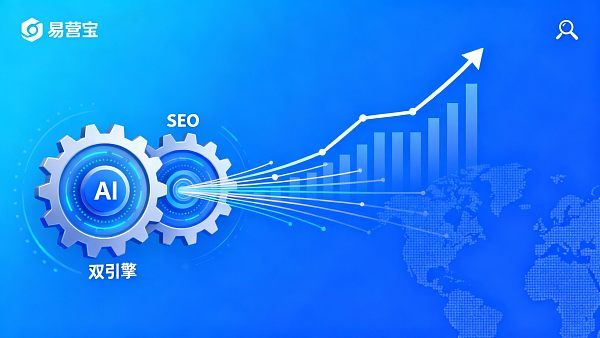
2. The Essence of AI + SEO: Not Replacement, but Collaboration
Before delving deeper, it's essential to clarify one premise:
AI cannot replace SEO, nor can SEO exist independently without AI.
Their relationship is more akin to:
SEO determines "what content to create, what problems to solve, and who to target"
AI determines "how to produce content faster and at scale"
For details on "what AI can and cannot do in website and content workflows," refer to What is an AI Website System?.
If AI is used without SEO, it tends to generate large volumes of low-relevance, low-value content.
If SEO is done without AI, it becomes difficult to keep up with competition in terms of efficiency and scale.
3. The Core Logic of Organic Traffic for Foreign Trade Websites
To understand how AI + SEO enhances organic traffic, we must first dissect the core components of foreign trade website traffic:
Keyword search traffic
From organic clicks on search engines like Google.Long-tail question-type traffic
From specific queries, solutions, and comparison searches.Multilingual search traffic
From search demands in different countries and languages.AI search and recommendation traffic
From answer citations and recommendations on AI platforms like ChatGPT, Gemini, and Perplexity.
The goal of AI + SEO is to simultaneously cover all four traffic sources, not just traditional keyword rankings.
4. Eyingbao's AI + SEO Dual-Engine Website Framework
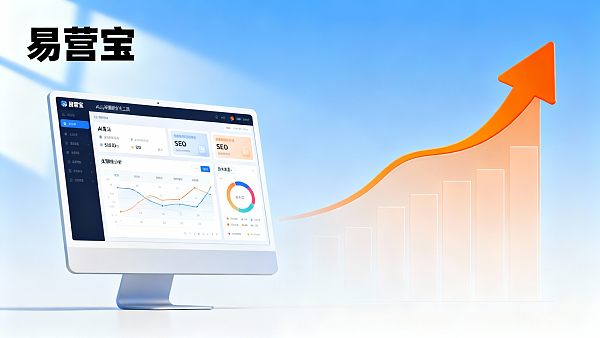
Eyingbao deeply integrates AI and SEO at the system design level, with core principles including:
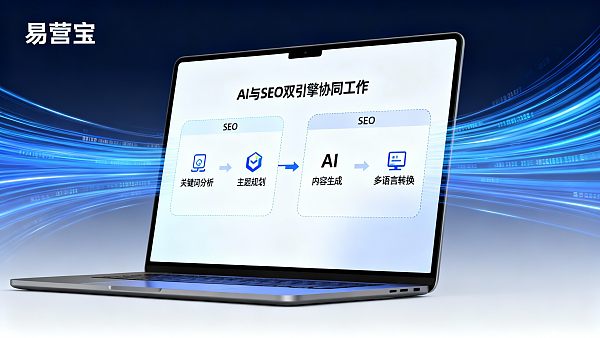
SEO directs strategy: keywords, themes, structure, and internal linking
AI handles execution: content generation, expansion, multilingual support, and update efficiency
System enforces constraints: architecture, quality control, and sustainability
This model avoids common pitfalls like "uncontrolled AI content" or "lagging SEO execution."
5. Key Application Scenarios of AI + SEO in Eyingbao
1. Keyword-Driven AI Content Production
In Eyingbao's AI + SEO system, content isn't randomly generated but follows clear SEO objectives:
Input based on keywords, themes, or user queries
AI generates structured content drafts
Manual industry-specific and differentiated enhancements
This approach significantly reduces the cost of moving SEO content from "planning to implementation."
2. Scalable Coverage of Long-Tail Question Content
In foreign trade SEO, long-tail questions often yield more stable traffic than core keywords, such as:
How to choose a specific product type
Pros and cons comparison of certain solutions
Precautions for different markets
AI can assist in this scenario by:
Quickly generating question-type content drafts
Covering more granular search intents
Building systematic FAQ and knowledge bases
This type of content is most likely to be directly cited by AI search platforms.
To transform "question-type traffic" into an extractable answer repository for AI, consider archiving high-frequency questions in Eyingbao's FAQ.
3. AI-Assisted Multilingual SEO Expansion
Traditional multilingual SEO faces challenges like:
High translation costs
Complex maintenance
High risk of content duplication
With AI + SEO collaboration:
AI generates multilingual content drafts
SEO rules constrain structure and keywords
Different language versions can be independently optimized
This achieves "scalable expansion + controlled quality" balance.
The key to multilingual expansion isn't "translation speed" but structure and internationalization rules. For details, refer to How to Do Multilingual SEO.
4. Increased Content Update Frequency and Site Activity
Search engines and AI systems generally prefer:
Consistently updated content
Clear thematic focus
Long-term site activity
With AI integration, businesses can:
Update content more frequently
Cover more related themes
Build stable content growth curves
These are critical long-term factors for boosting organic traffic.
To implement "update frequency" at the team execution level, consider establishing phased plans. For details, see How to Operate a Foreign Trade Independent Website.
6. How Does AI + SEO Impact AI Search Recommendations?
As AI search becomes more prevalent, content recommendations increasingly depend on:
Clear definition
Direct problem-solving capability
Structured, citable format
Credible sources and original content
AI + SEO collaboration makes content more aligned with AI extraction and citation needs, such as:
Standardized paragraph definitions
Q&A-style structures
Clear subheading hierarchies
Single-theme focus
This is precisely the direction Eyingbao emphasizes in GEO (AI Search Optimization).
7. Core Differences Between AI + SEO and Traditional SEO
8. Does AI + SEO Have Risks? How to Mitigate Them?
Common Risks
Mass production of low-quality content
Content homogenization
Keyword stuffing
Over-automation
Eyingbao's Mitigation Logic
AI output is editable and controllable
Emphasis on manual review and supplementation
SEO architecture first, not post-hoc fixes
Content centers on "problem-solving," not keyword stuffing
Proper use of AI + SEO builds long-term assets, not short-term opportunism.
9. Correct Implementation Path for AI + SEO Dual-Engine Websites
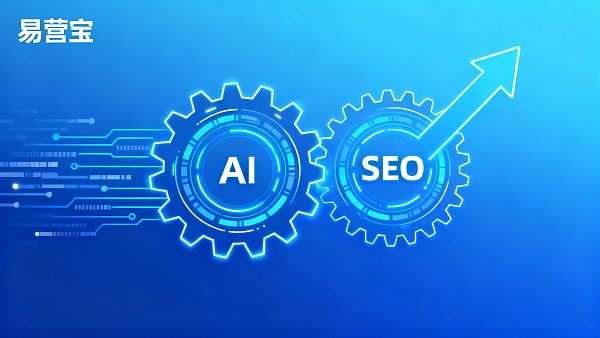
For foreign trade businesses, the recommended implementation sequence is:
Define business and market positioning
Plan SEO themes and keyword structures
Use AI to enhance content production efficiency
Continuously optimize content quality and structure
Build multilingual and multi-market coverage
Long-term tracking of traffic and conversion performance
Eyingbao's system design is built around this complete path.
10. Conclusion: AI + SEO is the Long-Term Engine for Foreign Trade Organic Traffic
In an era where search engines and AI search coexist, foreign trade websites must possess three capabilities to sustain organic traffic:
Content scaling capability
Structure and quality control capability
AI-search-compatible expression
The AI + SEO dual-engine website isn't about chasing technical trends but solving real challenges in long-term lead generation for foreign trade businesses.
Through systematic AI + SEO collaboration, Eyingbao helps foreign trade websites gradually build stable, sustainable, and scalable organic traffic sources.
For quick answers to high-frequency questions about AI content, SEO, multilingual support, and operations, directly review Eyingbao FAQ.
Systematic Applications of AI and SEO
👉AI Website System Capabilities Explained: Understanding AI's specific roles in content and website building
👉How to Do Multilingual SEO?: How AI + SEO expands international search traffic
👉 Foreign Trade Independent Site Operation Workflow: Practical applications of AI + SEO at different operational stages
👉 Eyingbao Feature Guide (SEO Capabilities): View system-level SEO support
👉 AI + SEO FAQ: Key answers about AI content and SEO
FAQ | Common Questions About AI + SEO Dual-Engine Websites
Q1: Can AI directly replace SEO?
No. AI can only improve execution efficiency; SEO still directs strategy and judgment.
Q2: Does AI-generated content help SEO rankings?
It depends on content quality and usage. High-quality, problem-solving content ranks better.
Q3: Is AI + SEO suitable for new sites?
Highly suitable. New sites can accumulate content and theme coverage faster with AI + SEO.
Q4: Could AI + SEO be penalized by search engines?
Search engines penalize low-quality, duplicate, or valueless content, not AI itself.
Q5: Must multilingual SEO use AI?
Not mandatory, but AI significantly reduces multilingual SEO execution costs.
Q6: Is AI + SEO effective for B2B foreign trade websites?
Yes. B2B sites typically require large content volumes and long cycles, making AI + SEO more advantageous.
Q7: How soon can AI + SEO results be seen?
Depends on industry competition and execution depth, usually becoming visible after months of consistent operation.
Related Articles
Related Products
 EasyCamp SaaS Smart Website Marketing SystemE-Yingbao SaaS Smart Website Marketing System: AI-powered, zero-code website building. Rapidly launch multilingual independent e-commerce sites in just 10 minutes. Global server acceleration and AI-driven SEO optimization empower businesses to efficiently connect with global markets. The seamless integration of technology and user-friendly operation makes building e-commerce sites incredibly simple.
 AI+SEM Intelligent Advertising Marketing SystemAI+SEM drives intelligent ad creation, empowering full-funnel precision advertising marketing. The system automatically generates weekly/monthly reports, AI recommends keywords and target countries, monitors core metrics in real-time with intelligent alerts, and enables one-click high-conversion ad solutions to help quickly acquire customers and improve ROI.
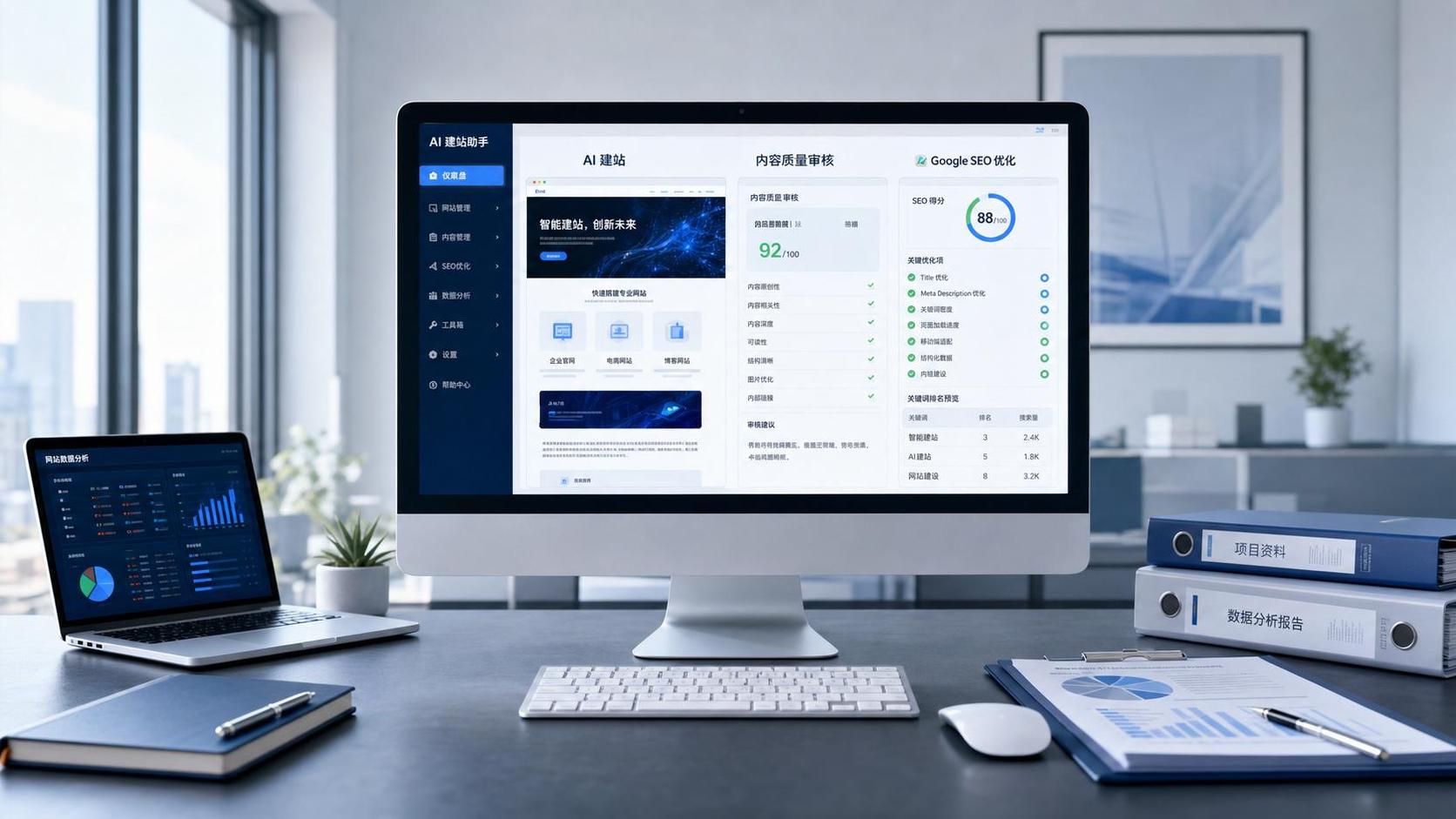
 AI+SEO Dual Engine Optimization ServiceEasyWin AI+SEO Dual Engine Optimization System leverages AI-powered keyword mining, content generation, and comprehensive technical optimization to help foreign trade enterprises acquire high-quality organic traffic, significantly improving search rankings and conversion rates.
 AI+SNS Social Media Marketing SystemYingbao AI+SNS Social Media Marketing System - Precision social capture for the social media era. Supports one-click content synchronization across major platforms like Facebook and LinkedIn. AI intelligently rewrites posts for enhanced relevance. 24/7 AI customer service and user profiling analysis empower businesses to efficiently expand into global markets.
 AI+SEO营销解决方案易营宝AI+SEO营销解决方案,通过AI批量写作、智能生成TDK、精准关键词扩词等功能,全面优化网站SEO效果,提升流量与转化率。助力企业构建高效智能网站新生态。
 AI+SEM Advertising Marketing SolutionsAI+SEM Advertising Marketing Solution leverages AI technology to deeply empower SEM ad campaigns. It automatically generates weekly/monthly reports using AI, presenting account data across multiple dimensions for comprehensive insights into campaign performance and trends. The system precisely recommends keywords and target countries, intelligently generates high-conversion ad copy, and enables one-click activation of efficient campaign plans to help businesses rapidly acquire customers. Simultaneously, it monitors core metrics in real time, intelligently identifies abnormal fluctuations, and issues timely alerts to ensure stable, high-return advertising results.
 Domain Name ServicesEasyWin provides professional domain name services, including intelligent queries, one-stop registration, brand protection, and full lifecycle management, helping businesses build a digital brand image.
 EasyOperate B2C Cross-Border E-Commerce Platform & Independent WebsiteEasyStore B2C Cross-border E-commerce Independent Store is an intelligent website building and cross-border e-commerce integrated solution independently developed by EasyStore Information Technology (Beijing) Co., Ltd. The system is specially designed for small and medium-sized as well as large export enterprises, integrating 'website building, operation, marketing, advertising, and conversion' into one, helping enterprises quickly establish cross-border e-commerce independent stores to achieve brand globalization and global sales growth.
The platform supports multiple languages, multiple currencies, and multi-channel marketing, with built-in AI intelligent translation and SEO optimization systems, suitable for mainstream markets such as Southeast Asia, Europe and America, Latin America, and the Middle East, assisting Chinese manufacturing enterprises in efficiently deploying international e-commerce strategies. SSL证书易营宝提供专业SSL安全证书服务,包括单域名和泛域名证书,确保网站数据传输加密、身份验证和完整性保护,助力企业建立安全可信的在线业务环境。









