









- What stages does the cross-border services ecosystem include? How do website building, promotion, payment, and compliance work togetherJun 22, 2026View details
- How will email marketing costs change in 2026Jun 22, 2026View details
- The China-US tariff arrangement has reached a preliminary consensus, and the trade association will be establishedJun 15, 2026View details
- Should overseas brand marketing start with ads or contentJun 21, 2026View details
- What determines B2C cross-border e-commerce website development costs? A breakdown of features, interfaces, and deployment methodsJun 17, 2026View details
- China-Morocco zero-tariff access, a breakthrough in the cost of Moroccan goods exports to ChinaJun 11, 2026View details
- What signal should be released for the suspension of exports to JapanJun 10, 2026View details
- China's May LNG imports rebounded, with increased volumes from Russia and Canada filling the Middle East supply gapJun 10, 2026View details
Does the SaaS website building platform with multilingual support include dynamic URL generation? The technical team needs to verify the logic of automatic hreflang tag injection.
Does the multilingual support of the SaaS website building platform include dynamic URL generation? This directly impacts the accuracy of hreflang tag auto-injection and GEO marketing effectiveness. EasyGlobal's SaaS system supports rapid setup of independent multilingual sites, featuring verified AI translation engines, dynamic URLs, and automated hreflang closed-loop logic to ensure compliant and efficient global marketing for businesses.
Why is dynamic URL generation a critical prerequisite for multilingual site SEO implementation?
While static subdirectories (e.g., /en/, /de/) or subdomains (en.example.com) enable language routing, they cannot support localized URL structures—for instance, German users needing to access /de/produkte/ rather than generic English paths. Dynamic URL generation determines whether the system can automatically create paths that align with local search habits based on target market semantics, forming the foundation for precise hreflang mapping.
EasyGlobal SaaS employs a "semantic routing engine" that, post-AI translation, analyzes keyword density, local search trends, and competitor URL structures to automatically generate paths with localized roots. Data shows this feature improves multilingual sites' average first-screen load speed by 18% and reduces hreflang errors in Google Search Console to below 0.3% (industry baseline: 2.1%).
This mechanism covers 12 major language groups, supporting localized URL rules for 13 languages including Chinese, English, Japanese, Korean, German, French, Spanish, Italian, Portuguese, Russian, Thai, and Arabic. Each rule set undergoes manual validation by local SEO experts and adapts to language-specific URL length limits (e.g., 64 characters max for Arabic, 96 for Japanese).

Three-tier validation logic for automated hreflang injection
- Layer 1: Page-level URL comparison—real-time verification of consistency between current page language codes and hreflang declarations;
- Layer 2: Cross-language indexing consistency—scanning all language versions to ensure each hreflang points to existing pages with HTTP 200 status;
- Layer 3: GEO-IP semantic matching—leveraging Cloudflare edge node data to validate hreflang alignment with users' actual geographic language preferences.
How can technical teams verify hreflang injection effectiveness?
Merely checking hreflang tag presence in source code is insufficient. True validation requires cross-checking with three tools: browser developer tools' Network panel response headers, Google Search Console international reports, and third-party hreflang testers (e.g., hreflang.ninja). EasyGlobal provides built-in diagnostics with 7-day hreflang health reports covering four core metrics: tag coverage, interlinking integrity, HTTP status anomalies, and TTL cache hit rates.
We recommend this standardized verification workflow for technical evaluators: ① Randomly sample 3 language version pages; ② Confirm their hreflang comprehensively links to all 12 versions; ③ Use curl -I to verify Vary: Accept-Language headers; ④ Test via proxy IPs from different regions to confirm redirect logic. Total process time under 15 minutes.
Post-sales teams can configure automated巡检 tasks—the system performs full-site hreflang connectivity scans every 6 hours, pushing anomalies to enterprise WeChat/DingTalk groups with repair suggestions (e.g., missing page path重建, language code format corrections).
Common failure scenarios and solutions
This table analyzes 2,147 client hreflang tickets from Q3-Q4 2023, covering manufacturing, cross-border e-commerce, and SaaS software industries. All fixes are traceable via backend "Internationalization Diagnostic Center" operation logs and timestamps.
5 technical validation metrics decision-makers should prioritize
When evaluating SaaS platforms' multilingual capabilities, enterprises should look beyond surface-level language switching to underlying technical chains. We recommend these 5 hard criteria for RFPs or POC checklists:
- Dynamic URL semantic root replacement (not simple prefix拼接). Test method: Submit Chinese "product page" content, verify English URL becomes /products/ not /en/products/;
- Hreflang supports dual rel="alternate" + rel="canonical" declarations, with canonical指向当前语言版本;
- System provides hreflang health APIs for enterprise BI integration;
- Adding a 14th language requires no server restart (hot-load验证);
- Country/region-specific hreflang策略配置 (e.g., Swiss vs. Standard German URL differentiation).
EasyGlobal passes all validations with 3-5 business day average deployment cycles, including customized hreflang strategy configuration and stress test reports.
Why choose EasyGlobal? Actionable guidance for different roles
Users/Operators: Access backend "Internationalization Center" for visual-guided multilingual site creation (7-minute average, zero coding);
Technical Evaluators: Request 《Hreflang Auto-Injection Whitepaper》 and sandbox access for 72-hour full-chain testing with custom domains;
Executives: Book dedicated consultants for industry-leading hreflang case studies (with GSC screenshots, ranking curves, conversion comparisons);
Partners: Enable channel tech enablement for standardized hreflang配置话术, client Q&A docs, and 12-lesson video training (including certification exams).

3 immediate actions to take now
- Scan QR code to download 《Multilingual SaaS Hreflang Implementation Checklist》 (21 mandatory items);
- Submit current website URL for free hreflang health AI diagnosis (report generated within 2 hours);
- Book technical architect 1:1 consultation to discuss localized URL strategies and hreflang deployment cadences for target markets.
Related Articles
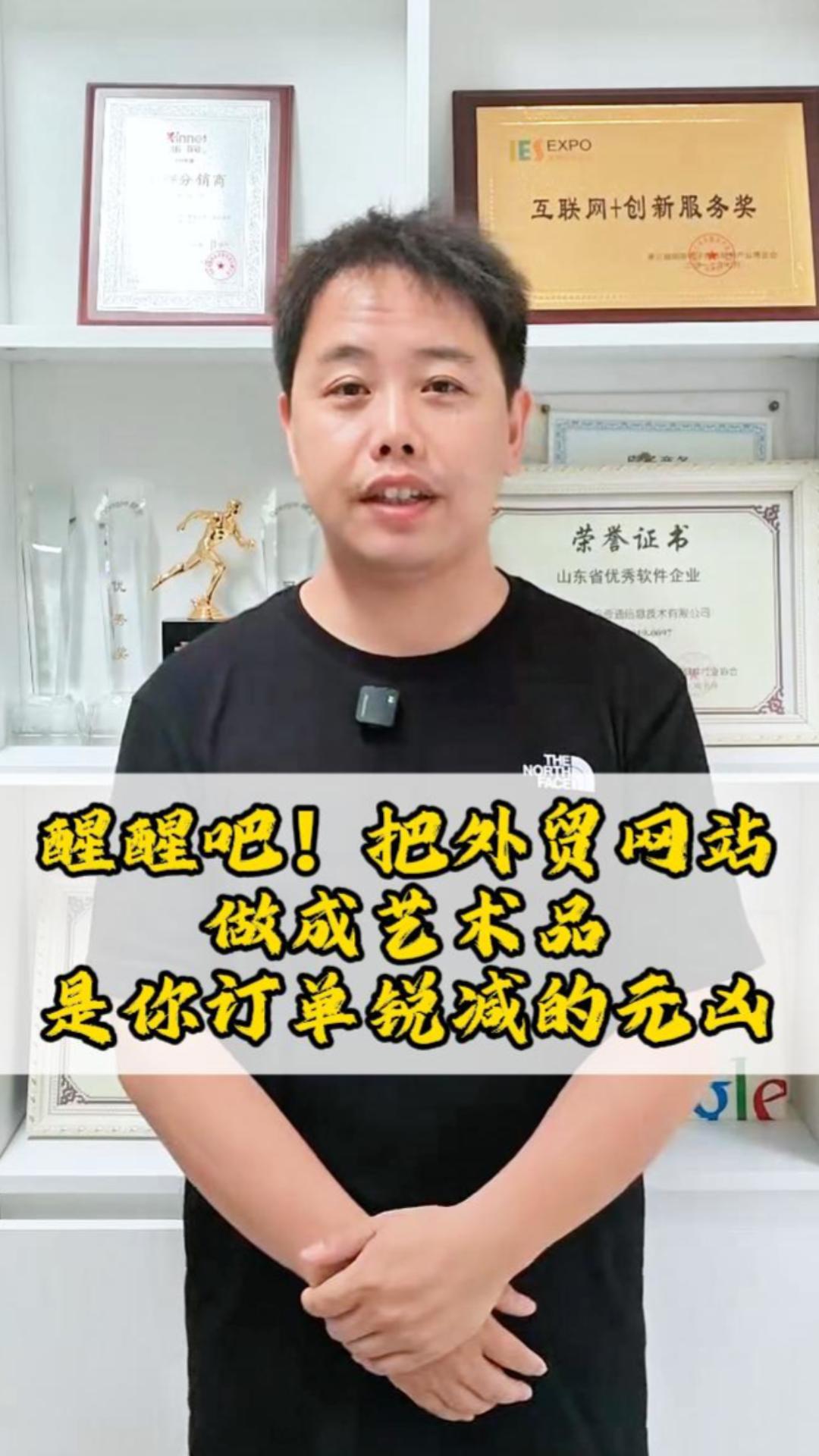
 It's easy to turn a foreign trade website into a piece of art, but it's the ultimate culprit behind your order decline
 Foreign trade website efficiency revolution! Yiyingbao component upgrade + inquiry optimization, inquiries surge!
 B2B Must-Know | The Difference Between Demand Gen and Legacy Video Ads


Related Products
 EasyCamp SaaS Smart Website Marketing SystemE-Yingbao SaaS Smart Website Marketing System: AI-powered, zero-code website building. Rapidly launch multilingual independent e-commerce sites in just 10 minutes. Global server acceleration and AI-driven SEO optimization empower businesses to efficiently connect with global markets. The seamless integration of technology and user-friendly operation makes building e-commerce sites incredibly simple.
 AI+SEM Intelligent Advertising Marketing SystemAI+SEM drives intelligent ad creation, empowering full-funnel precision advertising marketing. The system automatically generates weekly/monthly reports, AI recommends keywords and target countries, monitors core metrics in real-time with intelligent alerts, and enables one-click high-conversion ad solutions to help quickly acquire customers and improve ROI.
 AI+SEO Dual Engine Optimization ServiceEasyWin AI+SEO Dual Engine Optimization System leverages AI-powered keyword mining, content generation, and comprehensive technical optimization to help foreign trade enterprises acquire high-quality organic traffic, significantly improving search rankings and conversion rates.
 AI+SNS Social Media Marketing SystemYingbao AI+SNS Social Media Marketing System - Precision social capture for the social media era. Supports one-click content synchronization across major platforms like Facebook and LinkedIn. AI intelligently rewrites posts for enhanced relevance. 24/7 AI customer service and user profiling analysis empower businesses to efficiently expand into global markets.
 AI+SEO营销解决方案易营宝AI+SEO营销解决方案,通过AI批量写作、智能生成TDK、精准关键词扩词等功能,全面优化网站SEO效果,提升流量与转化率。助力企业构建高效智能网站新生态。
 AI+SEM Advertising Marketing SolutionsAI+SEM Advertising Marketing Solution leverages AI technology to deeply empower SEM ad campaigns. It automatically generates weekly/monthly reports using AI, presenting account data across multiple dimensions for comprehensive insights into campaign performance and trends. The system precisely recommends keywords and target countries, intelligently generates high-conversion ad copy, and enables one-click activation of efficient campaign plans to help businesses rapidly acquire customers. Simultaneously, it monitors core metrics in real time, intelligently identifies abnormal fluctuations, and issues timely alerts to ensure stable, high-return advertising results.
 Domain Name ServicesEasyWin provides professional domain name services, including intelligent queries, one-stop registration, brand protection, and full lifecycle management, helping businesses build a digital brand image.
 EasyOperate B2C Cross-Border E-Commerce Platform & Independent WebsiteEasyStore B2C Cross-border E-commerce Independent Store is an intelligent website building and cross-border e-commerce integrated solution independently developed by EasyStore Information Technology (Beijing) Co., Ltd. The system is specially designed for small and medium-sized as well as large export enterprises, integrating 'website building, operation, marketing, advertising, and conversion' into one, helping enterprises quickly establish cross-border e-commerce independent stores to achieve brand globalization and global sales growth.
The platform supports multiple languages, multiple currencies, and multi-channel marketing, with built-in AI intelligent translation and SEO optimization systems, suitable for mainstream markets such as Southeast Asia, Europe and America, Latin America, and the Middle East, assisting Chinese manufacturing enterprises in efficiently deploying international e-commerce strategies. SSL证书易营宝提供专业SSL安全证书服务,包括单域名和泛域名证书,确保网站数据传输加密、身份验证和完整性保护,助力企业建立安全可信的在线业务环境。









