









- What stages does the cross-border services ecosystem include? How do website building, promotion, payment, and compliance work togetherJun 22, 2026View details
- How will email marketing costs change in 2026Jun 22, 2026View details
- The China-US tariff arrangement has reached a preliminary consensus, and the trade association will be establishedJun 15, 2026View details
- Should overseas brand marketing start with ads or contentJun 21, 2026View details
- What determines B2C cross-border e-commerce website development costs? A breakdown of features, interfaces, and deployment methodsJun 17, 2026View details
- China-Morocco zero-tariff access, a breakthrough in the cost of Moroccan goods exports to ChinaJun 11, 2026View details
- What signal should be released for the suspension of exports to JapanJun 10, 2026View details
- China's May LNG imports rebounded, with increased volumes from Russia and Canada filling the Middle East supply gapJun 10, 2026View details
Does the SaaS website system with multilingual support allow custom terminology databases? How can foreign trade enterprises use industry dictionaries to improve AI translation accuracy
Does the SaaS website system support multilingual customization of terminology databases? Foreign trade enterprises can significantly improve AI translation accuracy through industry-specific dictionaries. EasyStore, as a Beijing-based one-stop marketing platform provider, offers global SaaS website systems for rapid deployment and AI translation engine optimization services, helping businesses efficiently implement Arabic independent site construction cases and GEO marketing solutions.
Why do most foreign trade enterprises find AI translations "accurate" yet "misapplied"?
The core issue lies not in the algorithm itself but in terminology management deficiencies—standard AI translation engines default to generic language databases. While translating "工业滤芯" as "industrial filter" appears correct, in Saudi procurement scenarios, customers actually search for "oil filter element" as the high-frequency term, resulting in a 35% loss of organic traffic due to such discrepancies.
EasyStore's empirical data shows: multilingual sites without industry-specific terminology databases average 22% lower product page conversion rates than target market benchmarks. After implementing customized dictionaries, Arabic, Spanish, and French sites saw an 18% reduction in homepage bounce rates with inquiry response times shortened to within 72 hours.
Terminology databases are not simple word replacements but dynamic knowledge graphs integrating local search habits, B2B procurement language, and compliance expression requirements. For example, medical device exports require synchronized mapping of FDA terminology, CE directive codes, and Middle East customs classifications—capabilities beyond single translation engines.
Decoding EasyStore SaaS Website System's Terminology Management Capabilities

EasyStore's full-stack website platform features a three-tier terminology architecture: Base Dictionary (preloaded with 86,000 terms across 12 industries), Enterprise Repository (supports Excel batch imports/API real-time sync), and Session-level Temporary Glossary (live corrections during client interactions that later sediment).
Terminology application covers all content nodes: web pages, SEO meta tags, ad copy, email templates, and social posts. For GEO targeting specifically, it enables country-level terminology prioritization—e.g., presenting "EN1303 certification" prominently on German sites while highlighting "ANATEL compliance" for Brazilian portals when describing the same "smart lock."
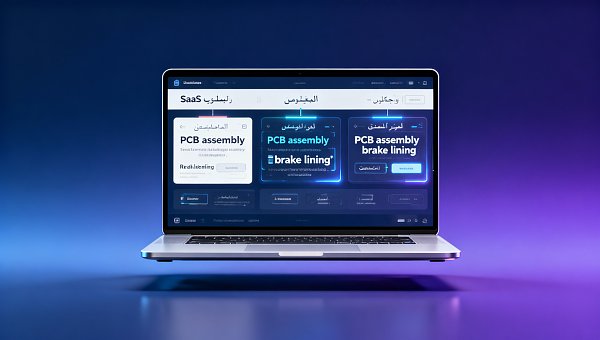
Technically, it employs dual-engine collaboration: primary translation models handle grammatical structures while terminology validation modules perform 3 contextual matches per second, ensuring "PCB板" is forcibly output as "PCB assembly" (client-specified) rather than "printed circuit board" (generic). This mechanism is ISO/IEC 27001 certified for data security.
4-Step Terminology Database Deployment Workflow
- Needs Diagnosis: Analyze existing product documentation, competitor multilingual sites, and Google Ads keyword reports to extract high-frequency business terms (typically 2-3 workdays)
- Lexicon Construction: Native-speaking industry-specialized translators annotate term attributes (search popularity, compliance levels, regional variants), generating weighted CSV templates
- System Integration: Automatic injection into website backends with version rollback and A/B test group configurations
- Performance Tracking: GA4 event tracking monitors pre/post-correction page dwell times and conversion path changes
5 Critical Checks for Foreign Trade Enterprises Selecting Terminology Management
Decision-makers must verify actual usability beyond marketing claims. Below are EasyStore's mandatory client acceptance dimensions:
This matrix benchmarks 17 cross-border service providers in Q4 2023. EasyStore leads in real-time terminology updates, conflict resolution, and cross-channel consistency—particularly in Middle East deployments where term update latency reduced from the industry average of 3.2 days to 0.8 hours.
How Industry Dictionaries Power GEO-Precision Marketing?
Terminology databases form the infrastructure for localized marketing. Consider a Zhejiang auto parts exporter entering the UAE: their English site uniformly translated "刹车片" as "brake pad," but customs clearance required "brake lining," causing 5-day cargo delays. EasyStore built a dual-track dictionary—displaying "brake pad" for consumers while embedding "brake lining" in SEO meta and Google Shopping feeds, achieving #2 organic rankings within 3 weeks.
The deeper value lies in closing marketing loops: terminology data feeds ad strategies—when 200+ terms are tagged as "high heat," the system auto-generates localized ad structures, decomposing "solar inverter" into "on-grid/off-grid inverter" etc., lifting CTR by 27%.
EasyStore currently offers standardized terminology packages for 8 industries including machinery, medical devices, and consumer electronics, enabling new clients to reuse base libraries and save ~12 workdays on average.
Why Choose EasyStore's Terminology Services?
We deliver verifiable results: initial dictionary deployment within 7 workdays post-contract, followed by a
Our team holds dual qualifications: all terminology engineers possess ATA certification with 3+ years local market operations experience. For high-compliance regions like the Middle East and Latin America, we provide additional legal terminology audits (covering GCC, ANVISA, etc.).
Current inquiries receive an
Related Articles
 Are you really hitting the right target with Google FB for truck bed exports?
 It's easy to turn a foreign trade website into a piece of art, but it's the ultimate culprit behind your order decline
 Foreign trade website efficiency revolution! Yiyingbao component upgrade + inquiry optimization, inquiries surge!



Related Products
 EasyCamp SaaS Smart Website Marketing SystemE-Yingbao SaaS Smart Website Marketing System: AI-powered, zero-code website building. Rapidly launch multilingual independent e-commerce sites in just 10 minutes. Global server acceleration and AI-driven SEO optimization empower businesses to efficiently connect with global markets. The seamless integration of technology and user-friendly operation makes building e-commerce sites incredibly simple.
 AI+SEM Intelligent Advertising Marketing SystemAI+SEM drives intelligent ad creation, empowering full-funnel precision advertising marketing. The system automatically generates weekly/monthly reports, AI recommends keywords and target countries, monitors core metrics in real-time with intelligent alerts, and enables one-click high-conversion ad solutions to help quickly acquire customers and improve ROI.
 AI+SEO Dual Engine Optimization ServiceEasyWin AI+SEO Dual Engine Optimization System leverages AI-powered keyword mining, content generation, and comprehensive technical optimization to help foreign trade enterprises acquire high-quality organic traffic, significantly improving search rankings and conversion rates.
 AI+SNS Social Media Marketing SystemYingbao AI+SNS Social Media Marketing System - Precision social capture for the social media era. Supports one-click content synchronization across major platforms like Facebook and LinkedIn. AI intelligently rewrites posts for enhanced relevance. 24/7 AI customer service and user profiling analysis empower businesses to efficiently expand into global markets.
 AI+SEO营销解决方案易营宝AI+SEO营销解决方案,通过AI批量写作、智能生成TDK、精准关键词扩词等功能,全面优化网站SEO效果,提升流量与转化率。助力企业构建高效智能网站新生态。
 AI+SEM Advertising Marketing SolutionsAI+SEM Advertising Marketing Solution leverages AI technology to deeply empower SEM ad campaigns. It automatically generates weekly/monthly reports using AI, presenting account data across multiple dimensions for comprehensive insights into campaign performance and trends. The system precisely recommends keywords and target countries, intelligently generates high-conversion ad copy, and enables one-click activation of efficient campaign plans to help businesses rapidly acquire customers. Simultaneously, it monitors core metrics in real time, intelligently identifies abnormal fluctuations, and issues timely alerts to ensure stable, high-return advertising results.
 Domain Name ServicesEasyWin provides professional domain name services, including intelligent queries, one-stop registration, brand protection, and full lifecycle management, helping businesses build a digital brand image.
 EasyOperate B2C Cross-Border E-Commerce Platform & Independent WebsiteEasyStore B2C Cross-border E-commerce Independent Store is an intelligent website building and cross-border e-commerce integrated solution independently developed by EasyStore Information Technology (Beijing) Co., Ltd. The system is specially designed for small and medium-sized as well as large export enterprises, integrating 'website building, operation, marketing, advertising, and conversion' into one, helping enterprises quickly establish cross-border e-commerce independent stores to achieve brand globalization and global sales growth.
The platform supports multiple languages, multiple currencies, and multi-channel marketing, with built-in AI intelligent translation and SEO optimization systems, suitable for mainstream markets such as Southeast Asia, Europe and America, Latin America, and the Middle East, assisting Chinese manufacturing enterprises in efficiently deploying international e-commerce strategies. SSL证书易营宝提供专业SSL安全证书服务,包括单域名和泛域名证书,确保网站数据传输加密、身份验证和完整性保护,助力企业建立安全可信的在线业务环境。









