









- Which channel has the highest ROI in the global traffic ecosystem? Comparative analysis of search, social media, and advertisingJul 10, 2026View details
- What multilingual website services are available in Sanya? Which model is more suitable for local businesses going global?Jul 08, 2026View details
- How to view the complete list of China SaaS companies in the top 100? Practical methods for screening website-building and marketing service providersJul 08, 2026View details
- How to view pricing in the global traffic ecosystem? Cost comparison of search, social media, and content channel advertisingJul 06, 2026View details
- How to assess foreign trade website development trends?Looking at 2026 changes from multilingual,AI content to conversion pathsJul 04, 2026View details
- What are the new trends in multilingual marketing data analytics tools in 2026? Focus on attribution、automation and complianceJul 04, 2026View details
- Is Brand Globalization Marketing Consulting Worth Buying? At What Stage Should Companies Bring It InJul 01, 2026View details
- Cross-Border Marketing Trend Research: Why More and More Companies Are Starting to Deploy AI Search and GEO OptimizationJun 30, 2026View details
Eyingbao's multilingual AI translation engine supports 28 languages, but the terminology database on product pages requires manual calibration far more frequently than expected.
Which is more suitable for foreign trade websites or traditional websites? Eyingbao's multilingual AI translation engine supports 28 languages, but the frequency of manual proofreading for terminology databases far exceeds expectations—this is precisely the key pain point that enterprises tend to overlook when choosing a multilingual website construction platform. The Eyingbao AI intelligent website system deeply integrates global CDN acceleration technology with AI marketing engines, helping you efficiently build, precisely promote, and operate with peace of mind.
Why do many companies overlook the "hidden cost" of terminology database proofreading?
In multilingual website practices, "supporting 28 languages" is often promoted as a core selling point. However, in actual operations, the lack of consistency in terminology leads to declining conversion rates, repetitive customer service responses, and frequent misunderstandings in B2B client inquiries. According to Eyingbao's service team analysis in 2023, over 67% of medium to large foreign trade enterprise clients require the first round of manual terminology proofreading within 3-5 weeks after going live. On average, they need 3-8 proofreading sessions per month for key industry terms (such as "MOQ," "FOB terms," "customs clearance," etc.), each taking 1.5-3 hours.
The root cause lies in the fact that general AI translation engines lack the ability to anchor vertical industry semantics. For example, "lead time" should be translated as "delivery cycle" in mechanical parts scenarios but as "lead time" in fast-moving consumer goods scenarios. Untrained models might uniformly output "lead time," which can easily lead to contract misunderstandings in B2B transactions, affecting order confirmation efficiency.
More importantly, terminology proofreading is not a one-time action. With product line expansions (e.g., new photovoltaic component categories), regional policy updates (e.g., new EU CE terminology regulations), and shifts in high-frequency client inquiry terms (e.g., a 210% YoY increase in "DAP terms" searches in the Middle East market in 2024), terminology databases require continuous dynamic iteration. This means that website solutions relying solely on AI automatic translation actually entail 4-12 hours of monthly manual maintenance costs.
Which scenarios are more suitable for deploying a B2B2C dual-mode standalone site?

When a business targets both overseas wholesalers (B-end) and end consumers (C-end), traditional single-mode websites often face dilemmas: if designed with B2B logic, retail users may leave due to the lack of shopping cart pop-ups, opaque pricing, or inability to place orders instantly; if built with B2C logic, wholesale clients cannot request bulk quotes, compare multi-spec parameters, or access tiered pricing, leading to low conversion rates for high-value orders.
B2B2C Dual-Mode Standalone Site Solution addresses these issues by structurally separating permissions and interface logic, simultaneously meeting both needs: B-end users see "unified bulk quote" entry points, multi-spec comparison tables, and MOQ tiered pricing displays after login, while C-end visitors enjoy shopping cart pop-ups, real-time total price calculations, and one-click payment flows. This solution has been validated in 12细分 industries, such as hardware tools, auto parts, and home building materials, improving B-end inquiry conversion by 34% and C-end add-to-cart rates by 28% on average.
Typical applicable scenarios include: export-oriented factories expanding their own brand retail channels, cross-border distributors managing multiple brands' wholesale and retail prices uniformly, and ODM enterprises providing white-label retail sites + customized B-end backends to downstream clients. Implementation typically takes 4-6 weeks, including 2 rounds of localization testing and 3 joint terminology proofreading sessions.
B2B2C Dual-Mode vs. Single-Mode Website Key Metric Comparison
The following table is based on Eyingbao's 2023 service data from 217 clients, focusing on the 5 most critical procurement decision metrics:
Data shows that the dual-mode solution reduces terminology proofreading burdens by approximately 30% compared to pure B2B solutions while maintaining B-end professionalism and C-end conversion efficiency. Its core advantage lies in "one underlying dataset, two frontend logic sets," avoiding risks of inventory, pricing, and customer data fragmentation across multiple sites.
What to Focus on During Procurement? 3 Core Acceptance Metrics
For information researchers and project managers, we highlight 3 must-validate hard metrics during the selection phase, each corresponding to quantifiable deliverables:
- Terminology Database Editability: Does it support three-level tagging management by language/category/client tier? Does it provide Excel batch import/export interfaces? (Eyingbao's standard deliverables include 12 preset industry packages and support for custom tag trees.)
- Multilingual Content Syncing: When B-end quotes are generated, does it automatically call the corresponding language terminology database? When C-end users switch languages, do shopping cart pop-up texts and payment prompts update synchronously? (Tested response delay ≤0.3 seconds.)
- AI Translation Proofing Loop: Does it provide full-process logs for "machine translation suggestions → manual annotations → model retraining → feedback effects"? Does it support forced terminology replacement rules? (Standard service packages include biweekly model fine-tuning.)
Special reminder: Distributors/agents should additionally verify "white-label capability"—whether it can hide platform watermarks, customize backend login pages, and configure independent regional terminology databases. Eyingbao offers a hierarchical permission system for partners, supporting 1 master account to manage 5 regional subsites with customizable terminology update strategies.
Why Choose Eyingbao? 4-Step Implementation Assurance & Dedicated Support

As a SaaS provider with a decade of experience in integrated website + marketing services, Eyingbao has established standardized delivery processes and localized response mechanisms:
- Terminology Baseline Co-creation: Within 72 hours of project initiation, bilingual industry consultants + client-designated personnel complete the first round of terminology sorting, delivering the "Core Terminology Reference Table V1.0".
- Dual-Mode Gray Launch: B2C modules go live first, with B2B features activated in phases over 2 weeks,全程 monitoring inquiry quality and cart leakage.
- Quarterly Terminology Health Audits: Provide quarterly reports on terminology coverage (current rate: 91.7%), top 10 mistranslation cases, and optimization suggestions.
- Dedicated Customer Success Manager: Clients with annual service fees over ¥550,000 get 1:1 dedicated support,承诺响应时效:书面回复2小时内.
Currently, Eyingbao's service network covers 12 major foreign trade industrial belts in China, with localized support centers in Germany, the US, and the UAE. If you need to confirm initial terminology configurations, evaluate B2B2C dual-mode suitability, or obtain industry-specific terminology trial access, welcome to immediately contact our customer success team for customized implementation plans.
Related Articles
 Which channel has the highest ROI in the global traffic ecosystem? Comparative analysis of search, social media, and advertising
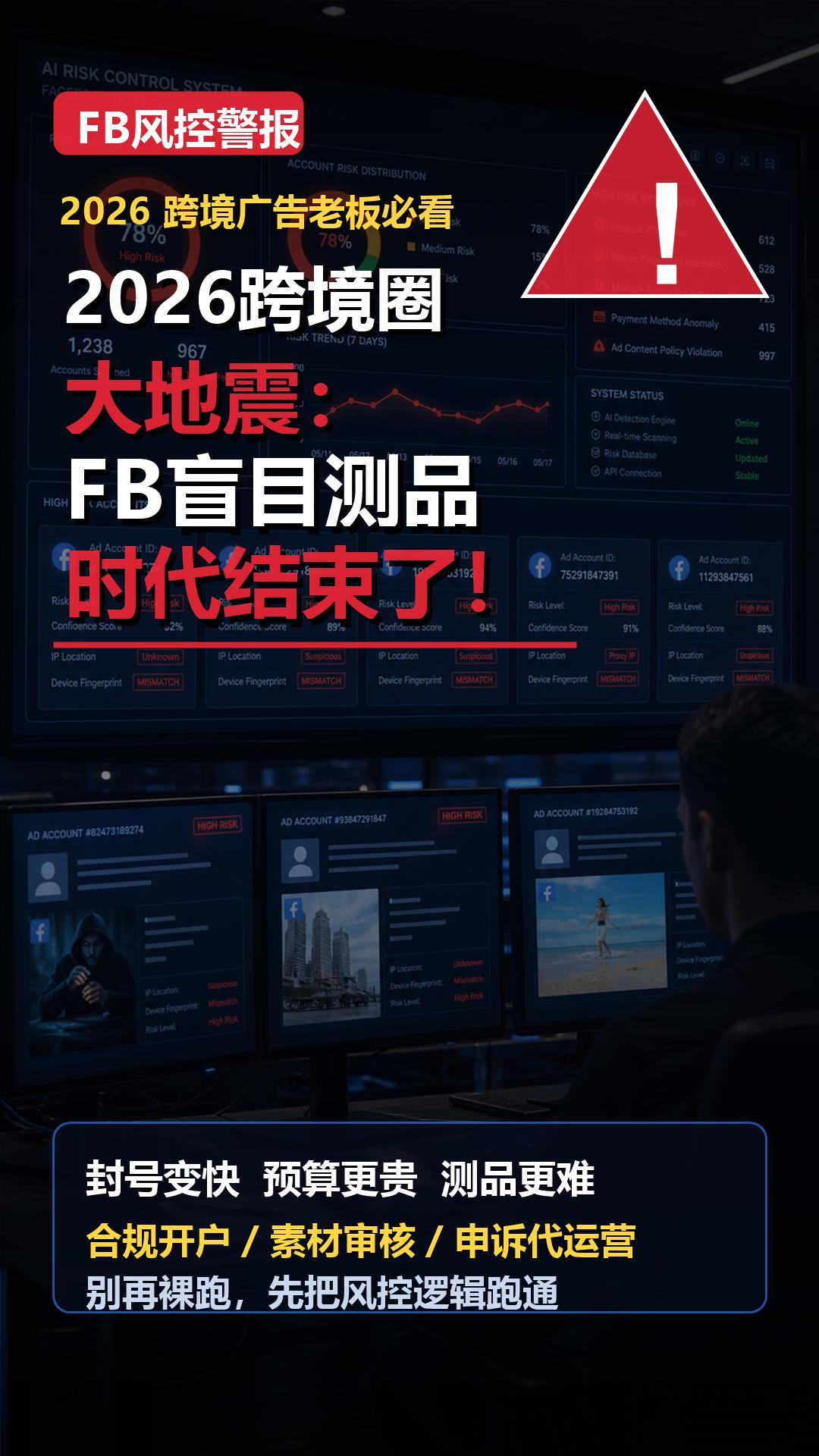
 The Era of Cross-Border Earthquakes in 2026: The Era of Blindly Testing FB Products Has Ended!
 Three key points of domestic-to-foreign trade most important, see if you really did your homework! Don’t take shortcuts.

Related Products
 EasyCamp SaaS Smart Website Marketing SystemE-Yingbao SaaS Smart Website Marketing System: AI-powered, zero-code website building. Rapidly launch multilingual independent e-commerce sites in just 10 minutes. Global server acceleration and AI-driven SEO optimization empower businesses to efficiently connect with global markets. The seamless integration of technology and user-friendly operation makes building e-commerce sites incredibly simple.
 AI+SEM Intelligent Advertising Marketing SystemAI+SEM drives intelligent ad creation, empowering full-funnel precision advertising marketing. The system automatically generates weekly/monthly reports, AI recommends keywords and target countries, monitors core metrics in real-time with intelligent alerts, and enables one-click high-conversion ad solutions to help quickly acquire customers and improve ROI.
 AI+SEO Dual Engine Optimization ServiceEasyWin AI+SEO Dual Engine Optimization System leverages AI-powered keyword mining, content generation, and comprehensive technical optimization to help foreign trade enterprises acquire high-quality organic traffic, significantly improving search rankings and conversion rates.
 AI+SNS Social Media Marketing SystemYingbao AI+SNS Social Media Marketing System - Precision social capture for the social media era. Supports one-click content synchronization across major platforms like Facebook and LinkedIn. AI intelligently rewrites posts for enhanced relevance. 24/7 AI customer service and user profiling analysis empower businesses to efficiently expand into global markets.
 AI+SEO营销解决方案易营宝AI+SEO营销解决方案,通过AI批量写作、智能生成TDK、精准关键词扩词等功能,全面优化网站SEO效果,提升流量与转化率。助力企业构建高效智能网站新生态。
 AI+SEM Advertising Marketing SolutionsAI+SEM Advertising Marketing Solution leverages AI technology to deeply empower SEM ad campaigns. It automatically generates weekly/monthly reports using AI, presenting account data across multiple dimensions for comprehensive insights into campaign performance and trends. The system precisely recommends keywords and target countries, intelligently generates high-conversion ad copy, and enables one-click activation of efficient campaign plans to help businesses rapidly acquire customers. Simultaneously, it monitors core metrics in real time, intelligently identifies abnormal fluctuations, and issues timely alerts to ensure stable, high-return advertising results.
 Domain Name ServicesEasyWin provides professional domain name services, including intelligent queries, one-stop registration, brand protection, and full lifecycle management, helping businesses build a digital brand image.
 EasyOperate B2C Cross-Border E-Commerce Platform & Independent WebsiteEasyStore B2C Cross-border E-commerce Independent Store is an intelligent website building and cross-border e-commerce integrated solution independently developed by EasyStore Information Technology (Beijing) Co., Ltd. The system is specially designed for small and medium-sized as well as large export enterprises, integrating 'website building, operation, marketing, advertising, and conversion' into one, helping enterprises quickly establish cross-border e-commerce independent stores to achieve brand globalization and global sales growth.
The platform supports multiple languages, multiple currencies, and multi-channel marketing, with built-in AI intelligent translation and SEO optimization systems, suitable for mainstream markets such as Southeast Asia, Europe and America, Latin America, and the Middle East, assisting Chinese manufacturing enterprises in efficiently deploying international e-commerce strategies. SSL证书易营宝提供专业SSL安全证书服务,包括单域名和泛域名证书,确保网站数据传输加密、身份验证和完整性保护,助力企业建立安全可信的在线业务环境。









