









- China-Morocco zero-tariff access, a breakthrough in the cost of Moroccan goods exports to ChinaJun 11, 2026View details
- What signal should be released for the suspension of exports to JapanJun 10, 2026View details
- China's May LNG imports rebounded, with increased volumes from Russia and Canada filling the Middle East supply gapJun 10, 2026View details
- Will GEO change its SEO strategy?Jun 04, 2026View details
- What types of businesses are end-to-end solutions suitable for?Jun 03, 2026View details
- 2026 Global Growth Channel TrendsJun 02, 2026View details
How AI Intelligent Advertising Platforms Collaborate with Brand Marketing: 5 Key Settings to Simultaneously Boost Exposure and Control CPL
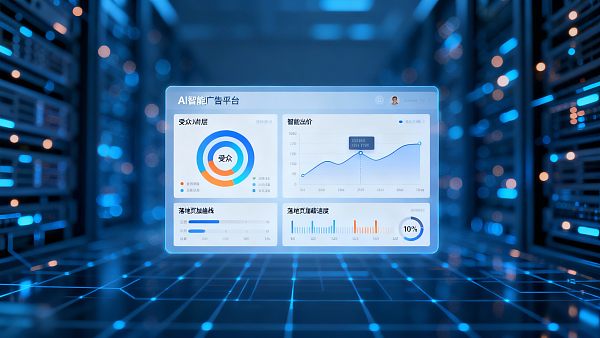

This article analyzes how AI-powered advertising platforms can simultaneously enhance exposure and control CPL (Cost Per Lead) in cross-border e-commerce operations and promotions, helping to optimize global market SEO strategies.
In cross-border e-commerce, SaaS website platforms, and general internet service scenarios, the core pain points faced by market researchers and operators typically include: how to ensure brand exposure while keeping the cost per lead (CPL) within an acceptable range; how to integrate website acceleration and performance optimization with advertising strategies; and how to implement global market SEO optimization strategies through digital marketing solutions. This article addresses both technical and operational perspectives, providing five actionable key setup ideas and combining them with the technical capabilities and practical methods of AI-powered advertising platforms to help businesses achieve cost reduction and efficiency gains in multilingual marketing systems and cross-border e-commerce ecosystems.

Optimizing Account Structure and Audience Segmentation: Reducing CPL and Expanding High-Quality Exposure Through Granular Structures
A granular account and ad group structure is the foundation for AI-powered advertising platforms to achieve both high exposure and low CPL. In cross-border e-commerce operations and promotions, it is recommended to segment audiences across multiple dimensions such as market, language, product line, purchase intent, and lifecycle stage. Practical steps include: first, establishing independent ad units based on region and language to ensure consistency between creatives and landing pages, thereby improving relevance and quality scores; second, creating sub-ad groups by product SKU or category, using high-frequency, low-CPL bidding strategies for high-intent audiences and brand exploration bids for potential audiences to maximize total exposure. AI-powered advertising platforms can automatically recommend audience segmentation and traffic allocation weights, combining historical conversion data to score audience tags for dynamic expansion and contraction.
At the execution level, it is essential to pause or merge underperforming ad groups to avoid traffic dilution leading to higher CPL. Simultaneously, employing negative keywords and audience exclusion strategies can filter out low-value impressions. Aligning the account structure with the multilingual marketing system and SEO groupings (e.g., unifying TDK and page intent on SaaS website platforms) can improve landing page relevance, leading to higher conversion rates and lower CPL.
Smart Bidding and Budget Strategies: Balancing Exposure and Costs Through Model-Based Delivery

Smart bidding is not simply handing budgets over to machines but achieving "human-machine collaboration" through strategy and rule design. First, set clear KPIs (CPL, ROAS, CPA) and allocate budgets to different goals in phases—for example, dedicating part of the budget to brand exposure to expand future low-CPL audience pools while reserving another portion for short-term promotions to close sales loops. Leveraging the bidding prediction models of AI advertising platforms enables second-level bid adjustments based on device, region, time, and keyword intent, directing more traffic to high-potential audiences within the same budget.
Additionally, synchronizing ad delivery with website acceleration and performance optimization is crucial. Landing page load speed significantly impacts conversion rates; adopting AI-powered acceleration technologies improves user experience, directly reducing bounce rates and increasing conversions, thereby lowering CPL. For industry-specific clients, such as manufacturing or equipment companies, integrating marketing budgets with professional websites and product display optimizations can enhance the commercial value per click. For industry-specific solutions, reference examples like laser engraving machine industry solutions—professional website and marketing solutions that help businesses rapidly iterate on product displays and landing page experiences.
Creative and Multilingual Asset Automation: Boosting Brand Visibility and Click-Through Rates with High-Relevance Creatives
Creative materials and copy are critical factors determining ad exposure quality and click costs. The creative factory model provided by AI-powered advertising platforms can automatically generate high-CTR ad copy, multilingual creatives, and dynamic keyword libraries, significantly reducing asset production time and costs. When running ads on cross-border e-commerce platforms, prioritize localized creatives and cultural adaptations to ensure ad copy, images, and videos align with the target market's language and review habits. This not only improves click-through rates but also increases page dwell time, positively impacting global market SEO optimization strategies.
Multilingual marketing systems must integrate with smart delivery, ensuring consistency between ad copy, landing page titles, and meta descriptions (TDK). AI-powered keyword expansion tools can broaden long-tail keyword coverage, improving search traffic reach in target markets. For users/operators, establishing standardized asset libraries and multivariate testing templates enables rapid A/B testing iterations, enhancing brand visibility while steadily reducing CPL over time. Leveraging AI to boost brand visibility and exposure requires combining creative quality, landing page experience, and bidding strategies to form reusable workflows and benchmarks.
Data-Driven Landing Metrics and A/B Testing Systems: Validating and Continuously Optimizing CPL Curves
Any strategy claiming to "simultaneously increase exposure and control CPL" must be data-anchored. Building clear conversion funnel and attribution models is a prerequisite: define KPIs for each stage (impression, click, landing page interaction, form submission/purchase) and ensure data integrity through unified tracking and event monitoring. AI-powered advertising platforms typically support bidirectional integration with ad platforms like Google Ads, Meta, and Yandex at the account level, enabling real-time exposure, click, and conversion data extraction for second-level diagnostics and optimization recommendations.
A/B testing designs should cover five dimensions: copy, creatives, bidding strategies, landing page usability, and loading performance. Continuous small-scale iterations (focusing on one to two variables per test) avoid the CPL volatility risks of large swings. Combined with finer audience segmentation and automated bidding, the system can automatically direct traffic to the best-performing combinations while maintaining exposure scale. For cross-border e-commerce operations and promotion teams, establishing regular testing rhythms and feedback mechanisms transforms one-time optimizations into long-term performance gains.
Landing Integration: How Technical Capabilities and Service Support Build Long-Term Competitiveness
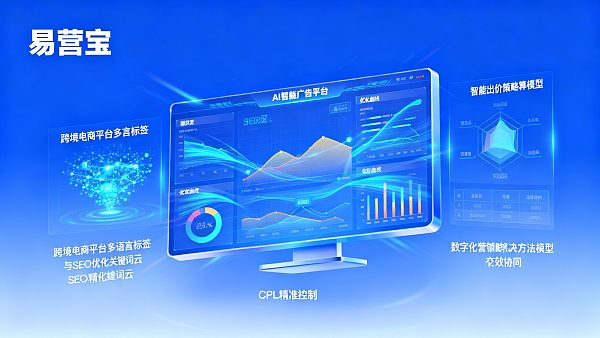
Achieving long-term equilibrium in "exposure + low CPL" requires parallel efforts across technical backends, global traffic ecosystems, and localized services. Technologically, continuously updated AI algorithms and big data capabilities enable predictive delivery and automated creative generation; global traffic ecosystems (including partnerships with search engines and social platforms) ensure diversified traffic sources; localized services guarantee compliance and cultural fit in target markets. For businesses looking to expand cross-border e-commerce platforms and global markets, choosing end-to-end digital marketing solutions—from AI-powered website building and marketing engines to AI ad management—maximizes ROI while reducing management complexity.
When selecting vendors, prioritize partners with technical patents, global CDN, and compliance capabilities, ensuring stable ad delivery and data security while improving website acceleration and performance optimization. Standardized services and industry solutions (e.g., specialized templates for manufacturing, equipment, or B2B scenarios) can significantly shorten launch cycles, enhancing product display effectiveness and user search efficiency to drive global growth.
In summary, by optimizing account structures and audience segmentation, adopting smart bidding and budget strategies, automating creative and multilingual assets, establishing data-driven A/B testing systems, and selecting technically advantaged partners, businesses can achieve the dual goals of increasing exposure and controlling CPL on AI-powered advertising platforms. YINGBAO, with its AI-driven all-in-one smart marketing platform at its core, combines global ecosystems and localized services to provide digital marketing solutions covering AI website building, website acceleration and performance optimization, social media automation, and AI ad management, helping brands achieve measurable growth in cross-border e-commerce operations and promotions.
To learn more about integrating AI-powered advertising platforms with your global market SEO optimization strategies, or to access industry landing solutions and technical demos, contact us immediately for customized implementation paths and ROI estimates. Contact us now to explore more solutions and apply for a trial.
- Website Builder Platform
- Google Ads
- Yiyingbao
- SEO
- SEO Optimization
- Smart Website Development
- AI Marketing Engine
- Social Media Automation
- Global Traffic Ecosystem
- cross-border e-commerce
- Use AI to enhance brand voice and exposure
- AI Website Acceleration Technology Enhances User Experience
- Global Market SEO Optimization Strategies
- SaaS Website Platform
- Cross-border e-commerce platform
- Multilingual Marketing System
- AI Smart Advertising Platform
- Digital Marketing Solutions
- Website Acceleration and Performance Optimization
- Cross-border e-commerce operation and promotion
Related Articles
 45 cities accelerate cross-border trade facilitation, AI bill of lading recognition speeds up local settlement
 How long does it take to develop a B2C cross-border e-commerce store? Break down the scope of features and timeline
 How to make website data analysis useful? Traffic sources, conversion paths, and abnormal metrics breakdown



Related Products
 EasyCamp SaaS Smart Website Marketing SystemE-Yingbao SaaS Smart Website Marketing System: AI-powered, zero-code website building. Rapidly launch multilingual independent e-commerce sites in just 10 minutes. Global server acceleration and AI-driven SEO optimization empower businesses to efficiently connect with global markets. The seamless integration of technology and user-friendly operation makes building e-commerce sites incredibly simple.
 AI+SEM Intelligent Advertising Marketing SystemAI+SEM drives intelligent ad creation, empowering full-funnel precision advertising marketing. The system automatically generates weekly/monthly reports, AI recommends keywords and target countries, monitors core metrics in real-time with intelligent alerts, and enables one-click high-conversion ad solutions to help quickly acquire customers and improve ROI.
 AI+SEO Dual Engine Optimization ServiceEasyWin AI+SEO Dual Engine Optimization System leverages AI-powered keyword mining, content generation, and comprehensive technical optimization to help foreign trade enterprises acquire high-quality organic traffic, significantly improving search rankings and conversion rates.
 AI+SNS Social Media Marketing SystemYingbao AI+SNS Social Media Marketing System - Precision social capture for the social media era. Supports one-click content synchronization across major platforms like Facebook and LinkedIn. AI intelligently rewrites posts for enhanced relevance. 24/7 AI customer service and user profiling analysis empower businesses to efficiently expand into global markets.
 AI+SEO营销解决方案易营宝AI+SEO营销解决方案,通过AI批量写作、智能生成TDK、精准关键词扩词等功能,全面优化网站SEO效果,提升流量与转化率。助力企业构建高效智能网站新生态。
 AI+SEM Advertising Marketing SolutionsAI+SEM Advertising Marketing Solution leverages AI technology to deeply empower SEM ad campaigns. It automatically generates weekly/monthly reports using AI, presenting account data across multiple dimensions for comprehensive insights into campaign performance and trends. The system precisely recommends keywords and target countries, intelligently generates high-conversion ad copy, and enables one-click activation of efficient campaign plans to help businesses rapidly acquire customers. Simultaneously, it monitors core metrics in real time, intelligently identifies abnormal fluctuations, and issues timely alerts to ensure stable, high-return advertising results.
 Domain Name ServicesEasyWin provides professional domain name services, including intelligent queries, one-stop registration, brand protection, and full lifecycle management, helping businesses build a digital brand image.
 EasyOperate B2C Cross-Border E-Commerce Platform & Independent WebsiteEasyStore B2C Cross-border E-commerce Independent Store is an intelligent website building and cross-border e-commerce integrated solution independently developed by EasyStore Information Technology (Beijing) Co., Ltd. The system is specially designed for small and medium-sized as well as large export enterprises, integrating 'website building, operation, marketing, advertising, and conversion' into one, helping enterprises quickly establish cross-border e-commerce independent stores to achieve brand globalization and global sales growth.
The platform supports multiple languages, multiple currencies, and multi-channel marketing, with built-in AI intelligent translation and SEO optimization systems, suitable for mainstream markets such as Southeast Asia, Europe and America, Latin America, and the Middle East, assisting Chinese manufacturing enterprises in efficiently deploying international e-commerce strategies. SSL证书易营宝提供专业SSL安全证书服务,包括单域名和泛域名证书,确保网站数据传输加密、身份验证和完整性保护,助力企业建立安全可信的在线业务环境。









