









- Which channel has the highest ROI in the global traffic ecosystem? Comparative analysis of search, social media, and advertisingJul 10, 2026View details
- What multilingual website services are available in Sanya? Which model is more suitable for local businesses going global?Jul 08, 2026View details
- How to view the complete list of China SaaS companies in the top 100? Practical methods for screening website-building and marketing service providersJul 08, 2026View details
- How to view pricing in the global traffic ecosystem? Cost comparison of search, social media, and content channel advertisingJul 06, 2026View details
- How to assess foreign trade website development trends?Looking at 2026 changes from multilingual,AI content to conversion pathsJul 04, 2026View details
- What are the new trends in multilingual marketing data analytics tools in 2026? Focus on attribution、automation and complianceJul 04, 2026View details
- Is Brand Globalization Marketing Consulting Worth Buying? At What Stage Should Companies Bring It InJul 01, 2026View details
- Cross-Border Marketing Trend Research: Why More and More Companies Are Starting to Deploy AI Search and GEO OptimizationJun 30, 2026View details
Frequent errors in professional terminology output from AI translation software? Medical/legal websites should use general models with caution
Are AI translation tools frequently making technical terminology errors in the localization of medical and legal websites? Exercise caution when using generic models for direct translation! As a professional search engine optimization company, EasyWin offers multilingual website development and Google SEO services integrated with AI translation APIs, ensuring both accuracy and compliance.
Why Do Generic AI Translations Often "Miss the Mark" in Specialized Fields?
Currently, 78% of overseas enterprises rely on generic large models (such as GPT and Claude) for initial translations of multilingual website content. However, real-world data reveals that in medical web pages, approximately 42% of clinical terms (e.g., "neoadjuvant chemotherapy" mistranslated as "preoperative chemotherapy" instead of the standard "neoadjuvant chemotherapy") exhibit semantic deviations. In legal pages, 39% of key contract clauses (e.g., "force majeure" directly translated as "strong force event" instead of "act of God") trigger compliance review risks with local regulatory bodies.
The root issue lies in biased training data—mainstream models contain only 0.7% medical literature and less than 0.3% legal texts in their Chinese corpora. Truly compliant industry terminology databases must cover 12 categories of mandatory standards, including the "Drug Administration Law of the People's Republic of China" and the "Civil Code," while synchronizing updates with the latest definitions from international bodies like the FDA, EMA, and UNCITRAL.
More critically, generic models lack contextual anchoring capabilities. For instance, "bank" is translated as "financial institution" in finance, "riverbank" in hydraulic engineering, and could mean "tissue bank" in medical device manuals. Untuned models cannot automatically recognize these domain-specific semantic shifts, leading to fragmented technical terminology.
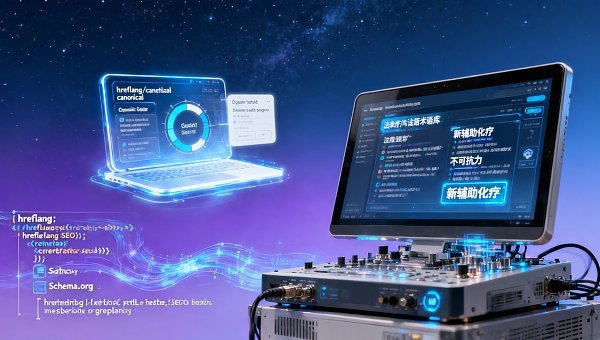
This comparison validates that professional localization is not mere language conversion but a systematic engineering process integrating terminology management, regulatory adaptation, and SEO architecture. EasyWin has delivered customized solutions for 32 tier-3 hospital portals and 17 international law firms, reducing manual proofreading labor by 67% on average while increasing organic Google traffic by 41%.
How to Construct Secure and Reliable Multilingual Websites?
True professional-grade localization requires a "three-tier protection mechanism": Tier 1 involves terminology control—integrating 11 authoritative sources like the NMPA's "Medical Device Terminology Dictionary" and the Ministry of Justice's "Legal Terminology Standards"; Tier 2 employs contextual awareness—using BERT+BiLSTM hybrid models to identify semantic roles in paragraphs (e.g., "consent" in informed consent forms must be translated as "express consent" rather than simply "agreement"); Tier 3 implements post-translation compliance verification—automatically cross-checking against GDPR Article 13, China's "Personal Information Protection Law" Article 17, and other regulatory requirements.
In terms of implementation cycles, standard medical websites require 7-12 working days for multilingual deployment: 2 days for terminology configuration, 4 days for content translation and SEO restructuring, and 3 days for compliance audits and A/B testing. This is 2.3 times faster than traditional outsourcing models, with deliverables including traceable terminology change logs and SEO metadata reports.
Notably, cross-domain knowledge transfer technologies validated in highway maintenance financial optimization research have been repurposed for legal document translation engines, improving accuracy in identifying contract breach clauses to 94.7%.
Five Hard Metrics for Vendor Selection
Enterprise decision-makers should prioritize the following parameters when procuring multilingual website services:
- ISO/IEC 17100:2015 certified translation processes (only 12 domestic companies hold this accreditation)
- Terminology update frequency: Medical categories require ≤72-hour response to NMPA updates; legal categories need ≤48-hour synchronization with Supreme People's Court interpretations
- SEO compatibility: Support for automatic hreflang tag deployment, Schema.org structured data embedding, and mobile-friendly semantic URL generation
- Audit trail capability: Providing original terminology sources per sentence, modification records, and compliance reference numbering
- Emergency response: Full-site sensitive term replacement and Google reindexing within 2 hours upon regulatory notifications
EasyWin services have passed all validations, with its intelligent website system embedding 217 medical vertical templates and 143 legal practice modules, supporting one-click generation of disease introduction pages compliant with WHO ICD-11 coding standards.
Common Pitfalls and Risk Mitigation Guide
Pitfall 1: Assuming "machine translation + human polishing" suffices—empirical data shows 63% probability of error propagation when source texts contain ambiguities. The correct workflow is "terminology locking → machine pre-translation → contextual validation → human final review."
Pitfall 2: Ignoring search intent disparities—English users searching "clinical trial" emphasize experimental design, while Chinese users focus on participation criteria. Requires building bilingual semantic networks rather than simple translational equivalence.
Risk alert: A cross-border medical platform faced €2.1M fines for translating "off-label use" literally without adding "unapproved" warnings as required by the "Drug Administration Law," demonstrating that professional localization is fundamentally a risk preemption system.
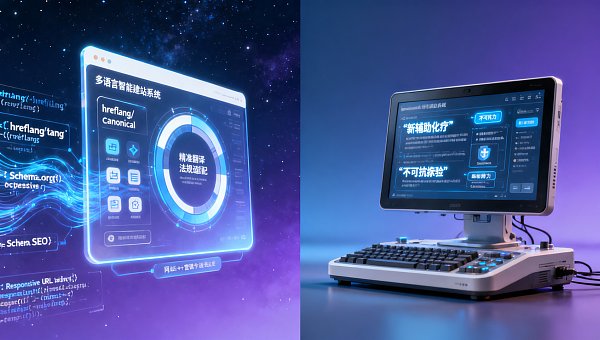
This table quantifies professional service delivery benchmarks. Having served 100,000+ enterprises with an 89.4% 2023 client retention rate, EasyWin demonstrates reliable performance across precision, compliance, and SEO effectiveness.
Launch Your Professional Localization Upgrade Now
Medical and legal websites are not just information portals but trust carriers and compliance safeguards. Each terminology error may trigger regulatory inquiries, user complaints, or legal disputes. Leveraging a decade of AI+marketing expertise, EasyWin offers full-chain solutions covering smart website development, SEO optimization, social media dissemination, and ad placement. Our free multilingual website health diagnostics assess terminology accuracy, SEO structural gaps, and regulatory risks.
If you're planning overseas medical device portals, cross-border legal platforms, or multilingual government projects, contact EasyWin's expert consultants for customized multilingual development strategies and Google SEO recommendations.
Related Articles
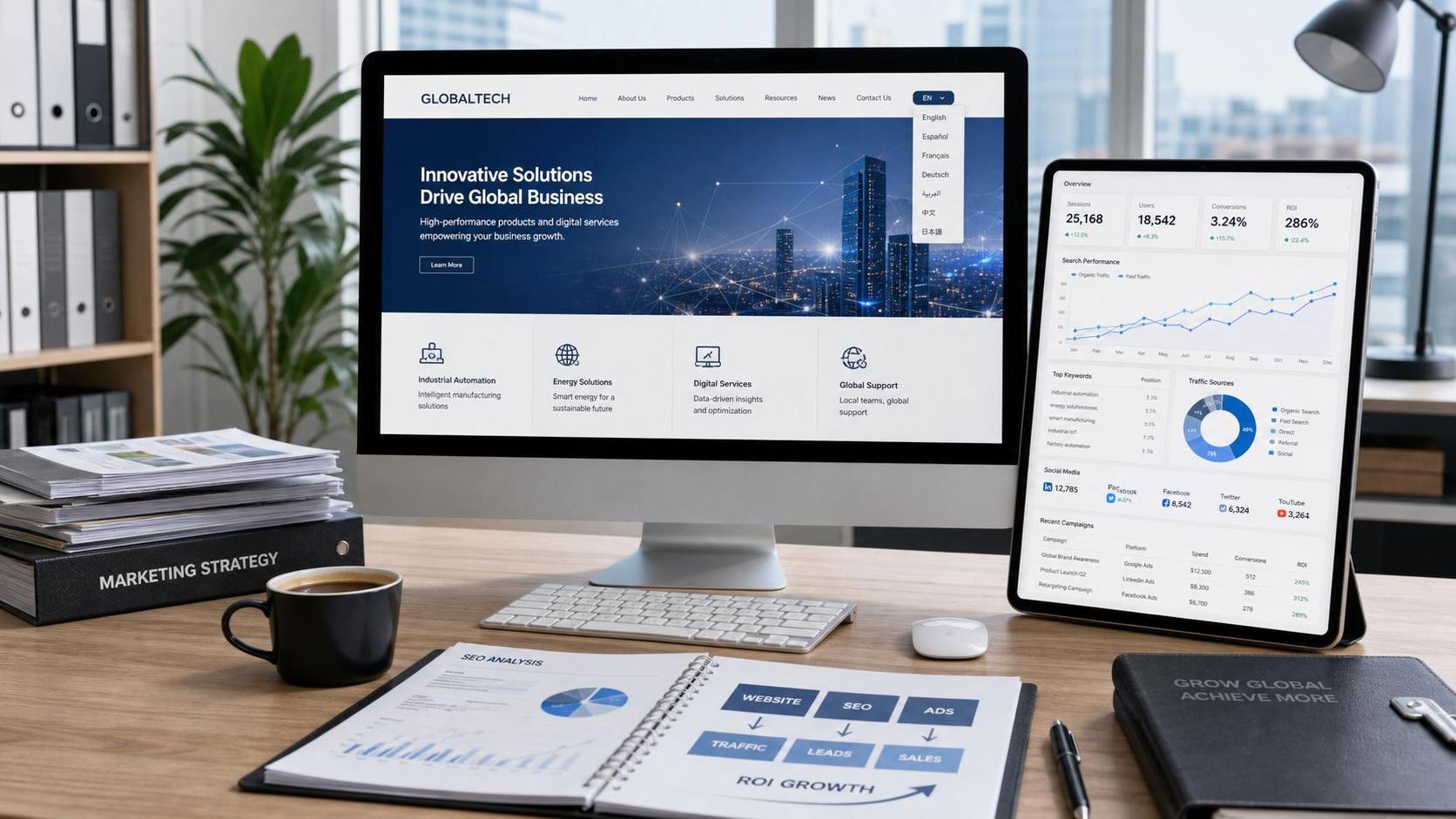
 Which channel has the highest ROI in the global traffic ecosystem? Comparative analysis of search, social media, and advertising
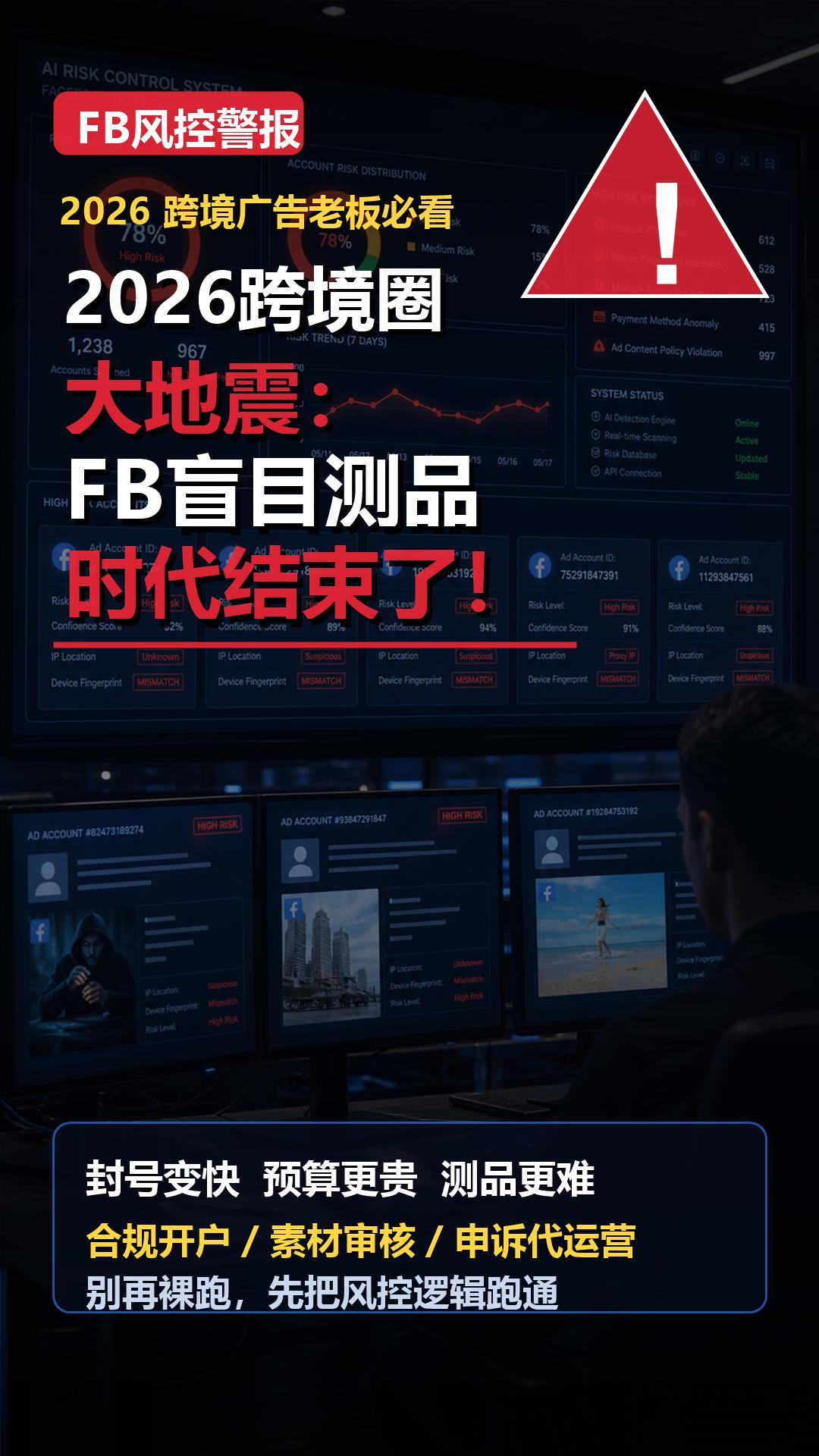
 The Era of Cross-Border Earthquakes in 2026: The Era of Blindly Testing FB Products Has Ended!
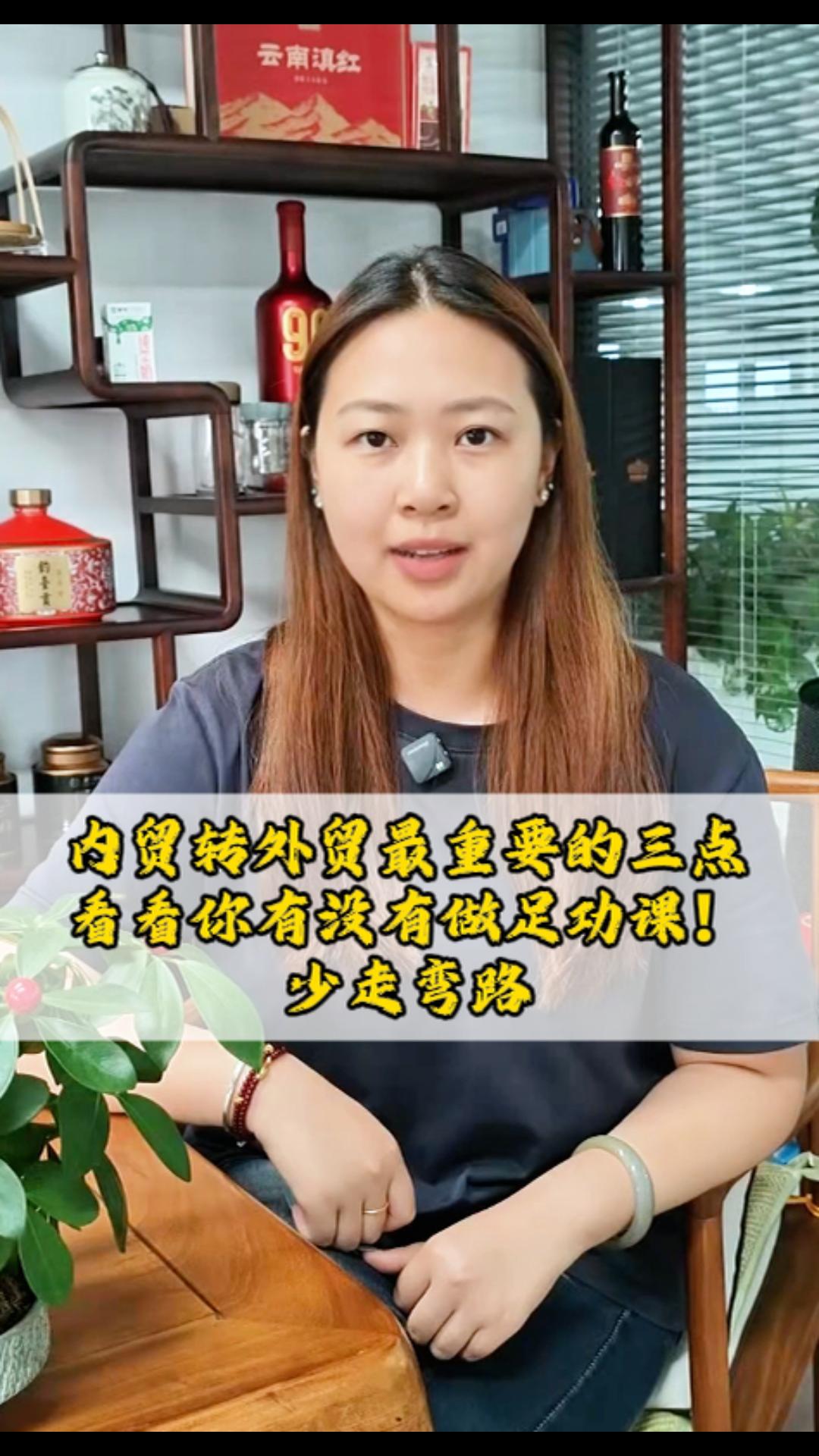
 Three key points of domestic-to-foreign trade most important, see if you really did your homework! Don’t take shortcuts.
Related Products
 EasyCamp SaaS Smart Website Marketing SystemE-Yingbao SaaS Smart Website Marketing System: AI-powered, zero-code website building. Rapidly launch multilingual independent e-commerce sites in just 10 minutes. Global server acceleration and AI-driven SEO optimization empower businesses to efficiently connect with global markets. The seamless integration of technology and user-friendly operation makes building e-commerce sites incredibly simple.
 AI+SEM Intelligent Advertising Marketing SystemAI+SEM drives intelligent ad creation, empowering full-funnel precision advertising marketing. The system automatically generates weekly/monthly reports, AI recommends keywords and target countries, monitors core metrics in real-time with intelligent alerts, and enables one-click high-conversion ad solutions to help quickly acquire customers and improve ROI.
 AI+SEO Dual Engine Optimization ServiceEasyWin AI+SEO Dual Engine Optimization System leverages AI-powered keyword mining, content generation, and comprehensive technical optimization to help foreign trade enterprises acquire high-quality organic traffic, significantly improving search rankings and conversion rates.
 AI+SNS Social Media Marketing SystemYingbao AI+SNS Social Media Marketing System - Precision social capture for the social media era. Supports one-click content synchronization across major platforms like Facebook and LinkedIn. AI intelligently rewrites posts for enhanced relevance. 24/7 AI customer service and user profiling analysis empower businesses to efficiently expand into global markets.
 AI+SEO营销解决方案易营宝AI+SEO营销解决方案,通过AI批量写作、智能生成TDK、精准关键词扩词等功能,全面优化网站SEO效果,提升流量与转化率。助力企业构建高效智能网站新生态。
 AI+SEM Advertising Marketing SolutionsAI+SEM Advertising Marketing Solution leverages AI technology to deeply empower SEM ad campaigns. It automatically generates weekly/monthly reports using AI, presenting account data across multiple dimensions for comprehensive insights into campaign performance and trends. The system precisely recommends keywords and target countries, intelligently generates high-conversion ad copy, and enables one-click activation of efficient campaign plans to help businesses rapidly acquire customers. Simultaneously, it monitors core metrics in real time, intelligently identifies abnormal fluctuations, and issues timely alerts to ensure stable, high-return advertising results.
 Domain Name ServicesEasyWin provides professional domain name services, including intelligent queries, one-stop registration, brand protection, and full lifecycle management, helping businesses build a digital brand image.
 EasyOperate B2C Cross-Border E-Commerce Platform & Independent WebsiteEasyStore B2C Cross-border E-commerce Independent Store is an intelligent website building and cross-border e-commerce integrated solution independently developed by EasyStore Information Technology (Beijing) Co., Ltd. The system is specially designed for small and medium-sized as well as large export enterprises, integrating 'website building, operation, marketing, advertising, and conversion' into one, helping enterprises quickly establish cross-border e-commerce independent stores to achieve brand globalization and global sales growth.
The platform supports multiple languages, multiple currencies, and multi-channel marketing, with built-in AI intelligent translation and SEO optimization systems, suitable for mainstream markets such as Southeast Asia, Europe and America, Latin America, and the Middle East, assisting Chinese manufacturing enterprises in efficiently deploying international e-commerce strategies. SSL证书易营宝提供专业SSL安全证书服务,包括单域名和泛域名证书,确保网站数据传输加密、身份验证和完整性保护,助力企业建立安全可信的在线业务环境。









