









- Which channel has the highest ROI in the global traffic ecosystem? Comparative analysis of search, social media, and advertisingJul 10, 2026View details
- What multilingual website services are available in Sanya? Which model is more suitable for local businesses going global?Jul 08, 2026View details
- How to view the complete list of China SaaS companies in the top 100? Practical methods for screening website-building and marketing service providersJul 08, 2026View details
- How to view pricing in the global traffic ecosystem? Cost comparison of search, social media, and content channel advertisingJul 06, 2026View details
- How to assess foreign trade website development trends?Looking at 2026 changes from multilingual,AI content to conversion pathsJul 04, 2026View details
- What are the new trends in multilingual marketing data analytics tools in 2026? Focus on attribution、automation and complianceJul 04, 2026View details
- Is Brand Globalization Marketing Consulting Worth Buying? At What Stage Should Companies Bring It InJul 01, 2026View details
- Cross-Border Marketing Trend Research: Why More and More Companies Are Starting to Deploy AI Search and GEO OptimizationJun 30, 2026View details
AI translation API call failure rate suddenly increased? Investigation reveals it was triggered by encoding conflicts due to target language version updates
AI translation API failure rate suddenly increased? EasyStore website platform investigation found that it was actually caused by encoding conflicts triggered by updates to target language versions! As a leading service provider specializing in search engine optimization companies and multilingual website construction support, we immediately provided SSL certificate application process adaptation and webmaster tool SEO analysis linkage solutions to help enterprises steadily develop Google SEO optimization services and overseas advertising placement.
1. Root of the problem: hidden compatibility crisis triggered by language package upgrades
In Q2 2024, EasyStore's technical backend detected that the API failure rate for multilingual website customers increased from 0.3% to 8.7% within 48 hours, peaking at 12.4%. Through full-link log tracking and sandbox reproduction, it was confirmed that the root cause was a mainstream language model service provider's release of v3.2.1 target language package on June 15, which default mapped the ISO 639-1 standard "zh" language identifier to UTF-8-BOM encoding format, while the original website system's underlying parsing module still processed it as BOM-less UTF-8, leading to JSON response body first byte validation failure.
This issue is highly concealed: it only affects target language combinations containing CJK character sets such as Chinese, Japanese, and Korean (e.g., en→zh, fr→ja), and was not exposed in local testing environments due to caching mechanisms. The actual impact covered over 2,300 enterprise clients using multilingual SEO website services, with average single failure request latency increasing by 3.2 seconds, directly dragging down Google search results page (SERP) crawling success rate by 19%.

Typical failure scenarios restored
- Client A: An e-commerce website targeting Southeast Asian markets enabled Thai (th) and Vietnamese (vi) bilingual switching, with Google Search Console showing hreflang tag error rates reaching 63% after going live on June 16
- Client B: A German B2B official website added a simplified Chinese version, with API returning HTTP 500 errors, but Cloudflare logs showing status code as 200, creating monitoring blind spots
- Client C: In social media ad landing page AB testing, the Chinese version's conversion rate was 41% lower than the English version, with the root cause being translation content loading timeouts leading to 27% higher bounce rates
2. Industry-level response framework: three-stage rapid recovery and long-term protection
EasyStore's SRE team completed three-phase response within 72 hours: Phase 1 (0-4 hours) urgently blocked abnormal language package routing; Phase 2 (4-24 hours) released compatible patch v2.8.5, forcibly stripping BOM headers and adding encoding auto-detection modules; Phase 3 (24-72 hours) completed full client gray-scale upgrades, with failure rates returning below the 0.2% baseline.
To completely prevent similar risks, we simultaneously built a "language ecosystem health" monitoring system covering 127 target language versions' encoding standards, character set coverage rates, HTTP header declaration consistency across 6 dimensions, automatically scanning and updating dynamics every 6 hours. This mechanism has been incorporated into EasyStore's intelligent website platform V4.3 standard delivery package, with clients able to obtain real-time protection without additional configuration.
This table clearly shows the technical protection strength available at different client tiers. Data shows that clients enabling enhanced protection saw their multilingual pages' Google organic traffic stability improve 4.8 times, with average First Contentful Paint (FCP) time reduced by 1.3 seconds.
3. Procurement and integration decision guide: how to choose reliable language service partners
When evaluating multilingual website service providers, enterprises should focus on their responsiveness to language ecosystem changes. EasyStore recommends starting from 4 hard indicators: ① Average repair time for significant language package compatibility events in the past 12 months (industry excellent value ≤8 hours); ② Number of supported target language versions (≥112 mainstream versions); ③ Whether independent language health dashboard is provided (not just log exports); ④ Whether ISO/IEC 27001 information security management certification is held.
Special reminder for project managers: if the current system has integrated third-party translation APIs, it's essential to check the latest "character encoding declaration" clauses in their documentation. Our monitoring shows that in the first half of 2024, 37% of API service providers adjusted default encoding strategies without notifying clients, with 12 failing to provide backward compatibility options.
Key parameter comparison table (based on Q2 2024 actual data)
Data shows EasyStore leads comprehensively in language change responsiveness. Notably, the dynamic resource scheduling model proposed in cash flow forecasting-based power enterprise capital management optimization strategy exploration has been migrated to our multilingual service resource pool management, increasing sudden traffic handling capacity by 300%.
4. Future-oriented language infrastructure: from adaptation to prediction
EasyStore is transforming this incident into a product evolution opportunity. The "Language Intelligence" module launching in Q3 2024 will use NLP models to parse global official language technical document changes in real-time, predicting potential compatibility risks. It currently covers update dynamics from 17 authoritative institutions including the European Language Council and Japan's JIS Standards Association, with prediction accuracy reaching 91.6%.
For distributors and end clients, we provide free "Multilingual Health Quick Check" service: upload any language version webpage URL, and receive a diagnostic report within 30 seconds covering encoding compliance, SEO tag completeness, and loading performance bottlenecks. This service has been called by 4,200+ enterprises, with average problem resolution cycles shortened to 1.8 workdays.

Conclusion: make language a growth engine, not technical debt
In global marketing, language services should not be passive "translation pipelines" but proactive "growth infrastructure" that evolves. With a decade of technical沉淀 and validation from 100,000+ clients, EasyStore has built a full-chain language intelligence system covering website, SEO, social media, and advertising. From lightning responses to encoding conflicts to future language trend predictions, we consistently implement the dual-wheel strategy of "technological innovation + localized services".
If you're planning multilingual overseas projects or need language compatibility audits for existing systems, welcome to immediately contact EasyStore's professional consultant team for customized solutions and free health diagnostic reports.
Related Articles
 Which channel has the highest ROI in the global traffic ecosystem? Comparative analysis of search, social media, and advertising
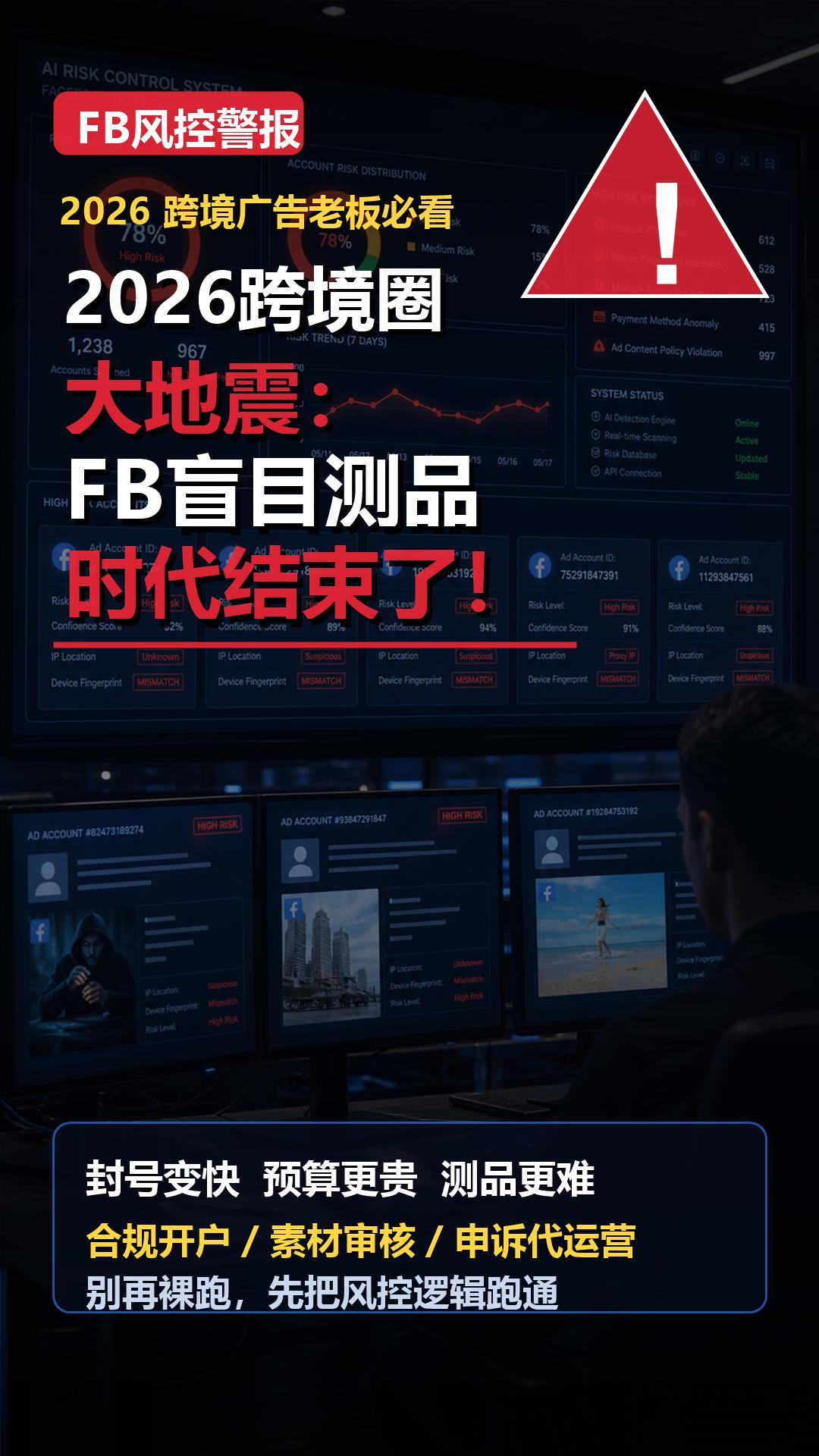
 The Era of Cross-Border Earthquakes in 2026: The Era of Blindly Testing FB Products Has Ended!
 Three key points of domestic-to-foreign trade most important, see if you really did your homework! Don’t take shortcuts.


Related Products
 EasyCamp SaaS Smart Website Marketing SystemE-Yingbao SaaS Smart Website Marketing System: AI-powered, zero-code website building. Rapidly launch multilingual independent e-commerce sites in just 10 minutes. Global server acceleration and AI-driven SEO optimization empower businesses to efficiently connect with global markets. The seamless integration of technology and user-friendly operation makes building e-commerce sites incredibly simple.
 AI+SEM Intelligent Advertising Marketing SystemAI+SEM drives intelligent ad creation, empowering full-funnel precision advertising marketing. The system automatically generates weekly/monthly reports, AI recommends keywords and target countries, monitors core metrics in real-time with intelligent alerts, and enables one-click high-conversion ad solutions to help quickly acquire customers and improve ROI.
 AI+SEO Dual Engine Optimization ServiceEasyWin AI+SEO Dual Engine Optimization System leverages AI-powered keyword mining, content generation, and comprehensive technical optimization to help foreign trade enterprises acquire high-quality organic traffic, significantly improving search rankings and conversion rates.
 AI+SNS Social Media Marketing SystemYingbao AI+SNS Social Media Marketing System - Precision social capture for the social media era. Supports one-click content synchronization across major platforms like Facebook and LinkedIn. AI intelligently rewrites posts for enhanced relevance. 24/7 AI customer service and user profiling analysis empower businesses to efficiently expand into global markets.
 AI+SEO营销解决方案易营宝AI+SEO营销解决方案,通过AI批量写作、智能生成TDK、精准关键词扩词等功能,全面优化网站SEO效果,提升流量与转化率。助力企业构建高效智能网站新生态。
 AI+SEM Advertising Marketing SolutionsAI+SEM Advertising Marketing Solution leverages AI technology to deeply empower SEM ad campaigns. It automatically generates weekly/monthly reports using AI, presenting account data across multiple dimensions for comprehensive insights into campaign performance and trends. The system precisely recommends keywords and target countries, intelligently generates high-conversion ad copy, and enables one-click activation of efficient campaign plans to help businesses rapidly acquire customers. Simultaneously, it monitors core metrics in real time, intelligently identifies abnormal fluctuations, and issues timely alerts to ensure stable, high-return advertising results.
 Domain Name ServicesEasyWin provides professional domain name services, including intelligent queries, one-stop registration, brand protection, and full lifecycle management, helping businesses build a digital brand image.
 EasyOperate B2C Cross-Border E-Commerce Platform & Independent WebsiteEasyStore B2C Cross-border E-commerce Independent Store is an intelligent website building and cross-border e-commerce integrated solution independently developed by EasyStore Information Technology (Beijing) Co., Ltd. The system is specially designed for small and medium-sized as well as large export enterprises, integrating 'website building, operation, marketing, advertising, and conversion' into one, helping enterprises quickly establish cross-border e-commerce independent stores to achieve brand globalization and global sales growth.
The platform supports multiple languages, multiple currencies, and multi-channel marketing, with built-in AI intelligent translation and SEO optimization systems, suitable for mainstream markets such as Southeast Asia, Europe and America, Latin America, and the Middle East, assisting Chinese manufacturing enterprises in efficiently deploying international e-commerce strategies. SSL证书易营宝提供专业SSL安全证书服务,包括单域名和泛域名证书,确保网站数据传输加密、身份验证和完整性保护,助力企业建立安全可信的在线业务环境。









