









- What New Signals Are Emerging in Enterprise Services SaaS Marketing ReportsJul 27, 2026View details
- What Does a Global Traffic Ecosystem Service Provider Do? What Are the Differences from a Single Advertising AgencyJul 16, 2026View details
- What should you focus on in the latest enterprise SaaS report? From renewal rates and delivery costs to overseas growth opportunitiesJul 12, 2026View details
- What signals are worth paying attention to in a cross-border marketing trend report? B2B companies should look at these 6 signalsJul 11, 2026View details
- How to Read a Cross-Border Marketing Trends Report? Five Key Dimensions for Evaluating Channel OpportunitiesJul 11, 2026View details
- Which channel has the highest ROI in the global traffic ecosystem? Comparative analysis of search, social media, and advertisingJul 10, 2026View details
- What multilingual website services are available in Sanya? Which model is more suitable for local businesses going global?Jul 08, 2026View details
- How to view the complete list of China SaaS companies in the top 100? Practical methods for screening website-building and marketing service providersJul 08, 2026View details
What customer acquisition scenarios are suitable for AI+SNS marketing tools
AI+SNS marketing tools are not a one-size-fits-all solution for “every business, every channel, and every goal,” but they are highly suitable for companies that need continuous customer acquisition, improved lead quality, expanded brand reach, and optimized advertising efficiency. For businesses building an integrated strategy across website development, SEO, social media marketing, and advertising, the key is not “whether to adopt AI+SNS,” but rather “which customer acquisition scenarios it is best suited for, where it is most likely to deliver results, and how to avoid investing without getting conversions.”
Especially for decision-makers focused on international digital marketing services, brand awareness enhancement tools, and data-driven advertising optimization, whether a tool is worth investing in usually depends on three things: whether it can help find more precise target audiences, whether it can reduce manual operation costs, and whether it can make inquiries and conversions more controllable. Below, we will break down several real business scenarios where AI+SNS marketing tools are best applied for customer acquisition, and how companies should determine whether they are suitable for their own needs.
Which businesses are best suited to using AI+SNS marketing tools for customer acquisition
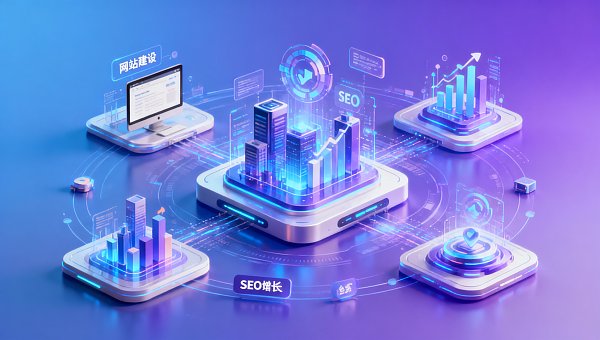
From the perspective of search intent, what users really want to know is not how many features the tool itself has, but rather “whether my business is suitable for using it” and “in what scenarios it is more likely to produce results.” Overall, AI+SNS marketing tools are more suitable for the following types of businesses:
- Businesses that need to continuously acquire new customers: such as foreign trade, manufacturing, global brand expansion, education and training, B2B service providers, etc., which rely on long-term traffic and lead accumulation.
- Businesses under pressure to operate across multiple channels: simultaneously distributing content and testing ads on platforms such as Facebook, Instagram, LinkedIn, TikTok, X, or Xiaohongshu, where manual coordination costs are high.
- Businesses with relatively long lead conversion journeys: such as high-ticket products, customized services, and enterprise-level product sales, which require content reach, repeated nurturing, and multiple interactions to complete conversions.
- Businesses hoping to improve campaign efficiency: those that have already done social media and advertising, but still face issues such as insufficient content output, inaccurate audience targeting, and unstable inquiry quality.
Simply put, if a company’s customer acquisition process includes multiple stages such as “finding people—reaching them—interacting—capturing leads—converting,” then AI+SNS marketing tools have high application value, because they can improve efficiency in content generation, user profiling, publishing timing, ad optimization, lead screening, and other stages.
The 5 customer acquisition scenarios where AI+SNS marketing tools are best applied
This is the part companies should focus on most when evaluating. In different scenarios, the value brought by AI+SNS tools is not the same.
1. New market expansion and brand cold start
When a company enters a new region, a new language market, or a new industry, the biggest challenge is not “posting content,” but not knowing what content people want to see, what topics can drive engagement, and what audiences are more likely to generate inquiries. AI tools can support topic planning, content variation generation, and initial audience testing based on historical industry data, platform trends, and competitor activity; SNS platforms are then responsible for delivering that content to potential audiences.
This scenario is especially suitable for:
- Early-stage global brand expansion
- New product launches
- Franchise and distributor recruitment promotion
- Regional agent expansion
For distributor, agent, and reseller networks, these tools can also unify externally distributed communication materials, reducing the problem of each regional market “speaking its own language.”
2. Content-driven customer acquisition and organic traffic accumulation
For many companies, the problem is not the lack of advertising budget, but the long-term lack of sustainable organic traffic sources. AI+SNS marketing tools are highly suitable for high-frequency content production scenarios, such as short copy, industry insights, case breakdowns, product highlights, FAQ responses, and event warm-up content.
Their advantage is not just “writing fast,” but also:
- Generating differentiated messaging for different audiences
- Adjusting tone, length, and structure according to platform characteristics
- Testing more frequently which content drives better engagement and clicks
For companies with integrated website + marketing needs, SNS content should not exist in isolation, but should work in coordination with official website landing pages, SEO content, and form pages, so that traffic brought by social media can truly accumulate into inquiry assets.
3. Advertising optimization and lead cost control
This is one of the application scenarios business managers care about most. Many companies encounter the following issue when running social media ads: impressions are not low and clicks are decent, but lead submissions are few, sales feedback is poor, and lead quality is unstable. The most practical value of AI here is not replacing media buyers, but helping teams complete the following tasks faster:
- Identifying the characteristics of high-converting creatives
- Analyzing engagement differences across different audience segments
- Automatically optimizing ad scheduling and budget allocation
- Detecting underperforming ad groups and stopping losses in time
- Using behavioral data to pre-qualify lead quality
If a company is already running Facebook Ads, LinkedIn Ads, or TikTok Ads, AI+SNS marketing tools usually show their value in “reducing trial-and-error costs.” They are particularly suitable for companies with limited ad budgets that still need to validate market direction as quickly as possible.
4. Direct message inquiries, comment interactions, and lead nurturing
Many companies overlook one key fact: many business opportunities do not come directly through forms, but are gradually converted from comments, direct messages, users who liked posts, and sharing interactions. The role of AI tools in social media customer service and interaction management is often underestimated.
For example:
- Automatically identifying high-intent direct messages and prioritizing alerts for sales follow-up
- Automatically generating reply suggestions for common questions
- Tagging and categorizing users based on the content of their questions
- Feeding engaged users into the follow-up remarketing pool
For after-sales support staff and operations teams, these capabilities help improve response efficiency and also help upgrade from “customer service communication” to “sales lead identification.” Especially in B2B, service industries, and high-ticket products, interaction management often determines subsequent deal opportunities.
5. Existing customer reactivation and channel relationship maintenance
AI+SNS marketing tools are not only suitable for “new customer acquisition,” but also highly effective for managing existing customers. For example, delivering industry updates, marketing materials, event notifications, and product upgrade information to existing customers, agents, and partners can improve repeat purchases, referrals, and channel activity.
If a company itself has a distributor system or agency system, then one important value of social media tools is helping headquarters achieve standardized communication while still preserving room for localization adjustments. The reason service providers like Easy Marketing that focus deeply on global digital marketing emphasize “technological innovation + localized service” is essentially because content demands vary across different markets, different channels, and different roles, and relying only on template-based distribution often makes sustainable conversion difficult.
What business decision-makers should focus on most is not how many features there are, but these 4 evaluation criteria
There are many AI+SNS marketing tools on the market, but more features do not necessarily mean a better fit. For business decision-makers, whether to invest can first be evaluated based on the following four points:
1. Whether it can connect with the current customer acquisition funnel
If a company already has an official website, landing pages, ad accounts, CRM, or sales follow-up processes, then the tool must be able to integrate naturally instead of adding a new collaboration burden. Otherwise, it can easily become a situation where “the operations team uses it, the sales team feels nothing, and management cannot see the results.”
2. Whether it can improve lead quality rather than just increase traffic
A truly effective tool should not only make impressions and clicks look better, but should also help companies identify high-intent audiences, optimize conversion paths, and filter out low-quality traffic. B2B companies in particular should focus on “opportunity quality” rather than just the number of form submissions.
3. Whether it supports localization and multilingual operations
Customer acquisition in international markets relies heavily on differences in language, culture, and platform usage habits. If a tool can only produce generic English content and cannot support multilingual and multi-region expression optimization, then its actual value will be limited.
4. Whether it has data loop and continuous optimization capabilities
Social media customer acquisition is not a one-time action, but a process of ongoing testing, review, and optimization. Companies should pay attention to whether the tool has capabilities such as cross-platform attribution, creative performance analysis, lead tracking, and remarketing support. Only by forming a closed loop does AI become more than just “assisting with content writing” and truly participate in growth decision-making.
Why many companies use tools but still see no obvious results
This is a very practical question and also a real concern many research-oriented users want answered. Usually, the reason does not lie in the tool itself, but in deviation in how it is applied:
- Treating AI as a content replacement tool: only seeking fast posting without audience insight, resulting in large amounts of homogeneous content.
- Disconnect between social media and the official website: content can attract clicks, but poor landing page follow-up naturally leads to low inquiry conversion.
- Only looking at front-end metrics: focusing on reads, likes, and follower growth, but not tracking through to lead capture, deals, and repeat purchases.
- Lack of localized operations: using the same set of materials and messaging across different markets, resulting in low engagement rates.
- No clear scenario prioritization: wanting to do branding, lead generation, and customer service automation all at once, resulting in every initiative being only superficially attempted.
Therefore, when introducing AI+SNS marketing tools, companies should first clarify one priority goal: to reduce customer acquisition cost first, to increase inquiry volume first, or to enhance brand awareness first. Different goals also mean different tool configurations and evaluation standards.
How to build a more effective AI+SNS customer acquisition path
If a company wants to truly use AI+SNS as a growth tool rather than a system that merely “looks advanced,” it can proceed along the following path:
- First clarify the core customer acquisition scenarios: new customer development, advertising optimization, content growth, direct message conversion, or channel support—choose 1–2 priority breakthroughs.
- Map out the current conversion funnel: from social media reach to official website visits, lead capture, sales follow-up, and deals, identify the breakpoints.
- Establish content and data mechanisms: not simply increasing posting frequency, but building processes for topic selection, testing, review, and optimization.
- Connect the official website and marketing system: social media traffic should flow back into the company’s own official website and lead asset pool, avoiding the inability to retain platform traffic.
- Localize operations by market: different countries, regions, and audience tags require differentiated expression.
When many companies advance digital marketing upgrades, they also pay simultaneous attention to organizational resilience and long-term growth capabilities. If this is understood from a broader operational perspective, you may further refer to Analysis of the impact of digital transformation on corporate resilience, which also offers some useful inspiration for judging the relationship between technology investment and business continuity.
Conclusion: Whether AI+SNS marketing tools are suitable depends on scenario fit and conversion follow-through
Back to the core question: which customer acquisition scenarios are AI+SNS marketing tools suitable for? The answer is that they are best suited for scenarios requiring “high-frequency reach + continuous optimization + data feedback,” such as new market expansion, content-driven customer acquisition, advertising optimization, direct message interaction conversion, and reactivation of existing customers and channels.
For business decision-makers, there is no need to be attracted by complex features first. Instead, you should first determine: whether your business needs long-term stable customer acquisition, whether there is pressure from multi-platform operations, and whether you want to improve inquiry quality and advertising efficiency. If the answer is yes, then AI+SNS marketing tools often have high application value.
The truly effective approach is not to purchase a tool in isolation, but to place it within the full chain of coordinated website development, SEO optimization, social media marketing, and advertising. Only in this way can AI be upgraded from an “efficiency tool” to a “growth tool,” bringing companies more sustainable traffic and business opportunities.
Related Articles



Related Products
 EasyCamp SaaS Smart Website Marketing SystemE-Yingbao SaaS Smart Website Marketing System: AI-powered, zero-code website building. Rapidly launch multilingual independent e-commerce sites in just 10 minutes. Global server acceleration and AI-driven SEO optimization empower businesses to efficiently connect with global markets. The seamless integration of technology and user-friendly operation makes building e-commerce sites incredibly simple.
 AI+SEM Intelligent Advertising Marketing SystemAI+SEM drives intelligent ad creation, empowering full-funnel precision advertising marketing. The system automatically generates weekly/monthly reports, AI recommends keywords and target countries, monitors core metrics in real-time with intelligent alerts, and enables one-click high-conversion ad solutions to help quickly acquire customers and improve ROI.
 AI+SEO Dual Engine Optimization ServiceEasyWin AI+SEO Dual Engine Optimization System leverages AI-powered keyword mining, content generation, and comprehensive technical optimization to help foreign trade enterprises acquire high-quality organic traffic, significantly improving search rankings and conversion rates.
 AI+SNS Social Media Marketing SystemYingbao AI+SNS Social Media Marketing System - Precision social capture for the social media era. Supports one-click content synchronization across major platforms like Facebook and LinkedIn. AI intelligently rewrites posts for enhanced relevance. 24/7 AI customer service and user profiling analysis empower businesses to efficiently expand into global markets.
 AI+SEO营销解决方案易营宝AI+SEO营销解决方案,通过AI批量写作、智能生成TDK、精准关键词扩词等功能,全面优化网站SEO效果,提升流量与转化率。助力企业构建高效智能网站新生态。
 AI+SEM Advertising Marketing SolutionsAI+SEM Advertising Marketing Solution leverages AI technology to deeply empower SEM ad campaigns. It automatically generates weekly/monthly reports using AI, presenting account data across multiple dimensions for comprehensive insights into campaign performance and trends. The system precisely recommends keywords and target countries, intelligently generates high-conversion ad copy, and enables one-click activation of efficient campaign plans to help businesses rapidly acquire customers. Simultaneously, it monitors core metrics in real time, intelligently identifies abnormal fluctuations, and issues timely alerts to ensure stable, high-return advertising results.
 Domain Name ServicesEasyWin provides professional domain name services, including intelligent queries, one-stop registration, brand protection, and full lifecycle management, helping businesses build a digital brand image.
 EasyOperate B2C Cross-Border E-Commerce Platform & Independent WebsiteEasyStore B2C Cross-border E-commerce Independent Store is an intelligent website building and cross-border e-commerce integrated solution independently developed by EasyStore Information Technology (Beijing) Co., Ltd. The system is specially designed for small and medium-sized as well as large export enterprises, integrating 'website building, operation, marketing, advertising, and conversion' into one, helping enterprises quickly establish cross-border e-commerce independent stores to achieve brand globalization and global sales growth.
The platform supports multiple languages, multiple currencies, and multi-channel marketing, with built-in AI intelligent translation and SEO optimization systems, suitable for mainstream markets such as Southeast Asia, Europe and America, Latin America, and the Middle East, assisting Chinese manufacturing enterprises in efficiently deploying international e-commerce strategies. SSL证书易营宝提供专业SSL安全证书服务,包括单域名和泛域名证书,确保网站数据传输加密、身份验证和完整性保护,助力企业建立安全可信的在线业务环境。









