- B2B Foreign Trade Website Price Comparison: Is It More Cost-Effective to Choose a Package or Custom Development?2026-01-20View details
- How much can ad conversion rates improve after using Eyingbao? What are the influencing factors?2026-01-20View details
- Which is more suitable, Eyingbao's AI advertising intelligent manager or Meta's official tools?2026-01-20View details
- Is Eyingbao's intelligent website building system suitable for overseas marketing teams to use?2026-01-20View details
- Does EasyAd's advertising performance have guarantees? How does the service mechanism work?2026-01-18View details
- Is the cost of using AI advertising smart manager high? How to calculate the budget more reasonably2026-01-18View details
- How to implement multilingual advertising optimization solutions in the general internet industry2026-01-18View details
- Is EasyAd AI Advertising Smart Manager easy to use? Is it suitable for general internet service companies?2026-01-19View details
AI Website Acceleration Technology Enhances User Experience: How Edge Computing and Intelligent Compression Significantly Reduce Bounce Rates

AI website acceleration technology significantly reduces bounce rates and achieves website speed and performance optimization through edge computing and intelligent compression, enhancing cross-border e-commerce conversion efficiency.
In cross-border e-commerce and B2B digital marketing scenarios, website performance directly correlates with traffic quality and conversion rates. Market researchers and operational users often face issues such as slow page loading, high regional latency, and bloated multilingual resources, leading to soaring bounce rates, declining SEO performance, and rising ad costs. This article focuses on the general internet services sector, combining edge computing, intelligent compression, and AI-driven resource scheduling strategies to analyze how technical solutions can achieve website acceleration and performance optimization, supporting the execution of cross-border e-commerce operations, promotions, and global SEO strategies.
How Edge Computing Reshapes Website Response: Reducing Latency and Improving Usability

Edge computing significantly reduces round-trip time (RTT) by deploying computing and caching nodes near users' geographical locations, forming the foundation for improved user experience. For cross-border e-commerce platforms, user requests no longer need to return to a single central data center but are processed at the nearest edge node for static resource caching, image, and video distribution, reducing first-screen time from seconds to milliseconds and directly lowering bounce rates. Operational data shows that every 100ms reduction in Time to First Byte (TTFB) can increase conversion rates by several percentage points, which is critical for high-traffic ad landing pages and checkout flows.
At the implementation level, it is recommended to set different caching strategies for key resources (JS, CSS, critical images), combining layered caching with intelligent origin rate limiting to reduce peak origin pressure. For enterprises using SaaS platforms or self-hosted servers, adopting global CDN nodes and load balancing strategies ensures service stability and compliance. Additionally, edge computing can integrate with AI routing to dynamically select optimal paths, enhancing availability and DDoS resilience in high-concurrency scenarios, thereby providing robust performance support for cross-border e-commerce operations and promotions.
Intelligent Compression and Content Optimization: Maximizing Performance Gains Without Compromising Experience
Intelligent compression goes beyond simply enabling GZIP or Brotli. AI-driven perceptual compression dynamically adjusts image resolution, WebP/AVIF format conversion, text compression levels, and lazy loading strategies based on page importance, user device type, and network quality. For multilingual marketing systems and multi-scenario landing pages, automatic character set recognition and differential compression can significantly reduce transmission bytes without harming readability, which is particularly crucial for right-to-left (RTL) layouts like Arabic.
In practice, combining AI image compression with CDN edge decoding can reduce image traffic by over 50% while maintaining visual quality. Prioritizing resource loading (critical resources first, secondary resources delayed) improves first-screen rendering speed and reduces perceived wait time. In digital marketing solutions, intelligent compression should also align with SEO strategies, ensuring compressed resources maintain semantic crawlability to support global SEO while balancing performance and search engine friendliness.
AI and Data-Driven Performance Monitoring: From Passive Alerts to Proactive Optimization
Traditional performance monitoring often relies on threshold alerts, which are reactive and difficult to diagnose. Proprietary AI models trained on billions of data points enable multidimensional analysis of user behavior, geography, device types, and traffic sources, proactively predicting performance risks and triggering optimization strategies. For example, when detecting abnormal increases in a region's average first-screen time, AI automatically routes traffic to closer edge nodes while enabling temporary compression and cache adjustments—all without manual intervention—minimizing bounce rates and lost conversion opportunities.
Furthermore, integrating feedback from AI ad platforms creates closed loops between post-click page load experience, conversion data, and ad performance evaluation, optimizing campaign structures and keyword bids. For cross-border e-commerce merchants, this closed-loop capability reduces customer acquisition costs and improves ad ROI, achieving synergy between ad spend and website performance.

Localization and Multilingual Support: Middle East Market Implementation Guide
Entering Middle Eastern markets or targeting Arabic users requires parallel performance optimization and localization. Right-to-left (RTL) layouts, Arabic font rendering, and local social media habits all impact page loading and interaction. We recommend adopting multilingual marketing systems with AI-powered localization to reduce redundancy and semantic inconsistencies from manual translation. Proper domain distribution and SSL strategies also affect search engine region recognition and trust.
To facilitate rapid Middle East market entry, we offer specialized technical and strategic support, including Arabic website development, RTL layouts, AI localization, and Google Ads Arabic keyword optimization. For details, refer to our Arabic Industry Website Development and Marketing Solutions, which includes free Middle East social media strategy consultations and first-year website maintenance to help businesses achieve faster traffic monetization.
Conclusion and Call to Action: Turning Technology Into Quantifiable Business Growth
In summary, AI website acceleration combining edge computing and intelligent compression fundamentally reduces bounce rates, improves load speed, and optimizes cross-border e-commerce conversion efficiency. Through AI-driven performance monitoring, smart routing, and multilingual support, enterprises can achieve sustained website acceleration and performance evolution, transforming technical advantages into SEO and ad competitiveness. As an industry leader with years of technical expertise, we provide end-to-end digital marketing solutions and SaaS platform capabilities, supporting cross-border e-commerce operations and promotions.
Contact us now for customized performance diagnostics and acceleration solutions. Learn more about website acceleration, global SEO strategies, and AI-driven brand exposure. Explore our implementation cases to help your cross-border business achieve higher traffic conversion and long-term growth.
- Website construction
- Platform
- Social Media Marketing
- Google Ads
- Keyword Optimization
- Campbell (name)
- SEO
- SEO Optimization
- AI Marketing Engine
- cross-border e-commerce
- Enhance brand voice and exposure with AI
- Global Market SEO Optimization Strategies
- SaaS Website Platform
- Cross-border e-commerce platform
- Multilingual Marketing System
- AI Advertising Platform
- Digital Marketing Solutions
- Website Acceleration and Performance Optimization
- Cross-border e-commerce operation and promotion
Related Articles
 The 'King Bomb' of the AI search era is updated! EasyStore GEO Black Tech goes live, making your website crazily favored by AI
 A Guide to Post-Build O&M for Multilingual Websites: Version Iteration, Backups, and Failure Response Processes
 Yingbao SEO Optimization Feature Upgrade: More Accurate Keyword Ranking Monitoring


Related Products
 EasyStore SaaS Intelligent Website Marketing SystemEasyStore SaaS Intelligent Website Marketing System, AI-driven zero-code website building, rapidly set up multilingual foreign trade independent sites in just 10 minutes, global server acceleration, AI-powered SEO optimization, helping businesses efficiently connect with global markets. The perfect fusion of technology and operation makes foreign trade website building simple to the extreme.
 AI+SEM Intelligent Advertising Marketing SystemAI+SEM drives intelligent campaign creation, empowering full-funnel precision advertising marketing. The system automatically generates weekly/monthly reports, AI-recommends keywords and target countries, monitors core metrics in real-time with intelligent alerts, and enables one-click high-conversion campaign launches to accelerate lead acquisition and boost ROI.
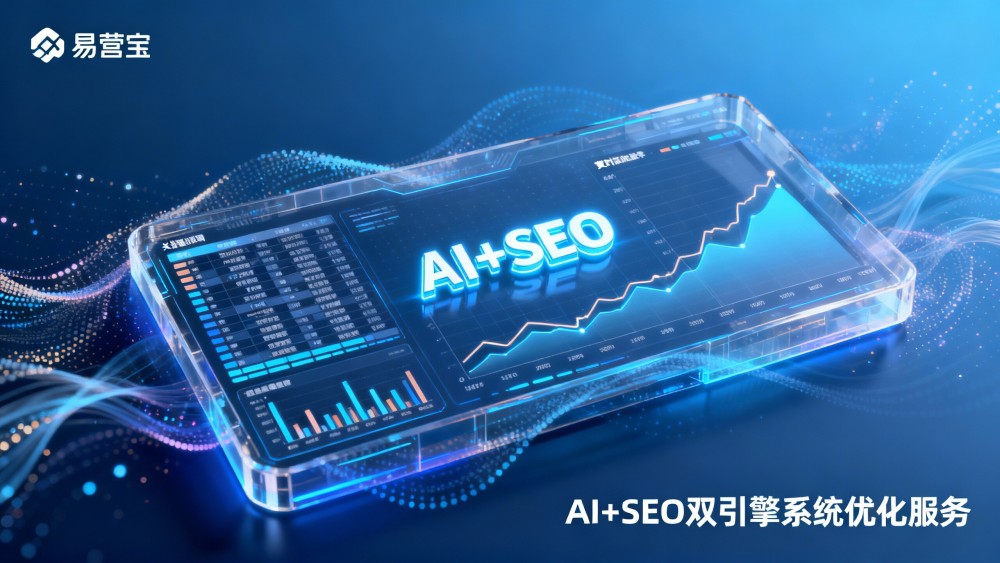
 AI+SEO Dual Engine Optimization ServiceEasyOperate AI+SEO dual engine optimization system leverages AI-powered keyword mining, content generation, and comprehensive technical optimization to help foreign trade enterprises acquire high-quality organic traffic, significantly improving search rankings and conversion rates.
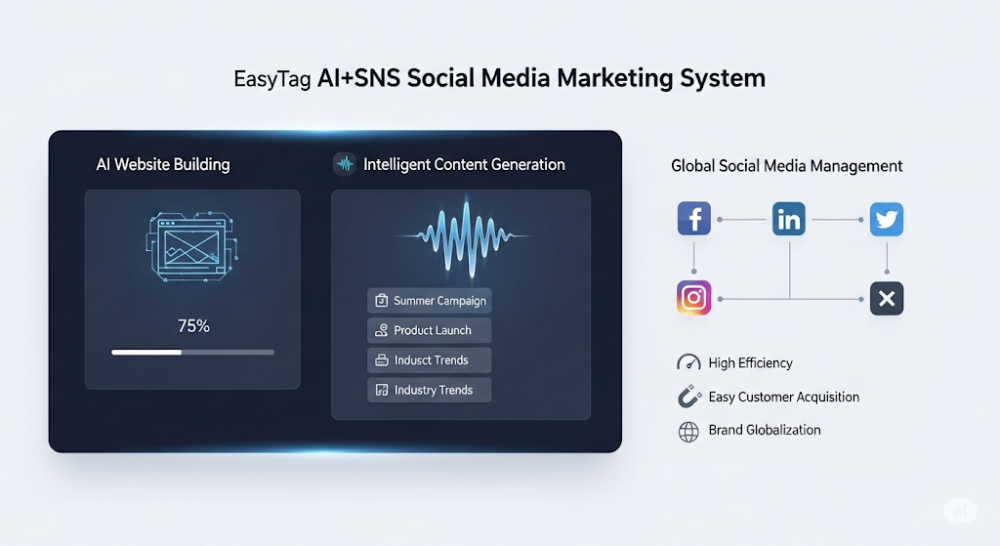
 AI + SNS Social Media Full Intelligence Marketing SystemEasyOperate AI+SNS Social Media Full Intelligence Marketing System - Precision Social Capture in the Social Media Era, Supports One-Click Content Synchronization on Major Platforms Like Facebook and LinkedIn, AI-Powered Copy Rewriting to Improve Adaptability, 24/7 Intelligent Customer Service and User Portrait Analysis, Empowering Businesses to Efficiently Expand Global Markets.
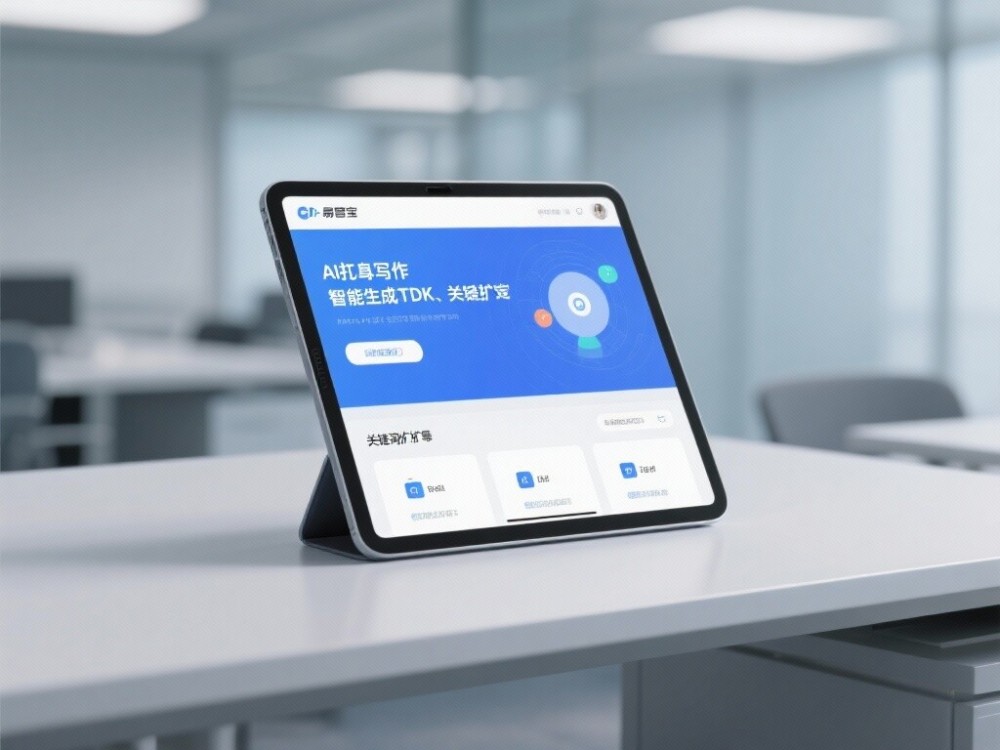
 AI+SEO Marketing SolutionEasyWin AI+SEO Marketing Solution leverages AI-powered batch content creation, intelligent TDK generation, and precise keyword expansion to comprehensively optimize website SEO performance, boosting traffic and conversion rates. Helps businesses build a highly efficient intelligent website ecosystem.
 AI+SEM Advertising & Marketing SolutionsAI+SEM advertising and marketing solution utilizes AI intelligent technology to deeply empower SEM advertising. Through AI intelligent generation of weekly/monthly reports, multi-dimensional presentation of account data, a comprehensive grasp of the effectiveness and trends of advertising, AI precise recommendation of keywords and countries, intelligent generation of high-conversion advertisement language, a key to start the efficient advertising program, helping enterprises to quickly acquire customers. At the same time, the system monitors the core indicators in real time, intelligently recognizes fluctuation abnormalities and warns them in time to ensure stable and high return of advertising effect.
 Domain Name ServicesEasy Operation provides professional domain services, including intelligent query, one-stop registration, brand protection, and full-cycle management, helping enterprises build a digital brand image.
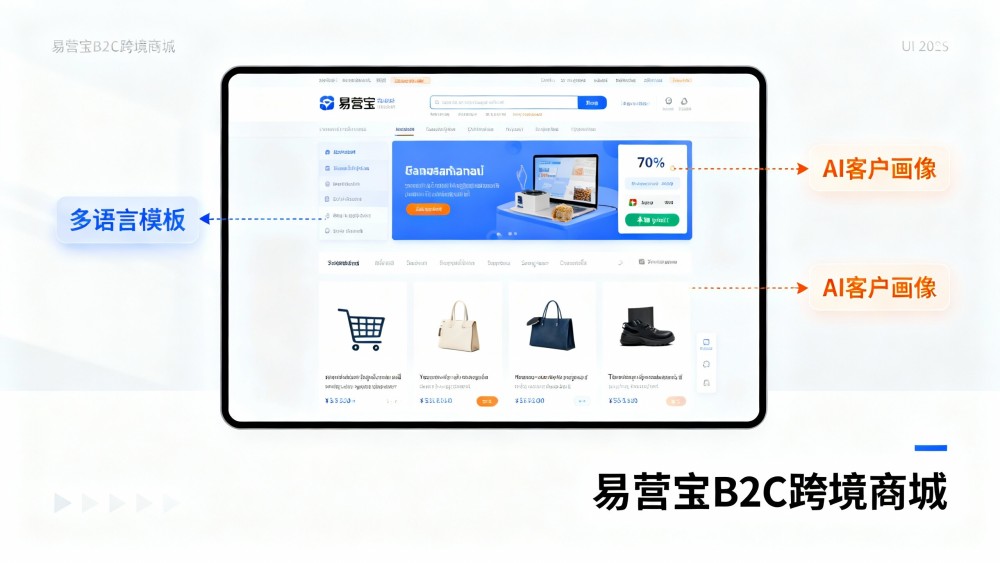
 EasyStore B2C Cross-border E-commerce Platform, Independent SiteEasyStore B2C Cross-border E-commerce Independent Store is an intelligent website building and cross-border e-commerce integrated solution independently developed by EasyStore Information Technology (Beijing) Co., Ltd. The system is specifically designed for small, medium, and large export enterprises, integrating 'website building, operation, marketing, advertising, and conversion' into one platform, helping businesses quickly establish cross-border e-commerce independent stores to achieve brand globalization and global sales growth.
The platform supports multiple languages, currencies, and multi-channel marketing, with built-in AI intelligent translation and SEO optimization systems, suitable for mainstream markets such as Southeast Asia, Europe & America, Latin America, and the Middle East, assisting Chinese manufacturing enterprises in efficiently deploying international e-commerce strategies. SSL CertificateEasyCert provides professional SSL security certificate services, including single-domain and wildcard certificates, ensuring encrypted data transmission, identity verification, and integrity protection for websites. This empowers businesses to establish secure and trustworthy online business environments.