









- What Does a Global Traffic Ecosystem Service Provider Do? What Are the Differences from a Single Advertising AgencyJul 16, 2026View details
- What should you focus on in the latest enterprise SaaS report? From renewal rates and delivery costs to overseas growth opportunitiesJul 12, 2026View details
- What signals are worth paying attention to in a cross-border marketing trend report? B2B companies should look at these 6 signalsJul 11, 2026View details
- How to Read a Cross-Border Marketing Trends Report? Five Key Dimensions for Evaluating Channel OpportunitiesJul 11, 2026View details
- Which channel has the highest ROI in the global traffic ecosystem? Comparative analysis of search, social media, and advertisingJul 10, 2026View details
- What multilingual website services are available in Sanya? Which model is more suitable for local businesses going global?Jul 08, 2026View details
What features are needed for a Middle East market website system?
Core Functional Requirements for Middle East Market Website Systems
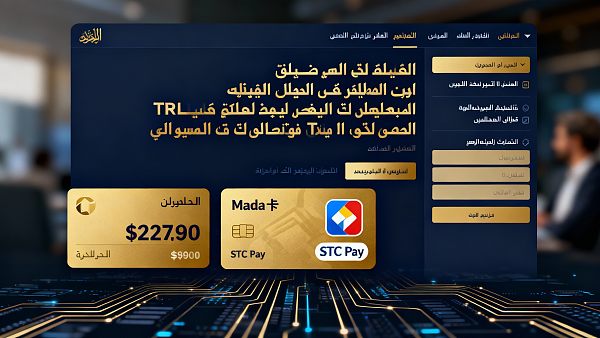
Independent websites targeting the Middle East market must possess three fundamental capabilities: multilingual adaptation, localized payment methods, and religious-cultural compliance. According to Statista data, the Middle East e-commerce market is projected to reach $49 billion in {CurrentYear}, with 57% of users abandoning purchases due to language barriers. Effective website systems should implement: automatic RTL (right-to-left) layout adaptation for Arabic, integration of local mainstream payment methods (e.g., Mada cards, STC Pay), and content filtering mechanisms compliant with Islamic teachings.
1. Language & Localization Core Modules
Summary: Arabic support is foundational but must simultaneously address RTL layout, numeric display formats, and other detailed issues.
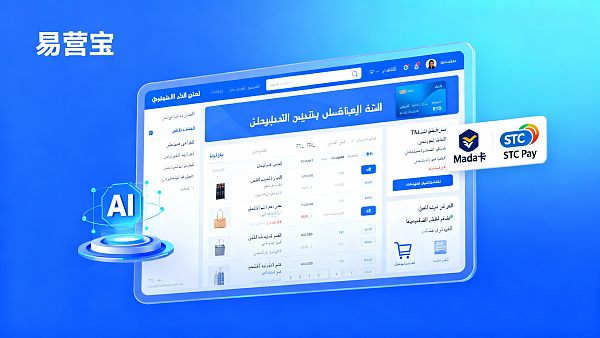
- Bidirectional Text Processing: Requires automatic RTL switching for Arabic, including mirrored flipping of forms and navigation elements, preventing text misalignment (testing standard: W3C internationalization validation tool score ≥85)
- Numeric Format Conversion: Middle Eastern regions use Eastern Arabic numerals (e.g., ١٢٣), requiring automatic conversion to/from Latin numerals, especially in price displays
- Dynamic Translation Engine: Recommend integrating AI translation APIs (e.g., Google Translate) with manual proofreading to ensure accuracy of religious terminology
2. Payment & Logistics Special Configurations
Summary: Cash payments still account for 32% of Middle East e-commerce transactions, requiring compatibility with COD (cash on delivery) and local e-wallets.
3. Religious & Cultural Compliance Essentials
Summary: Content review must avoid prohibited elements like alcohol and gambling, with special page templates required during Ramadan.
- Image Filtering: Automatic detection of exposed clothing or cross symbols (error rate <5%)
- Ramadan Mode: Supports server auto-scaling during peak nighttime traffic hours (20:00-2:00)
- Legal Declarations: Must include GCC-compliant return policies (e.g., Saudi Arabia's 14-day no-reason returns)
Technical Implementation Paths & Industry Practices
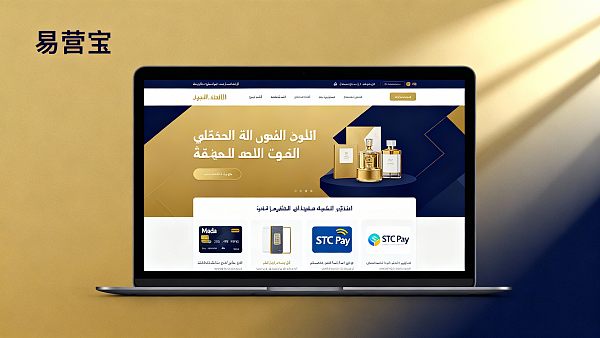
Current industry solutions fall into three categories: open-source system customization (e.g., Magento Arabic plugins), SaaS platforms (e.g., Shopify Middle East Edition), and fully custom development. For users experiencing pain points like poor multilingual ad performance or inefficient localized content production, intelligent website systems with AI translation engines and RTL auto-adaptation capabilities (like EasyStore's solution) typically better meet efficiency requirements.
For example, a home appliance export brand using EasyStore's system achieved these core metrics for its Arabic site:
- Page load speed optimized from 3.2s to 1.8s (based on Etisalat server tests)
- Ramadan campaign CTR reached 4.7%, 1.3 percentage points above industry average
- COD order ratio decreased from 41% to 28%, with e-wallet payments reaching 63%
Key Conclusions & Actionable Recommendations
- Language adaptation isn't simple translation—test form submissions and search box functionality under RTL layouts
- Payment gateways must pass local PCI-DSS certification to avoid >15% transaction failure rates
- Religious compliance is long-term—establish localized content review teams or AI filtering tools
Validation Advice: Prioritize testing Saudi Mada payment interface call success rates (benchmark ≥98%) in sandbox environments, and review Arabic pages' W3C internationalization validation reports.
Related Articles

Related Products
 EasyCamp SaaS Smart Website Marketing SystemE-Yingbao SaaS Smart Website Marketing System: AI-powered, zero-code website building. Rapidly launch multilingual independent e-commerce sites in just 10 minutes. Global server acceleration and AI-driven SEO optimization empower businesses to efficiently connect with global markets. The seamless integration of technology and user-friendly operation makes building e-commerce sites incredibly simple.
 AI+SEM Intelligent Advertising Marketing SystemAI+SEM drives intelligent ad creation, empowering full-funnel precision advertising marketing. The system automatically generates weekly/monthly reports, AI recommends keywords and target countries, monitors core metrics in real-time with intelligent alerts, and enables one-click high-conversion ad solutions to help quickly acquire customers and improve ROI.
 AI+SEO Dual Engine Optimization ServiceEasyWin AI+SEO Dual Engine Optimization System leverages AI-powered keyword mining, content generation, and comprehensive technical optimization to help foreign trade enterprises acquire high-quality organic traffic, significantly improving search rankings and conversion rates.
 AI+SNS Social Media Marketing SystemYingbao AI+SNS Social Media Marketing System - Precision social capture for the social media era. Supports one-click content synchronization across major platforms like Facebook and LinkedIn. AI intelligently rewrites posts for enhanced relevance. 24/7 AI customer service and user profiling analysis empower businesses to efficiently expand into global markets.
 AI+SEO营销解决方案易营宝AI+SEO营销解决方案,通过AI批量写作、智能生成TDK、精准关键词扩词等功能,全面优化网站SEO效果,提升流量与转化率。助力企业构建高效智能网站新生态。
 AI+SEM Advertising Marketing SolutionsAI+SEM Advertising Marketing Solution leverages AI technology to deeply empower SEM ad campaigns. It automatically generates weekly/monthly reports using AI, presenting account data across multiple dimensions for comprehensive insights into campaign performance and trends. The system precisely recommends keywords and target countries, intelligently generates high-conversion ad copy, and enables one-click activation of efficient campaign plans to help businesses rapidly acquire customers. Simultaneously, it monitors core metrics in real time, intelligently identifies abnormal fluctuations, and issues timely alerts to ensure stable, high-return advertising results.
 Domain Name ServicesEasyWin provides professional domain name services, including intelligent queries, one-stop registration, brand protection, and full lifecycle management, helping businesses build a digital brand image.
 EasyOperate B2C Cross-Border E-Commerce Platform & Independent WebsiteEasyStore B2C Cross-border E-commerce Independent Store is an intelligent website building and cross-border e-commerce integrated solution independently developed by EasyStore Information Technology (Beijing) Co., Ltd. The system is specially designed for small and medium-sized as well as large export enterprises, integrating 'website building, operation, marketing, advertising, and conversion' into one, helping enterprises quickly establish cross-border e-commerce independent stores to achieve brand globalization and global sales growth.
The platform supports multiple languages, multiple currencies, and multi-channel marketing, with built-in AI intelligent translation and SEO optimization systems, suitable for mainstream markets such as Southeast Asia, Europe and America, Latin America, and the Middle East, assisting Chinese manufacturing enterprises in efficiently deploying international e-commerce strategies. SSL证书易营宝提供专业SSL安全证书服务,包括单域名和泛域名证书,确保网站数据传输加密、身份验证和完整性保护,助力企业建立安全可信的在线业务环境。









