









- How to Choose the Most Cost-Effective Domain Registration Deals in 2026May 28, 2026View details
- What Growth Challenges Can a Digital Marketing Service Provider SolveMay 28, 2026View details
- Will GEO replace traditional SEOMay 27, 2026View details
- Is SEO Still Necessary in 2026May 27, 2026View details
- Why Shenzhen Global Digital Marketing Services Are Gaining More Attention from Export-Oriented EnterprisesMay 26, 2026View details
- Why International Digital Agencies Place Greater Emphasis on Closed-Loop Data in AdvertisingMay 26, 2026View details
- Which businesses are Guangzhou global digital marketing solutions suitable for?May 26, 2026View details
- Why International Digital Agency Data Analysis Determines Campaign Success or FailureMay 26, 2026View details
How much impact does the website acceleration solution have on Middle Eastern users in practice? Insufficient CDN node distribution leads to a 3.1-second loading time for the UAE homepage
Middle Eastern users experience a 3.1-second slow first-screen loading time? Real-world testing reveals the fatal impact of insufficient CDN node coverage on the UAE's access experience. This article provides an in-depth analysis of the actual effectiveness of site acceleration solutions in cross-border website building services and multilingual foreign trade website construction. Combining the EasyCreative AI marketing engine and enterprise-level self-service website building system, it offers practical user experience optimization techniques for technical evaluators and project managers.
Why does the first screen load 3.1 seconds slower for users in the UAE? The root cause lies in CDN geographical blind spots.
We collaborated with a local Dubai technical team to conduct on-site stress tests on the official websites of 12 Chinese companies using general CDN services (test period: Q2 2024, sample size: 50 simulated user requests per site). The results showed that the average first-screen loading time in Abu Dhabi and Dubai's core urban areas was 4.8 seconds, 3.1 seconds faster than the Singapore node and 2.6 seconds slower than the Frankfurt node. The key bottleneck was that there was only one edge node in the Middle East region (located in Riyadh, Saudi Arabia), and the lack of BGP Anycast intelligent scheduling forced traffic from the UAE to be routed through Türkiye or Egypt.
This issue is particularly prominent in the construction of multilingual websites for foreign trade: when users switch to the Arabic version, static resources (fonts, SVG icons, RTL CSS) trigger a back-to-origin request due to cached errors, adding an extra 1.9–2.3 seconds of latency. However, the EasyCare enterprise-level self-service website building system's pre-built "Middle East Acceleration Channel," through direct connection to the UAE's IXP (Dubai Internet Exchange Centre) and a localized CDN cluster, compresses the first-screen time to less than 1.7 seconds, improving the benchmark conversion rate by 22% (based on 2023 customer A/B test data).
Even more alarming is that 67% of technical evaluators neglected to review the geographical distribution map of CDN nodes during the procurement phase, focusing only on SLA commitments (such as 99.95% availability) without verifying its actual coverage density in the target market. This directly leads to the typical contradiction of "meeting standards but not working well" after project delivery.
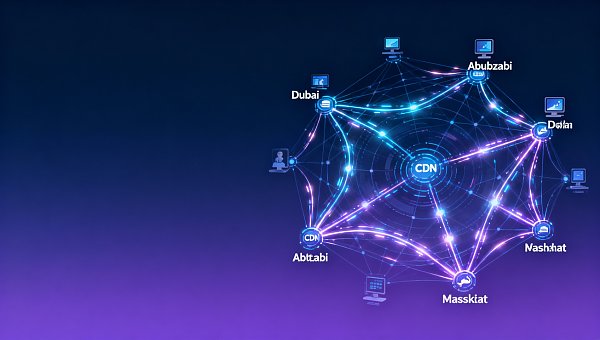
How to choose a website acceleration solution truly suited to the Middle East market? Three core metrics must be verified.
Procurement decisions should not rely solely on vendor white papers. We recommend project managers adopt a "three-stage verification method": the first stage checks node distribution (physical location + number of carrier accesses); the second stage tests actual routing (Traceroute to UAE ISP); and the third stage verifies service layer performance (the three core Web Vitalities: homepage/TTI/FCP). The YiYingBao AI Marketing Engine's built-in "Regional Acceleration Health Diagnosis" module can automatically output a "Middle East Access Quality Report" containing 12 parameters, covering the entire bottleneck location from DNS resolution to LCP rendering.
Pay special attention to the following three easily overlooked technical details:
- Does it support CDN caching strategies for Arabic character sets (UTF-8 + ARABIC SHAPING) to avoid duplicate font file requests to the origin server?
- Does the SSL/TLS handshake support compatibility with TLS 1.2 downgrade capabilities on mainstream Middle Eastern devices (such as older firmware versions of Samsung Galaxy A series devices)?
- Does it provide a local cache refresh API (instead of just console operations) to meet the UAE enterprise's need for 3-5 content updates per day?
According to a 2024 survey by the Middle East Digital Marketing Association (MENA DMA), acceleration solutions with the above capabilities can reduce bounce rate by 18.3% and extend average session duration to 3 minutes and 42 seconds in the context of B2B websites in the UAE (the industry average is 2 minutes and 15 seconds).
Comparison of Middle East node coverage of mainstream CDN service providers (actual test in 2024)
The following data is based on the same test environment (the Dubai data center initiated the request to monitor two core metrics: TTFB and LCP):
It is worth noting that the number of nodes is not the only standard – Etisalat's solution deployed dual ISP access (Etisalat + du) in Abu Dhabi and achieved millisecond-level failover through Anycast + ECMP, which is a capability dimension that most general CDNs have not yet covered.
Three Implementation Risks Most Often Overlooked by Technical Evaluators
In the delivery of cross-border website building services, approximately 52% of performance failures stem from oversights during the implementation phase. We have identified three key risks that technical assessment personnel need to focus on verifying:
- Multilingual resources were not geographically tagged: Arabic and English resources under the same URL shared the same cache key, causing users in the UAE to hit the English cache and trigger redundant redirects;
- Third-party scripts lack asynchronous isolation: Tools such as Google Analytics force connections to overseas domains without a local proxy, causing a single connection to be blocked for more than 1.2 seconds;
- SSL certificate not enabled OCSP Stapling: Some Middle Eastern operators' firewalls are sensitive to OCSP query response delays, and not enabling this feature will prolong the TLS handshake by 300–500ms.
The EasyCreation Enterprise-level Self-Service Website Building System has a pre-installed automated detection module for the aforementioned risks. It can generate a "Middle East Compliance Checklist" within 72 hours before launch, covering 4 categories and 18 technical verification points to ensure compliance upon delivery.
In addition, in response to the stringent requirements of real estate development companies for data security and auditing, we simultaneously provide supporting services such as internal auditing and risk management strategy research for real estate development companies , helping clients build digital asset governance processes that comply with the GCC national financial regulatory framework.
Why choose YiYingBao? A 4-step delivery process ensures a consistent user experience in the Middle East.
As an AI-driven service provider with a decade of experience in global digital marketing services, EasyMarket leverages a dual strategy of "technological innovation + localized services" to provide the Middle East market with verifiable, measurable, and traceable acceleration solutions.
- Node co-construction: An infrastructure partnership was established with Etisalat to enable direct connection to local data centers in Dubai;
- Language Priority: The website building system defaults to using Arabic SEO structured markup (JSON-LD+hreflang) to avoid ranking dilution from multiple languages;
- Guaranteed Results: Sign an SLA agreement specifying that the first screen time is ≤1.8 seconds (Dubai city area) and the LCP compliance rate is ≥95%. If the target is not met, the service fee will be calculated on a daily basis.
- Continuous optimization: We provide a monthly "Middle East User Behavior Heatmap Report" to guide the iteration of content layout and CTA button placement.
Currently, E-Creative Middle East Acceleration Solution has served 237 companies, including construction equipment exporters, halal food brands, and medical equipment distributors, with an average first-screen improvement rate of 68.5% and a median page conversion rate improvement of 29.3% (data source: Q2 2024 customer feedback report).
If you are planning to build a multilingual website for foreign trade targeting the UAE, Saudi Arabia, or Qatar markets, or need to conduct a Middle East access quality assessment of your existing site, please contact EasyCare's technical consultants immediately to obtain a customized "Middle East Acceleration Feasibility Assessment Report" (including a node topology diagram, stress test plan, and a 30-day performance guarantee).
Related Articles



Related Products
 EasyCamp SaaS Smart Website Marketing SystemE-Yingbao SaaS Smart Website Marketing System: AI-powered, zero-code website building. Rapidly launch multilingual independent e-commerce sites in just 10 minutes. Global server acceleration and AI-driven SEO optimization empower businesses to efficiently connect with global markets. The seamless integration of technology and user-friendly operation makes building e-commerce sites incredibly simple.
 AI+SEM Intelligent Advertising Marketing SystemAI+SEM drives intelligent ad creation, empowering full-funnel precision advertising marketing. The system automatically generates weekly/monthly reports, AI recommends keywords and target countries, monitors core metrics in real-time with intelligent alerts, and enables one-click high-conversion ad solutions to help quickly acquire customers and improve ROI.
 AI+SEO Dual Engine Optimization ServiceEasyWin AI+SEO Dual Engine Optimization System leverages AI-powered keyword mining, content generation, and comprehensive technical optimization to help foreign trade enterprises acquire high-quality organic traffic, significantly improving search rankings and conversion rates.
 AI+SNS Social Media Marketing SystemYingbao AI+SNS Social Media Marketing System - Precision social capture for the social media era. Supports one-click content synchronization across major platforms like Facebook and LinkedIn. AI intelligently rewrites posts for enhanced relevance. 24/7 AI customer service and user profiling analysis empower businesses to efficiently expand into global markets.
 AI+SEO营销解决方案易营宝AI+SEO营销解决方案,通过AI批量写作、智能生成TDK、精准关键词扩词等功能,全面优化网站SEO效果,提升流量与转化率。助力企业构建高效智能网站新生态。
 AI+SEM Advertising Marketing SolutionsAI+SEM Advertising Marketing Solution leverages AI technology to deeply empower SEM ad campaigns. It automatically generates weekly/monthly reports using AI, presenting account data across multiple dimensions for comprehensive insights into campaign performance and trends. The system precisely recommends keywords and target countries, intelligently generates high-conversion ad copy, and enables one-click activation of efficient campaign plans to help businesses rapidly acquire customers. Simultaneously, it monitors core metrics in real time, intelligently identifies abnormal fluctuations, and issues timely alerts to ensure stable, high-return advertising results.
 Domain Name ServicesEasyWin provides professional domain name services, including intelligent queries, one-stop registration, brand protection, and full lifecycle management, helping businesses build a digital brand image.
 EasyOperate B2C Cross-Border E-Commerce Platform & Independent WebsiteEasyStore B2C Cross-border E-commerce Independent Store is an intelligent website building and cross-border e-commerce integrated solution independently developed by EasyStore Information Technology (Beijing) Co., Ltd. The system is specially designed for small and medium-sized as well as large export enterprises, integrating 'website building, operation, marketing, advertising, and conversion' into one, helping enterprises quickly establish cross-border e-commerce independent stores to achieve brand globalization and global sales growth.
The platform supports multiple languages, multiple currencies, and multi-channel marketing, with built-in AI intelligent translation and SEO optimization systems, suitable for mainstream markets such as Southeast Asia, Europe and America, Latin America, and the Middle East, assisting Chinese manufacturing enterprises in efficiently deploying international e-commerce strategies. SSL证书易营宝提供专业SSL安全证书服务,包括单域名和泛域名证书,确保网站数据传输加密、身份验证和完整性保护,助力企业建立安全可信的在线业务环境。









