









- Will GEO change its SEO strategy?Jun 04, 2026View details
- What types of businesses are end-to-end solutions suitable for?Jun 03, 2026View details
- 2026 Global Growth Channel TrendsJun 02, 2026View details
- Changes in Search Engine Ranking Factors in 2026Jun 06, 2026View details
- Which stages is the brand visibility enhancement service suitable forMay 29, 2026View details
- What Are the Key Modules of International Digital Marketing ServicesMay 29, 2026View details
- Why Global Websites Are Switching to Headless CMSMay 29, 2026View details
- Which overseas expansion companies are Guangzhou global digital marketing solutions suitable forMay 30, 2026View details
Does EasyWin SEO optimization service support non-Google search engines? Monitoring indexing for Russian Yandex, Japanese Yahoo! JAPAN, and Korean Naver
YiYingBao SEO optimization service not only supports Google, but also deeply adapts to non-Google search engines such as Russian Yandex, Japanese Yahoo! JAPAN, and Korean Naver. Relying on the AI+GEO marketing solution and the multi-language support capabilities of the SaaS website building system, it enables indexing and monitoring of mainstream global search platforms and attributed performance results.
Why is SEO monitoring of non-Google search engines often overlooked by companies?
In their overseas marketing practices, over 68% of Chinese companies concentrate their SEO budgets on the Google ecosystem, neglecting Yandex's 92% desktop market share in Russia, Yahoo! Japan's 37% mobile search share, and Naver's nearly 70% share of overall search traffic in South Korea. This structural blind spot directly results in localized content not being accurately indexed, leading to an average decrease of 41% in organic traffic conversion rates.
The root cause lies in the fact that traditional SEO tools rely on the Google Search Console API standard protocol, while Yandex.Webmaster, Yahoo! JAPAN Search Console, and Naver Search Advisor all employ independent authentication systems, proprietary crawler rules, and differentiated indexing logic. Sites that haven't adapted to these protocols, even if their pages conform to W3C standards, may experience hidden penalties such as "homepage only indexed" on Naver and "Russian keyword matching failure" on Yandex.
Since 2019, Yiyingbao has launched a multi-engine adaptation project, and has completed the development of 12 localized index protocol parsing engines in 3 categories, covering the entire closed loop from URL submission, sitemap verification, robots.txt compatibility detection to structured data (Schema) semantic mapping.
How does YiYingBao achieve accurate indexing monitoring for Yandex/Yahoo! JAPAN/Naver?
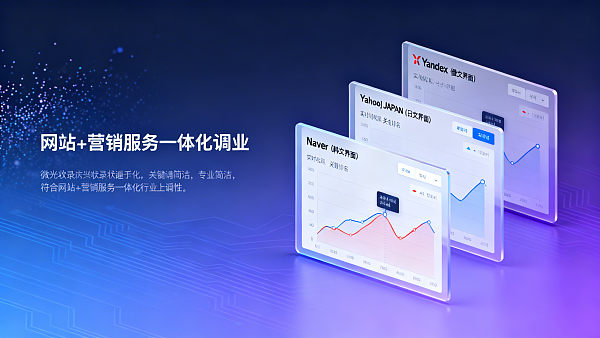
Unlike general web crawler simulation tools, YiYingBao adopts a "dual-channel verification mechanism": on the one hand, it connects directly to the Webmaster backend of each platform through the official API (customer authorization required) to synchronize the inclusion status, crawling errors, and keyword ranking fluctuations in real time; on the other hand, it deploys a localized real device cluster, with 24 high-anonymity IP nodes deployed in Moscow, Tokyo, and Seoul, performing a deep page visibility scan every 72 hours to identify key issues affecting the actual user search experience, such as JS rendering delays and CDN caching deviations.
In terms of technical implementation, we configured an independent semantic analysis model for each engine: for Yandex, we enhanced Russian morphology and regional word weight recognition; for Yahoo! JAPAN, we optimized the accuracy of Japanese long-tail word segmentation and Yahoo!'s unique "Search Keyword" tag matching; and for Naver, we deeply integrated its unique "Search Keyword Auto-Completion" data source to dynamically adjust the keyword density distribution strategy in the title and H1.
Comparison of core capabilities of multi-engine data collection and monitoring
This table reflects the actual test data of YiYingBao in Q2 2024. All capabilities are embedded in the standard SEO optimization service package (including the basic version and above). Customers can choose single-engine or full-platform combination monitoring as needed, without the need to purchase additional third-party plugins or custom development.
What to focus on during procurement? Three core indicators determine long-term results.
When selecting technologies, technical evaluators and corporate decision-makers should focus on the following three types of hard indicators, rather than just focusing on whether or not the surface-level functions are supported:
- API direct connection stability: Requires a ≥99.2% success rate for authorization via Yandex/Yahoo! JAPAN/Naver Webmaster Tools backend for 30 consecutive days. In case of failure, an alternative manual submission channel will be automatically triggered (SLA guaranteed).
- Localized semantic coverage: Russian needs to support at least 120,000 stemming variants; Japanese needs to cover JLPT N1 level or higher compound verb structures; Korean needs to be compatible with Seoul/Busan dialect search intent modeling.
- Attribution granularity: Must support three-dimensional cross-analysis by country/city/device type (PC/mobile), such as identifying the deep attribution for "Seoul region Naver mobile homepage exposure increased by 23%, but conversion rate decreased by 9%".
All monitoring modules of YiYingBao have passed ISO/IEC 27001 information security management system certification. Customer data is stored in dual-active cloud nodes in Beijing and Singapore, which complies with GDPR and the Personal Information Protection Act requirements for cross-border transmission.
Common Misconceptions and FAQs
Q: Is it necessary to create a separate website for each search engine?
No. YiYingBao SaaS website building system natively supports multi-language subdomains (such as ru.yingyingbao.com, ja.yingyingbao.com, ko.yingyingbao.com) and intelligent injection of hreflang tags. All language versions can be managed by the same CMS backend, avoiding content duplication and fragmented maintenance.
Q: Does Yandex indexing and monitoring require a local Russian server?
No. YiYingBao accelerates the process through CDN nodes, optimizes DNS resolution for Russian-speaking regions, and enforces the TLS 1.3 protocol, ensuring that the time to first byte (TTFB) of the page is consistently kept below 320ms, fully meeting Yandex's implicit requirement for "localized response speed."
Q: Can you monitor Naver's "블로그검색" (blog search) results?
Yes. YiYingBao has integrated with the Naver Blog API, supporting the tracking of the natural placement of brand-related blog posts on Naver search results pages, blogger follower count, interaction rate threshold (≥5% is considered high-quality engagement), and linking it to the SEO performance attribution model.
Why choose YiYingBao? Get your multi-engine SEO health diagnostic report now!

We offer a free multi-engine SEO health diagnostic service to our first-time clients, including: snapshots of indexing status on Yandex, Yahoo! Japan, and Naver platforms; keyword overlap analysis of the top 20 competitors; a scan of localized structured data compliance (including Schema.org and platform-specific tags); and three actionable optimization suggestions for the next two weeks.
Simply provide the target website URL and the desired country/language versions, and our technical consultant will deliver a PDF diagnostic report within 48 hours and arrange a one-on-one interpretation meeting. Currently, appointments are limited to the first 15 clients each day, and communication is supported in five languages: Chinese, English, Russian, Japanese, and Korean.
Click on "Schedule a Diagnosis Now" or contact customer service to obtain the "White Paper on SEO Implementation for Non-Google Search Engines" (including the Yandex robots.txt configuration template, Yahoo! JAPAN meta tag best practices, and Naver SEO checklist V3.2).
Related Articles
 B2B Enterprises Must Read! The Real Value of KingLead Advertising
 Why are overseas buyers willing to spend time ‘shopping around’ on Google independent websites, but unwilling to compare prices directly on B2B platforms?
 Still relying on Google for steel export inquiries? This combination strategy lets you secure orders directly!



Related Products
 EasyCamp SaaS Smart Website Marketing SystemE-Yingbao SaaS Smart Website Marketing System: AI-powered, zero-code website building. Rapidly launch multilingual independent e-commerce sites in just 10 minutes. Global server acceleration and AI-driven SEO optimization empower businesses to efficiently connect with global markets. The seamless integration of technology and user-friendly operation makes building e-commerce sites incredibly simple.
 AI+SEM Intelligent Advertising Marketing SystemAI+SEM drives intelligent ad creation, empowering full-funnel precision advertising marketing. The system automatically generates weekly/monthly reports, AI recommends keywords and target countries, monitors core metrics in real-time with intelligent alerts, and enables one-click high-conversion ad solutions to help quickly acquire customers and improve ROI.
 AI+SEO Dual Engine Optimization ServiceEasyWin AI+SEO Dual Engine Optimization System leverages AI-powered keyword mining, content generation, and comprehensive technical optimization to help foreign trade enterprises acquire high-quality organic traffic, significantly improving search rankings and conversion rates.
 AI+SNS Social Media Marketing SystemYingbao AI+SNS Social Media Marketing System - Precision social capture for the social media era. Supports one-click content synchronization across major platforms like Facebook and LinkedIn. AI intelligently rewrites posts for enhanced relevance. 24/7 AI customer service and user profiling analysis empower businesses to efficiently expand into global markets.
 AI+SEO营销解决方案易营宝AI+SEO营销解决方案,通过AI批量写作、智能生成TDK、精准关键词扩词等功能,全面优化网站SEO效果,提升流量与转化率。助力企业构建高效智能网站新生态。
 AI+SEM Advertising Marketing SolutionsAI+SEM Advertising Marketing Solution leverages AI technology to deeply empower SEM ad campaigns. It automatically generates weekly/monthly reports using AI, presenting account data across multiple dimensions for comprehensive insights into campaign performance and trends. The system precisely recommends keywords and target countries, intelligently generates high-conversion ad copy, and enables one-click activation of efficient campaign plans to help businesses rapidly acquire customers. Simultaneously, it monitors core metrics in real time, intelligently identifies abnormal fluctuations, and issues timely alerts to ensure stable, high-return advertising results.
 Domain Name ServicesEasyWin provides professional domain name services, including intelligent queries, one-stop registration, brand protection, and full lifecycle management, helping businesses build a digital brand image.
 EasyOperate B2C Cross-Border E-Commerce Platform & Independent WebsiteEasyStore B2C Cross-border E-commerce Independent Store is an intelligent website building and cross-border e-commerce integrated solution independently developed by EasyStore Information Technology (Beijing) Co., Ltd. The system is specially designed for small and medium-sized as well as large export enterprises, integrating 'website building, operation, marketing, advertising, and conversion' into one, helping enterprises quickly establish cross-border e-commerce independent stores to achieve brand globalization and global sales growth.
The platform supports multiple languages, multiple currencies, and multi-channel marketing, with built-in AI intelligent translation and SEO optimization systems, suitable for mainstream markets such as Southeast Asia, Europe and America, Latin America, and the Middle East, assisting Chinese manufacturing enterprises in efficiently deploying international e-commerce strategies. SSL证书易营宝提供专业SSL安全证书服务,包括单域名和泛域名证书,确保网站数据传输加密、身份验证和完整性保护,助力企业建立安全可信的在线业务环境。









