









- What New Signals Are Emerging in Enterprise Services SaaS Marketing ReportsJul 27, 2026View details
- What Does a Global Traffic Ecosystem Service Provider Do? What Are the Differences from a Single Advertising AgencyJul 16, 2026View details
- What should you focus on in the latest enterprise SaaS report? From renewal rates and delivery costs to overseas growth opportunitiesJul 12, 2026View details
- What signals are worth paying attention to in a cross-border marketing trend report? B2B companies should look at these 6 signalsJul 11, 2026View details
- How to Read a Cross-Border Marketing Trends Report? Five Key Dimensions for Evaluating Channel OpportunitiesJul 11, 2026View details
- Which channel has the highest ROI in the global traffic ecosystem? Comparative analysis of search, social media, and advertisingJul 10, 2026View details
Why is there such a big price difference in website performance optimization services? The impact of server configuration and caching strategies
The pricing differences for website performance optimization services primarily stem from the technical complexity of server configurations and caching strategy combinations. For cross-border e-commerce businesses, European market users typically have a lower tolerance threshold for page loading speeds, usually under 3 seconds, while factors such as server geographic location, CDN node distribution, and dynamic content caching rules can lead to cost variations of 3-5 times. According to Akamai's 2026 Global Retail Performance Report, German users abandon loading at a critical threshold of 2.8 seconds, while the French market requires additional consideration of GDPR compliance costs for cache purging.
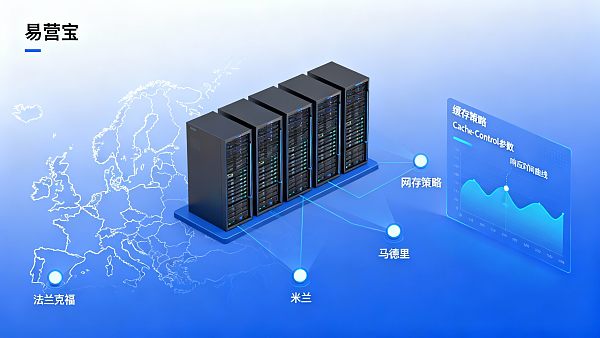
Technical Decision Tree for Server Configuration
European cross-border operations need to evaluate three levels of infrastructure:
Physical Server Location
While the Falkenstein data center covers German-speaking regions, latency for Southern European users may exceed 200ms. Deploying AWS Local Zones can reduce latency by 15-20%, but with a monthly cost increase of $800-$1200.
Cloud Provider Service Agreements
Google Cloud's Premium Tier network accelerates 40% faster than the standard version, but the 95th percentile billing model may cause sudden traffic cost spikes. A home appliance e-commerce case showed unadjusted billing models during promotions led to bandwidth costs exceeding budgets by 300%.
Container Deployment Density
Kubernetes cluster Pod density and memory reservation ratios directly impact instance costs. Tests show increasing Node resource utilization from 60% to 85% can reduce EC2 costs by 28%, but requires implementing HPA auto-scaling strategies.
Performance Curve of Caching Strategies
Multilingual sites require establishing differentiated caching rule matrices:
Static Resource Caching
Setting Cache-Control max-age=31536000 enables long-term caching for CSS/JS files, but requires content hash fingerprints to avoid update failures. A clothing brand's missing version numbers caused 30% of French traffic to load outdated stylesheets.
Dynamic API Caching
Using Stale-While-Revalidate for product detail APIs reduced German market first-screen rendering time from 1.4s to 0.6s, but requires field-level GraphQL caching to prevent privacy data leaks.
Edge Computing Logic
Cloudflare Workers processing multilingual redirects reduced TTFB by 70ms, but Italian markets require additional VCL rules for cookie compliance. Geolocation headers are recommended for edge logic branching.
Industry Benchmark Optimization Path Comparison
European e-commerce companies typically adopt three performance optimization approaches:
In-house Operations Team Model
Suitable for enterprises with existing DevOps foundations, requiring at least 2 full-stack engineers proficient in Terraform and Prometheus. A 3C brand adopting this model improved LCP from 4.2s to 1.9s, with first-year labor costs reaching €150k.

Managed Cloud Service Solutions
AWS's WAF+CloudFront combination offers out-of-the-box acceleration but has limited dynamic content optimization. Monitoring data shows Spanish shopping cart pages still have CLS scores above the 0.25 good threshold.
Smart Optimization Platform Integration
For enterprises struggling with multilingual version synchronization or ad-performance disconnects, providers with global CDNs and AI traffic scheduling capabilities are often better fits. A tools SaaS client using intelligent edge node selection reduced Italian user bounce rates by 22%.
Decision Validation Points
- If targeting German-speaking users, prioritize testing TCP connection times at the Falkenstein node, requiring 95% of handshakes to complete within 100ms
- When ads involve English-French bilingual content, ensure CDNs support Accept-Language header-based cache versioning to prevent CTR loss
- For promotional pages, require providers to guarantee at least 200% burst bandwidth capacity with clear overage fee calculations
Recommend running WebPageTest simulations in Amsterdam, Milan, and Madrid for multilingual testing, focusing on First Contentful Paint (FCP) and Cumulative Layout Shift (CLS) metrics. GDPR-compliant providers should document SCC clauses for EU-US data transfers.
Related Articles

Related Products
 EasyCamp SaaS Smart Website Marketing SystemE-Yingbao SaaS Smart Website Marketing System: AI-powered, zero-code website building. Rapidly launch multilingual independent e-commerce sites in just 10 minutes. Global server acceleration and AI-driven SEO optimization empower businesses to efficiently connect with global markets. The seamless integration of technology and user-friendly operation makes building e-commerce sites incredibly simple.
 AI+SEM Intelligent Advertising Marketing SystemAI+SEM drives intelligent ad creation, empowering full-funnel precision advertising marketing. The system automatically generates weekly/monthly reports, AI recommends keywords and target countries, monitors core metrics in real-time with intelligent alerts, and enables one-click high-conversion ad solutions to help quickly acquire customers and improve ROI.
 AI+SEO Dual Engine Optimization ServiceEasyWin AI+SEO Dual Engine Optimization System leverages AI-powered keyword mining, content generation, and comprehensive technical optimization to help foreign trade enterprises acquire high-quality organic traffic, significantly improving search rankings and conversion rates.
 AI+SNS Social Media Marketing SystemYingbao AI+SNS Social Media Marketing System - Precision social capture for the social media era. Supports one-click content synchronization across major platforms like Facebook and LinkedIn. AI intelligently rewrites posts for enhanced relevance. 24/7 AI customer service and user profiling analysis empower businesses to efficiently expand into global markets.
 AI+SEO营销解决方案易营宝AI+SEO营销解决方案,通过AI批量写作、智能生成TDK、精准关键词扩词等功能,全面优化网站SEO效果,提升流量与转化率。助力企业构建高效智能网站新生态。
 AI+SEM Advertising Marketing SolutionsAI+SEM Advertising Marketing Solution leverages AI technology to deeply empower SEM ad campaigns. It automatically generates weekly/monthly reports using AI, presenting account data across multiple dimensions for comprehensive insights into campaign performance and trends. The system precisely recommends keywords and target countries, intelligently generates high-conversion ad copy, and enables one-click activation of efficient campaign plans to help businesses rapidly acquire customers. Simultaneously, it monitors core metrics in real time, intelligently identifies abnormal fluctuations, and issues timely alerts to ensure stable, high-return advertising results.
 Domain Name ServicesEasyWin provides professional domain name services, including intelligent queries, one-stop registration, brand protection, and full lifecycle management, helping businesses build a digital brand image.
 EasyOperate B2C Cross-Border E-Commerce Platform & Independent WebsiteEasyStore B2C Cross-border E-commerce Independent Store is an intelligent website building and cross-border e-commerce integrated solution independently developed by EasyStore Information Technology (Beijing) Co., Ltd. The system is specially designed for small and medium-sized as well as large export enterprises, integrating 'website building, operation, marketing, advertising, and conversion' into one, helping enterprises quickly establish cross-border e-commerce independent stores to achieve brand globalization and global sales growth.
The platform supports multiple languages, multiple currencies, and multi-channel marketing, with built-in AI intelligent translation and SEO optimization systems, suitable for mainstream markets such as Southeast Asia, Europe and America, Latin America, and the Middle East, assisting Chinese manufacturing enterprises in efficiently deploying international e-commerce strategies. SSL证书易营宝提供专业SSL安全证书服务,包括单域名和泛域名证书,确保网站数据传输加密、身份验证和完整性保护,助力企业建立安全可信的在线业务环境。









