









- What Does a Global Traffic Ecosystem Service Provider Do? What Are the Differences from a Single Advertising AgencyJul 16, 2026View details
- What should you focus on in the latest enterprise SaaS report? From renewal rates and delivery costs to overseas growth opportunitiesJul 12, 2026View details
- What signals are worth paying attention to in a cross-border marketing trend report? B2B companies should look at these 6 signalsJul 11, 2026View details
- How to Read a Cross-Border Marketing Trends Report? Five Key Dimensions for Evaluating Channel OpportunitiesJul 11, 2026View details
- Which channel has the highest ROI in the global traffic ecosystem? Comparative analysis of search, social media, and advertisingJul 10, 2026View details
- What multilingual website services are available in Sanya? Which model is more suitable for local businesses going global?Jul 08, 2026View details
- How to view the complete list of China SaaS companies in the top 100? Practical methods for screening website-building and marketing service providersJul 08, 2026View details
- How to view pricing in the global traffic ecosystem? Cost comparison of search, social media, and content channel advertisingJul 06, 2026View details
Does website design style affect conversion rates?
Does website design style affect conversion rates? The answer is: yes, it does, and the impact is often reflected not only in whether it “looks good,” but more importantly in whether users are willing to keep browsing, whether they trust the company, and whether they can quickly find key information and complete an inquiry, submit their details, or place an order. For businesses, a website with a chaotic design style and a lack of professionalism may lose potential customers on the very first screen, even if traffic is not low. On the contrary, an approach that aligns with industry expectations while balancing user experience and search engine optimization is often more likely to convert visits into inquiries and deals.
Especially in the integrated website + marketing services scenario, a website is no longer just an online business card, but an important conversion hub for SEO traffic, paid advertising traffic, and social media referral traffic. This article will examine several aspects, including user search intent, the relationship between design style and trust building, the steps for building a marketing-oriented website, and key SEO implementation points, to help businesses determine what kind of website design truly supports conversion growth.
Conclusion first: what affects conversion rates is not the “style itself,” but whether the style matches the user’s decision-making journey
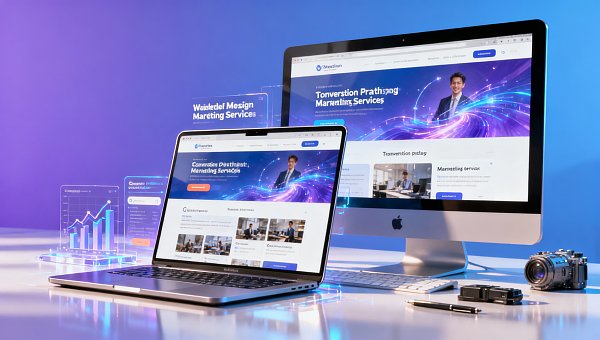
When creating a website, many companies tend to focus on abstract descriptions such as “high-end, premium, internationalized, and technological,” but what users truly care about is: can this website help me quickly understand what you do, whether you are trustworthy, whether you can solve my problem, and how I should contact you next.
Therefore, website design style does affect conversion rates, but only if that style serves business goals rather than being an aesthetic expression detached from user needs. For information researchers, they need to obtain clear information quickly; for technical evaluators, they care more about structural logic, product capabilities, and technical details; for business decision-makers, they focus on brand credibility, case results, return on investment, and risk control; while end consumers care more about usability, trust, and whether the action path is clear.
If the website style does not match the target audience’s perception, these problems are likely to occur:
- The page may look very “flashy,” but key information does not stand out, and users cannot find the core services;
- The brand image appears unprofessional, affecting trust building;
- The visual hierarchy is confusing, and buttons, forms, and inquiry entry points are not obvious;
- Excessive pursuit of creativity leads to slow loading and poor mobile experience;
- Search engines have difficulty crawling and understanding the page content, affecting SEO performance.
In other words, what truly affects conversion is the combined result of “visual style + content structure + user experience + technical performance,” rather than any single popular design style.
What target readers care about most is actually whether the website can bring inquiries and business opportunities
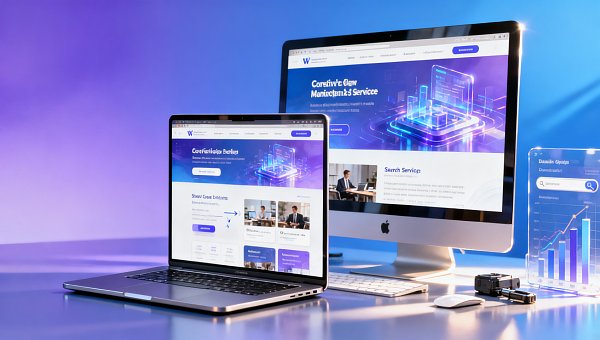
From the perspective of search intent, users searching for “Does website design style affect conversion rates” are usually not simply trying to understand design theory, but are trying to determine whether a website revamp is worth doing, whether design investment can bring actual returns, and how to choose a website solution that better fits their business.
The questions these readers care about most usually include:
- What kind of website style makes customers trust more easily?
- Can a design revamp actually improve inquiry volume, lead submission rate, or conversion rate?
- How should the steps of building a marketing-oriented website be arranged to avoid only changing the “surface”?
- Do website design and SEO conflict, and can aesthetics and rankings both be achieved?
- What kind of page style is suitable for different business types and different customer groups?
Therefore, the article should not stop at listing styles such as “minimalist, tech, or business style,” but should help readers build judgment criteria: what kind of design is more suitable for customer acquisition, and what kind of design merely increases costs without improving conversion.
For example, in the business services field, an overly fancy website is not necessarily more effective than a website with a clear structure, credible case studies, concise forms, and fast response speed. The longer the decision-making chain of a business, the more it needs to strengthen professionalism, data proof, case presentation, and clear action guidance through page design.
Which design factors most directly affect website conversion rates
If we work backward from conversion results, the following factors are usually more critical than “pure aesthetic style.”
1. Whether the first screen can establish recognition within a few seconds
The first 3 to 5 seconds after a user enters a website determine whether most visitors stay or leave. The first screen should answer three questions: who are you, what can you offer, and why should I keep reading. The position of the headline, core selling points, scenario explanation, and inquiry button all directly affect bounce rate and dwell time.
2. Whether the visuals convey professionalism and credibility
Colors, layout, image style, icon system, and brand consistency all affect users’ perception of a company’s strength. Especially for marketing services, technical services, and B2B service websites, users subconsciously judge whether a company is reliable based on visual maturity. A messy, cheap-looking, and inconsistent design can easily weaken brand trust.
3. Whether the information architecture aligns with the decision-making process
High-conversion websites are usually not about having more information, but about having information in a reasonable sequence. A common efficient structure includes: core value → service content → advantage explanation → case studies/customer testimonials → frequently asked questions → contact methods. Every step users scroll down should bring them closer to making an inquiry.
4. Whether the call-to-action buttons are clear
Many websites have poor conversion not because no one is interested, but because there is no clear next action. For example, if buttons such as “Consult Now,” “Get a Solution,” “Book a Demo,” and “Get a Quote” do not stand out, or if there are too many form fields, potential customers may give up at the last moment.
5. Whether mobile performance and loading speed meet standards
A large amount of traffic now comes from mobile devices. If visual effects rely too much on large images, animations, and complex scripts, page loading becomes slower, and conversion will be directly dragged down. SEO methods also place great emphasis on website performance, because speed affects not only user experience, but also crawling and rankings.
Why the steps of building a marketing-oriented website determine whether the design is truly effective
Many companies mistakenly believe that “changing to a good-looking template” means upgrading the website, but truly effective website development must revolve around marketing goals and user pathways. A more reliable set of steps for building a marketing-oriented website usually includes the following stages:
Clarify the goal: brand presentation, customer acquisition conversion, or channel招商
Different goals correspond to different page priorities. A brand official website emphasizes image and public credibility, a customer acquisition website emphasizes the conversion path, and a channel招商 website should highlight policies, support, successful cases, and cooperation thresholds. If the goal is unclear, even the best design may deviate from business results.
Analyze users: who is visiting, and what do they most want to see
For technical evaluators, content should be more specific; for decision-makers, results and value should be emphasized; for distributors and agents, the cooperation model, support policies, and market opportunities should be explained. The design style must be consistent with the target audience’s information consumption habits.
Plan the structure: make important information visible faster
Page hierarchy should be designed around conversion logic, rather than simply pursuing pages that feel “full” and “rich.” There should be clear connections among the homepage, service pages, case study pages, and landing pages, so users do not keep clicking around without finding the key points.
Synchronize content and SEO planning
Truly effective website development does not mean designing first and adding SEO later, but considering keyword layout, section planning, URL structure, title descriptions, and internal linking logic from the very beginning. This ensures not only page aesthetics, but also helps search engines better understand the website’s topic.
Continuous optimization after launch
A website is not a “one-time deliverable,” but a marketing asset that should be continuously optimized. Through data such as heatmaps, form conversion rates, page dwell time, bounce rate, and keyword rankings, companies can continually verify whether the design is effective and gradually optimize first-screen copy, button placement, case presentation methods, and form settings.
On some professional content websites, clear structure and credible information presentation are equally important. For example, when presenting professional topics, research-oriented content pages also need to balance readability and information organization logic. For instance, content such as Research on the Path of Internal Control Construction in Public Hospitals from the Perspective of Financial and Accounting Supervision, if the page design is too messy, readers will find it difficult to efficiently obtain valuable information even if they have a clear need.
How website design can balance SEO and conversion instead of sacrificing one for the other
A common concern for companies during a revamp is: if the design becomes more refined, will it be unfavorable for SEO? In fact, as long as the approach is correct, SEO and conversion do not conflict, but should promote each other.
The following are more practical approaches:
- Ensure text content is recognizable: do not turn large blocks of key information into images, otherwise search engines will have difficulty crawling them;
- Use heading hierarchy properly: a clear H2 and H3 structure helps search engines understand the page topic and also makes it easier for users to scan quickly;
- Control page loading resources: compress images and optimize scripts to avoid having “design effects” impact performance;
- Let keywords naturally integrate into core sections: keywords such as website design style, steps for building a marketing-oriented website, and SEO methods can appear in titles, body text, subheadings, and case explanations;
- Strengthen authentic page information: case studies, customer reviews, data results, and service processes are more beneficial for rankings and conversion than vague slogans.
For companies with globalization growth needs, this is especially important. Service providers such as Yiyingbao Information Technology (Beijing) Co., Ltd., which offer integrated website + marketing services, usually place more emphasis on coordination across the full chain from website building, SEO optimization, and social media marketing to advertising campaigns. Because only by considering website design, content strategy, and traffic operations in a unified way can visits truly be converted into business opportunities.
How companies should judge whether their website needs a revamp
If you are evaluating whether your website needs an upgrade, you can first look at the following signals:
- Website traffic is not low, but inquiry volume remains consistently low;
- The homepage looks “okay,” but users stay for a short time and the bounce rate is high;
- The mobile experience is poor, with crowded text, hard-to-click buttons, and complicated forms;
- There is a lot of website content, but no clear main line, and users do not know what to do next;
- SEO has some basic rankings, but landing pages cannot effectively receive search traffic;
- The visual style is outdated and does not reflect the company’s current strength and positioning.
If two or three of these problems appear, it is usually worth re-examining the website’s design and content structure. It should be noted that a revamp does not mean tearing everything down and starting over, but first identifying the key links that most affect conversion. Many times, simply optimizing the first-screen message, adjusting call-to-action buttons, strengthening case study displays, and improving the mobile experience can already produce obvious improvements.
Of course, this judgment method is also suitable for the design of content pages. Even for professionally research-oriented content such as Research on the Path of Internal Control Construction in Public Hospitals from the Perspective of Financial and Accounting Supervision, if the page structure is clear and the key points stand out, it will also be easier to gain user dwell time and reading completion rates than simply piling up text.
Summary: the core of a high-conversion website design is to “make it easier for the right people to take the right action”
Back to the original question: does website design style affect conversion rates? The answer is very clear——yes. But what truly determines the effect is not what trendy style the website uses, but whether that style builds trust, improves comprehension efficiency, shortens the decision-making path, and remains aligned with SEO methods and marketing goals.
For companies, judging whether website design is effective should not rely only on visual feeling, but on whether it brings longer dwell time, lower bounce rates, more inquiries, and a clearer user pathway. A truly valuable marketing-oriented website should balance brand image, user experience, SEO performance, and conversion capability.
If a company is planning a website upgrade, it is recommended to start with target users, business scenarios, the steps for building a marketing-oriented website, and data indicators, rather than starting only from “aesthetic preferences.” Only by putting design back into the logic of growth can a website truly become an asset for continuous customer acquisition, rather than a static display piece.
Related Articles
 Attention! Builders' must-see: Yibingbao AI components updated, design efficiency directly doubled!
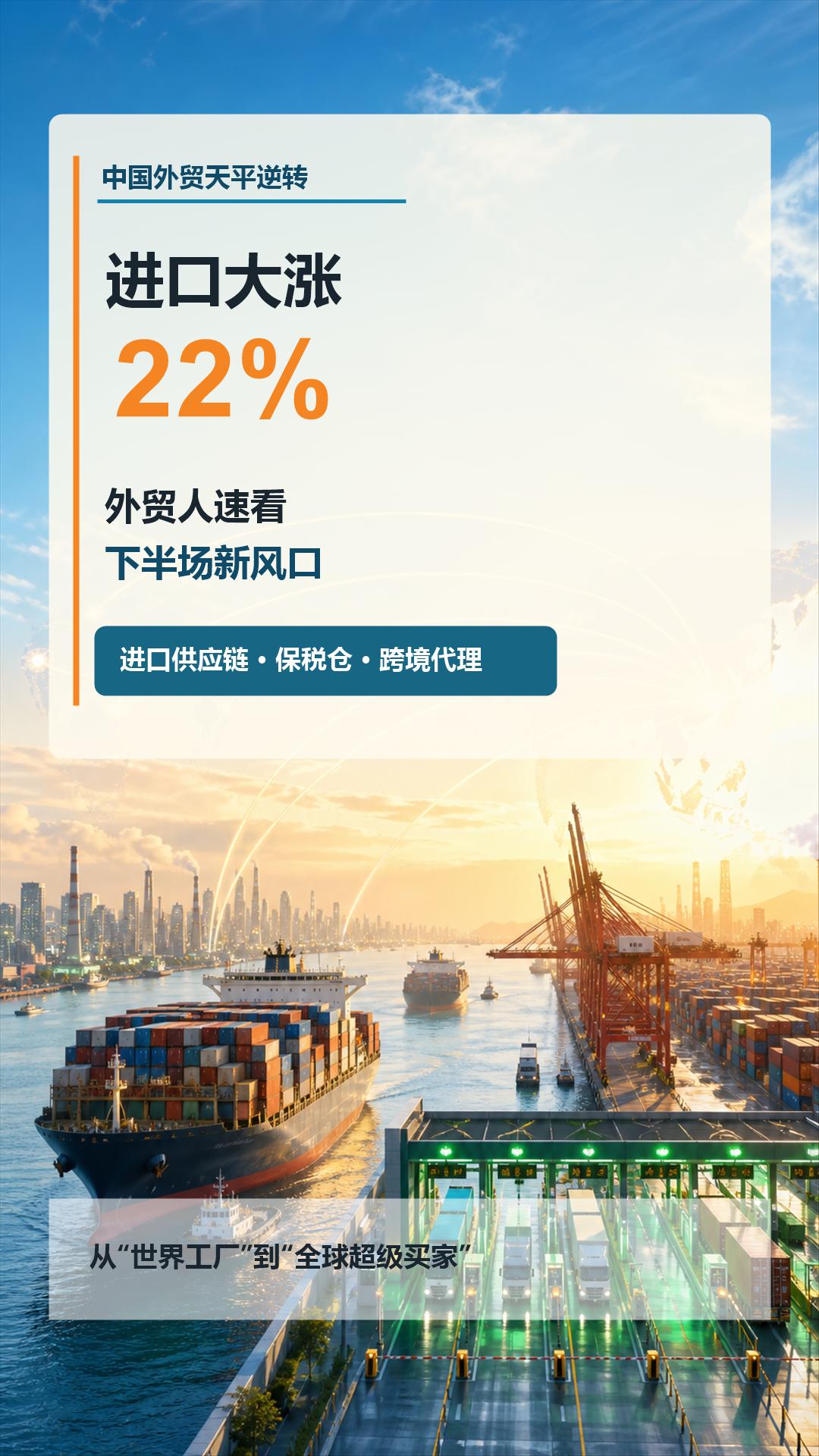
 China's foreign trade sees a turnaround: imports surge by 22%! Foreign trade professionals should quickly take note of the new trends in the second half of the year
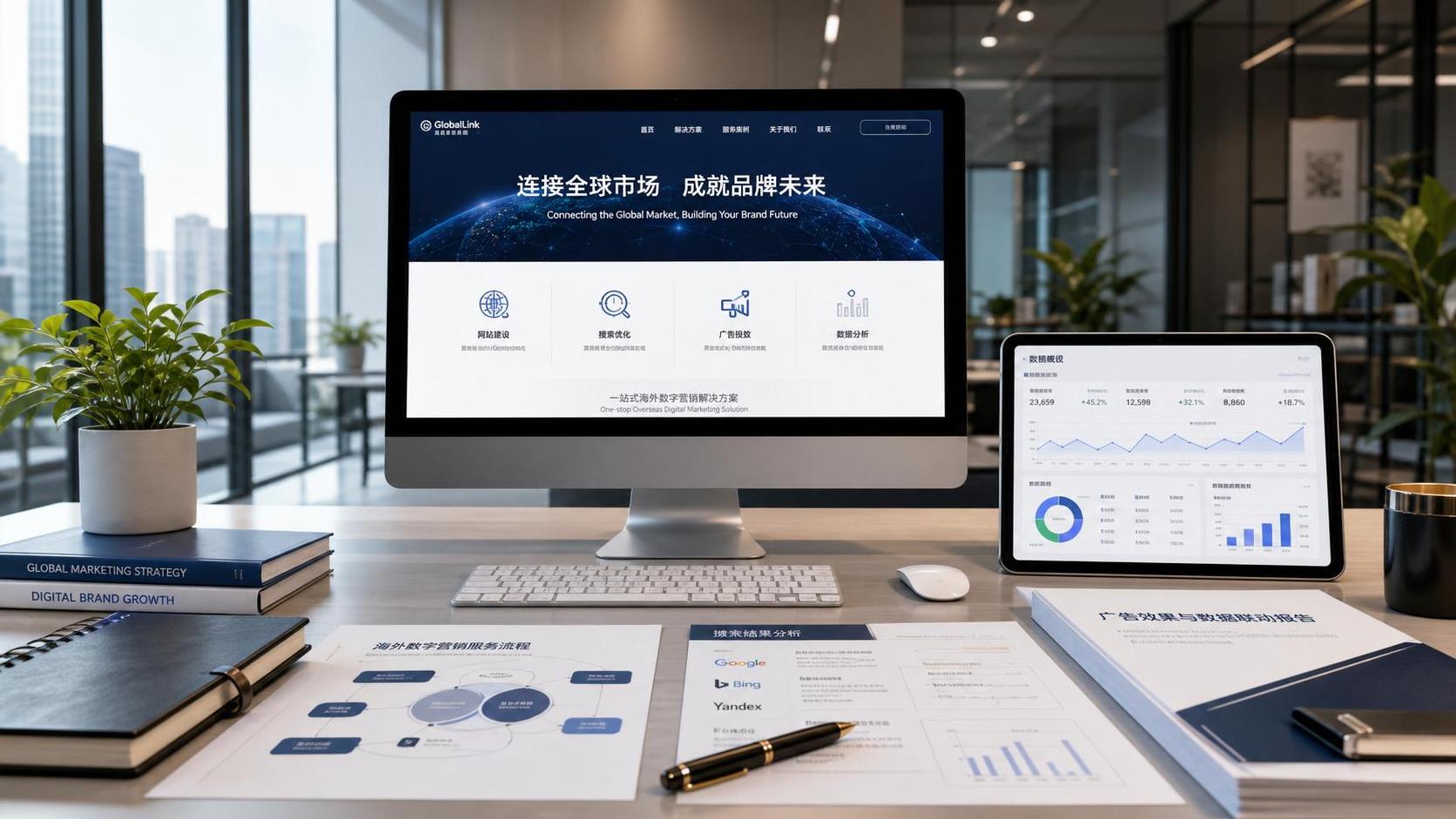
 What Does a Global Traffic Ecosystem Service Provider Do? What Are the Differences from a Single Advertising Agency

Related Products
 EasyCamp SaaS Smart Website Marketing SystemE-Yingbao SaaS Smart Website Marketing System: AI-powered, zero-code website building. Rapidly launch multilingual independent e-commerce sites in just 10 minutes. Global server acceleration and AI-driven SEO optimization empower businesses to efficiently connect with global markets. The seamless integration of technology and user-friendly operation makes building e-commerce sites incredibly simple.
 AI+SEM Intelligent Advertising Marketing SystemAI+SEM drives intelligent ad creation, empowering full-funnel precision advertising marketing. The system automatically generates weekly/monthly reports, AI recommends keywords and target countries, monitors core metrics in real-time with intelligent alerts, and enables one-click high-conversion ad solutions to help quickly acquire customers and improve ROI.
 AI+SEO Dual Engine Optimization ServiceEasyWin AI+SEO Dual Engine Optimization System leverages AI-powered keyword mining, content generation, and comprehensive technical optimization to help foreign trade enterprises acquire high-quality organic traffic, significantly improving search rankings and conversion rates.
 AI+SNS Social Media Marketing SystemYingbao AI+SNS Social Media Marketing System - Precision social capture for the social media era. Supports one-click content synchronization across major platforms like Facebook and LinkedIn. AI intelligently rewrites posts for enhanced relevance. 24/7 AI customer service and user profiling analysis empower businesses to efficiently expand into global markets.
 AI+SEO营销解决方案易营宝AI+SEO营销解决方案,通过AI批量写作、智能生成TDK、精准关键词扩词等功能,全面优化网站SEO效果,提升流量与转化率。助力企业构建高效智能网站新生态。
 AI+SEM Advertising Marketing SolutionsAI+SEM Advertising Marketing Solution leverages AI technology to deeply empower SEM ad campaigns. It automatically generates weekly/monthly reports using AI, presenting account data across multiple dimensions for comprehensive insights into campaign performance and trends. The system precisely recommends keywords and target countries, intelligently generates high-conversion ad copy, and enables one-click activation of efficient campaign plans to help businesses rapidly acquire customers. Simultaneously, it monitors core metrics in real time, intelligently identifies abnormal fluctuations, and issues timely alerts to ensure stable, high-return advertising results.
 Domain Name ServicesEasyWin provides professional domain name services, including intelligent queries, one-stop registration, brand protection, and full lifecycle management, helping businesses build a digital brand image.
 EasyOperate B2C Cross-Border E-Commerce Platform & Independent WebsiteEasyStore B2C Cross-border E-commerce Independent Store is an intelligent website building and cross-border e-commerce integrated solution independently developed by EasyStore Information Technology (Beijing) Co., Ltd. The system is specially designed for small and medium-sized as well as large export enterprises, integrating 'website building, operation, marketing, advertising, and conversion' into one, helping enterprises quickly establish cross-border e-commerce independent stores to achieve brand globalization and global sales growth.
The platform supports multiple languages, multiple currencies, and multi-channel marketing, with built-in AI intelligent translation and SEO optimization systems, suitable for mainstream markets such as Southeast Asia, Europe and America, Latin America, and the Middle East, assisting Chinese manufacturing enterprises in efficiently deploying international e-commerce strategies. SSL证书易营宝提供专业SSL安全证书服务,包括单域名和泛域名证书,确保网站数据传输加密、身份验证和完整性保护,助力企业建立安全可信的在线业务环境。









