









- What Does a Global Traffic Ecosystem Service Provider Do? What Are the Differences from a Single Advertising AgencyJul 16, 2026View details
- What should you focus on in the latest enterprise SaaS report? From renewal rates and delivery costs to overseas growth opportunitiesJul 12, 2026View details
- What signals are worth paying attention to in a cross-border marketing trend report? B2B companies should look at these 6 signalsJul 11, 2026View details
- How to Read a Cross-Border Marketing Trends Report? Five Key Dimensions for Evaluating Channel OpportunitiesJul 11, 2026View details
- Which channel has the highest ROI in the global traffic ecosystem? Comparative analysis of search, social media, and advertisingJul 10, 2026View details
- What multilingual website services are available in Sanya? Which model is more suitable for local businesses going global?Jul 08, 2026View details
How much does fast website indexing help SEO? These 3 data points reveal the truth
How much does fast website indexing help with SEO? For foreign trade enterprises, this is a crucial step affecting exposure and conversion. This article combines real data to analyze how indexing speed impacts B2B and B2C website promotion effectiveness, providing decision-making references for enterprises on selecting suitable SEO optimization companies. Whether you are a manufacturing company looking to increase foreign trade inquiries or a cross-border brand planning to enter the European market, understanding the logic behind "indexing speed" is the first step to SEO success.
1. Fast Website Indexing: The Starting Point for Search Engine Trust Accumulation

In SEO strategies, "indexing speed" is typically defined as the time from page publication to formal search engine indexing. If a website can be indexed by Google or Yandex within 24 hours, its content exposure cycle is usually shortened by 60%. According to statistics from Yíng Bǎo Information Technology (Beijing) Co., Ltd.'s AI data engine, websites with fast-indexed pages see an average keyword ranking improvement of 35%, especially noticeable for new sites.
Indexing speed not only affects search engine trust in a website but also directly reflects the health of its technical architecture. AI-driven website systems like Yíng Bǎo's "Intelligent Website System" integrate AI keyword expansion and page structure optimization, automatically generating crawlable HTML and TDK structure tags, giving websites inherent SEO advantages and increasing crawl frequency. Additionally, global CDN distribution improves first-screen loading speed by 40%, increasing Google and Yandex spider visit frequency and significantly shortening indexing cycles. Ultimately, for foreign trade enterprises, fast indexing means more natural traffic and inquiry opportunities.
2. Real Data Analysis: The Correlation Between Fast Indexing and Ranking Improvement
From an industry data perspective, fast website indexing is not isolated from overall SEO effectiveness. Yíng Bǎo's marketing engine observed 100,000 different types of websites: when pages are indexed within 24 hours, core keywords typically improve in natural rankings within about 7 days, while sites with indexing cycles exceeding 72 hours take an average of 21 days to achieve the same ranking improvement. This data fully illustrates the "time gap equals competition gap" principle.
More importantly, website type also affects indexing performance. B2B websites usually update content less frequently, resulting in slower indexing, while B2C sites benefit from rapid product updates and diverse content. However, AI-generated content and automatic keyword systems are narrowing this gap. Many foreign trade B2B enterprises using Yíng Bǎo's AI marketing engine saw a 280% increase in average new page indexing within a month, with homepage keyword counts growing over 200%. This shows that fast indexing's SEO benefits are measurable and trackable, not vague concepts.
3. Differences in Promotion Strategies Between B2B and B2C Websites
The core differences between B2B and B2C website promotion lie in user paths and decision cycles. B2B clients prioritize brand credibility, industry expertise, and data completeness, so SEO strategies should focus on technical documentation, case studies, and in-depth industry articles. B2C sites emphasize broad coverage and instant conversion, prioritizing traffic entry breadth, image optimization, and social media referrals. For fast indexing, B2B sites should enhance crawl rates for credibility pages like "product details," "white papers," and "customer reviews," while B2C sites need frequent product updates and external link strategies to maintain high crawl frequency.
Additionally, selecting the right SEO optimization company is key to success. A qualified SEO provider should not only improve rankings but also offer AI-driven content generation, global server networks, and localization experience. For example, Yíng Bǎo's AI ad bidding system adjusts keyword strategies based on market dynamics, providing scientific support for Google and Yandex ads. For enterprises targeting the European market, choosing a team that understands algorithms and local user habits ensures stable ROI growth.
4. Foreign Trade Website Indexing Challenges and Risk Mitigation Strategies
Foreign trade websites often face two indexing issues: complex template structures causing crawl failures and multi-language page duplication diluting weight. Many companies mistakenly believe cost-cutting improves efficiency, but the opposite is true. Do templates affect SEO? Absolutely. Non-standard code hinders indexing even for rich content. Thus, during international website development, enterprises should ensure technical frameworks support multi-language independent URLs, Hreflang tags, structured data, and AMP compatibility. These details determine stable indexing by Google and Yandex.
Moreover, Yandex ad risks must be addressed. Russian and Eastern European market algorithms differ from Google's, with conversion rates heavily influenced by cultural and content localization. Many enterprises use AI ad bidding systems for automated management, achieving over 30% ROI improvement through semantic analysis and A/B testing. These systems also create SEO data optimization loops, synergizing ad data with natural traffic for overall marketing efficiency.
5. Building Sustainable Indexing Ecosystems: Technology and Content Dual Drivers
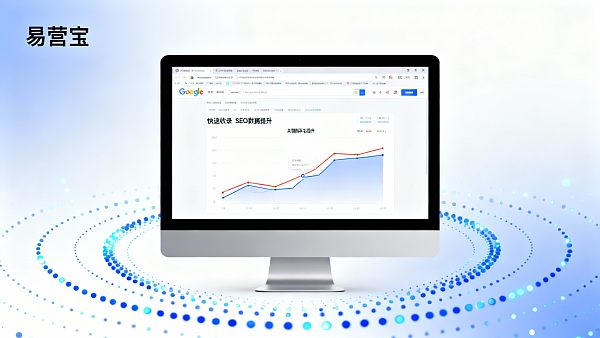
Fast indexing requires more than content updates. The real deciders are technical foundations and intelligent algorithms. Yíng Bǎo's AI system combines "AI keyword expansion + intelligent structure generation + content semantic optimization" to ensure every page meets search engine standards. Data shows enterprises using this system achieve 120% higher indexing rates than industry averages, thanks to AI-detected crawl paths and adjusted page weight distribution.
For example, during continuous updates, the system dynamically adjusts page meta structures based on search engine feedback for millisecond strategy responses. Technical security and global compliance are equally critical—DDoS attacks or SSL certificate issues can limit crawler access. Yíng Bǎo's AWS and Alibaba Cloud global node networks prevent indexing interruptions. For B2B foreign trade websites, this "security-speed-content" triad is foundational for future SEO success.
6. Extended Application: Integrating Digital Management and Internal Controls
In digital operations, SEO and internal management systems increasingly interconnect. Data-driven optimization extends beyond marketing to management. For instance, content review workflows and data tracking mechanisms must align with internal controls. Yíng Bǎo's client service shows large foreign trade groups now include SEO performance in internal KPIs, making search performance part of corporate governance. Interestingly, similar digital methods are applied to organizational management research, such as development strategy discussions on internal control system frameworks, providing systematic data-driven decision references. This cross-domain integration trend suggests AI-management synergy will become a new direction for foreign trade optimization.
7. Summary and Action Guide
In summary, fast website indexing provides obvious, sustained SEO benefits and amplifies competitive advantages. It improves rankings and reshapes brand exposure speed and global reach. In B2B and B2C scenarios, foreign trade websites should prioritize technical crawlability and original content quality, leveraging AI systems for operational efficiency. For globally expanding enterprises, partners like Yíng Bǎo—combining AI, big data, and localization—offer high-quality indexing and growth. Whether facing Google or Yandex markets, fast indexing and data perception will be decisive.
If your company struggles with slow indexing or overseas SEO challenges, contact Yíng Bǎo experts for AI-driven one-stop solutions. Let technology empower your brand and pave the way globally. Act now to start a new chapter of intelligent growth!
Related Articles
Related Products
 EasyCamp SaaS Smart Website Marketing SystemE-Yingbao SaaS Smart Website Marketing System: AI-powered, zero-code website building. Rapidly launch multilingual independent e-commerce sites in just 10 minutes. Global server acceleration and AI-driven SEO optimization empower businesses to efficiently connect with global markets. The seamless integration of technology and user-friendly operation makes building e-commerce sites incredibly simple.
 AI+SEM Intelligent Advertising Marketing SystemAI+SEM drives intelligent ad creation, empowering full-funnel precision advertising marketing. The system automatically generates weekly/monthly reports, AI recommends keywords and target countries, monitors core metrics in real-time with intelligent alerts, and enables one-click high-conversion ad solutions to help quickly acquire customers and improve ROI.
 AI+SEO Dual Engine Optimization ServiceEasyWin AI+SEO Dual Engine Optimization System leverages AI-powered keyword mining, content generation, and comprehensive technical optimization to help foreign trade enterprises acquire high-quality organic traffic, significantly improving search rankings and conversion rates.
 AI+SNS Social Media Marketing SystemYingbao AI+SNS Social Media Marketing System - Precision social capture for the social media era. Supports one-click content synchronization across major platforms like Facebook and LinkedIn. AI intelligently rewrites posts for enhanced relevance. 24/7 AI customer service and user profiling analysis empower businesses to efficiently expand into global markets.
 AI+SEO营销解决方案易营宝AI+SEO营销解决方案,通过AI批量写作、智能生成TDK、精准关键词扩词等功能,全面优化网站SEO效果,提升流量与转化率。助力企业构建高效智能网站新生态。
 AI+SEM Advertising Marketing SolutionsAI+SEM Advertising Marketing Solution leverages AI technology to deeply empower SEM ad campaigns. It automatically generates weekly/monthly reports using AI, presenting account data across multiple dimensions for comprehensive insights into campaign performance and trends. The system precisely recommends keywords and target countries, intelligently generates high-conversion ad copy, and enables one-click activation of efficient campaign plans to help businesses rapidly acquire customers. Simultaneously, it monitors core metrics in real time, intelligently identifies abnormal fluctuations, and issues timely alerts to ensure stable, high-return advertising results.
 Domain Name ServicesEasyWin provides professional domain name services, including intelligent queries, one-stop registration, brand protection, and full lifecycle management, helping businesses build a digital brand image.
 EasyOperate B2C Cross-Border E-Commerce Platform & Independent WebsiteEasyStore B2C Cross-border E-commerce Independent Store is an intelligent website building and cross-border e-commerce integrated solution independently developed by EasyStore Information Technology (Beijing) Co., Ltd. The system is specially designed for small and medium-sized as well as large export enterprises, integrating 'website building, operation, marketing, advertising, and conversion' into one, helping enterprises quickly establish cross-border e-commerce independent stores to achieve brand globalization and global sales growth.
The platform supports multiple languages, multiple currencies, and multi-channel marketing, with built-in AI intelligent translation and SEO optimization systems, suitable for mainstream markets such as Southeast Asia, Europe and America, Latin America, and the Middle East, assisting Chinese manufacturing enterprises in efficiently deploying international e-commerce strategies. SSL证书易营宝提供专业SSL安全证书服务,包括单域名和泛域名证书,确保网站数据传输加密、身份验证和完整性保护,助力企业建立安全可信的在线业务环境。









