









- What Does a Global Traffic Ecosystem Service Provider Do? What Are the Differences from a Single Advertising AgencyJul 16, 2026View details
- What should you focus on in the latest enterprise SaaS report? From renewal rates and delivery costs to overseas growth opportunitiesJul 12, 2026View details
- What signals are worth paying attention to in a cross-border marketing trend report? B2B companies should look at these 6 signalsJul 11, 2026View details
- How to Read a Cross-Border Marketing Trends Report? Five Key Dimensions for Evaluating Channel OpportunitiesJul 11, 2026View details
- Which channel has the highest ROI in the global traffic ecosystem? Comparative analysis of search, social media, and advertisingJul 10, 2026View details
- What multilingual website services are available in Sanya? Which model is more suitable for local businesses going global?Jul 08, 2026View details
- How to view the complete list of China SaaS companies in the top 100? Practical methods for screening website-building and marketing service providersJul 08, 2026View details
- How to view pricing in the global traffic ecosystem? Cost comparison of search, social media, and content channel advertisingJul 06, 2026View details
Do website SEO optimization companies guarantee rankings
When many companies choose a website SEO optimization company, what they care about most is whether the company will promise rankings. Let’s start with the conclusion: formal and professional website SEO optimization companies usually do not make absolute promises such as “a certain keyword will definitely rank at a specific position,” but they will be responsible for the optimization direction, phased goals, work scope, data improvement, and long-term organic traffic growth. This is because search rankings are affected by multiple factors such as search engine algorithms, industry competition, website fundamentals, content quality, and user behavior. Any claim like “guaranteed rankings” or “guaranteed first page” is something companies should treat with caution.
For business decision-makers, technical evaluators, and marketing managers, what truly matters is not a simple ranking promise, but whether the company can provide a clear methodology, an actionable plan, a transparent data reporting mechanism, and results related to business growth. Below, we will start with several of the questions users care about most to clearly explain whether website SEO optimization companies actually promise rankings, why they cannot make such promises lightly, and how companies should judge whether an SEO service provider is reliable.
Why Legitimate SEO Companies Generally Do Not Promise “Guaranteed Rankings”

When many people search for “Will a website SEO optimization company promise rankings?”, their core intent is actually not simply asking “will they or won’t they,” but judging whether the company is reliable, worth working with, and whether there may be marketing traps.
From a professional perspective, search engine optimization is essentially an ongoing effort, not a deliverable result that can be completely controlled. The main reasons are as follows:
1. Search engine ranking mechanisms are not determined by SEO companies.
Whether it is Baidu, Google, or other search platforms, ranking rules are controlled by the search engines themselves. SEO companies can improve website performance through website structure optimization, content development, keyword deployment, page experience enhancement, and backlink strategies, but they cannot directly control search engine results.
2. Keyword competition varies greatly.
Even within SEO, the difficulty differs completely across industries and keywords. A niche long-tail keyword may show results within a few weeks, while highly competitive commercial keywords may require several months or even longer, and the outcome is still influenced by competitors’ actions.
3. The current condition of the website determines the starting point of optimization.
If a company’s website has problems such as a chaotic technical architecture, poor indexing, duplicate content, slow loading speed, or poor mobile experience, then the first task of SEO is to “build a solid foundation,” rather than directly pushing for rankings.
4. Rankings are not the only goal; traffic and conversions matter more.
Some companies promise rankings for a small number of keywords, but those keywords may not necessarily bring effective inquiries or sales. For businesses, what truly has value is targeted traffic, brand exposure, and conversion improvement, rather than the superficial ranking positions of a few individual keywords.
Therefore, what professional website SEO optimization companies are more likely to promise is diagnosis and analysis, optimization execution, content planning, technical improvements, data tracking, and phased growth goals, rather than absolute rankings.
Which “Ranking Promise” Claims Should Companies Be Most Wary Of
If a service provider frequently emphasizes during early communication claims such as “100% first-page ranking,” “results in 7 days,” “full refund if targets are not met,” or “ranking manipulation through internal channels,” companies need to carefully review whether its methods are compliant.
Common high-risk claims include:
“Guaranteed first-page ranking for core keywords, no ranking no charge.”
On the surface, this seems to reduce risk, but in reality some service providers will choose extremely low-difficulty, low-search-volume keywords to make up the numbers, and may even avoid the business keywords the company truly cares about.
“Fast rankings, short-term surge.”
These kinds of solutions often rely on gray-hat or black-hat tactics, such as abnormal backlinks, click manipulation, scraped content, doorway pages, and the like. Rankings may fluctuate upward in the short term, but once identified by the algorithm, the website may be penalized or even removed from the index.
“We cooperate with the platform and can directly create rankings.”
This is a typical misleading statement. Legitimate SEO is compliant optimization, not internal manipulation. Truly mature service providers emphasize research into search rules and long-term strategy, rather than mysterious resources.
“Let’s get the keywords ranked first, then talk about conversions later.”
This indicates that the other party is more focused on superficial metrics rather than business results. For managers, if SEO investment cannot support leads, inquiries, deals, and brand growth, it is difficult to create long-term value.
To judge whether a website SEO optimization company is reliable, it is helpful to ask in reverse: which keywords are being promised? What is the basis? How long is the timeline? What methods will be used? Do they provide content strategy, technical plans, data reports, and risk disclosures? The more clearly they can explain the process, the more trustworthy they are.
More Important Than “Ranking Promises” Are These 5 Criteria for Evaluating a Partnership

When screening SEO service providers, companies should truly focus on the following dimensions.
1. Whether they conduct a website diagnosis first instead of quoting directly.
Professional companies usually first evaluate the current state of the website, including crawling, indexing, technical structure, page quality, keyword distribution, content gaps, backlink status, and competitor performance, and then provide optimization recommendations. If there is no diagnosis and they directly offer a packaged quote, it often indicates that the service is relatively templated.
2. Whether there is a clear execution path.
A reliable plan usually includes keyword strategy, on-site technical optimization, content planning, category structure adjustment, page SEO standards, data monitoring, and phased review. Companies need to see “how it will be done,” not just hear “it can be done well.”
3. Whether they value content quality and user search intent.
Today’s search engines place increasing emphasis on content value. Truly effective SEO is not about stuffing keywords, but about producing content around user questions. For example, when business clients research professional materials, they often care more about content depth and credibility. This approach is also applicable in other industries. For instance, if certain knowledge-based content pages can be built around specific questions, their organic search performance is usually more stable. Similar to Research on optimization strategies for the financial and accounting supervision system of public institutions, titles like this have search value precisely because they correspond to a clear information acquisition need.
4. Whether they provide measurable data feedback.
Companies should not only look at ranking screenshots, but should pay more attention to core metrics such as indexed pages, target keyword coverage, organic traffic, page dwell time, inquiry volume, and conversion paths. The more transparent the data, the easier it is to build trust in the partnership.
5. Whether they consider business coordination and long-term maintenance.
For integrated website + marketing service projects, SEO does not exist in isolation. It often needs to work together with website development, content operations, advertising campaigns, social media communication, and landing page design in order to amplify results. A team that can plan from the perspective of the full funnel usually has more practical value than a team that only focuses on a few keywords.
How Companies Should Understand the “Reasonable Results” SEO Companies Can Promise
Although legitimate SEO companies do not make absolute ranking promises, that does not mean partnership goals cannot be defined. On the contrary, mature projects should more clearly define results that are “manageable, trackable, and reviewable.”
Reasonable goals that can usually be agreed upon include:
Phased website health improvements.
For example, fewer page crawling issues, improved indexing, fixed technical errors, and a clearer site structure.
Expanded target keyword coverage.
Rather than focusing on just one keyword, the goal is to give more business-related keywords, long-tail keywords, and question-based keywords opportunities to gain visibility.
Organic traffic growth trends.
One of the core values of SEO is enabling a website to gain a more stable source of free traffic. The growth rate varies by industry, but the trend can be continuously observed.
Improved inquiry generation capacity of high-value pages.
For example, whether product pages, service pages, solution pages, and case study pages bring in more inquiries. This is a result that is closer to business outcomes than rankings alone.
Continuous accumulation of content assets.
High-quality SEO content is not a one-time consumable, but a company’s long-term digital asset. As the content library expands, the website’s search competitiveness within the industry becomes stronger and stronger.
If a service provider can break these goals down into quarterly, monthly, and execution milestones, and explain the prerequisites, influencing factors, and evaluation criteria, this kind of partnership is usually more practical.
How the Focus Differs Among Different Roles When Evaluating an SEO Company
Even when choosing a website SEO optimization company, different roles are concerned about different issues.
Business decision-makers:
They care more about return on investment, project timeline, business growth, risk controllability, and whether the service provider is worth a long-term partnership. For this type of reader, the most valuable information is whether SEO can generate stable leads, whether the cost is better than some paid traffic channels, and how long it will take to see trend changes.
Technical evaluators:
They pay more attention to website architecture, crawling logic, page standards, code optimization, loading speed, mobile compatibility, structured data, and similar issues. They need to judge whether the service provider truly understands the underlying structure of websites, rather than only knowing how to write articles and report rankings.
After-sales maintenance staff or execution teams:
They care more about whether the collaboration process is smooth, such as how content is updated, who modifies pages, how issues are reported back, and how data is viewed. The lower the execution cost, the more stable the SEO implementation.
Distributors, agents, and channel partners:
They are more likely to hope SEO can improve regional customer acquisition and brand coverage, so they pay extra attention to localized keywords, industry keywords, and multi-site/multi-category management capabilities.
End consumers or information researchers:
Although they may not directly purchase SEO services, they will judge a company’s professionalism through search results. In other words, good SEO not only brings traffic, but also affects brand trust.
Precisely because the audience is complex, companies need to choose a website SEO optimization company that can balance technology, content, and marketing coordination, rather than a team that only emphasizes “ranking guarantees.”
8 Key Questions Companies Can Ask Directly When Choosing an SEO Service Provider
If you are currently screening partners, the following questions are very practical:
1. What website diagnostics will you conduct first?
2. Do you promise rankings, or improvements in traffic and page performance?
3. How are target keywords determined, and are they aligned with business conversions?
4. Who produces the content, and how do you ensure professionalism and originality?
5. What does technical optimization include, and is it compatible with the existing website system?
6. Which metrics will the data reports show, and how often will they be updated?
7. How long will it take to see phased changes?
8. If industry competition intensifies or algorithms are adjusted, how will the plan respond?
Truly professional companies can usually provide clear answers around methods, processes, and boundaries, rather than simply repeating “we have experience” or “we can get it ranked.”
Conclusion: Don’t Just Ask “Will They Promise Rankings,” Ask More Importantly “Can They Deliver Long-Term Growth”
Returning to the original question: will website SEO optimization companies promise rankings? The answer is that some companies will market themselves that way, but the more legitimate and professional the service provider is, the less likely they are to make absolute ranking promises casually. That is because they understand more clearly that the essence of SEO is a long-term optimization project built on search rules, user intent, and website fundamentals.
For companies, when choosing an SEO service provider, what deserves the most attention is not a phrase like “guaranteed to rank at a certain position,” but whether the other party truly has diagnostic capability, execution capability, content capability, and data analysis capability, and whether it can integrate SEO with website development, brand communication, and customer conversion. Only then will SEO not just be a ranking game, but a long-term asset that truly serves business growth.
If you are evaluating a website SEO optimization company, you may want to use “whether the strategy is clear, whether the process is transparent, whether the results can be reviewed, and whether the risks are controllable” as your core evaluation criteria. Doing so will help companies make better decisions than chasing an attractive-sounding phrase like “ranking promise.”
Related Articles
 Attention! Builders' must-see: Yibingbao AI components updated, design efficiency directly doubled!
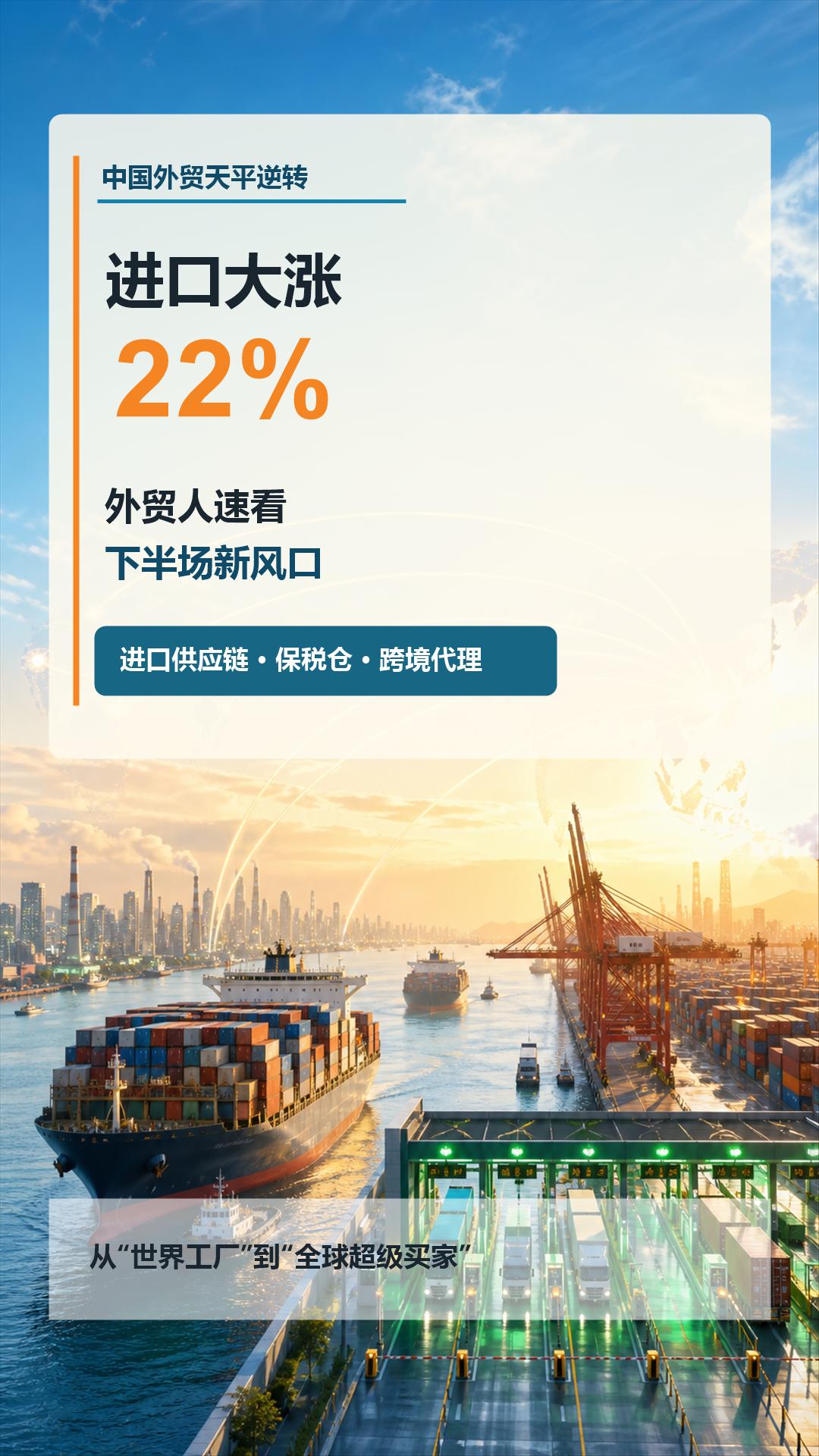
 China's foreign trade sees a turnaround: imports surge by 22%! Foreign trade professionals should quickly take note of the new trends in the second half of the year
 What Does a Global Traffic Ecosystem Service Provider Do? What Are the Differences from a Single Advertising Agency

Related Products
 EasyCamp SaaS Smart Website Marketing SystemE-Yingbao SaaS Smart Website Marketing System: AI-powered, zero-code website building. Rapidly launch multilingual independent e-commerce sites in just 10 minutes. Global server acceleration and AI-driven SEO optimization empower businesses to efficiently connect with global markets. The seamless integration of technology and user-friendly operation makes building e-commerce sites incredibly simple.
 AI+SEM Intelligent Advertising Marketing SystemAI+SEM drives intelligent ad creation, empowering full-funnel precision advertising marketing. The system automatically generates weekly/monthly reports, AI recommends keywords and target countries, monitors core metrics in real-time with intelligent alerts, and enables one-click high-conversion ad solutions to help quickly acquire customers and improve ROI.
 AI+SEO Dual Engine Optimization ServiceEasyWin AI+SEO Dual Engine Optimization System leverages AI-powered keyword mining, content generation, and comprehensive technical optimization to help foreign trade enterprises acquire high-quality organic traffic, significantly improving search rankings and conversion rates.
 AI+SNS Social Media Marketing SystemYingbao AI+SNS Social Media Marketing System - Precision social capture for the social media era. Supports one-click content synchronization across major platforms like Facebook and LinkedIn. AI intelligently rewrites posts for enhanced relevance. 24/7 AI customer service and user profiling analysis empower businesses to efficiently expand into global markets.
 AI+SEO营销解决方案易营宝AI+SEO营销解决方案,通过AI批量写作、智能生成TDK、精准关键词扩词等功能,全面优化网站SEO效果,提升流量与转化率。助力企业构建高效智能网站新生态。
 AI+SEM Advertising Marketing SolutionsAI+SEM Advertising Marketing Solution leverages AI technology to deeply empower SEM ad campaigns. It automatically generates weekly/monthly reports using AI, presenting account data across multiple dimensions for comprehensive insights into campaign performance and trends. The system precisely recommends keywords and target countries, intelligently generates high-conversion ad copy, and enables one-click activation of efficient campaign plans to help businesses rapidly acquire customers. Simultaneously, it monitors core metrics in real time, intelligently identifies abnormal fluctuations, and issues timely alerts to ensure stable, high-return advertising results.
 Domain Name ServicesEasyWin provides professional domain name services, including intelligent queries, one-stop registration, brand protection, and full lifecycle management, helping businesses build a digital brand image.
 EasyOperate B2C Cross-Border E-Commerce Platform & Independent WebsiteEasyStore B2C Cross-border E-commerce Independent Store is an intelligent website building and cross-border e-commerce integrated solution independently developed by EasyStore Information Technology (Beijing) Co., Ltd. The system is specially designed for small and medium-sized as well as large export enterprises, integrating 'website building, operation, marketing, advertising, and conversion' into one, helping enterprises quickly establish cross-border e-commerce independent stores to achieve brand globalization and global sales growth.
The platform supports multiple languages, multiple currencies, and multi-channel marketing, with built-in AI intelligent translation and SEO optimization systems, suitable for mainstream markets such as Southeast Asia, Europe and America, Latin America, and the Middle East, assisting Chinese manufacturing enterprises in efficiently deploying international e-commerce strategies. SSL证书易营宝提供专业SSL安全证书服务,包括单域名和泛域名证书,确保网站数据传输加密、身份验证和完整性保护,助力企业建立安全可信的在线业务环境。









