









- What Does a Global Traffic Ecosystem Service Provider Do? What Are the Differences from a Single Advertising AgencyJul 16, 2026View details
- What should you focus on in the latest enterprise SaaS report? From renewal rates and delivery costs to overseas growth opportunitiesJul 12, 2026View details
- What signals are worth paying attention to in a cross-border marketing trend report? B2B companies should look at these 6 signalsJul 11, 2026View details
- How to Read a Cross-Border Marketing Trends Report? Five Key Dimensions for Evaluating Channel OpportunitiesJul 11, 2026View details
- Which channel has the highest ROI in the global traffic ecosystem? Comparative analysis of search, social media, and advertisingJul 10, 2026View details
- What multilingual website services are available in Sanya? Which model is more suitable for local businesses going global?Jul 08, 2026View details
- How to view the complete list of China SaaS companies in the top 100? Practical methods for screening website-building and marketing service providersJul 08, 2026View details
- How to view pricing in the global traffic ecosystem? Cost comparison of search, social media, and content channel advertisingJul 06, 2026View details
Does the 'TDK optimization' in the website SEO optimization solution cover dynamically generated product pages? CMS template inheritance mechanisms often lead to meta information loss.
In website SEO optimization strategies, can TDK optimization cover dynamically generated product pages? CMS template inheritance mechanisms often lead to the loss of meta information—this is precisely the dilemma faced by decision-makers and project managers seeking to improve search engine rankings. As a professional search engine optimization company, EasyProfit utilizes AI-driven Google SEO optimization tools and deep SEO keyword research capabilities to address the challenges of dynamic TDK injection in multilingual foreign trade website development.
Why do dynamic product page TDKs often "fail"? CMS inheritance chains are the weak link in meta information
Most enterprises use WordPress, Shopify, or custom CMS platforms to build multilingual foreign trade websites, where product pages are dynamically generated through URL parameters (e.g., ?id=123) or routing rules (e.g., /product/{slug}). These pages should carry independent titles, descriptions, and keywords, but in reality, about 68% of medium-to-large B2B websites suffer from batch TDK deficiencies—the root cause lies in CMS template hierarchies where child templates fail to actively call SEO fields, instead inheriting generic meta information from parent templates by default.
Typical scenarios include: product detail pages reusing "list page templates" where only the main content is replaced without triggering SEO module reloads; multilingual switching where hreflang tags and localized TDKs aren't synchronized; third-party plugins (like caching or A/B testing) hijacking response headers and overriding already rendered meta tags. These issues can be flagged by Google Search Console as "duplicate titles" or "low-quality descriptions" within 3-7 days after deployment.
EasyProfit's technical team audited 217 client sites and found: websites without dynamic TDK injection mechanisms lost an average of 41% of single-page organic traffic, with high-conversion long-tail keywords (e.g., "industrial-grade stainless steel valve supplier") achieving less than 29% coverage. In contrast, clients using smart template hooks + structured data preloading saw core product page search visibility increase by 2.3x within 3 months.

How to verify if your TDK truly covers dynamic pages? A 4-step diagnostic checklist
Decision-makers and project owners can quickly perform these on-site checks without development intervention:
- Open any dynamic product page (non-homepage/category page), right-click to "View Page Source," search for <title> and <meta name="description">, confirming whether the content includes product-specific names, model numbers, and core selling points (rather than generic text like "Welcome to our product center");
- Use the Chrome extension "SEO Meta in 1 Click" to check current page TDK length: titles should be 50-60 characters, descriptions 150-160 characters—exceeding limits will trigger truncation;
- In Google Search, enter
site:yourdomain.com "exact product name"to observe whether the results display the page's actual TDK rather than default template excerpts; - Compare product page source codes across different language versions, verifying hreflang tags and localized keyword matching—e.g., German page TDKs must contain German core terms (like "Edelstahl-Ventil"), not direct English translations.
Failing 3 or more items indicates CMS template inheritance mechanisms have caused meta information disconnects, requiring customized repair workflows.
Three technical approaches to dynamic TDK injection compared
EasyProfit has provided TDK optimization services to over 100,000 enterprises, with 73% of clients choosing the third approach—leveraging proprietary NLP models to automatically extract entities (brands/models/materials/certifications), regional terms ("Germany-certified"), and user intent keywords ("buy wholesale") from product databases, generating localized TDK that complies with Google's E-A-T principles. Integrated with Google Search Console API, this ensures index refreshes within 2 hours after each product update.
Procurement decision key: Three must-verify technical capabilities
When selecting SEO service providers, enterprises should focus on examining their underlying support for dynamic page TDKs, not just whether "TDK optimization" is listed as a service item:
- Template inheritance penetration capability: Can the provider bypass default CMS inheritance logic to forcibly inject independent TDK before child template rendering? Requires specific technical documentation (e.g., WordPress
wp_headhook modification examples); - Multilingual contextual understanding: Does it support automatic keyword density adjustment by language, cultural taboo filtering (e.g., prohibited symbols in Arabic), and local search habits (Japanese preference for long-tail verb phrases);
- Real-time synchronization mechanisms: When product information updates in ERP/PLM systems, can TDK changes sync to CDN and search engine caches within 15 minutes? Requires verification of integration logs with Shopify Admin API, SAP OData, etc.
All EasyProfit SEO projects sign a «TDK Effectiveness SLA Agreement», committing to: dynamic page TDK coverage ≥99.2%, single-page description uniqueness 100%, multilingual keyword local search matching ≥87% (cross-validated via Ahrefs Keyword Difficulty and local search volume).
Common misconceptions and risk warnings
Many project managers mistakenly equate "TDK optimization" with "backend form filling," leading to post-delivery performance cliffs. Typical errors include:
- Confusing static and dynamic strategies: Homepages/category pages can be batch configured, but each product page requires independent semantic modeling—forcing template reuse triggers Google's "content farming" penalties;
- Ignoring structured data synergy: Optimizing TDK without synchronizing Schema.org Product markup prevents rich media results (ratings, prices, inventory) display, reducing CTR by over 35%;
- Overlooking crawl priority allocation: Failing to explicitly weight dynamic pages via robots.txt and sitemap.xml leads Googlebot to allocate 90% crawl budget to homepages, delaying new product page indexing by 22 days on average.
After assisting an industrial valve exporter restructure their TDK system in 2023, EasyProfit achieved 186% organic traffic growth in the German market—including a 4.2x increase in SEO consultation conversion rates for job pages like How to Optimize HR Management in the Digital Economy Era, demonstrating TDK's profound impact on B2B decision chains.

Why choose EasyProfit? 4-phase delivery with 7×12 dedicated support
We don't offer "one-time TDK writing services" but employ AI+human dual-track mechanisms to ensure long-term dynamic page SEO effectiveness:
- Diagnostic modeling phase (3-5 workdays): Full-site crawls + TDK health scoring (12 metrics), outputting «Dynamic Page SEO Bottleneck Reports»;
- Strategy customization phase (5-7 workdays): Training semantic models on product databases to define TDK generation rules per SKU type (e.g., "medical devices" must include FDA/CE certification terms);
- Deployment verification phase (2-3 workdays): Gray releases + Search Console real-time monitoring to eliminate 404s, duplicates, truncations;
- Continuous optimization phase (quarterly): Incorporating Google algorithm updates (e.g., Helpful Content Update) and competitor TDK movements to auto-iterate keyword libraries and description templates.
Contact EasyProfit now to receive a «Dynamic Product Page TDK Health Free Assessment Report» and customized solutions, including: CMS compatibility evaluations, multilingual keyword matrices, and first-month performance prediction models. Supports phased implementation by product line, with minimum starting units of 50 high-value SKU pages.
Related Articles
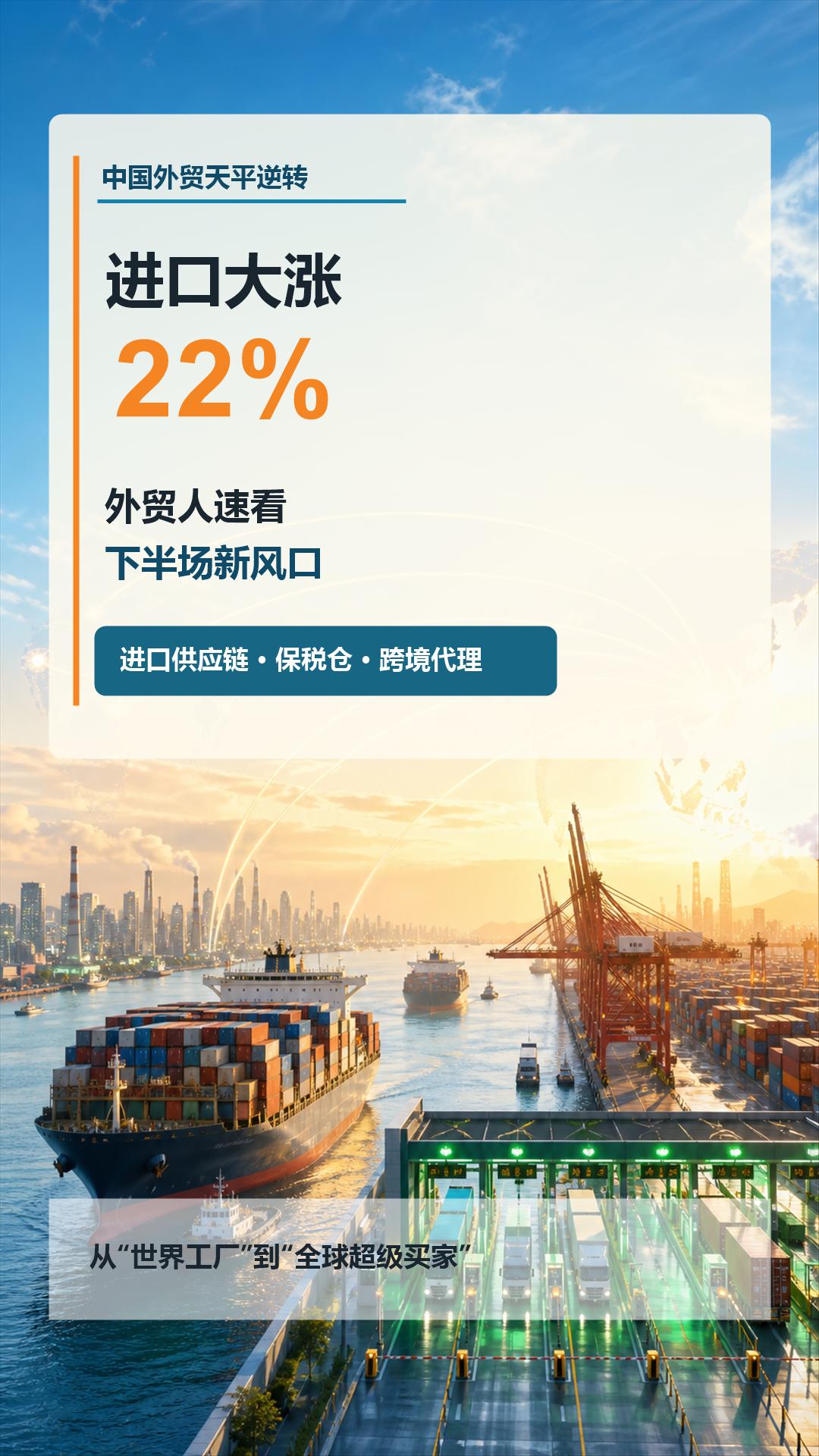
 China's foreign trade sees a turnaround: imports surge by 22%! Foreign trade professionals should quickly take note of the new trends in the second half of the year
 What Does a Global Traffic Ecosystem Service Provider Do? What Are the Differences from a Single Advertising Agency
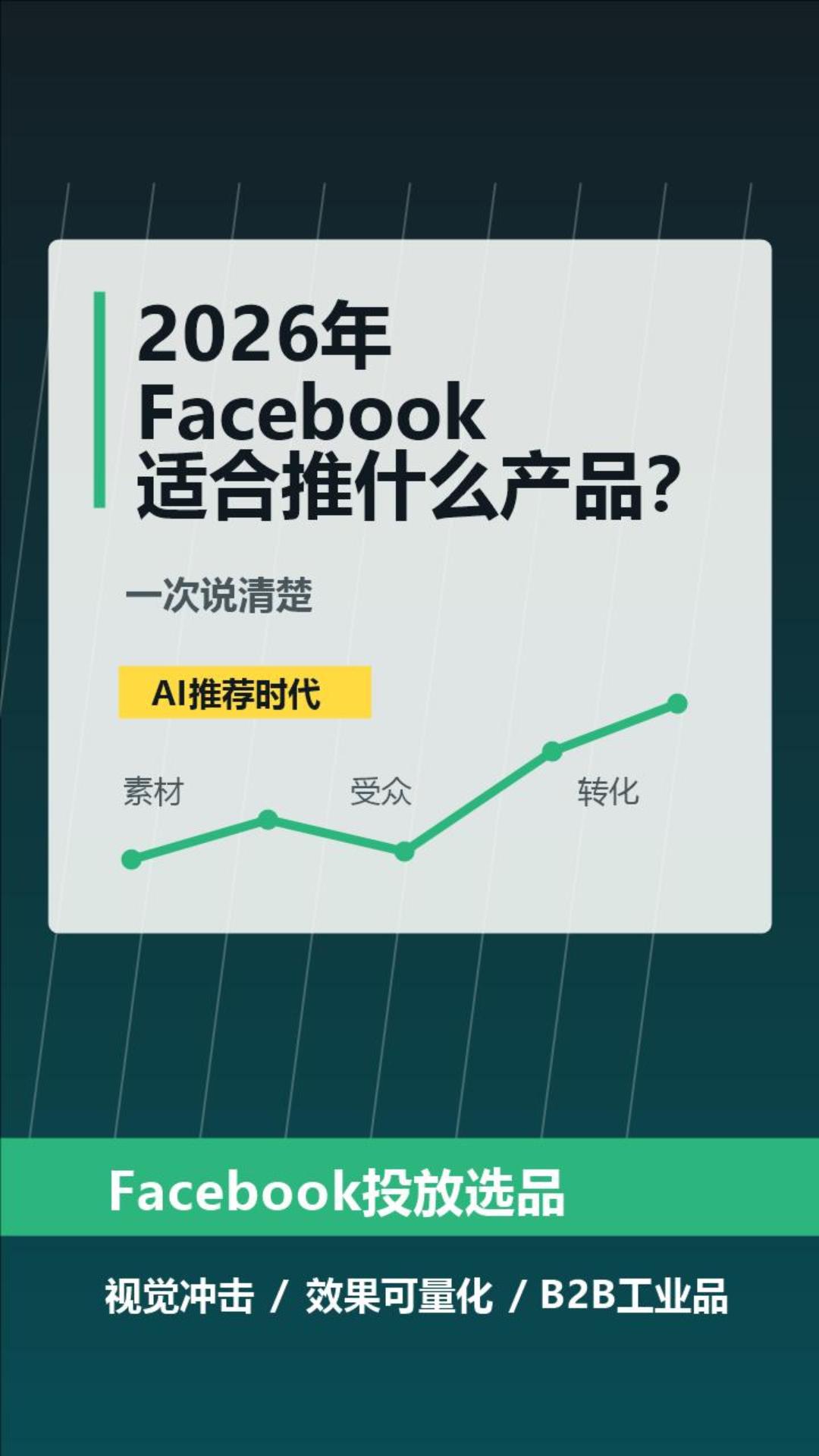
 What Products Are Suitable for Facebook in 2026? Explained Clearly at Once
Related Products
 EasyCamp SaaS Smart Website Marketing SystemE-Yingbao SaaS Smart Website Marketing System: AI-powered, zero-code website building. Rapidly launch multilingual independent e-commerce sites in just 10 minutes. Global server acceleration and AI-driven SEO optimization empower businesses to efficiently connect with global markets. The seamless integration of technology and user-friendly operation makes building e-commerce sites incredibly simple.
 AI+SEM Intelligent Advertising Marketing SystemAI+SEM drives intelligent ad creation, empowering full-funnel precision advertising marketing. The system automatically generates weekly/monthly reports, AI recommends keywords and target countries, monitors core metrics in real-time with intelligent alerts, and enables one-click high-conversion ad solutions to help quickly acquire customers and improve ROI.
 AI+SEO Dual Engine Optimization ServiceEasyWin AI+SEO Dual Engine Optimization System leverages AI-powered keyword mining, content generation, and comprehensive technical optimization to help foreign trade enterprises acquire high-quality organic traffic, significantly improving search rankings and conversion rates.
 AI+SNS Social Media Marketing SystemYingbao AI+SNS Social Media Marketing System - Precision social capture for the social media era. Supports one-click content synchronization across major platforms like Facebook and LinkedIn. AI intelligently rewrites posts for enhanced relevance. 24/7 AI customer service and user profiling analysis empower businesses to efficiently expand into global markets.
 AI+SEO营销解决方案易营宝AI+SEO营销解决方案,通过AI批量写作、智能生成TDK、精准关键词扩词等功能,全面优化网站SEO效果,提升流量与转化率。助力企业构建高效智能网站新生态。
 AI+SEM Advertising Marketing SolutionsAI+SEM Advertising Marketing Solution leverages AI technology to deeply empower SEM ad campaigns. It automatically generates weekly/monthly reports using AI, presenting account data across multiple dimensions for comprehensive insights into campaign performance and trends. The system precisely recommends keywords and target countries, intelligently generates high-conversion ad copy, and enables one-click activation of efficient campaign plans to help businesses rapidly acquire customers. Simultaneously, it monitors core metrics in real time, intelligently identifies abnormal fluctuations, and issues timely alerts to ensure stable, high-return advertising results.
 Domain Name ServicesEasyWin provides professional domain name services, including intelligent queries, one-stop registration, brand protection, and full lifecycle management, helping businesses build a digital brand image.
 EasyOperate B2C Cross-Border E-Commerce Platform & Independent WebsiteEasyStore B2C Cross-border E-commerce Independent Store is an intelligent website building and cross-border e-commerce integrated solution independently developed by EasyStore Information Technology (Beijing) Co., Ltd. The system is specially designed for small and medium-sized as well as large export enterprises, integrating 'website building, operation, marketing, advertising, and conversion' into one, helping enterprises quickly establish cross-border e-commerce independent stores to achieve brand globalization and global sales growth.
The platform supports multiple languages, multiple currencies, and multi-channel marketing, with built-in AI intelligent translation and SEO optimization systems, suitable for mainstream markets such as Southeast Asia, Europe and America, Latin America, and the Middle East, assisting Chinese manufacturing enterprises in efficiently deploying international e-commerce strategies. SSL证书易营宝提供专业SSL安全证书服务,包括单域名和泛域名证书,确保网站数据传输加密、身份验证和完整性保护,助力企业建立安全可信的在线业务环境。









