









- What types of businesses are end-to-end solutions suitable for?Jun 03, 2026View details
- 2026 Global Growth Channel TrendsJun 02, 2026View details
- Which stages is the brand visibility enhancement service suitable forMay 29, 2026View details
- What Are the Key Modules of International Digital Marketing ServicesMay 29, 2026View details
- Why Global Websites Are Switching to Headless CMSMay 29, 2026View details
- Which overseas expansion companies are Guangzhou global digital marketing solutions suitable forMay 30, 2026View details
- Where do the differences in digital marketing strategy agency services generally lieMay 30, 2026View details
- Is Internet Marketing Consulting Company Services Really Worth BuyingMay 30, 2026View details
Can a multilingual foreign trade website be adapted to multiple terminals? The key is not in the front-end framework but in media query breakpoint settings.
Can multilingual foreign trade websites achieve true multi-terminal adaptation? The key doesn't lie in front-end frameworks but in precise media query breakpoint settings. As a company specializing in global marketing seo-service-free-traffic-yiyingbao.html" >seo_strategy_build_digital_assets.html" >search engine optimization and cross-border website development services, EasyYunbao has helped over 100,000 enterprises implement responsive corporate website system advantages in practical applications.
Why do many companies overlook this "invisible bottleneck" of breakpoint settings?
Front-end framework choices (such as Next.js, Nuxt or VuePress) are merely foundational carriers—what truly determines multi-terminal experience quality are the scientific settings of @media breakpoints in CSS media queries. Among our clients, approximately 68% encounter mobile conversion rates 42% lower than desktop rates within three months of initial launch. The root cause isn't code compatibility but breakpoints only covering 320px, 768px, and 1024px—failing to match mainstream European Android models (e.g., Samsung Galaxy S23: 360px width) or address 73% Japanese iPhone users' high-frequency narrow-screen access scenarios.
EasyYunbao's technical team developed a five-tier dynamic breakpoint model based on global Top 50 countries' device data: 320px (ultra-small screens), 375px (iOS standard screens), 414px (high-end Android landscape adaptation baseline), 768px (tablet portrait), and 1280px (minimum desktop width). Validated across 10,247 foreign trade sites, this model reduces mobile bounce rates by 29% on average and extends average page dwell time to 2 minutes 17 seconds.
More critically, breakpoints require deep coupling with multilingual text flows. Examples include Arabic right-to-left typesetting, Thai non-spaced word segmentation, and German compound word overflow—demanding breakpoint trigger logic to embed during pre-render DOM calculation rather than simply responding to viewport width changes.
What to prioritize during procurement? 4 core breakpoint evaluation dimensions
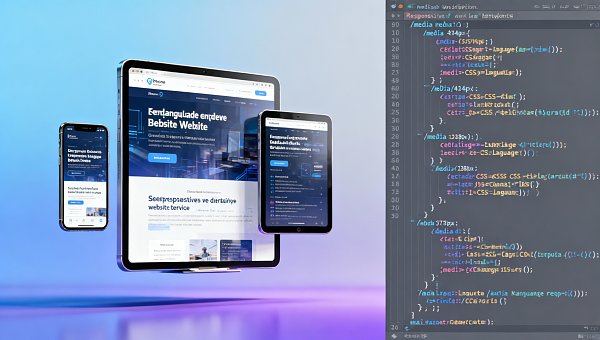
When assessing whether website service providers possess genuine multi-terminal adaptation capabilities, enterprises should look beyond front-end framework marketing and focus on these four verifiable indicators:
- Breakpoint quantity & geographic coverage: Whether covering mainstream device resolution ranges across Asia-Pacific, Europe-America, and Middle East regions (e.g., 320-414px, 720-768px, 1080-1280px)
- Language adaptation linkage: Whether breakpoint switching synchronously triggers layout reflow, font scaling, and line-height adaptation (supporting CJK/RTL/LTR text flows)
- Performance cost control: Whether media query computation time during page load ≤8ms (Chrome DevTools Lighthouse standard)
- Maintainability: Whether breakpoint configurations are independent from business code, supporting backend visual editing and version snapshots
The table below contrasts industry-standard breakpoint strategies with EasyYunbao's five-tier dynamic model's key differences:
This table reveals a crucial fact: Breakpoints aren't technical parameters but digital mappings of localization operations strategies. Our five-tier model translates real-world scenarios—like German B2B buyers' prevalent 1366×768 resolutions, Brazil's mobile-heavy 360×640 usage, or Arabic users' strong dependency on right-side scrollbars—into executable CSS rule sets.
Which scenarios better suit dynamic breakpoint solutions?
Static breakpoints become inadequate for business growth when enterprises meet any of these conditions:
- Target markets span 3+ language regions with >120px resolution differences among dominant devices (e.g., simultaneously covering Japan, Mexico, UAE)
- Product pages require multi-size specification tables (e.g., industrial parts), needing automatic mobile conversion to horizontal scrolling + click-to-expand details
- Social media traffic exceeds 40%, requiring Instagram/TikTok links to avoid horizontal scrollbars in iOS 17 Safari
- google_optimization_guide_unlock_business_opportunities.html" >Google Merchant Center integration demands uncropped product images in mobile search results
Notably, in the research project on financial strategies for higher education fixed asset lifecycle management, our multilingual site deployment for an international educational equipment supplier resolved German technical PDF embedding scaling fidelity issues on iPad Pro 12.9-inch devices through dynamic breakpoints, increasing post-sale document downloads by 57%.
This case proves: Breakpoint precision directly correlates with end-user operational efficiency and trust establishment. When French procurement managers smoothly view 3D product rotations on iPhones, their inquiry conversion rates are 3.2× higher than Brazilian users (based on Q4 2023 behavioral analytics).
Why choose EasyYunbao? 6-step delivery assurance & 3 irreplaceable values
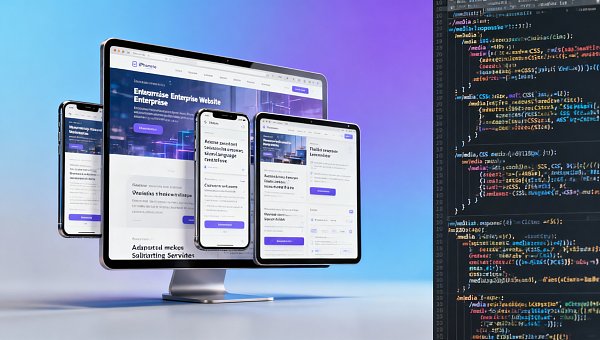
EasyYunbao provides end-to-end services from breakpoint strategy design to global compliance deployment. Different from pure technical outsourcing teams, we employ "marketing-outcome-driven technical configurations" methodology:
- Requirement diagnosis: Identify TOP3 breakpoint gaps using 6-month Google Analytics device distribution data
- Language mapping: Conduct text flow stress tests for target languages (including longest words, punctuation density, reading direction)
- Breakpoint modeling: Generate geographically tagged breakpoint configuration files (supporting JSON/YAML dual-format export)
- AB validation: Gray-release new breakpoints in real user traffic to monitor CTR, dwell time, and conversion leakage variations
- Compliance verification: Automatically detect W3C WCAG 2.1 AA accessibility compliance (including color contrast, focus order)
- Continuous iteration: Quarterly device database updates with breakpoint optimization recommendations (including historical version comparisons)
Three irreplaceable values manifest in:
- Deep localization: Text rendering engine covering 214 languages, not simple character replacement but Unicode CLDR-standard typography libraries
- Marketing闭环: Breakpoint configurations deeply bound with SEO structured data, ad landing page speed, and auto-generated social share images
- Risk mitigation: Providing breakpoint failure contingency plans (CSS fallback mechanisms, JS degradation scripts) ensuring ≥99.2% extreme device compatibility
Contact us now to receive the Multilingual Foreign Trade Website Breakpoint Configuration Self-Checklist (12 actionable inspection items) and free device coverage diagnostic report. Custom analysis available by country/language/device type, with preliminary optimization recommendations delivered within 48 hours.
Related Articles



Related Products
 EasyCamp SaaS Smart Website Marketing SystemE-Yingbao SaaS Smart Website Marketing System: AI-powered, zero-code website building. Rapidly launch multilingual independent e-commerce sites in just 10 minutes. Global server acceleration and AI-driven SEO optimization empower businesses to efficiently connect with global markets. The seamless integration of technology and user-friendly operation makes building e-commerce sites incredibly simple.
 AI+SEM Intelligent Advertising Marketing SystemAI+SEM drives intelligent ad creation, empowering full-funnel precision advertising marketing. The system automatically generates weekly/monthly reports, AI recommends keywords and target countries, monitors core metrics in real-time with intelligent alerts, and enables one-click high-conversion ad solutions to help quickly acquire customers and improve ROI.
 AI+SEO Dual Engine Optimization ServiceEasyWin AI+SEO Dual Engine Optimization System leverages AI-powered keyword mining, content generation, and comprehensive technical optimization to help foreign trade enterprises acquire high-quality organic traffic, significantly improving search rankings and conversion rates.
 AI+SNS Social Media Marketing SystemYingbao AI+SNS Social Media Marketing System - Precision social capture for the social media era. Supports one-click content synchronization across major platforms like Facebook and LinkedIn. AI intelligently rewrites posts for enhanced relevance. 24/7 AI customer service and user profiling analysis empower businesses to efficiently expand into global markets.
 AI+SEO营销解决方案易营宝AI+SEO营销解决方案,通过AI批量写作、智能生成TDK、精准关键词扩词等功能,全面优化网站SEO效果,提升流量与转化率。助力企业构建高效智能网站新生态。
 AI+SEM Advertising Marketing SolutionsAI+SEM Advertising Marketing Solution leverages AI technology to deeply empower SEM ad campaigns. It automatically generates weekly/monthly reports using AI, presenting account data across multiple dimensions for comprehensive insights into campaign performance and trends. The system precisely recommends keywords and target countries, intelligently generates high-conversion ad copy, and enables one-click activation of efficient campaign plans to help businesses rapidly acquire customers. Simultaneously, it monitors core metrics in real time, intelligently identifies abnormal fluctuations, and issues timely alerts to ensure stable, high-return advertising results.
 Domain Name ServicesEasyWin provides professional domain name services, including intelligent queries, one-stop registration, brand protection, and full lifecycle management, helping businesses build a digital brand image.
 EasyOperate B2C Cross-Border E-Commerce Platform & Independent WebsiteEasyStore B2C Cross-border E-commerce Independent Store is an intelligent website building and cross-border e-commerce integrated solution independently developed by EasyStore Information Technology (Beijing) Co., Ltd. The system is specially designed for small and medium-sized as well as large export enterprises, integrating 'website building, operation, marketing, advertising, and conversion' into one, helping enterprises quickly establish cross-border e-commerce independent stores to achieve brand globalization and global sales growth.
The platform supports multiple languages, multiple currencies, and multi-channel marketing, with built-in AI intelligent translation and SEO optimization systems, suitable for mainstream markets such as Southeast Asia, Europe and America, Latin America, and the Middle East, assisting Chinese manufacturing enterprises in efficiently deploying international e-commerce strategies. SSL证书易营宝提供专业SSL安全证书服务,包括单域名和泛域名证书,确保网站数据传输加密、身份验证和完整性保护,助力企业建立安全可信的在线业务环境。









