









- Is Brand Globalization Marketing Consulting Worth Buying? At What Stage Should Companies Bring It InJul 01, 2026View details
- Cross-Border Marketing Trend Research: Why More and More Companies Are Starting to Deploy AI Search and GEO OptimizationJun 30, 2026View details
- Cross-Border Marketing Trend Research: How Independent Sites, AI Content, and Short-Video Customer Acquisition Are ChangingJun 30, 2026View details
- How Can a Brand Updates Page Be Made More SEO-Friendly? Analysis of Update Frequency, Content Structure, and Internal Linking StrategyJun 28, 2026View details
- What stages does the cross-border services ecosystem include? How do website building, promotion, payment, and compliance work togetherJun 22, 2026View details
- How will email marketing costs change in 2026Jun 22, 2026View details
- The China-US tariff arrangement has reached a preliminary consensus, and the trade association will be establishedJun 15, 2026View details
- Should overseas brand marketing start with ads or contentJun 21, 2026View details
What are the common misconceptions about search engine optimization techniques
When learning search engine optimization techniques, many people tend to focus on shortcuts while overlooking the relationship among search logic, content value, and conversion goals. In an integrated website + marketing services scenario, SEO is never a standalone task, but a systematic project that coordinates website building, content, data, user experience, and channels. Only by identifying common misconceptions can you avoid problems such as increased investment but unstable rankings, imprecise traffic, and stagnant inquiries.
In different business scenarios, the key criteria for judging search engine optimization techniques are not the same

Although all are doing SEO, some websites pursue brand exposure, some place greater emphasis on customer acquisition and conversion, and others need to balance multiple languages and overseas search ecosystems. If you do not first determine the scenario and only apply generic methods, search engine optimization techniques often become mechanical actions, resulting in a lot of keyword work but no real business growth.
For enterprises integrating websites + marketing services, SEO should be more closely linked with website structure, landing page planning, data analysis, advertising, and content matrix coordination. E-Marketing Information Technology (Beijing) Co., Ltd. has long provided full-chain services around intelligent website building, SEO optimization, social media marketing, and advertising. One of its core experiences is this: identify the business scenario first, then match the search engine optimization techniques, so that organic traffic can truly serve growth.
Common misconception 1: treating fast rankings as the top priority in all scenarios
Many websites, once launched, rush to pursue first-page rankings for core keywords. This approach may seem proactive, but in reality it carries high risk. High-traffic keywords are highly competitive, require long cycles, and have broad intent. Even if traffic is gained in the short term, it may not bring effective inquiries.
In a new website cold-start scenario, search engine optimization techniques should focus more on long-tail keywords, scenario keywords, question keywords, and solution keywords. Establish topical relevance first, then gradually expand toward core keywords. This is usually more stable than blindly chasing big keywords.
Applicable evaluation points
- The website has been online for a short time, and its authority foundation is weak.
- Product keywords have high search volume, but the conversion path is long.
- There is a need to verify content direction and inquiry quality as soon as possible.
Common misconception 2: the more keyword stuffing, the more effective the search engine optimization techniques
A common early SEO practice was to repeatedly stuff keywords into titles, descriptions, body text, and footers. Today, search engines place greater emphasis on semantic relevance, information completeness, and page readability. Excessive stuffing not only hurts the user experience, but may also weaken page quality assessment.
Truly effective search engine optimization techniques build a keyword cluster structure around one topic. For example, the main keyword, synonyms, application scenario keywords, comparison keywords, and question keywords should be distributed reasonably, so that the page can both cover search demand and maintain natural expression.
If you are planning a content system, you can also combine topic ideas such as Analysis of the impact of digital transformation on enterprise resilience to expand themes related to enterprise growth, technology upgrades, and marketing optimization, forming a more complete content network.
Common misconception 3: focusing only on content while ignoring website structure and technical foundations
Some companies keep publishing articles, yet the results remain average. The problem is not the quantity of content, but the structural foundation. Confusing category hierarchies, missing internal links, slow page loading, and poor mobile adaptation all directly affect crawling, indexing, and ranking performance.
In official website customer acquisition scenarios, search engine optimization techniques must be designed in sync with website building. Page templates, title rules, URL standards, breadcrumb navigation, structured content, and form paths are all foundational SEO capabilities and should not be passively patched after the website goes live.
Easily overlooked technical points
- Too many duplicate pages, dispersing topical authority.
- Images are too large, affecting access speed.
- Important pages are buried too deep, resulting in low crawl efficiency.
- Poor mobile reading experience, leading to a high bounce rate.
Common misconception 4: equating traffic growth with business growth
When reporting SEO results, many teams only look at indexing volume, clicks, and visits, while ignoring inquiry rate, engagement depth, conversion paths, and lead quality. As a result, traffic may look good, but the sales team feels no real change.
The goal of search engine optimization techniques is not to bring in just any traffic, but to attract the right people to complete the next action on the right page. For service websites, whether the page clearly communicates value, case studies, advantages, and contact paths is more critical than simple traffic numbers.
Breakdown of typical application scenarios: in different situations, SEO misconceptions manifest differently
New website launch scenario
A common misjudgment is rushing to target major core keywords while neglecting basic indexing and content expansion. At this stage, search engine optimization techniques should prioritize topic clustering, clear site sections, and long-tail keyword layout.
Old website redesign scenario
A common problem is that the redesign focuses only on visuals while ignoring URL inheritance, old-page redirects, and keyword mapping. This can easily cause the loss of existing rankings and even lead to indexing fluctuations and declining leads.
Multi-channel coordination scenario
When SEO, advertising, social media, and content marketing run in parallel, the misconception is often that each works separately. In fact, search engine optimization techniques can in turn guide ad keyword sets, content topic selection, and landing page structure, improving overall marketing efficiency.
Differences in needs across scenarios can be judged from these dimensions
More reliable scenario adaptation recommendations: bring search engine optimization techniques down to the execution level
- First, layer keywords by distinguishing brand keywords, product keywords, question keywords, and decision-stage keywords.
- Organize content by sections and topics instead of publishing scattered articles.
- Set a clear conversion action for every important page.
- Regularly check indexing, rankings, dwell time, and conversion paths.
- Unify SEO planning with website building, advertising, and social media content.
From a long-term growth perspective, search engine optimization techniques are not isolated operational actions, but part of digital operations. Building systems around content assets, channel efficiency, and organizational resilience is usually more valuable than one-time traffic spikes. If further reading is needed, you may also refer to content related to Analysis of the impact of digital transformation on enterprise resilience to understand the broader logic of coordination between technology and marketing.
Common scenario misjudgment: after doing so much, why are the results still unsatisfactory
One common reason is treating search engine optimization techniques as a fixed checklist rather than a dynamic strategy. Search demand changes, the competitive landscape changes, and the website stage also changes. If the method does not adjust with the scenario, even great effort may go in the wrong direction.
Another reason is ignoring the data closed loop. Without connecting keyword performance, page behavior, and lead outcomes, it is difficult to judge which types of content deserve more investment, which pages need to be redone, and which keywords may have traffic but no commercial value.
How to take the next step: correct misconceptions first, then establish an SEO rhythm suited to your own business
If you truly want to master search engine optimization techniques, it is recommended to first conduct a scenario-based diagnosis of the existing website: examine structure, content, technology, conversion, and data, and then determine priorities. This is more effective than blindly chasing new methods.
For businesses that need website construction and marketing to advance in coordination, it is best to incorporate SEO into the overall growth plan and plan it in sync. Only by clearly identifying misconceptions and accurately judging scenarios can search engine optimization techniques truly translate into stable rankings, precise traffic, and sustained growth.
Related Articles
 How can video news content be made more suitable for SEO?Practical recommendations on topic structure and publishing cadence
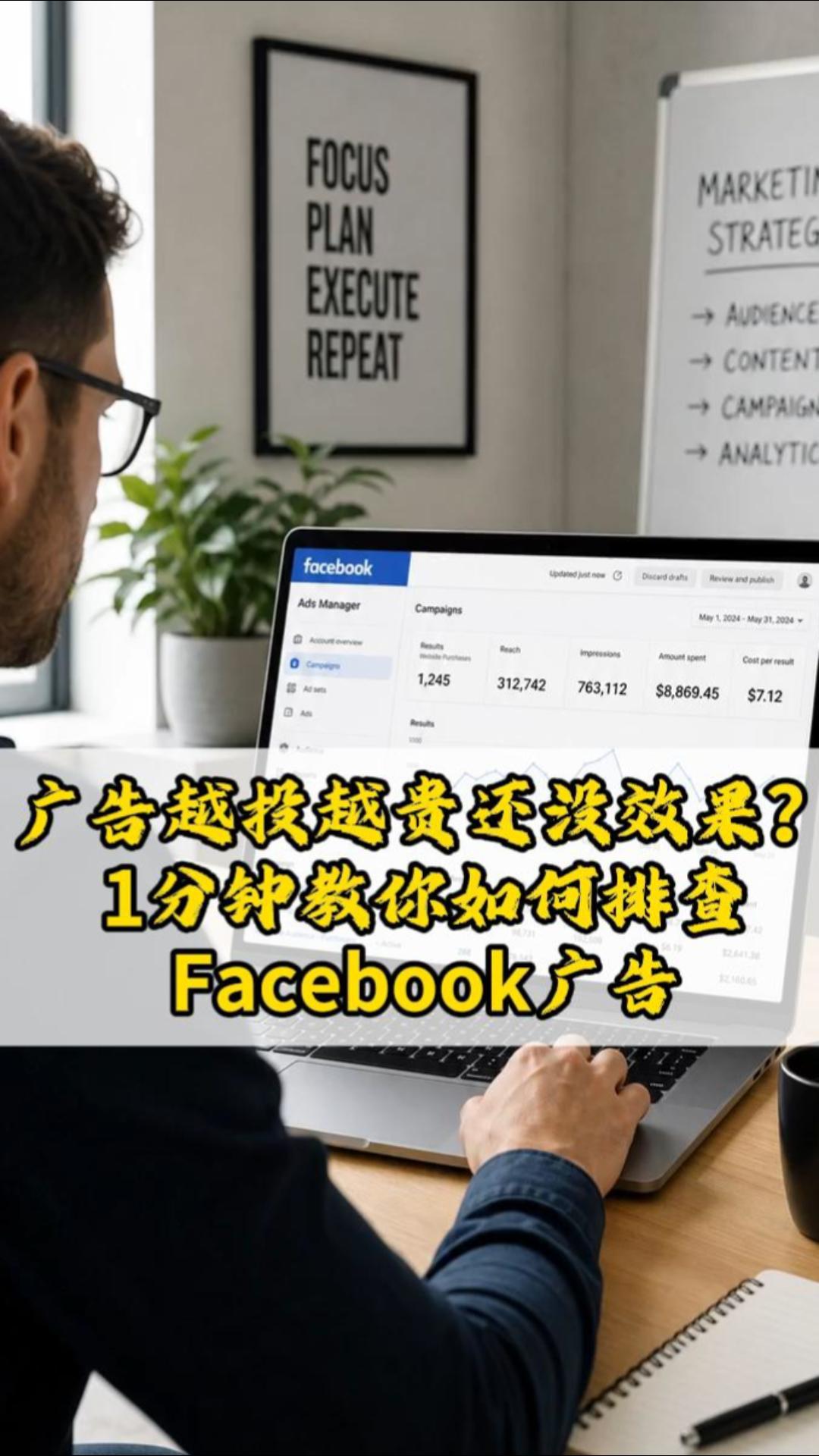
 Are your ads getting more expensive with no results?Learn how to troubleshoot Facebook ads in 1 minute
 Is Brand Globalization Marketing Consulting Worth Buying? At What Stage Should Companies Bring It In


Related Products
 EasyCamp SaaS Smart Website Marketing SystemE-Yingbao SaaS Smart Website Marketing System: AI-powered, zero-code website building. Rapidly launch multilingual independent e-commerce sites in just 10 minutes. Global server acceleration and AI-driven SEO optimization empower businesses to efficiently connect with global markets. The seamless integration of technology and user-friendly operation makes building e-commerce sites incredibly simple.
 AI+SEM Intelligent Advertising Marketing SystemAI+SEM drives intelligent ad creation, empowering full-funnel precision advertising marketing. The system automatically generates weekly/monthly reports, AI recommends keywords and target countries, monitors core metrics in real-time with intelligent alerts, and enables one-click high-conversion ad solutions to help quickly acquire customers and improve ROI.
 AI+SEO Dual Engine Optimization ServiceEasyWin AI+SEO Dual Engine Optimization System leverages AI-powered keyword mining, content generation, and comprehensive technical optimization to help foreign trade enterprises acquire high-quality organic traffic, significantly improving search rankings and conversion rates.
 AI+SNS Social Media Marketing SystemYingbao AI+SNS Social Media Marketing System - Precision social capture for the social media era. Supports one-click content synchronization across major platforms like Facebook and LinkedIn. AI intelligently rewrites posts for enhanced relevance. 24/7 AI customer service and user profiling analysis empower businesses to efficiently expand into global markets.
 AI+SEO营销解决方案易营宝AI+SEO营销解决方案,通过AI批量写作、智能生成TDK、精准关键词扩词等功能,全面优化网站SEO效果,提升流量与转化率。助力企业构建高效智能网站新生态。
 AI+SEM Advertising Marketing SolutionsAI+SEM Advertising Marketing Solution leverages AI technology to deeply empower SEM ad campaigns. It automatically generates weekly/monthly reports using AI, presenting account data across multiple dimensions for comprehensive insights into campaign performance and trends. The system precisely recommends keywords and target countries, intelligently generates high-conversion ad copy, and enables one-click activation of efficient campaign plans to help businesses rapidly acquire customers. Simultaneously, it monitors core metrics in real time, intelligently identifies abnormal fluctuations, and issues timely alerts to ensure stable, high-return advertising results.
 Domain Name ServicesEasyWin provides professional domain name services, including intelligent queries, one-stop registration, brand protection, and full lifecycle management, helping businesses build a digital brand image.
 EasyOperate B2C Cross-Border E-Commerce Platform & Independent WebsiteEasyStore B2C Cross-border E-commerce Independent Store is an intelligent website building and cross-border e-commerce integrated solution independently developed by EasyStore Information Technology (Beijing) Co., Ltd. The system is specially designed for small and medium-sized as well as large export enterprises, integrating 'website building, operation, marketing, advertising, and conversion' into one, helping enterprises quickly establish cross-border e-commerce independent stores to achieve brand globalization and global sales growth.
The platform supports multiple languages, multiple currencies, and multi-channel marketing, with built-in AI intelligent translation and SEO optimization systems, suitable for mainstream markets such as Southeast Asia, Europe and America, Latin America, and the Middle East, assisting Chinese manufacturing enterprises in efficiently deploying international e-commerce strategies. SSL证书易营宝提供专业SSL安全证书服务,包括单域名和泛域名证书,确保网站数据传输加密、身份验证和完整性保护,助力企业建立安全可信的在线业务环境。









