









- How to assess foreign trade website development trends?Looking at 2026 changes from multilingual,AI content to conversion pathsJul 04, 2026View details
- What are the new trends in multilingual marketing data analytics tools in 2026? Focus on attribution、automation and complianceJul 04, 2026View details
- Is Brand Globalization Marketing Consulting Worth Buying? At What Stage Should Companies Bring It InJul 01, 2026View details
- Cross-Border Marketing Trend Research: Why More and More Companies Are Starting to Deploy AI Search and GEO OptimizationJun 30, 2026View details
- Cross-Border Marketing Trend Research: How Independent Sites, AI Content, and Short-Video Customer Acquisition Are ChangingJun 30, 2026View details
- How Can a Brand Updates Page Be Made More SEO-Friendly? Analysis of Update Frequency, Content Structure, and Internal Linking StrategyJun 28, 2026View details
- What stages does the cross-border services ecosystem include? How do website building, promotion, payment, and compliance work togetherJun 22, 2026View details
- How will email marketing costs change in 2026Jun 22, 2026View details
Does building solution pages help improve inquiry conversion rates
Does building solution pages help improve inquiry conversion rates? The answer is usually yes, but the prerequisite is not as simple as “adding one more page.” A truly effective solution page is designed to clearly explain what a company can do, who it is suitable for, how it can be implemented, and what results it can deliver, helping visitors decide more quickly whether you are worth contacting.
For foreign trade companies, manufacturing factories, cross-border brands, and global expansion teams, website traffic does not equal business opportunities. Many websites can attract visits but still fail to generate high-quality inquiries for a long time. The problem is often not that no one is visiting, but that after reading the website, visitors are still unsure: whether you understand their industry, whether you can solve their problems, and whether cooperation can truly produce results.
From this perspective, the answer to whether building solution pages helps improve inquiry conversion rates is not merely “yes, it helps.” More often, it determines whether a website can be upgraded from a display-oriented site into a marketing website with real customer acquisition capabilities. This value is especially obvious in B2B and overseas marketing scenarios.
Why Many Websites Have Traffic but No Inquiries
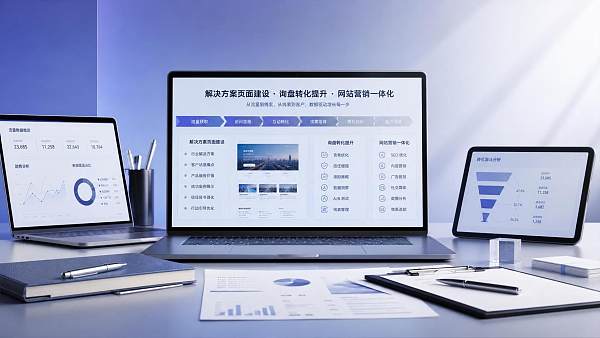
The issue with many corporate websites is not that the homepage is not attractive enough, nor that the product introduction is incomplete, but that they lack a layer of content that “translates product capabilities into customer value.” After entering the website, users may see the company profile, product specifications, and case screenshots, yet they still cannot quickly understand how these relate to their business goals.
For users searching for “Does building solution pages help improve inquiry conversion rates,” what they truly care about is not the page name itself, but why the company website generates so few inquiries and whether it is worth investing resources in solution pages. If such pages are built, can they actually improve conversions, rather than simply adding another section?
In reality, when customers arrive at a website through search, they usually have a clear task in mind. For example, a manufacturing company may be looking for a B2B foreign trade customer acquisition solution, a cross-border brand may be looking for multilingual independent website development services, and a global expansion team may be looking for a growth method that combines SEO and advertising. At this point, if the page can only introduce “who we are” but cannot answer “how you can solve my problem,” the conversion process is likely to break down.
This is also why simple product pages, service pages, and About Us pages often struggle to handle the full conversion task. They are suitable for providing basic information, but they are not good at meeting the decision-making needs of high-intent users. The significance of a solution page lies in systematically connecting customer problems, scenario-based needs, service paths, and expected results.
Why Solution Pages Are More Likely to Improve Inquiry Conversion Rates
The reason solution pages are more likely to improve inquiry conversion rates is that they are closer to how users make decisions. Most potential customers do not think according to your organizational structure. They do not first distinguish whether you sell website development, SEO, or advertising. Instead, they first look at whether you can solve practical problems such as “difficulty acquiring customers,” “low conversion rates,” and “failure to open overseas markets.”
A good solution page usually defines the problem first, then matches the scenario, then provides the method, and finally proves the results. This content structure can significantly reduce the visitor’s understanding cost. For business customers, the lower the understanding cost, the faster trust is built, and the higher the likelihood of leaving an inquiry.
At the same time, solution pages can also improve lead quality. Because they actively filter customers, people who truly match the target scenario, budget, and needs are more willing to contact you, while mismatched traffic will naturally drop off. What this brings is not a “superficial increase in inquiry volume,” but an “increase in the proportion of valid inquiries,” which is more valuable to the sales team.
From an SEO perspective, solution pages are also better suited to capturing medium- and high-intent keywords. Users often search not for broad terms, but for phrases close to demand expression, such as “foreign trade independent website customer acquisition solution,” “multilingual website development solution,” and “overseas promotion solution for the manufacturing industry.” These types of keywords naturally match the content structure of solution pages, making it easier to form a closed loop from search to conversion.
When Companies Especially Need to Build Solution Pages
Not every website needs to pile up a large number of solution pages, but for the following types of companies, such pages are almost essential for improving conversions. The first type is companies with relatively complex businesses and longer service chains, because customers need more explanation to understand the value. The second type is companies serving multiple industries or multiple national markets, because different audiences have clearly different concerns.
Services such as AI intelligent website development, multilingual website development, B2B foreign trade marketing, cross-border e-commerce stores, Google SEO optimization, Google advertising, and Facebook advertising marketing cannot be clearly explained in one sentence. Users care about capability boundaries, applicable scenarios, investment cycles, collaboration methods, and final results. These are exactly the jobs that solution pages should undertake.
The third type is typical high-ticket or long-decision-cycle businesses. The more a purchase requires evaluation by multiple people and repeated comparison, the more it needs a page to help align internal understanding. It serves not only one visitor, but often an entire procurement team. Whether the page clearly explains the logic directly affects whether customers are willing to enter the communication stage.
If a company’s current website shows signs such as “decent traffic but few form submissions,” “many consultations but low precision,” “sales repeatedly explaining basic questions,” or “high bounce rates after users enter the site from different advertising channels,” it usually indicates that the website lacks a content hub to receive intent-driven traffic. At this point, building solution pages is often a higher priority than simply continuing to buy more traffic.
What Content Should a Solution Page That Truly Drives Conversions Include
Many companies have also created so-called solution pages, but the results are average. The reason is usually not that the page type is wrong, but that the content still remains at the level of a “service list.” A truly effective page does not simply list website development, SEO, advertising, and social media separately. Instead, it reorganizes content around customer goals, enabling customers to understand how the set of services works together after reading.
The first part should clearly define the applicable audience and business scenarios. For example, it may be suitable for customer acquisition by foreign trade manufacturing companies, independent website growth for cross-border e-commerce brands, or teams that want multilingual market coverage in North America, Europe, and Southeast Asia. The more specific it is, the easier it is for visitors to judge “whether this is meant for me,” rather than continuing to wait and see.
The second part should clearly explain the core problems and solution path. Do not only say “increase exposure” or “improve conversion.” Instead, explain where the problem occurs, such as the website not being indexed, the page lacking a multilingual structure, SEO content being disconnected from ad landing pages, or social media traffic lacking a receiving page. Then explain the corresponding handling methods to establish professionalism.
The third part is result proof and trust building. Business customers rarely submit a form just because of the sentence “we are very professional.” They need to see case types, service processes, delivery mechanisms, data indicators, or methodologies. Even if sensitive data is not disclosed, customers should still see that you have done similar projects and know how to truly implement the solution.
The fourth part is a clear conversion entry point. The page should not end at reading completion. It should naturally guide the next step, such as booking a diagnosis, obtaining solution recommendations, requesting a demo, or submitting requirements. Improving inquiry conversion rates depends on a clear, low-friction action path.
What Metrics Managers Should Review When Evaluating Whether the Investment Is Worthwhile
Many managers have a very direct concern: does building solution pages help improve inquiry conversion rates, and is it worth investing budget and team time? When evaluating this, do not only look at whether the page has been launched. Instead, look at whether it can improve key business metrics, including form submission rate, valid inquiry rate, time on page, pre-sales communication cost, and channel conversion efficiency.
If, after a page goes live, traffic does not change much but the proportion of valid leads increases significantly and sales communication becomes smoother, it shows that the page has already created value. For B2B and global expansion service industries, what really matters is not shallow traffic, but whether high-intent customers can be steadily moved into the sales funnel.
It is also important to see whether the page has long-term reuse value. A good solution page can not only receive organic SEO traffic, but also be used for Google ad landing, social media promotion reception, sales reference materials sent to customers, and secondary follow-up after exhibitions. When one page serves multiple customer acquisition scenarios at the same time, its input-output ratio is often higher than that of a one-time campaign page.
For companies that provide integrated website and marketing services, this type of page is especially suitable for demonstrating “system capabilities” rather than “single-point capabilities.” This is because what customers ultimately purchase is not an isolated action, but a complete growth path from website development and optimization to customer acquisition and conversion. Whether the page can clearly explain this path directly affects whether customers are willing to entrust the project to you.
Common Mistakes Companies Make When Building Solution Pages
The first common mistake is writing a solution page as a company promotion page. The content describes the company’s founding time, technical strength, and platform features at length, but rarely responds to the customer’s situation. This can make the page look complete, but it offers limited help for conversion, because customers always care first about their own problems, not your resume.
The second mistake is having concepts but no scenarios. For example, repeatedly emphasizing digital marketing, AI-driven capabilities, and global growth without explaining which industries, markets, or stages of companies they are suitable for. Concepts can create positioning, but scenarios drive decisions. Without scenarios, users cannot connect the content with their own needs.
The third mistake is a chaotic content structure. Product introductions, cases, processes, advantages, and CTAs are randomly piled together, leaving users unable to grasp the key point after reading. A solution page must have a clear information rhythm, guiding users step by step through the decision-making process of “identifying the problem, understanding the solution, building trust, and taking action.”
The fourth mistake is ignoring subsequent optimization. Launching the page is not the finish line. Companies should continuously monitor keyword performance, bounce rate, conversion button click-through rate, and time spent after users enter from different channels, then iterate the copy and structure. Truly high-converting pages are rarely finalized in one version; they are continuously refined through data feedback.
Conclusion: Solution Pages Are Not Decoration, but Conversion Infrastructure
Returning to the original question: does building solution pages help improve inquiry conversion rates? For most companies that hope to acquire customers through their official websites, the answer is clear: yes. And often, it is not a minor optimization, but a key step from “having traffic but no results” to “traffic that can convert.”
Its core value is not increasing the number of pages, but helping companies explain complex services clearly, turn abstract capabilities into scenarios, address customer concerns in advance, and naturally guide visiting behavior toward inquiry actions. This type of page is especially important for foreign trade customer acquisition, brand global expansion, multilingual website development, and integrated overseas marketing services.
If a company is facing problems such as scattered website traffic, unstable inquiry quality, slow customer decision-making, and high sales explanation costs, then instead of continuing to add fragmented content, it is better to prioritize building a batch of solution pages truly oriented toward customer decision-making. The clearer the page explains the value, the easier it is for customers to understand it, and the greater the opportunity for inquiry conversion rates to improve steadily.
Related Articles
 How can video news production be made more efficient?Breaking down the standard process from topic selection to editing
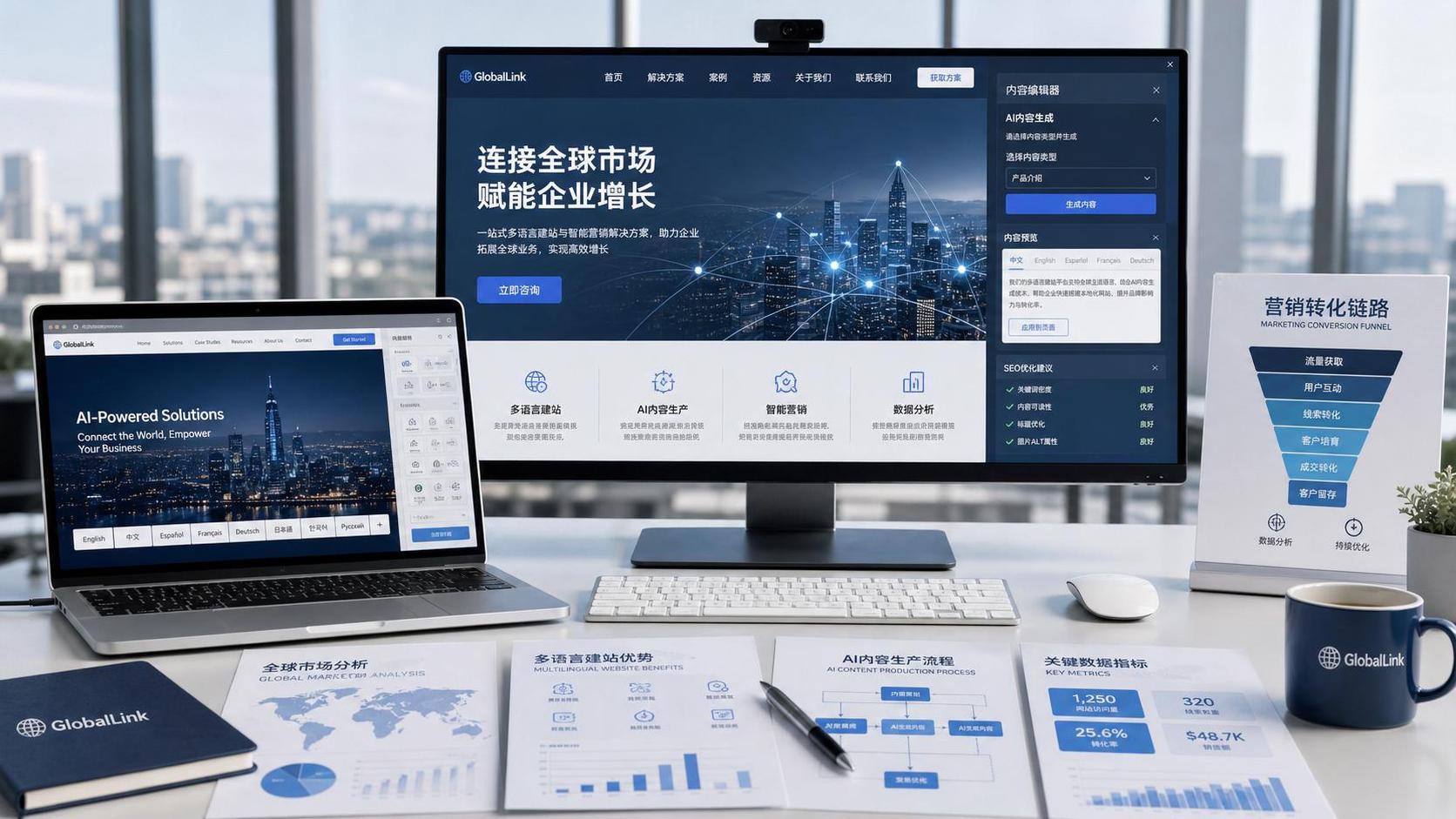
 How to assess foreign trade website development trends?Looking at 2026 changes from multilingual,AI content to conversion paths
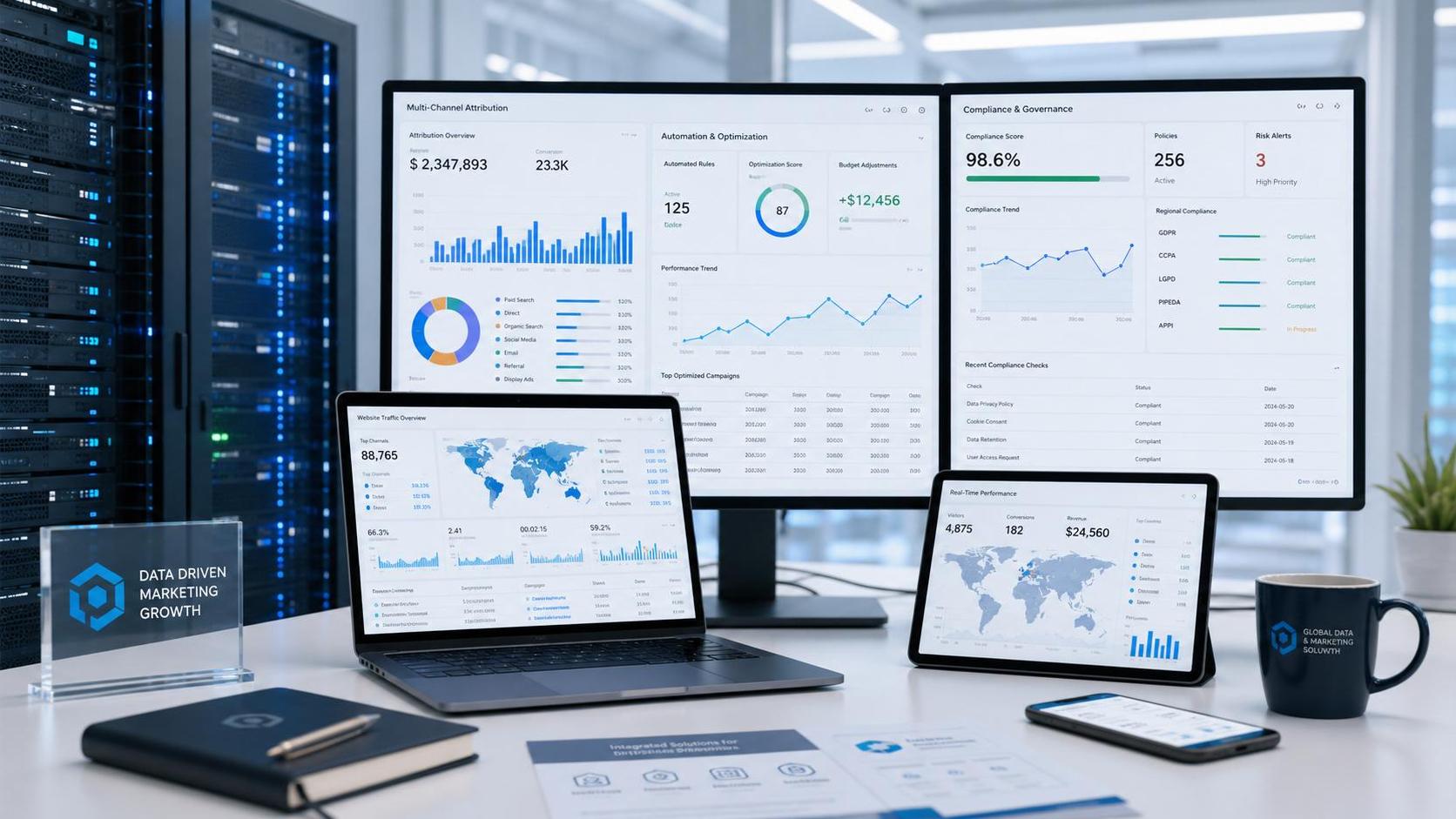
 What are the new trends in multilingual marketing data analytics tools in 2026? Focus on attribution、automation and compliance

Related Products
 EasyCamp SaaS Smart Website Marketing SystemE-Yingbao SaaS Smart Website Marketing System: AI-powered, zero-code website building. Rapidly launch multilingual independent e-commerce sites in just 10 minutes. Global server acceleration and AI-driven SEO optimization empower businesses to efficiently connect with global markets. The seamless integration of technology and user-friendly operation makes building e-commerce sites incredibly simple.
 AI+SEM Intelligent Advertising Marketing SystemAI+SEM drives intelligent ad creation, empowering full-funnel precision advertising marketing. The system automatically generates weekly/monthly reports, AI recommends keywords and target countries, monitors core metrics in real-time with intelligent alerts, and enables one-click high-conversion ad solutions to help quickly acquire customers and improve ROI.
 AI+SEO Dual Engine Optimization ServiceEasyWin AI+SEO Dual Engine Optimization System leverages AI-powered keyword mining, content generation, and comprehensive technical optimization to help foreign trade enterprises acquire high-quality organic traffic, significantly improving search rankings and conversion rates.
 AI+SNS Social Media Marketing SystemYingbao AI+SNS Social Media Marketing System - Precision social capture for the social media era. Supports one-click content synchronization across major platforms like Facebook and LinkedIn. AI intelligently rewrites posts for enhanced relevance. 24/7 AI customer service and user profiling analysis empower businesses to efficiently expand into global markets.
 AI+SEO营销解决方案易营宝AI+SEO营销解决方案,通过AI批量写作、智能生成TDK、精准关键词扩词等功能,全面优化网站SEO效果,提升流量与转化率。助力企业构建高效智能网站新生态。
 AI+SEM Advertising Marketing SolutionsAI+SEM Advertising Marketing Solution leverages AI technology to deeply empower SEM ad campaigns. It automatically generates weekly/monthly reports using AI, presenting account data across multiple dimensions for comprehensive insights into campaign performance and trends. The system precisely recommends keywords and target countries, intelligently generates high-conversion ad copy, and enables one-click activation of efficient campaign plans to help businesses rapidly acquire customers. Simultaneously, it monitors core metrics in real time, intelligently identifies abnormal fluctuations, and issues timely alerts to ensure stable, high-return advertising results.
 Domain Name ServicesEasyWin provides professional domain name services, including intelligent queries, one-stop registration, brand protection, and full lifecycle management, helping businesses build a digital brand image.
 EasyOperate B2C Cross-Border E-Commerce Platform & Independent WebsiteEasyStore B2C Cross-border E-commerce Independent Store is an intelligent website building and cross-border e-commerce integrated solution independently developed by EasyStore Information Technology (Beijing) Co., Ltd. The system is specially designed for small and medium-sized as well as large export enterprises, integrating 'website building, operation, marketing, advertising, and conversion' into one, helping enterprises quickly establish cross-border e-commerce independent stores to achieve brand globalization and global sales growth.
The platform supports multiple languages, multiple currencies, and multi-channel marketing, with built-in AI intelligent translation and SEO optimization systems, suitable for mainstream markets such as Southeast Asia, Europe and America, Latin America, and the Middle East, assisting Chinese manufacturing enterprises in efficiently deploying international e-commerce strategies. SSL证书易营宝提供专业SSL安全证书服务,包括单域名和泛域名证书,确保网站数据传输加密、身份验证和完整性保护,助力企业建立安全可信的在线业务环境。









