









- What stages does the cross-border services ecosystem include? How do website building, promotion, payment, and compliance work togetherJun 22, 2026View details
- How will email marketing costs change in 2026Jun 22, 2026View details
- The China-US tariff arrangement has reached a preliminary consensus, and the trade association will be establishedJun 15, 2026View details
- Should overseas brand marketing start with ads or contentJun 21, 2026View details
- What determines B2C cross-border e-commerce website development costs? A breakdown of features, interfaces, and deployment methodsJun 17, 2026View details
- China-Morocco zero-tariff access, a breakthrough in the cost of Moroccan goods exports to ChinaJun 11, 2026View details
International Website Development: Why Do 90% of Companies Get It Wrong?
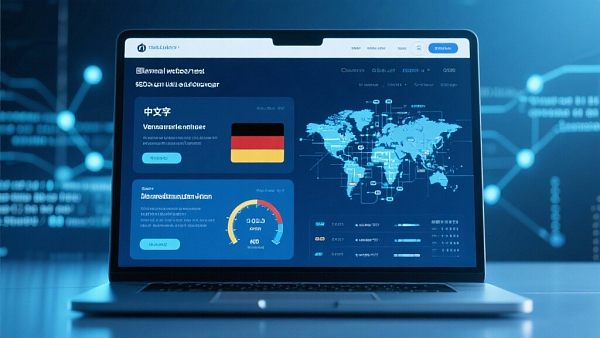
1. Six fatal mistakes in international website development
According to a Gartner survey, 73% of companies going global lose customers due to insufficient website localization. Here are the most common pitfalls for companies:

1. Language Translation ≠ Localization
Many companies simply use Google Translate to generate multilingual versions, but ignore the ambiguity caused by cultural differences. For example, a home appliance brand directly translated "Air Fryer" into "Air Fryer," which was boycotted in German-speaking regions because "Fryer" conflicted with religious terms. True localization requires:
- Dialect and terminology adaptation (e.g., differences between British and American English)
- Content review in compliance with local regulations
- Cultural symbols and color psychology applications
2. Ignoring Global SEO Architecture Design
The survey shows that 68% of foreign trade independent sites have the following SEO flaws:
2. Hidden Traps of Technical Architecture
1. Server deployment delay dilemma
When a user accesses a server in Singapore from Brazil, the latency may exceed 300ms, directly leading to a 35% increase in bounce rate. The ideal deployment strategy should follow:
- Prioritize AWS, Alibaba Cloud and other CDN nodes with global coverage
- Adopting edge computing for high-value markets
- Use tools to simulate global access speed test
2. The Sword of Damocles of Security and Compliance
Data protection regulations such as GDPR and CCPA impose strict requirements on websites. A cross-border e-commerce company was fined 4% of its turnover by the EU for failing to set up a cookie consent pop-up window. Key compliance points that must be addressed include:
- Data encryption transmission (mandatory HTTPS)
- User privacy rights exercise channel
- Restrictions on cross-border data flows
3. AI-driven solutions
Yiyingbao intelligent website building system solves the above pain points through three major technical modules:
1. Multilingual AI engine
Unlike traditional translation tools, the system has built-in:
- Industry terminology database (covering 50+ vertical fields)
- Culturally sensitive word filtering system
- Real-time SEO friendliness score
2. Global performance-optimized network
The acceleration solution in partnership with AWS enables:
4. Customer Success Stories
A medical device company used the AI+SEM advertising and marketing system to achieve:
- The conversion rate of the German site increased by 220%.
- Google organic search traffic increased 3 times
- Server costs reduced by 40%
5. Action Guide: Checklist for Building a Multilingual Independent Website
Business decision makers can refer to the following steps to proceed:
- Market priority assessment (TAM-SAM-SOM model is recommended)
- Choose a PCI DSS-compliant payment integration
- Deploy a real-time monitoring dashboard
Why choose Yiyingbao?
As a Google Premier Partner and official Meta agent, we provide:
- 15 patented AI technology guarantees
- 24/7 localized support
- Business cooperation model based on performance betting
Make an appointment for expert consultation now to get the "Global Independent Station Construction White Paper" and free website diagnosis services.
Related Articles
 New U.S. Customs regulations require B2B independent sites to connect to the USMCA Certificate of Origin API
 Why is website loading speed so important? The reasons it affects SEO rankings and inquiry conversion
 How can landing page creation improve independent website traffic conversion? Structure and content like this

Related Products
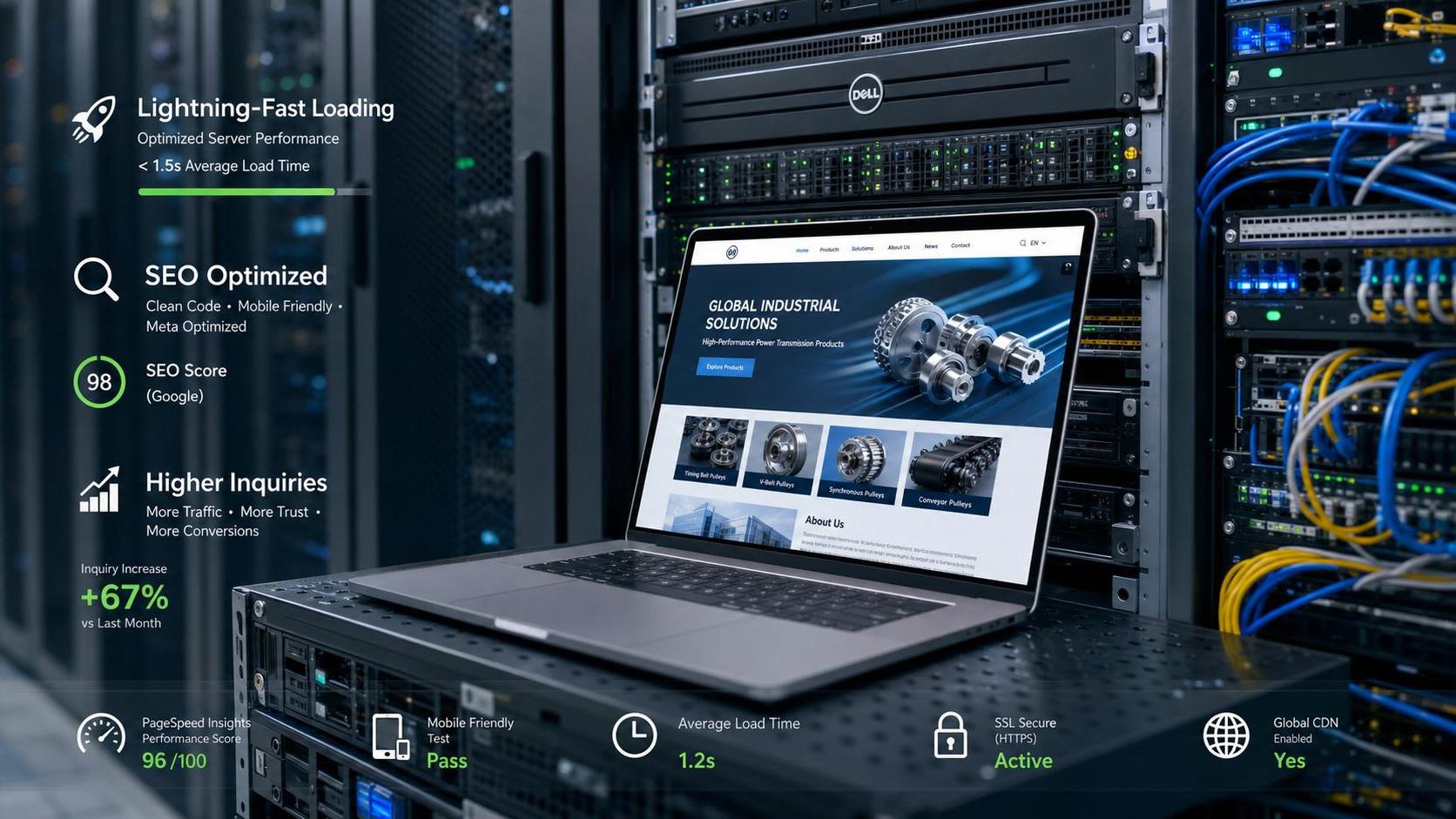
 EasyCamp SaaS Smart Website Marketing SystemE-Yingbao SaaS Smart Website Marketing System: AI-powered, zero-code website building. Rapidly launch multilingual independent e-commerce sites in just 10 minutes. Global server acceleration and AI-driven SEO optimization empower businesses to efficiently connect with global markets. The seamless integration of technology and user-friendly operation makes building e-commerce sites incredibly simple.
 AI+SEM Intelligent Advertising Marketing SystemAI+SEM drives intelligent ad creation, empowering full-funnel precision advertising marketing. The system automatically generates weekly/monthly reports, AI recommends keywords and target countries, monitors core metrics in real-time with intelligent alerts, and enables one-click high-conversion ad solutions to help quickly acquire customers and improve ROI.
 AI+SEO Dual Engine Optimization ServiceEasyWin AI+SEO Dual Engine Optimization System leverages AI-powered keyword mining, content generation, and comprehensive technical optimization to help foreign trade enterprises acquire high-quality organic traffic, significantly improving search rankings and conversion rates.
 AI+SNS Social Media Marketing SystemYingbao AI+SNS Social Media Marketing System - Precision social capture for the social media era. Supports one-click content synchronization across major platforms like Facebook and LinkedIn. AI intelligently rewrites posts for enhanced relevance. 24/7 AI customer service and user profiling analysis empower businesses to efficiently expand into global markets.
 AI+SEO营销解决方案易营宝AI+SEO营销解决方案,通过AI批量写作、智能生成TDK、精准关键词扩词等功能,全面优化网站SEO效果,提升流量与转化率。助力企业构建高效智能网站新生态。
 AI+SEM Advertising Marketing SolutionsAI+SEM Advertising Marketing Solution leverages AI technology to deeply empower SEM ad campaigns. It automatically generates weekly/monthly reports using AI, presenting account data across multiple dimensions for comprehensive insights into campaign performance and trends. The system precisely recommends keywords and target countries, intelligently generates high-conversion ad copy, and enables one-click activation of efficient campaign plans to help businesses rapidly acquire customers. Simultaneously, it monitors core metrics in real time, intelligently identifies abnormal fluctuations, and issues timely alerts to ensure stable, high-return advertising results.
 Domain Name ServicesEasyWin provides professional domain name services, including intelligent queries, one-stop registration, brand protection, and full lifecycle management, helping businesses build a digital brand image.
 EasyOperate B2C Cross-Border E-Commerce Platform & Independent WebsiteEasyStore B2C Cross-border E-commerce Independent Store is an intelligent website building and cross-border e-commerce integrated solution independently developed by EasyStore Information Technology (Beijing) Co., Ltd. The system is specially designed for small and medium-sized as well as large export enterprises, integrating 'website building, operation, marketing, advertising, and conversion' into one, helping enterprises quickly establish cross-border e-commerce independent stores to achieve brand globalization and global sales growth.
The platform supports multiple languages, multiple currencies, and multi-channel marketing, with built-in AI intelligent translation and SEO optimization systems, suitable for mainstream markets such as Southeast Asia, Europe and America, Latin America, and the Middle East, assisting Chinese manufacturing enterprises in efficiently deploying international e-commerce strategies. SSL证书易营宝提供专业SSL安全证书服务,包括单域名和泛域名证书,确保网站数据传输加密、身份验证和完整性保护,助力企业建立安全可信的在线业务环境。









