









- What stages does the cross-border services ecosystem include? How do website building, promotion, payment, and compliance work togetherJun 22, 2026View details
- How will email marketing costs change in 2026Jun 22, 2026View details
- The China-US tariff arrangement has reached a preliminary consensus, and the trade association will be establishedJun 15, 2026View details
- Should overseas brand marketing start with ads or contentJun 21, 2026View details
- What determines B2C cross-border e-commerce website development costs? A breakdown of features, interfaces, and deployment methodsJun 17, 2026View details
- China-Morocco zero-tariff access, a breakthrough in the cost of Moroccan goods exports to ChinaJun 11, 2026View details
Multilingual Automated Website Construction System Selection: Comparing Three Cross-Border Deployment Solutions and Cost Estimates

This article compares three cross-border multilingual website automation solutions and evaluates the impact of AI tools on conversion rates in terms of cost and improving website SEO rankings. For market researchers, business decision-makers, project managers, and distributors, this article aims to clarify the differences in deployment models, costs, risks, and SEO efficiency for multilingual automated websites, facilitating actionable technical and procurement decisions in global expansion. The article also discusses the synergistic effects of cross-border marketing and AI-driven ad placements, exploring how tools and workflows can enhance conversion rates for foreign trade websites and leverage intelligent methods to ensure long-term traffic and conversion stability.
Overview and Application Scenarios of Three Cross-Border Deployment Solutions
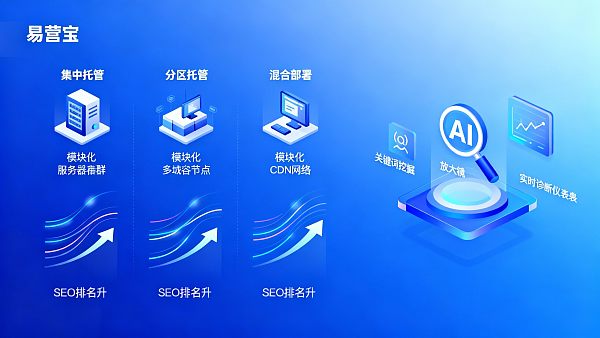
In cross-border multilingual automated website development, three common deployment methods are: single international domain centralized hosting, multi-domain partitioned hosting, and hybrid CDN with local node deployment. Single international domain hosting suits brands with high consistency requirements, enabling unified SEO strategies and domain authority concentration, but requires global CDN and localized payment/logistics integration for speed and compliance in target markets. Multi-domain hosting is ideal for teams operating independently in different markets, allowing localized content and campaigns, but incurs multiplied maintenance costs and SEO resource investments. The hybrid approach balances cost and performance by combining key-market single-point deployment with global CDN, suitable for growing businesses with limited budgets. When choosing solutions, consider brand lifecycle, target traffic scale, and immediate conversion requirements to weigh domain assets against content production capabilities, as both directly impact SEO rankings and ad ROI.
Comparative Impact of Technical Architecture on SEO and Conversion Rates
Technically, different deployments affect crawler behavior and page performance, influencing organic rankings, user experience, and ultimately conversion rates. Centralized hosting facilitates unified TDK strategies, semantic relevance, and long-tail keyword distribution, enabling AI tools to expand site-wide keyword coverage, but requires edge node and server cluster responsiveness to avoid bounce rate increases offsetting SEO gains. Partitioned hosting allows deep localization—including linguistic preferences, payment methods, and social media integration—significantly boosting landing page conversions but demands more content production and cross-site linking strategies to prevent keyword cannibalization. The hybrid model combining CDN with local nodes maintains core site authority while ensuring performance, a practical choice for early-stage expansion. In practice, AI-driven keyword recommendation and real-time diagnostic tools can track ranking fluctuations and optimize conversion paths—e.g., through long-tail keyword mining and LSI optimization—enhancing paid traffic conversion while reducing无效 clicks.
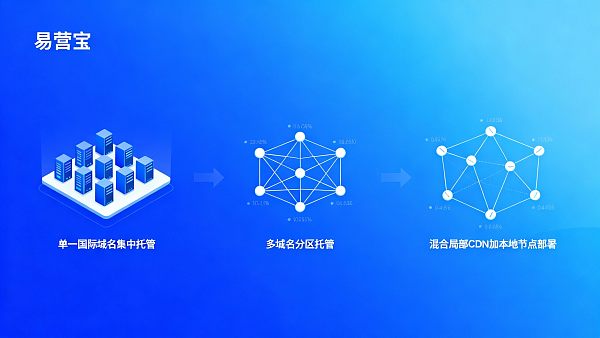
Cost Estimation Methods and Budget Allocation Recommendations
For cross-border deployment cost modeling, separate fixed and variable costs: fixed costs include domains/certificates, local/overseas server setup, core development, and initial multilingual translation; variable costs cover content production, ad spend, social media operations, and ongoing SEO diagnostics. Single-domain centralized hosting has lower initial costs but requires higher CDN/compliance expenses as markets grow. Partitioned hosting needs more configuration management and localization services upfront but often delivers conversion ROI justifying the investment. For hybrid solutions, apply the 80/20 budget rule—allocating 80% to core performance/content quality and 20% to market testing—to quickly validate high-conversion markets for data-driven scaling. Cost projections should include AI tool subscriptions or performance-based pricing, as these significantly reduce long-term CAC while improving SEO rankings and ad automation.
Empirical Effects of AI Tools and Marketing Systems on Conversion Rates
In practice, AI-driven SEO and marketing automation measurably boost conversions. AI-generated content and automated TDK creation can cover long-tail keywords at scale while improving semantic relevance for rankings—critical for foreign trade sites acquiring low-cost, high-intent traffic. Meanwhile, AI+SNS marketing and AI+SEM systems correlate search and social traffic contextually, delivering stage-specific content to potential customers. One cross-border e-commerce case saw a 30% conversion lift and 20% CAC reduction within three months by combining automated content with ad creatives—achieved through real-time diagnostics analyzing millions of ranking factors and executing optimization recommendations. For integrated SEO solutions, prioritize vendors with global CDN, AI content engines, long-tail keyword mining, and real-time ranking tracking with strategy reporting. Reference functionalities like SEO optimization in cross-border e-commerce and B2B scenarios, using term expansion, semantic analysis, and performance tracking to form closed-loop optimization with minimal人力成本.

Implementation Roadmap, Risks, and Operational Essentials
For execution, adopt phased piloting: first validate hybrid or multi-domain strategies in 1-2 markets, monitoring page speed, bounce rates, ranking fluctuations, and ad ROAS; then scale successful markets while building content/localization teams; finally implement cross-site automated monitoring and performance-based optimization. Risk management must address compliance—data localization, privacy regulations, and payment rules—while designing DNS/CDN failover to avoid traffic/ranking disruptions during migration. Operationally, establish 24/7 monitoring with AI diagnostics and manual audits, periodically reviewing strategies to adapt to algorithm updates and market shifts. When selecting vendors, prioritize update frequency, data coverage, and partner ecosystems—key factors influencing long-term SEO performance and expansion velocity.
Conclusion and Next Steps
Single-domain, partitioned, and hybrid deployments each excel in specific contexts—choose based on target markets, priorities, and budget constraints. AI tools for SEO rankings, combined with AI+SNS cross-border marketing and AI+SEM systems, demonstrably enhance traffic quality and conversions at all stages. Platforms like EasyTrade leverage AI and big data for intelligent site-building and ad systems, offering closed-loop solutions from content generation to real-time diagnostics—complemented by global CDN and localization services. For customized cost comparisons or pilot deployments, contact us for free diagnostics and implementation roadmaps. Click or consult客服to arrange dedicated technical support.
- Website Development
- SEO Ranking
- SEO diagnosis
- Social media management
- Keyword Optimization
- Cross-border Marketing
- Yiyingbao
- SEO
- Independent Website
- SEO Optimization
- Smart Website Building
- cross-border e-commerce
- AI+SEM Advertising System
- AI+SNS Cross-Border Marketing
- Marketing Automation
- Multilingual automated website construction system
- AI tools to improve website SEO ranking
Related Articles
 Urgent customs declaration for drone exports starting June 30: 10-digit HS code and domestic manufacturer information required
 Drone export declaration tightening: 5 new required items effective June 30
 What types of structured data are there? Which Schema markup should a corporate website prioritize?



Related Products
 EasyCamp SaaS Smart Website Marketing SystemE-Yingbao SaaS Smart Website Marketing System: AI-powered, zero-code website building. Rapidly launch multilingual independent e-commerce sites in just 10 minutes. Global server acceleration and AI-driven SEO optimization empower businesses to efficiently connect with global markets. The seamless integration of technology and user-friendly operation makes building e-commerce sites incredibly simple.
 AI+SEM Intelligent Advertising Marketing SystemAI+SEM drives intelligent ad creation, empowering full-funnel precision advertising marketing. The system automatically generates weekly/monthly reports, AI recommends keywords and target countries, monitors core metrics in real-time with intelligent alerts, and enables one-click high-conversion ad solutions to help quickly acquire customers and improve ROI.
 AI+SEO Dual Engine Optimization ServiceEasyWin AI+SEO Dual Engine Optimization System leverages AI-powered keyword mining, content generation, and comprehensive technical optimization to help foreign trade enterprises acquire high-quality organic traffic, significantly improving search rankings and conversion rates.
 AI+SNS Social Media Marketing SystemYingbao AI+SNS Social Media Marketing System - Precision social capture for the social media era. Supports one-click content synchronization across major platforms like Facebook and LinkedIn. AI intelligently rewrites posts for enhanced relevance. 24/7 AI customer service and user profiling analysis empower businesses to efficiently expand into global markets.
 AI+SEO营销解决方案易营宝AI+SEO营销解决方案,通过AI批量写作、智能生成TDK、精准关键词扩词等功能,全面优化网站SEO效果,提升流量与转化率。助力企业构建高效智能网站新生态。
 AI+SEM Advertising Marketing SolutionsAI+SEM Advertising Marketing Solution leverages AI technology to deeply empower SEM ad campaigns. It automatically generates weekly/monthly reports using AI, presenting account data across multiple dimensions for comprehensive insights into campaign performance and trends. The system precisely recommends keywords and target countries, intelligently generates high-conversion ad copy, and enables one-click activation of efficient campaign plans to help businesses rapidly acquire customers. Simultaneously, it monitors core metrics in real time, intelligently identifies abnormal fluctuations, and issues timely alerts to ensure stable, high-return advertising results.
 Domain Name ServicesEasyWin provides professional domain name services, including intelligent queries, one-stop registration, brand protection, and full lifecycle management, helping businesses build a digital brand image.
 EasyOperate B2C Cross-Border E-Commerce Platform & Independent WebsiteEasyStore B2C Cross-border E-commerce Independent Store is an intelligent website building and cross-border e-commerce integrated solution independently developed by EasyStore Information Technology (Beijing) Co., Ltd. The system is specially designed for small and medium-sized as well as large export enterprises, integrating 'website building, operation, marketing, advertising, and conversion' into one, helping enterprises quickly establish cross-border e-commerce independent stores to achieve brand globalization and global sales growth.
The platform supports multiple languages, multiple currencies, and multi-channel marketing, with built-in AI intelligent translation and SEO optimization systems, suitable for mainstream markets such as Southeast Asia, Europe and America, Latin America, and the Middle East, assisting Chinese manufacturing enterprises in efficiently deploying international e-commerce strategies. SSL证书易营宝提供专业SSL安全证书服务,包括单域名和泛域名证书,确保网站数据传输加密、身份验证和完整性保护,助力企业建立安全可信的在线业务环境。









