









- Cross-Border Marketing Trend Research: Why More and More Companies Are Starting to Deploy AI Search and GEO OptimizationJun 30, 2026View details
- Cross-Border Marketing Trend Research: How Independent Sites, AI Content, and Short-Video Customer Acquisition Are ChangingJun 30, 2026View details
- How Can a Brand Updates Page Be Made More SEO-Friendly? Analysis of Update Frequency, Content Structure, and Internal Linking StrategyJun 28, 2026View details
- What stages does the cross-border services ecosystem include? How do website building, promotion, payment, and compliance work togetherJun 22, 2026View details
- How will email marketing costs change in 2026Jun 22, 2026View details
- The China-US tariff arrangement has reached a preliminary consensus, and the trade association will be establishedJun 15, 2026View details
- Should overseas brand marketing start with ads or contentJun 21, 2026View details
- What determines B2C cross-border e-commerce website development costs? A breakdown of features, interfaces, and deployment methodsJun 17, 2026View details
What to Consider When Building a Responsive Foreign Trade Website for the German Market
Is responsive foreign trade website development suitable for the German market? For technical evaluators, the answer is not only about compatibility, but also about performance, compliance, and conversion efficiency. This article will analyze it from dimensions such as German user habits, GDPR requirements, and multi-device experience.
Why does the German market have higher requirements for responsive foreign trade websites?
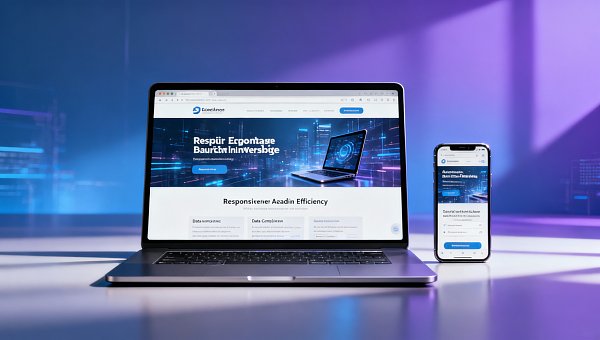
German buyers usually judge corporate websites more rationally, especially in industrial products, equipment categories, and B2B procurement scenarios, where the website is not only a display window, but also the first-round screening tool for technical credibility, delivery capability, and data compliance level.
Therefore, when discussing “Is responsive foreign trade website development suitable for the German market?”, you cannot only look at whether the page can scale on mobile devices, but also whether it can maintain a consistent information architecture, loading speed, and inquiry experience across desktop, tablet, and mobile devices.
For technical evaluators, the core difficulties of the German market are mainly concentrated in the following aspects:
- High requirements for access quality. An overly heavy above-the-fold section, redundant scripts, and uncontrolled animations will all affect loading stability.
- Strict requirements for privacy and data processing. Cookie consent mechanisms, form lead collection logic, and third-party tracking scripts all need to be deployed cautiously.
- The procurement decision chain is relatively long, and the website needs to simultaneously satisfy the reading habits of technical personnel, procurement staff, and management.
- The German-speaking market emphasizes clear information and rigorous structure. Pages with chaotic navigation and overly heavy marketing language often reduce trust.
This is also why more and more companies are beginning to value the integrated development of websites and marketing services. Simply creating a website is not enough to support customer acquisition in the German market; technology, content, compliance, search visibility, and conversion paths must be designed in coordination.
Is responsive foreign trade website development suitable for the German market? First look at the evaluation dimensions
If answered from the perspective of technical evaluation, the conclusion to “Is responsive foreign trade website development suitable for the German market?” is “Yes, but only if it is high-standard responsive design rather than low-end adaptive design”. The table below is suitable for initial project screening.
As can be seen from the table, responsiveness is not a “bonus item” in the German market, but a basic requirement. What truly creates a gap is the depth of performance optimization, the details of compliance implementation, and whether the page serves inquiry conversion.
When technical evaluators are making procurement decisions, which website capabilities do they focus on?
1. Performance is not an accessory to aesthetics, but a prerequisite for closing deals
When German users visit B2B websites, they are particularly averse to slow above-the-fold loading, too many pop-ups, and content shifting. Technical evaluators need to pay attention to image size control, the number of front-end scripts, server response strategies, and CDN deployment logic, to avoid launching sites that “look premium but are actually difficult to use”.
2. Compliance design should be planned upfront, not patched after launch
When many companies answer “Is responsive foreign trade website development suitable for the German market?”, they only talk about templates and device adaptation, while overlooking that the German market is more sensitive to data authorization, Cookie management, minimization of inquiry form fields, and accessibility of privacy statements.
If the site plans to integrate analytics tools, advertising pixels, or marketing automation systems, it is even more important to confirm whether the tracking logic is linked with the consent mechanism, otherwise it will bring risks to subsequent advertising placement and legal review.
3. Information architecture should serve multi-role decision-making
German B2B procurement is not a one-person decision. Technical engineers look at parameters and applications, procurement looks at delivery schedules and services, and management looks at brand credibility and supply capability. Therefore, page content is best presented in layers, rather than piling all information into one long page.
- The above-the-fold section should answer what the company does, which industries it serves, and what value it can provide.
- The middle section should display the product center, application scenarios, core data indicators, and service commitments.
- The bottom section should include customer testimonials, FAQs, inquiry entry points, and privacy statements.
For example, when heavy industry export enterprises present solutions for heavy machinery equipment, heavy industry, they can adopt a modular streamlined layout, a single-column structure, high-contrast inquiry entry points, and a waterfall display of real application scenarios, turning complex parameters into understandable construction or production application solutions.
In the German market, what is the difference between a responsive website and a regular foreign trade website?
If a company is only building a static showcase website, it may appear accessible on the surface, but in the German market, the actual gap between a regular showcase-style foreign trade website and a high-quality responsive foreign trade website will be directly reflected in bounce rate, page dwell time, and inquiry quality.
For technical evaluators, the value of this kind of comparison lies in the fact that it can help you determine whether a service provider is delivering a “webpage” or a “digital asset capable of continuously acquiring customers”.
Website + integrated marketing services, why is it more suitable for customer acquisition in German foreign trade?
Customer acquisition in the German market usually does not rely on a single channel. If a website has no search visibility, no closed-loop data analysis, and no conversion path design for different devices and traffic sources, it will be difficult to amplify the value of advertising and content.
Easy Marketing Bao Information Technology (Beijing) Co., Ltd. has long been deeply engaged in global digital marketing services, with artificial intelligence and big data as its core driving forces, and can integrate intelligent website building, SEO optimization, social media marketing, and advertising placement into one unified growth system. This capability is particularly critical for the German market, because technical evaluation no longer only looks at whether a website is launched, but whether the site can continuously bring compliant, stable, and traceable leads.
What key links are usually included in an integrated solution?
- Preliminary research: clarify the target German industry, core keywords, competitor structure, and device share.
- Architecture planning: formulate multilingual hierarchy, product center paths, content templates, and inquiry processes.
- Compliance configuration: improve the privacy policy, Cookie mechanism, form authorization, and tracking management.
- Post-launch optimization: test performance, indexing, logs, redirects, and multi-device interactions.
- Growth operations: combine SEO and advertising placement to continuously optimize high-value pages and lead sources.
This process is especially suitable for heavy industry, equipment manufacturing, and engineering enterprises, because such industries have long procurement chains, complex page information, and high lead unit prices, so the website must undertake more screening and persuasion tasks.
What are the common misconceptions during implementation that technical personnel should avoid in advance?
Misconception 1: Interpreting responsiveness as “automatic scaling”
A responsive solution truly suitable for the German market should make dedicated adjustments in breakpoint design, button size, content priority, and clickable areas, rather than simply compressing the desktop version onto a mobile screen.
Misconception 2: Focusing only on design, not content
German users will carefully read product details, application conditions, service boundaries, and contact paths. Industrial-style pages with yellow and black as the main visual colors can enhance recognition, but if there is no clear product guidance, core data indicators, and service commitment list, even the best visuals will find it difficult to support decision-making.
Misconception 3: Lack of continuous operation after launch
Many companies spent budget building a website in the early stage, but did not establish mechanisms for keyword monitoring, inquiry attribution, and page iteration. The result is that it is technically usable, but ineffective in marketing. Is responsive foreign trade website development suitable for the German market? Ultimately, the answer still comes back to the core question of “whether it can convert continuously”.
FAQ: The most common questions asked by technical evaluators
Is a responsive design definitely necessary for the German market?
Judging from current multi-device access habits, it is strongly recommended and should be considered essential. The reason is not only the growth of mobile access, but also that search entries, email redirects, social media visits, and ad clicks are often distributed across different devices. Without responsive capability, page consistency and lead capture will become noticeably worse.
Are industrial websites suitable for adding motion effects and large images?
Yes, but they should be used with restraint. In scenarios such as heavy machinery equipment, heavy industry, large industry-scene banners, real application displays, and fully responsive smooth motion effects can enhance professionalism, but the premise is that they must not slow down above-the-fold loading, and parameters, case studies, and inquiry entry points must remain clear and visible.
During technical evaluation, should priority be given to the front end or marketing capability?
The two cannot be separated. The front end determines the foundational user experience, while marketing capability determines traffic and conversion efficiency. A more reliable approach is to give priority to a service team that can simultaneously handle website building, content, search optimization, and advertising coordination, reducing the later integration cost of multiple vendors.
What acceptance criteria should be established during delivery evaluation?
It is recommended to include at least: multi-device display consistency, above-the-fold loading performance, form usability, privacy and Cookie mechanisms, basic search crawlability, product detail structure, inquiry tracking points, redirect and error page handling, document download paths, and subsequent operation permission configuration.
Why choose us: not just to build websites, but to help you complete both technical and customer acquisition evaluation for the German market
If you are evaluating “Is responsive foreign trade website development suitable for the German market?”, what is even more worth confirming is: do you need a page that can go online, or a foreign trade growth system that can balance performance, compliance, search, and conversion?
Relying on more than ten years of global digital marketing service experience, Easy Marketing Bao Information Technology (Beijing) Co., Ltd. can provide integrated support for enterprises targeting the German market, from site architecture, keyword layout, form compliance, and page performance to subsequent SEO and advertising coordination, helping technical evaluators clearly understand cost boundaries and implementation risks at the early stage of the project.
- Website parameter confirmation consultation available: device adaptation strategy, content hierarchy, page templates, and functional module planning.
- Industry selection consultation available: how complex products in heavy industry, equipment manufacturing, engineering support, and other sectors can build high-conversion pages.
- Delivery cycle and implementation process consultation available: how to schedule from requirements research, prototyping, development, and testing to launch and operations.
- Compliance and tracking solution consultation available: how to uniformly handle Cookie configuration, privacy statements, form authorization, and data attribution.
- Quotation and customized solution consultation available: how to balance design, performance, content, and promotional advertising needs under different budgets.
For technical evaluators, a good German foreign trade website project is not about checking off each item on the requirements list one by one, but about enabling the website to truly undertake the tasks of brand presentation, lead acquisition, and growth validation after launch. If you hope to complete parameter confirmation, solution comparison, and implementation evaluation more quickly, you can now move into a more specific communication stage.
Related Articles
 4 Major Reasons Behind WhatsApp Account Bans, A Quick Self-Check for Foreign Trade Professionals
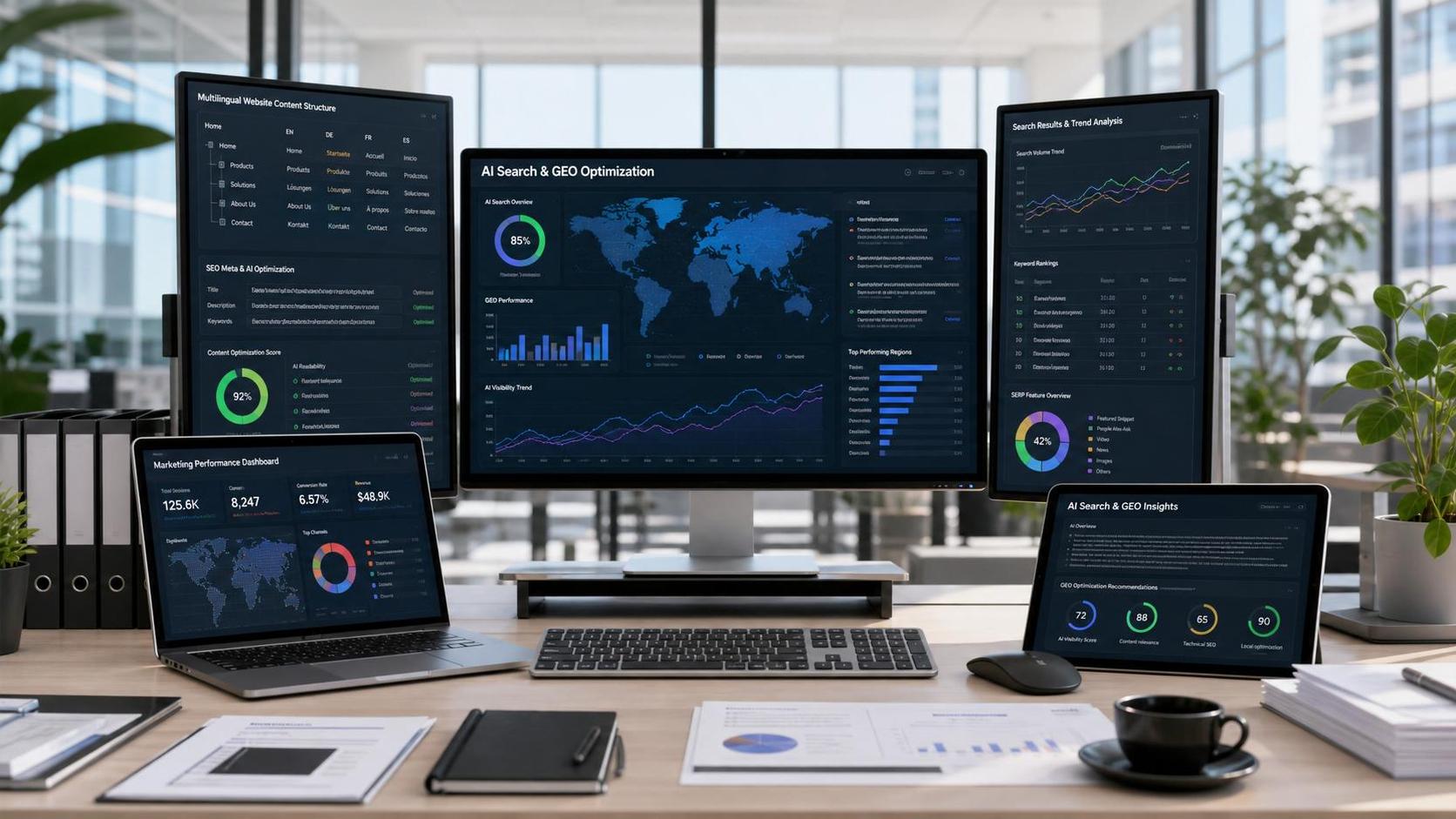
 Cross-Border Marketing Trend Research: Why More and More Companies Are Starting to Deploy AI Search and GEO Optimization
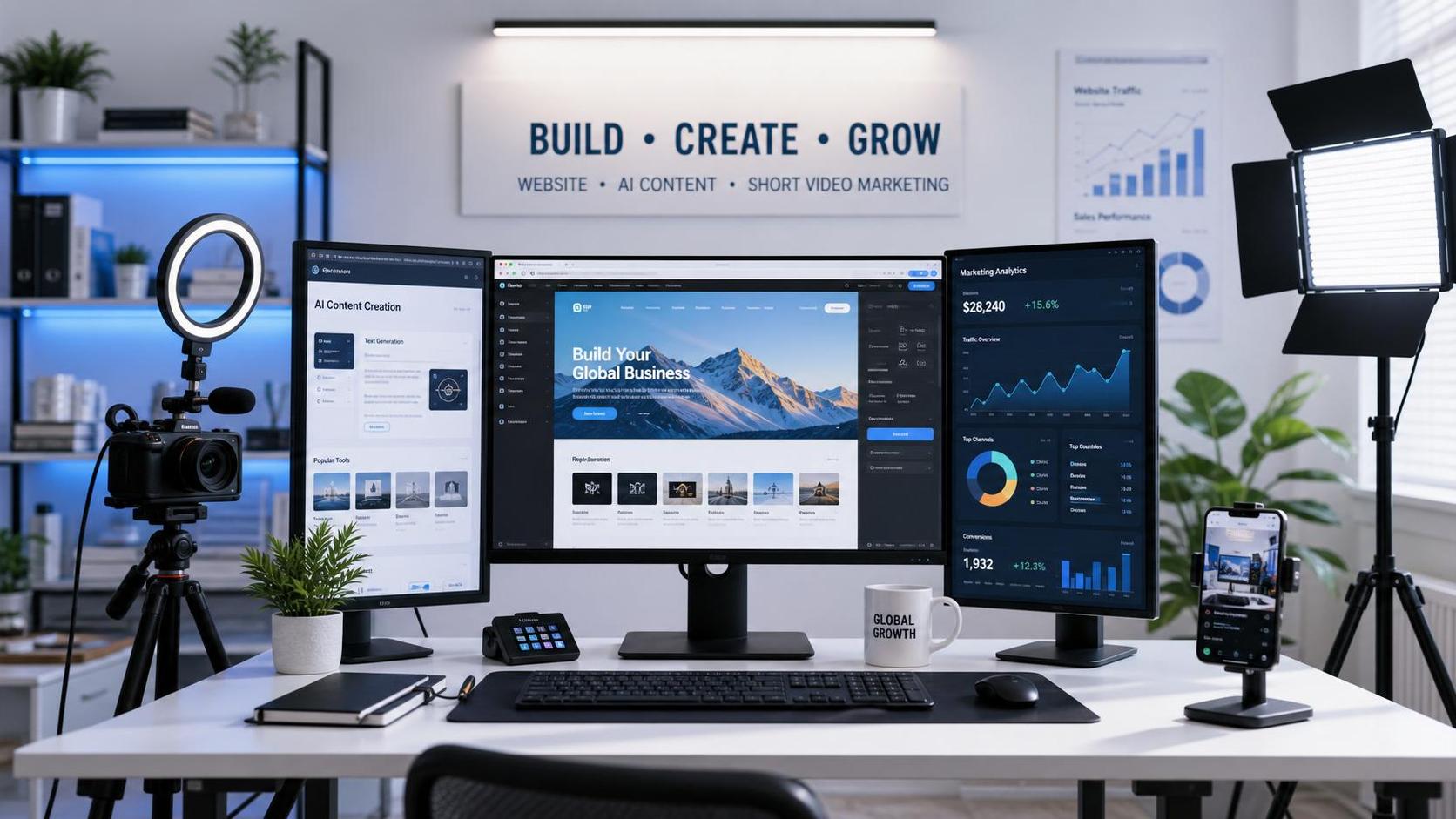
 Cross-Border Marketing Trend Research: How Independent Sites, AI Content, and Short-Video Customer Acquisition Are Changing
Related Products
 EasyCamp SaaS Smart Website Marketing SystemE-Yingbao SaaS Smart Website Marketing System: AI-powered, zero-code website building. Rapidly launch multilingual independent e-commerce sites in just 10 minutes. Global server acceleration and AI-driven SEO optimization empower businesses to efficiently connect with global markets. The seamless integration of technology and user-friendly operation makes building e-commerce sites incredibly simple.
 AI+SEM Intelligent Advertising Marketing SystemAI+SEM drives intelligent ad creation, empowering full-funnel precision advertising marketing. The system automatically generates weekly/monthly reports, AI recommends keywords and target countries, monitors core metrics in real-time with intelligent alerts, and enables one-click high-conversion ad solutions to help quickly acquire customers and improve ROI.
 AI+SEO Dual Engine Optimization ServiceEasyWin AI+SEO Dual Engine Optimization System leverages AI-powered keyword mining, content generation, and comprehensive technical optimization to help foreign trade enterprises acquire high-quality organic traffic, significantly improving search rankings and conversion rates.
 AI+SNS Social Media Marketing SystemYingbao AI+SNS Social Media Marketing System - Precision social capture for the social media era. Supports one-click content synchronization across major platforms like Facebook and LinkedIn. AI intelligently rewrites posts for enhanced relevance. 24/7 AI customer service and user profiling analysis empower businesses to efficiently expand into global markets.
 AI+SEO营销解决方案易营宝AI+SEO营销解决方案,通过AI批量写作、智能生成TDK、精准关键词扩词等功能,全面优化网站SEO效果,提升流量与转化率。助力企业构建高效智能网站新生态。
 AI+SEM Advertising Marketing SolutionsAI+SEM Advertising Marketing Solution leverages AI technology to deeply empower SEM ad campaigns. It automatically generates weekly/monthly reports using AI, presenting account data across multiple dimensions for comprehensive insights into campaign performance and trends. The system precisely recommends keywords and target countries, intelligently generates high-conversion ad copy, and enables one-click activation of efficient campaign plans to help businesses rapidly acquire customers. Simultaneously, it monitors core metrics in real time, intelligently identifies abnormal fluctuations, and issues timely alerts to ensure stable, high-return advertising results.
 Domain Name ServicesEasyWin provides professional domain name services, including intelligent queries, one-stop registration, brand protection, and full lifecycle management, helping businesses build a digital brand image.
 EasyOperate B2C Cross-Border E-Commerce Platform & Independent WebsiteEasyStore B2C Cross-border E-commerce Independent Store is an intelligent website building and cross-border e-commerce integrated solution independently developed by EasyStore Information Technology (Beijing) Co., Ltd. The system is specially designed for small and medium-sized as well as large export enterprises, integrating 'website building, operation, marketing, advertising, and conversion' into one, helping enterprises quickly establish cross-border e-commerce independent stores to achieve brand globalization and global sales growth.
The platform supports multiple languages, multiple currencies, and multi-channel marketing, with built-in AI intelligent translation and SEO optimization systems, suitable for mainstream markets such as Southeast Asia, Europe and America, Latin America, and the Middle East, assisting Chinese manufacturing enterprises in efficiently deploying international e-commerce strategies. SSL证书易营宝提供专业SSL安全证书服务,包括单域名和泛域名证书,确保网站数据传输加密、身份验证和完整性保护,助力企业建立安全可信的在线业务环境。









