









- What Does a Global Traffic Ecosystem Service Provider Do? What Are the Differences from a Single Advertising AgencyJul 16, 2026View details
- What should you focus on in the latest enterprise SaaS report? From renewal rates and delivery costs to overseas growth opportunitiesJul 12, 2026View details
- What signals are worth paying attention to in a cross-border marketing trend report? B2B companies should look at these 6 signalsJul 11, 2026View details
- How to Read a Cross-Border Marketing Trends Report? Five Key Dimensions for Evaluating Channel OpportunitiesJul 11, 2026View details
- Which channel has the highest ROI in the global traffic ecosystem? Comparative analysis of search, social media, and advertisingJul 10, 2026View details
- What multilingual website services are available in Sanya? Which model is more suitable for local businesses going global?Jul 08, 2026View details
- How to view the complete list of China SaaS companies in the top 100? Practical methods for screening website-building and marketing service providersJul 08, 2026View details
- How to view pricing in the global traffic ecosystem? Cost comparison of search, social media, and content channel advertisingJul 06, 2026View details
What Are the Common Bottlenecks in the SSL Certificate Application Process
For many companies, the step that truly consumes time when handling an SSL certificate is not the “application” itself, but the validation, selection, deployment, and follow-up monitoring before and after it. Especially for website owners, technical evaluators, and business managers, the common bottlenecks in the SSL certificate application process usually fall into 3 categories: domain or company information verification failure, choosing the wrong certificate type, and website errors or business performance issues after certificate deployment. This article starts from real-world scenarios to sort out these high-frequency bottlenecks, troubleshooting approaches, and handling suggestions, helping you go live faster while also taking into account the practical value of website SEO optimization solutions and website traffic monitoring tools.
First, the conclusion: Where are SSL certificate applications most likely to get stuck?

From the perspective of project advancement efficiency, the common bottlenecks in the SSL certificate application process are usually not “not knowing how to apply,” but rather “the application requirements were not fully prepared” and “post-deployment verification was not fully closed-loop.” Common issues usually include:
- Domain control validation failure: DNS records have not taken effect, email validation messages are not received, or the HTTP validation directory is configured incorrectly.
- Certificate type selection does not match: a personal site mistakenly chooses a business certificate, or a corporate website only purchases a basic type, resulting in brand trust or review cycles that do not meet expectations.
- CSR and server information are inconsistent: the domain name entered during application, the server configuration, and the actual deployment environment are not aligned.
- Incomplete intermediate certificate chain: the browser shows insecure prompts, and access is abnormal on some devices.
- SEO and traffic monitoring did not keep up after HTTPS went live: 301 redirects, internal links, search engine submissions, and analytics tool configurations were not adjusted in sync.
For companies, an SSL certificate is not just “adding a lock.” It also directly affects website credibility, form conversion rates, search engine crawling experience, and the access stability of advertising landing pages. If the application and deployment process is handled improperly, it will not only delay launch, but may also cause traffic loss and customer loss.
Why does domain validation always fail? This is the most common and time-consuming bottleneck
In the SSL certificate application process, domain validation is the step most prone to repeated errors. Especially when the website is jointly managed by a website service provider, operations and maintenance team, agency, or multiple departments, scattered permissions can make simple issues become complicated.
Common causes include the following categories:
- DNS validation record added incorrectly: the host record, record value, or record type was filled in incorrectly, or it was added in the backend of the wrong DNS service provider.
- DNS has not fully propagated: some records may appear to have been added, but global DNS synchronization still takes time.
- HTTP validation path configuration failed: the validation file was not uploaded to the correct directory, or it was blocked by pseudo-static rules or CDN caching.
- WHOIS or business email validation failed: the validation email went to spam, the domain management mailbox is not maintained, or the email address does not meet the requirements.
Practical suggestions:
- First confirm which platform actually hosts the domain DNS, and do not look only at the domain registrar.
- After adding records, use third-party DNS lookup tools to verify whether they have taken effect.
- If using a CDN, first confirm whether the validation path is being cached or blocked.
- When multiple people collaborate, clearly define “who is responsible for the domain, who is responsible for the server, and who is responsible for the certificate application” to avoid duplicate operations.
For distributors, agencies, or after-sales maintenance personnel, the key point in this step is not technical difficulty, but process coordination. Many delays are not because people “do not know how,” but because the information is not in the hands of the same person.
How should SSL certificate types be chosen, and why do many companies choose the wrong one from the start?

Many users who search for “what are the common bottlenecks in the SSL certificate application process” essentially do not just want to know the process; they want to avoid finding out after applying that it is “not suitable.” Certificate selection is one of the most typical problems.
Common certificates can roughly be divided into:
- DV certificate: mainly verifies domain ownership, is fast to apply for, and is suitable for basic websites, blogs, test environments, or budget-sensitive scenarios.
- OV certificate: adds business identity verification and is suitable for corporate websites and B2B showcase websites.
- EV certificate: has stricter review requirements and is suitable for scenarios with higher demands for brand trust and security compliance.
- Single-domain certificate: protects only one primary domain.
- Wildcard certificate: suitable for businesses that need to cover multiple subdomains.
- Multi-domain certificate: suitable for groups or multi-brand businesses that need to protect multiple different domains at the same time.
When making a decision, companies should not focus only on price, but on the following 3 points:
- Is your website only meant to “be accessible,” or does it also carry key business functions such as brand endorsement, lead conversion, and inquiry submission?
- Will you add new subdomains, regional sites, or multilingual sites in the next 6 to 12 months?
- Do you need to show customers, channel partners, or collaborators a higher level of corporate credibility?
For business decision-makers, the direct cost of choosing the wrong certificate is not just spending a few hundred yuan more, but repeated reviews, repeated deployments, project delays, and even impacts on the rhythm of marketing campaign launches. Especially when the official website carries SEO traffic or advertising traffic, HTTPS stability and credibility directly affect page dwell time, form submissions, and conversion efficiency.
CSR, servers, and deployment: why does the website still report errors after the application succeeds?
Many people think that once the certificate has been issued, everything is done. In fact, deployment is another high-incidence trouble spot. Common errors include the browser displaying “Not secure,” certificate name mismatch, some devices being unable to access the site, and mixed content warnings for page resources after HTTPS is enabled.
Common causes include:
- Incorrect domain entered when generating the CSR: for example, the www version was omitted, or the deployed site does not match the applied domain.
- The private key does not match the certificate: the CSR was not generated on the final deployment server, and a different private key was later mixed in during import.
- The certificate chain was not fully installed: only the main certificate was installed, and the intermediate certificate was not configured correctly.
- Differences in server environments: Nginx, Apache, and IIS use different installation methods and parameter configurations.
- Not all site resources were switched to HTTPS: images, JS, and CSS still use HTTP links, causing mixed content warnings.
Recommended troubleshooting order:
- First check whether the domain matches the certificate coverage scope.
- Then check whether the private key and certificate match.
- Verify whether the intermediate certificate chain is fully installed.
- Scan the entire site for HTTP resources and fix mixed content.
- Test access on PC, mobile, and different browsers.
If the company is also running SEO projects or advertising campaigns, this step especially cannot be judged only by whether “the website opens normally.” You also need to check whether the landing page is stable, whether redirects work properly, and whether analytics code continues to function. For marketing teams, one deployment detail issue may cause ad budgets to be wasted inefficiently.
After HTTPS goes live, why do SEO performance and analytics data also run into problems?
Many companies overlook one point: going live with an SSL certificate is not just a pure technical action. It affects search engine indexing, page authority transfer, user bounce rates, and the continuity of analytics data.
Common issues include:
- HTTP pages are not correctly redirected with 301 to HTTPS.
- Canonical tags, sitemap, and robots files still retain the old addresses.
- The HTTPS version of the site has not been resubmitted in search engine webmaster platforms.
- Analytics code, conversion code, and ad tracking parameters have not been revalidated.
- After HTTPS migration, page loading speed decreases, affecting user experience and rankings.
Therefore, after the SSL certificate application and deployment are completed, it is recommended to simultaneously conduct a round of checks for the website SEO optimization solution:
- Whether all site URLs have been standardized to the HTTPS version;
- Whether 301 redirects are one-to-one and without chained redirects;
- Whether core pages can be crawled and indexed normally;
- Whether all site resource requests have been upgraded to HTTPS;
- Whether the website traffic monitoring tools have updated the target URLs and event tracking rules.
If the business itself relies on search marketing or overseas advertising, then SSL stability and data monitoring accuracy need to be considered together even more. For example, when running ad campaigns, if the landing page has security warnings, abnormal redirects, or analytics loss, lead costs often rise significantly. In such scenarios, it is even more necessary to pair with data tracking and campaign optimization tools. For example, AI+SEM advertising marketing solution can help teams create a smoother marketing loop from keyword recommendations and ad copy generation to campaign performance monitoring, reducing the indirect impact of technical issues on customer acquisition efficiency.
In actual project advancement, how can companies reduce repeated rework in the SSL certificate application process?
For technical evaluators, business managers, and service providers, the key to improving efficiency is not just “knowing the problems,” but establishing a reusable application and deployment checklist.
It is recommended to prepare in advance from the following aspects:
- Asset review: clarify the domain list, subdomain scope, server environment, and CDN usage.
- Permission unification: confirm in advance who has backend access to the domain, who can modify DNS, and who can log in to the server.
- Pre-selection planning: determine DV, OV, EV, and whether a single-domain, wildcard, or multi-domain solution is needed based on the business scenario.
- Deployment contingency plan: prepare a test environment, back up the original configuration, and plan a rollback solution.
- Go-live acceptance: simultaneously verify browser access, security lock display, redirect logic, SEO settings, and analytics data.
- Expiration reminders and renewal mechanism: prevent sudden website errors caused by certificate expiration.
If the corporate website also carries tasks such as brand exposure, SEO lead generation, and advertising conversion, then certificate management cannot be handled only by operations and maintenance as a single-point task, but should be incorporated into the overall website operations mechanism. This is especially true for businesses with multiple sites, multiple languages, and multi-region campaigns, where certificates, website building, data analysis, and marketing execution are inherently integrated coordination issues.
How can you tell whether the current issue is “the application is stuck” or “the website system itself has shortcomings”?
On the surface, some companies are asking what the common bottlenecks are in the SSL certificate application process, but the actual issue they encounter is deeper: the website infrastructure, SEO standards, analytics monitoring, and marketing conversion capabilities are disconnected from one another.
If the following situations occur, then you should not focus only on the certificate itself:
- The certificate has been installed, but the website still frequently fails to open or opens slowly;
- HTTPS has been enabled, but search traffic continues to fluctuate;
- Ad clicks are normal, but landing page conversions are abnormally low;
- The technical team says “there is no problem,” but the marketing team still cannot get accurate data;
- Every launch requires repeated manual troubleshooting, with no standardized process.
At this point, it is more appropriate to conduct a systematic review from the overall perspective of “website building + SEO optimization + data monitoring + marketing campaigns,” rather than treating SSL as a one-time standalone task. For companies that rely on their official websites for long-term lead generation, the certificate is only a foundational capability. What really determines whether the website can become a growth tool is the subsequent coordination around access security, page experience, traffic analysis, and conversion optimization.
In summary, the common bottlenecks in the SSL certificate application process are mainly concentrated in domain validation, certificate selection, server deployment, and SEO and monitoring integration after HTTPS migration. For executors, the key is to handle validation and deployment details correctly; for business decision-makers, it is more important to avoid business risks caused by process confusion, wrong selection, and lack of follow-up operations and maintenance. As long as the three stages of “pre-application preparation, in-deployment verification, and post-launch monitoring” are connected together, SSL certificates will no longer be just a technical task, but will become an important foundation for improving website credibility, supporting traffic acquisition, and ensuring marketing effectiveness.
Related Articles
 Attention! Builders' must-see: Yibingbao AI components updated, design efficiency directly doubled!
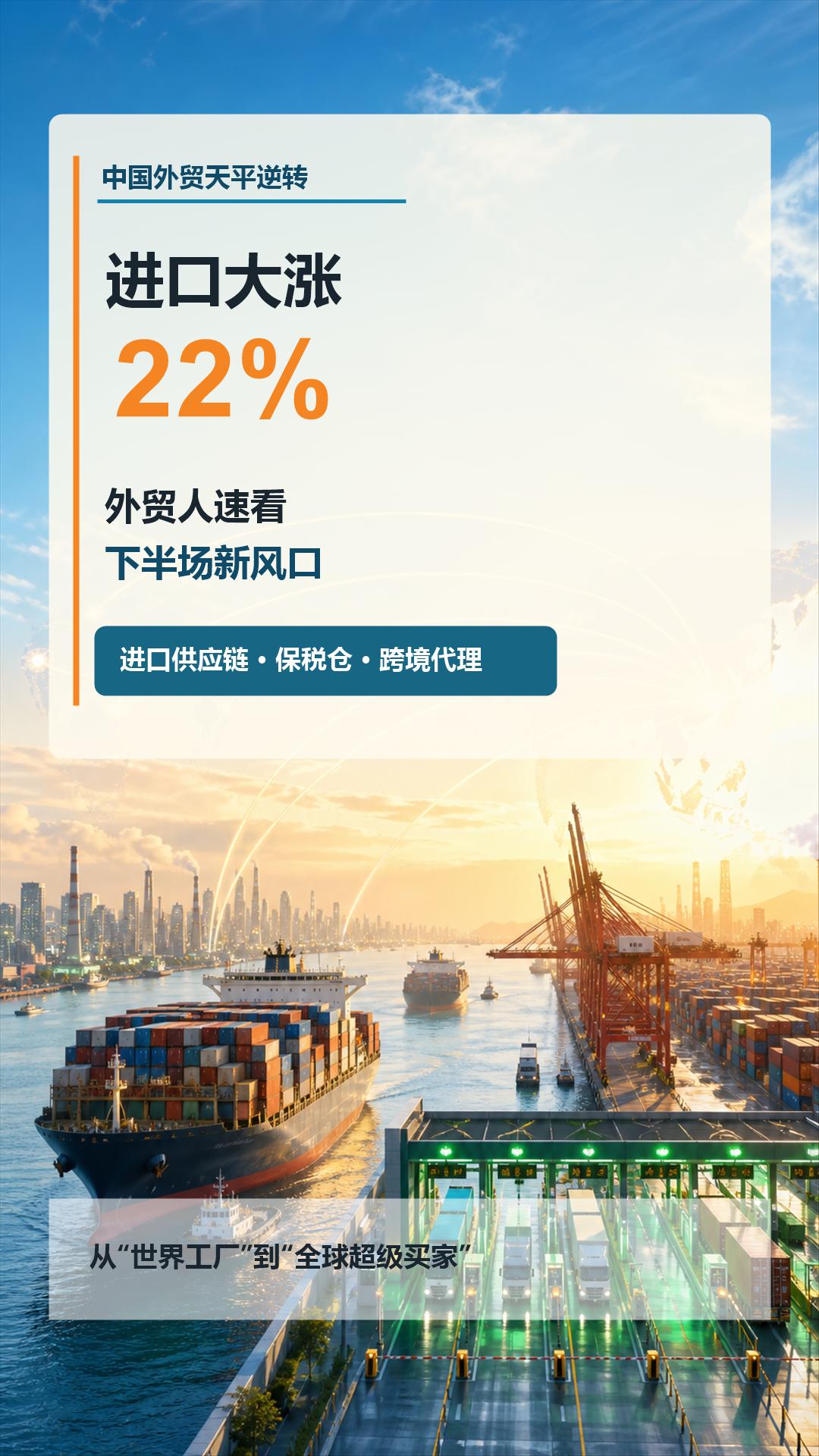
 China's foreign trade sees a turnaround: imports surge by 22%! Foreign trade professionals should quickly take note of the new trends in the second half of the year
 What Does a Global Traffic Ecosystem Service Provider Do? What Are the Differences from a Single Advertising Agency


Related Products
 EasyCamp SaaS Smart Website Marketing SystemE-Yingbao SaaS Smart Website Marketing System: AI-powered, zero-code website building. Rapidly launch multilingual independent e-commerce sites in just 10 minutes. Global server acceleration and AI-driven SEO optimization empower businesses to efficiently connect with global markets. The seamless integration of technology and user-friendly operation makes building e-commerce sites incredibly simple.
 AI+SEM Intelligent Advertising Marketing SystemAI+SEM drives intelligent ad creation, empowering full-funnel precision advertising marketing. The system automatically generates weekly/monthly reports, AI recommends keywords and target countries, monitors core metrics in real-time with intelligent alerts, and enables one-click high-conversion ad solutions to help quickly acquire customers and improve ROI.
 AI+SEO Dual Engine Optimization ServiceEasyWin AI+SEO Dual Engine Optimization System leverages AI-powered keyword mining, content generation, and comprehensive technical optimization to help foreign trade enterprises acquire high-quality organic traffic, significantly improving search rankings and conversion rates.
 AI+SNS Social Media Marketing SystemYingbao AI+SNS Social Media Marketing System - Precision social capture for the social media era. Supports one-click content synchronization across major platforms like Facebook and LinkedIn. AI intelligently rewrites posts for enhanced relevance. 24/7 AI customer service and user profiling analysis empower businesses to efficiently expand into global markets.
 AI+SEO营销解决方案易营宝AI+SEO营销解决方案,通过AI批量写作、智能生成TDK、精准关键词扩词等功能,全面优化网站SEO效果,提升流量与转化率。助力企业构建高效智能网站新生态。
 AI+SEM Advertising Marketing SolutionsAI+SEM Advertising Marketing Solution leverages AI technology to deeply empower SEM ad campaigns. It automatically generates weekly/monthly reports using AI, presenting account data across multiple dimensions for comprehensive insights into campaign performance and trends. The system precisely recommends keywords and target countries, intelligently generates high-conversion ad copy, and enables one-click activation of efficient campaign plans to help businesses rapidly acquire customers. Simultaneously, it monitors core metrics in real time, intelligently identifies abnormal fluctuations, and issues timely alerts to ensure stable, high-return advertising results.
 Domain Name ServicesEasyWin provides professional domain name services, including intelligent queries, one-stop registration, brand protection, and full lifecycle management, helping businesses build a digital brand image.
 EasyOperate B2C Cross-Border E-Commerce Platform & Independent WebsiteEasyStore B2C Cross-border E-commerce Independent Store is an intelligent website building and cross-border e-commerce integrated solution independently developed by EasyStore Information Technology (Beijing) Co., Ltd. The system is specially designed for small and medium-sized as well as large export enterprises, integrating 'website building, operation, marketing, advertising, and conversion' into one, helping enterprises quickly establish cross-border e-commerce independent stores to achieve brand globalization and global sales growth.
The platform supports multiple languages, multiple currencies, and multi-channel marketing, with built-in AI intelligent translation and SEO optimization systems, suitable for mainstream markets such as Southeast Asia, Europe and America, Latin America, and the Middle East, assisting Chinese manufacturing enterprises in efficiently deploying international e-commerce strategies. SSL证书易营宝提供专业SSL安全证书服务,包括单域名和泛域名证书,确保网站数据传输加密、身份验证和完整性保护,助力企业建立安全可信的在线业务环境。









