









- What Does a Global Traffic Ecosystem Service Provider Do? What Are the Differences from a Single Advertising AgencyJul 16, 2026View details
- What should you focus on in the latest enterprise SaaS report? From renewal rates and delivery costs to overseas growth opportunitiesJul 12, 2026View details
- What signals are worth paying attention to in a cross-border marketing trend report? B2B companies should look at these 6 signalsJul 11, 2026View details
- How to Read a Cross-Border Marketing Trends Report? Five Key Dimensions for Evaluating Channel OpportunitiesJul 11, 2026View details
- Which channel has the highest ROI in the global traffic ecosystem? Comparative analysis of search, social media, and advertisingJul 10, 2026View details
- What multilingual website services are available in Sanya? Which model is more suitable for local businesses going global?Jul 08, 2026View details
What Are the Requirements and Thresholds for Becoming a Foreign Trade Website代理?
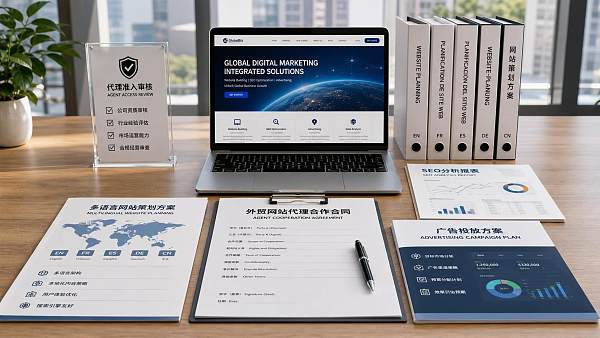
Foreign Trade Website Agency Requirements: Don’t Just Look at Whether It Can Be Done—Look at Whether It Can Generate Sales, Be Delivered Reliably, and Retain Customers
When assessing the requirements and thresholds for becoming a foreign trade website agency, don’t focus only on agency prices and rebates from the outset. For dealers, distributors, and agents, what really determines whether a partnership is worthwhile is usually not whether the system can build a website, but whether it can consistently help close deals, whether it can be delivered according to overseas market requirements, and whether customers will continue renewing after using it.
This industry has changed rapidly in recent years. In the past, many customers only asked about website development prices. Now, they are more likely to ask about multilingual support, Google indexing, the speed of advertising landing pages, how to connect social media traffic, and who will handle SEO later. In other words, foreign trade website agency services are no longer about selling webpages alone; they are about selling a complete set of “customer acquisition infrastructure.” If you are currently screening potential partner brands, the following checklist offers a more practical basis for evaluation.
First, Check Whether the Agency Thresholds Are “Real Thresholds”
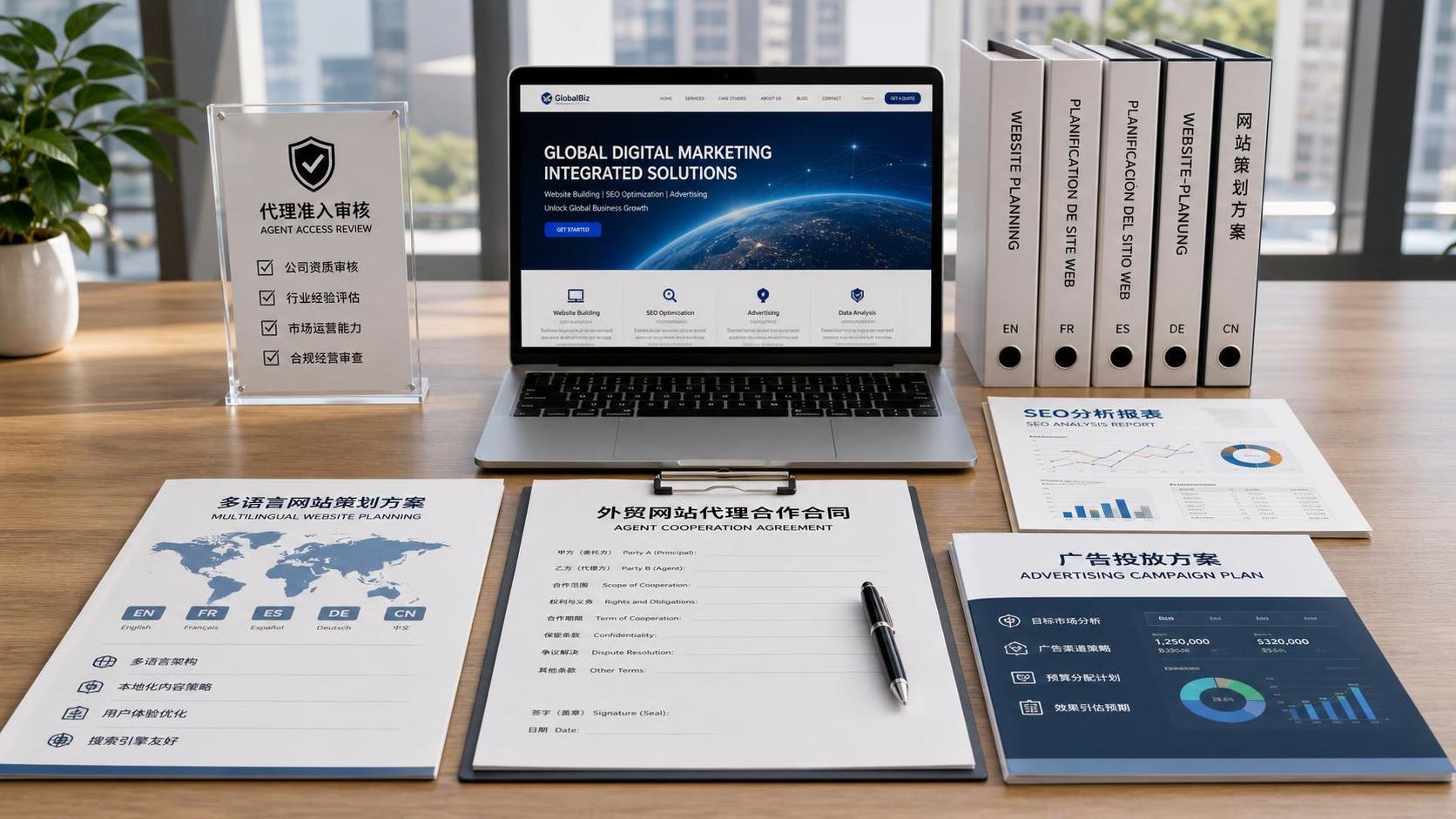
Some platforms describe their foreign trade website agency requirements in impressive terms, requiring a business license, team introduction, sales plan, and regional application. This may look formal and professional. But you need to distinguish between two things: one is normal partner access requirements, designed to screen out those without delivery capabilities; the other is merely packaging, where there is no actual product or service system, and after signing the contract, the agent is left to handle everything alone.
Therefore, the first step is not to ask, “Is there a franchise fee?” Instead, clarify what resources correspond to these thresholds:
- After submitting the qualifications, will the platform provide training, pre-sales support, and project guidance?
- Are the product boundaries clearly defined, including what can be sold and what cannot be promised?
- After the customer signs the contract, who handles delivery, after-sales service, and overseas promotion issues?
- For additional purchases such as renewals, redesigns, SEO, advertising, and social media, is there room for the agent to participate?
If a company publicly claims to provide “integrated website and marketing services,” its agency requirements should not stop at reviewing sales qualifications. They should also include a training system, delivery process, and customer success mechanism. Without these, the more orders you receive, the more problems you will face.
The Qualification Threshold Is Not Complicated, but the Partner Entity and Service Capabilities Must Be Verified
For most foreign trade website agency partnerships, basic materials usually include a business license, contact information, business introduction, and regional coverage. All of this is normal. What really needs to be verified is whether the partner entity is stable, whether the contract is clear, and whether someone is responsible for after-sales service.
For platforms such as 易营宝 that provide enterprise-level SaaS website building and integrated overseas marketing, the theoretical advantage for channel partnerships is that they do not merely sell a template website. Instead, they integrate intelligent website building, multilingual websites, SEO, advertising, social media operations, and GEO generative engine optimization into one complete chain. For agents, this means they do not need to find separate suppliers and piece together each process when serving customers.
However complete the business introduction may be, it is still advisable to verify three things: whether the contracting entity is consistent, whether the service content is included in the terms, and whether the after-sales response process can be implemented. Especially for cross-regional cooperation, clarify the delivery cycle, number of revisions, technical support methods, and renewal ownership in advance.
Whether a Product Can Be Represented Depends on Whether You Are Selling a “Website” or a “Result”
Many agents fall into a common trap in the early stages: treating foreign trade website development as standardized software. Then, when customers ask, “Why didn’t the website generate inquiries after going live?”, “Why hasn’t Google indexed it?”, or “Why does the English website have poor conversion?”, they are unable to respond effectively.
Therefore, when evaluating foreign trade website agency requirements, focus on whether the platform has the following capabilities, rather than simply judging whether the backend demonstration looks attractive:
Customers ultimately buy websites for customer acquisition. If the product you represent can only achieve “going live” but cannot support “promotion” and “conversion,” closing deals will become increasingly difficult, and after-sales pressure will continue to grow.
Do Not Overlook Regional Market Differences—they Directly Affect Whether You Can Close Deals
Another often underestimated hidden threshold for foreign trade website agencies is whether you can address the needs of your target markets. North American customers are more concerned with page speed, mobile experience, and the advertising conversion funnel. European markets are often more sensitive to privacy compliance and data notices. Southeast Asian customers may place greater emphasis on social media traffic acquisition and mobile browsing experience. In the Middle East, Russian-speaking regions, and other multilingual markets, requirements for language localization and page adaptation are also more detailed.
Agents are not advised to make assumptions and promises on their own here. Any matters involving local regulations, privacy compliance, Cookie notices, and the scope of data collection should be verified according to the customer’s actual business and target market requirements. Where necessary, ask the customer to confirm with their own legal or compliance advisor to avoid making overly broad promises during the pre-sales stage.
To put it directly, being able to provide multiple languages does not mean understanding localization; being able to build a website does not mean being able to make overseas marketing work. Whether the platform has a localized service approach is more important than the number of page templates.
Training, Pre-Sales Support, and Delivery Guidance Determine Whether an Agent Can Survive
Many people ask what conditions are required to become a foreign trade website agent. I would instead suggest asking: Will the platform help you complete your first few orders? In this industry, relying solely on a system backend and product manuals is far from enough.
A practical way to evaluate a partner is to ask directly whether it provides the following support:
- Standardized training: including website building logic, foreign trade SEO fundamentals, advertising landing page requirement identification, and handling common customer objections.
- Pre-sales assistance: Can they participate in communication with key customers, especially for projects involving manufacturing, cross-border e-commerce, and overseas brand expansion, where requirements are more complex?
- Delivery mechanism: After a project is initiated, is a dedicated person assigned to move it forward, or is the agent expected to coordinate everything independently?
- After-sales system: When website redesigns, domain resolution, page errors, fluctuations in indexing, or form failures occur, who responds first?
- Renewals and additional purchases: When customers later purchase SEO, advertising, or social media operations services, can the agent continue to participate in the revenue?
A partnership without these forms of support may appear to have a low threshold at the beginning, but it often becomes the most exhausting later. This is because what you sell is not merely a website, but an ongoing service relationship.
Pricing Policies Can Be Negotiated, but Settlement Rules Must Be Clarified in Detail
The most common problems in agency policies do not lie in the quotation itself, but in the “parts that have not been clearly written.” For example, how the minimum task volume is calculated, how customer refunds are handled, who owns cross-year renewals, how customized development beyond the agreed scope is charged, and whether regional protection is based on the registration location or the actual transaction location—all of these affect whether disputes will arise later.
In practice, at a minimum, the following items should be clearly confirmed in writing:
- Agent discounts and rebate cycles;
- Allocation rules for the first year, renewals, and additional purchases;
- Whether performance targets apply and whether failure to meet them affects the partnership level;
- How ownership of customer resources is determined;
- Whether sample customers and co-marketing leads can be shared.
Do not consider these details excessive. Many partnerships proceed smoothly at the beginning, but actual problems usually arise from settlement and unclear boundaries.
Finally, Consider the Most Practical Question: Do You Have Access to the Right Customer Base?
Not everyone is suitable to become a foreign trade website agent. First assess whether you already have access to the relevant customer groups, such as manufacturing resources, cross-border seller services, enterprise digitalization services, regional chamber of commerce channels, or foreign trade training communities. These are more reliable than simply wanting to “add another product line.”
This is because products such as foreign trade websites involve a relatively long customer decision-making process. Discussions typically cover business models, target countries, promotion methods, and budget cycles. Without a stable source of leads, agency work can easily become a one-time sale that cannot develop further. Conversely, if you already serve foreign trade enterprises, integrating a platform like 易营宝, with capabilities in AI website building, SEO, advertising, social media, and GEO, makes it easier to connect the product with your existing services.
Therefore, the truly practical evaluation method is simple: do not merely ask whether the requirements for becoming a foreign trade website agent are high or low. Ask whether this partnership mechanism can support you in continuously closing deals with three types of customers and whether it can encourage customers to renew in the second year. If the answer is unclear, the project is probably suitable only for short-term testing. If the product, training, delivery, settlement, and market support all align, entering the market at that point will give you much better odds of success.
Related Articles
Related Products
 EasyCamp SaaS Smart Website Marketing SystemE-Yingbao SaaS Smart Website Marketing System: AI-powered, zero-code website building. Rapidly launch multilingual independent e-commerce sites in just 10 minutes. Global server acceleration and AI-driven SEO optimization empower businesses to efficiently connect with global markets. The seamless integration of technology and user-friendly operation makes building e-commerce sites incredibly simple.
 AI+SEM Intelligent Advertising Marketing SystemAI+SEM drives intelligent ad creation, empowering full-funnel precision advertising marketing. The system automatically generates weekly/monthly reports, AI recommends keywords and target countries, monitors core metrics in real-time with intelligent alerts, and enables one-click high-conversion ad solutions to help quickly acquire customers and improve ROI.
 AI+SEO Dual Engine Optimization ServiceEasyWin AI+SEO Dual Engine Optimization System leverages AI-powered keyword mining, content generation, and comprehensive technical optimization to help foreign trade enterprises acquire high-quality organic traffic, significantly improving search rankings and conversion rates.
 AI+SNS Social Media Marketing SystemYingbao AI+SNS Social Media Marketing System - Precision social capture for the social media era. Supports one-click content synchronization across major platforms like Facebook and LinkedIn. AI intelligently rewrites posts for enhanced relevance. 24/7 AI customer service and user profiling analysis empower businesses to efficiently expand into global markets.
 AI+SEO营销解决方案易营宝AI+SEO营销解决方案,通过AI批量写作、智能生成TDK、精准关键词扩词等功能,全面优化网站SEO效果,提升流量与转化率。助力企业构建高效智能网站新生态。
 AI+SEM Advertising Marketing SolutionsAI+SEM Advertising Marketing Solution leverages AI technology to deeply empower SEM ad campaigns. It automatically generates weekly/monthly reports using AI, presenting account data across multiple dimensions for comprehensive insights into campaign performance and trends. The system precisely recommends keywords and target countries, intelligently generates high-conversion ad copy, and enables one-click activation of efficient campaign plans to help businesses rapidly acquire customers. Simultaneously, it monitors core metrics in real time, intelligently identifies abnormal fluctuations, and issues timely alerts to ensure stable, high-return advertising results.
 Domain Name ServicesEasyWin provides professional domain name services, including intelligent queries, one-stop registration, brand protection, and full lifecycle management, helping businesses build a digital brand image.
 EasyOperate B2C Cross-Border E-Commerce Platform & Independent WebsiteEasyStore B2C Cross-border E-commerce Independent Store is an intelligent website building and cross-border e-commerce integrated solution independently developed by EasyStore Information Technology (Beijing) Co., Ltd. The system is specially designed for small and medium-sized as well as large export enterprises, integrating 'website building, operation, marketing, advertising, and conversion' into one, helping enterprises quickly establish cross-border e-commerce independent stores to achieve brand globalization and global sales growth.
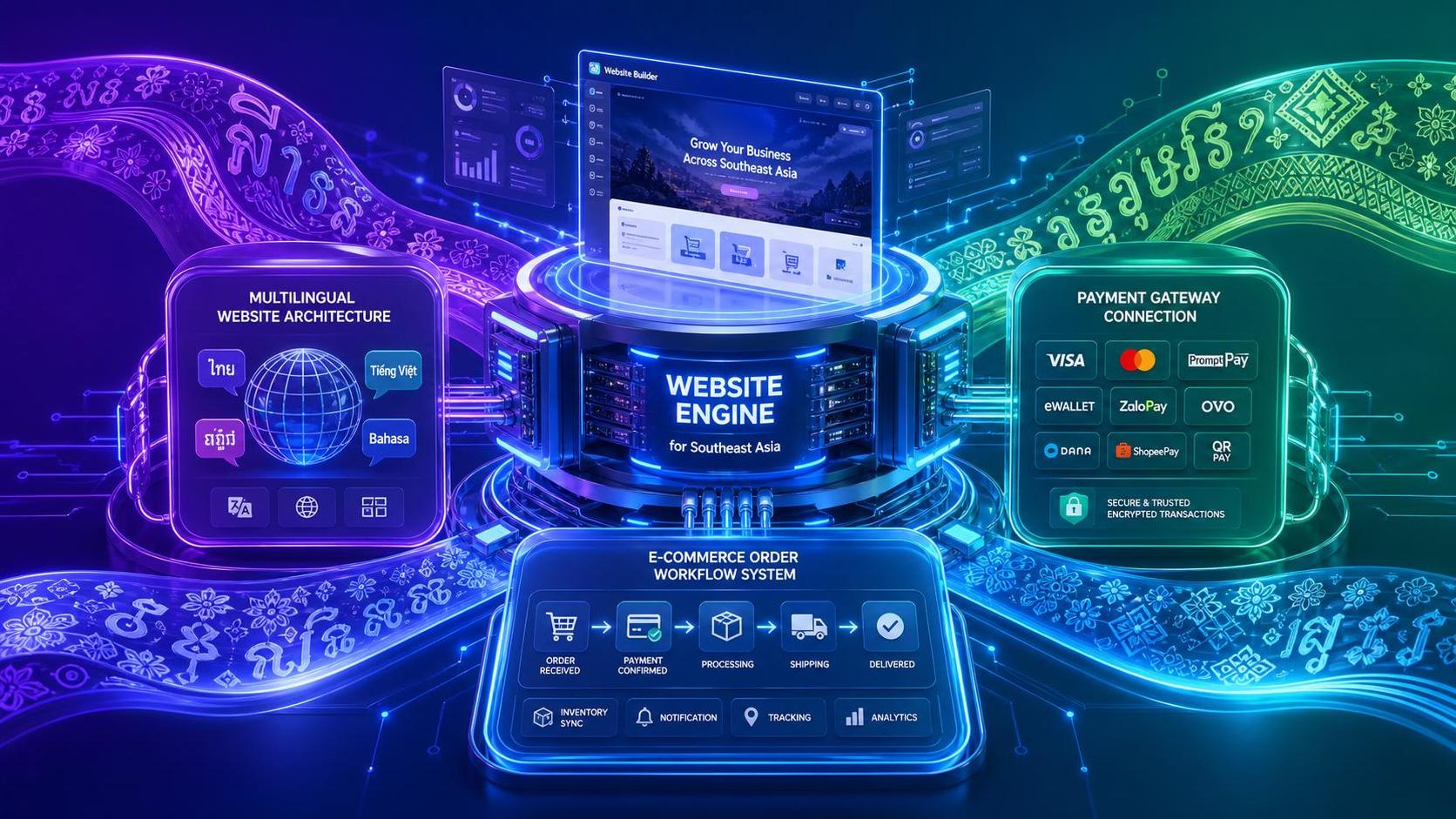
The platform supports multiple languages, multiple currencies, and multi-channel marketing, with built-in AI intelligent translation and SEO optimization systems, suitable for mainstream markets such as Southeast Asia, Europe and America, Latin America, and the Middle East, assisting Chinese manufacturing enterprises in efficiently deploying international e-commerce strategies. SSL证书易营宝提供专业SSL安全证书服务,包括单域名和泛域名证书,确保网站数据传输加密、身份验证和完整性保护,助力企业建立安全可信的在线业务环境。









