









- What should you focus on in the latest enterprise SaaS report? From renewal rates and delivery costs to overseas growth opportunitiesJul 12, 2026View details
- What signals are worth paying attention to in a cross-border marketing trend report? B2B companies should look at these 6 signalsJul 11, 2026View details
- How to Read a Cross-Border Marketing Trends Report? Five Key Dimensions for Evaluating Channel OpportunitiesJul 11, 2026View details
- Which channel has the highest ROI in the global traffic ecosystem? Comparative analysis of search, social media, and advertisingJul 10, 2026View details
- What multilingual website services are available in Sanya? Which model is more suitable for local businesses going global?Jul 08, 2026View details
- How to view the complete list of China SaaS companies in the top 100? Practical methods for screening website-building and marketing service providersJul 08, 2026View details
SEAC opens the free entry for Chinese SaaS service providers
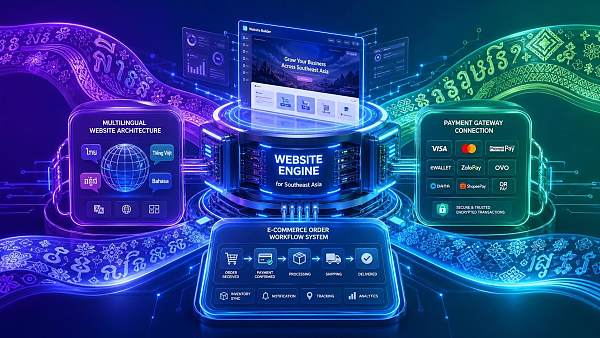
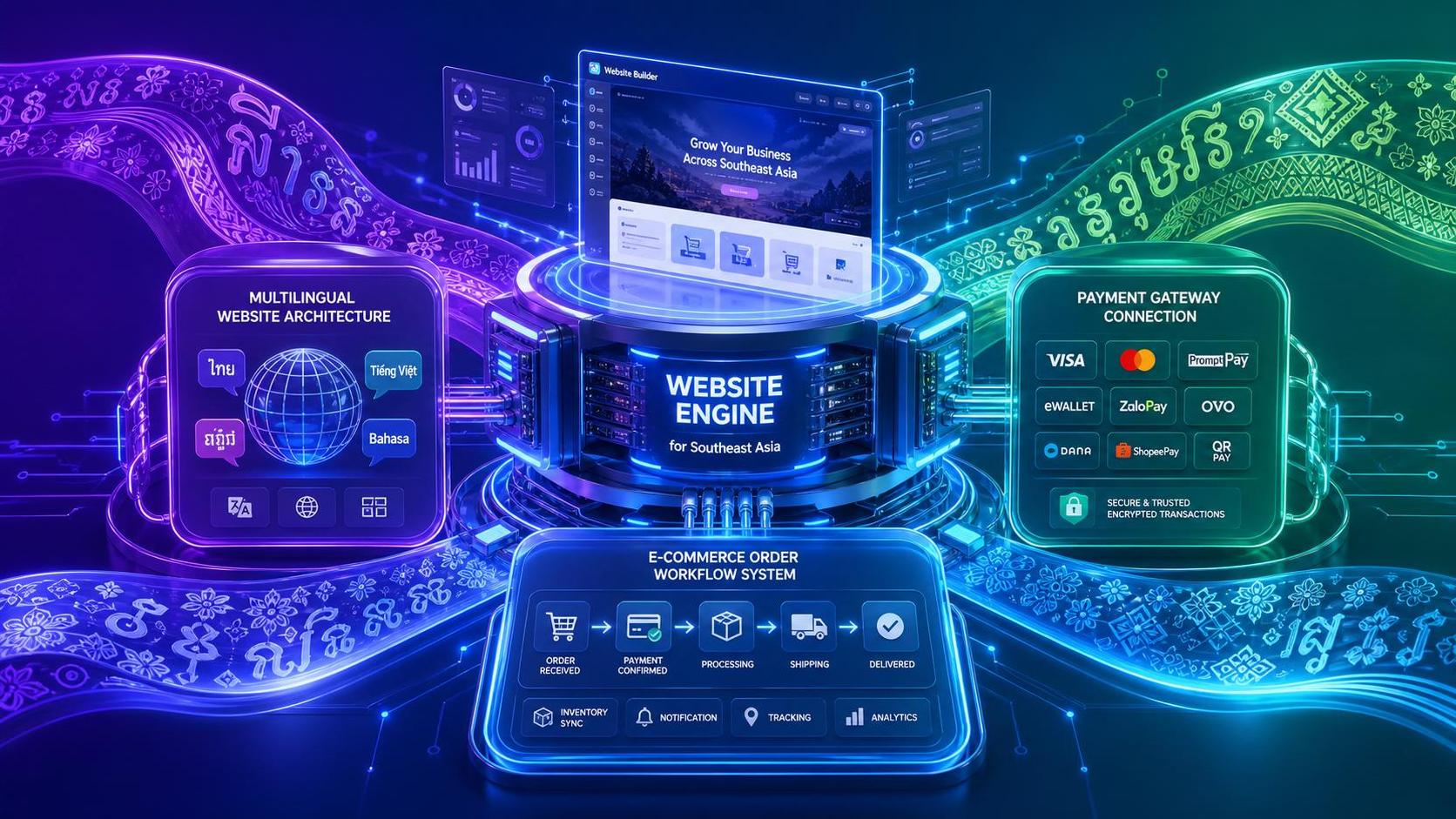
On July 12, 2026, the Southeast Asia E-commerce Consortium (SEAC), together with the e-commerce regulatory authorities of Indonesia, Thailand, and Vietnam, launched the “Local-First Website Initiative,” opening priority access to the official recommendation directory for China-based website-building SaaS enterprises at no entry fee. However, the prerequisites are quite clear: the platform must have GEO generative engine optimization capabilities in Thai, Vietnamese, and Indonesian, while also enabling local payment gateway integration and bidirectional synchronization with Lazada and Shopee order APIs. For cross-border e-commerce service providers, independent site technology platforms, and payment and order system integrators, this is worth noting, because what it conveys is not a single piece of recruitment information, but the fact that Southeast Asian markets are further refining their entry requirements for “local website-building capabilities.”
What has been confirmed in the plan
According to the information provided, this initiative was launched by the Southeast Asia E-commerce Consortium (SEAC) on July 12, 2026, and jointly initiated with the e-commerce regulatory authorities of Indonesia, Thailand, and Vietnam. The project is named “Local-First Website Initiative.”
The confirmed core arrangements include two points: first, China-based website-building SaaS enterprises are eligible to enter SEAC’s official recommendation directory at no entry fee; second, this eligibility is not open-ended, but is established on the basis of clear capability requirements.
The current confirmed capability thresholds include three items: support for GEO generative engine optimization in Thai, Vietnamese, and Indonesian; support for local payment gateway connectivity; and support for bidirectional synchronization with Lazada and Shopee order APIs. In addition, no further implementation details, validity period, directory scope, or review process have been provided in the input information.
Which business segments will this arrangement affect first
The competitive focus of website-building SaaS platforms is shifting
From an industry perspective, the most directly affected parties are website-building SaaS providers serving cross-border sellers. The reason is that SEAC is not offering a broad-based entry opportunity this time, but rather setting thresholds centered on three capabilities: language, local payment, and platform order collaboration. The impact will first be reflected in product capability positioning, namely whether website-building tools can move from being merely “functional” to truly “locally operable.” What deserves attention now is that platforms with multilingual GEO optimization and order bidirectional synchronization capabilities may gain higher visibility at the Southeast Asian market entry point.
Payment and system integration services will be placed in a more central position
For payment service providers, interface integration parties, and technical implementation teams, the impact of this information is mainly reflected in the delivery chain. Since local payment gateway connectivity and bidirectional synchronization with Lazada and Shopee order APIs have been explicitly written into the conditions, this means that related services are no longer just supplementary capabilities, but are becoming a basic part of the recommendation system. From an observational standpoint, enterprises will pay more attention to interface stability, adaptation efficiency, and consistency in multi-platform order flows.
The selection criteria for cross-border sellers are likely to become more specific
For cross-border sellers or brand overseas expansion teams using website-building SaaS, the impact may not be immediately visible on the sales side, but is more likely to appear in service-provider screening standards. The reason is that SEAC’s conditions have already put “local language capability,” “local payment access,” and “mainstream platform order collaboration” on the table. For such procurement-side parties, what needs attention is not only whether the service provider claims to support the Southeast Asian market, but whether it truly has corresponding system capabilities and delivery maturity.
What practical issues should enterprises focus on right now
First check whether qualification requirements will be further refined
For Chinese website-building SaaS enterprises interested in participation, the first thing to watch is whether subsequent official statements will further define concepts such as “head enterprises,” “official recommendation directory qualification,” and “priority access at no entry fee.” From an analytical perspective, these definitions will directly affect the scope of participation, application methods, and the rhythm of resource investment.
Separate multilingual GEO capability from ordinary translation
What is more worth noting at present is that the input information explicitly refers to GEO generative engine optimization for Thai, Vietnamese, and Indonesian, rather than multilingual page support in the general sense. When evaluating their own capabilities, enterprises need to distinguish between “being able to launch local-language pages” and “being able to optimize for local-language search and generative environments,” so as to avoid equating feature display with actual adaptation capability in external communication.
To assess payment connectivity and bidirectional order synchronization, look at the real delivery chain
From a practical perspective, local payment gateway connectivity and bidirectional synchronization with Lazada and Shopee order APIs both depend on technical integration and ongoing maintenance. Relevant enterprises should focus on interface access solutions, delivery timelines, version maintenance responsibilities, and exception handling mechanisms. Here, it is more appropriate to understand this as a verification of delivery capability, rather than as a simple product feature list.
Policy signals and actual business implementation still need to be judged separately
From an observational standpoint, SEAC is releasing a clear direction for entry, but whether this will develop into stable business opportunities still depends on subsequent rules, execution standards, and market adoption. For service providers and buyers, the more prudent approach at this stage is to synchronize product materials, technical specifications, and integration plans, while leaving room to track subsequent refinement of details.
How to understand the real significance for the industry
Taken together, the real significance of this dynamic is that it makes the focus of Southeast Asian e-commerce-related institutions on website-building SaaS more specific. For Chinese service providers, what is now being examined is no longer only whether they can help merchants build websites quickly, but whether they can provide verifiable capabilities in local language support, payment integration, and multi-platform order collaboration.
Therefore, the more appropriate interpretation at present is that this is an industry development with directional implications, rather than a definitive event that can already directly lead to market outcomes. In the short term, it will affect service providers’ capability narratives and preparation priorities; in the medium term, whether it will lead to broader cooperation or changes in entry criteria still requires continued observation of official rules and actual implementation.
References and follow-up verification directions
This article was generated based on the user-provided information title, event time, and event summary. The information used includes only the following: on July 12, 2026, the Southeast Asia E-commerce Consortium (SEAC) jointly initiated the “Local-First Website Initiative” with the e-commerce regulatory authorities of Indonesia, Thailand, and Vietnam, and opened priority access to the official recommendation directory for China-based website-building SaaS enterprises, on the premise of supporting GEO generative engine optimization in Thai, Vietnamese, and Indonesian, local payment gateway connectivity, and bidirectional synchronization with Lazada and Shopee order APIs.
According to the usual verification path for this type of industry information, subsequent tracking generally still needs to combine official announcements, enterprise announcements, industry association information, authoritative media reports, and relevant policy documents for continuous cross-verification. Because no specific official source link was provided in the input, this article cannot further verify the original announcement text, and the relevant details still need ongoing verification. Directions worth tracking in the future include: whether the qualification criteria are made public, whether the specific application and review mechanisms are disclosed, and whether the above technical conditions are further clarified at the execution level.
Related Articles
 SEAC opens the free entry for Chinese SaaS service providers
 What are the overseas marketing cooperation models? How to choose between agency operations, consulting services, and performance-based pricing?
 Does a website agency need technical expertise? Do entry barriers matter? From receiving orders to delivery ability, breaking it down

Related Products
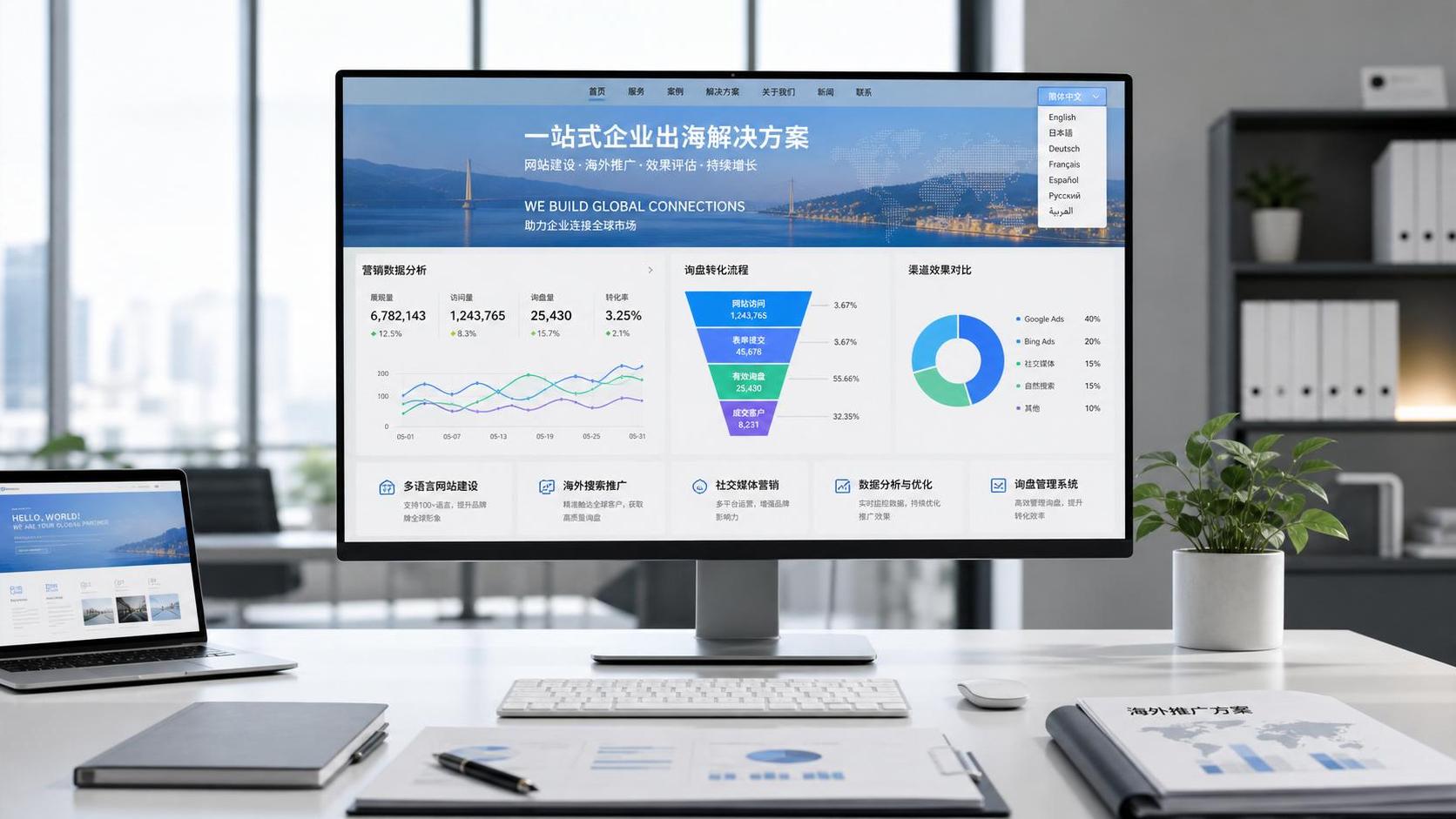
 EasyCamp SaaS Smart Website Marketing SystemE-Yingbao SaaS Smart Website Marketing System: AI-powered, zero-code website building. Rapidly launch multilingual independent e-commerce sites in just 10 minutes. Global server acceleration and AI-driven SEO optimization empower businesses to efficiently connect with global markets. The seamless integration of technology and user-friendly operation makes building e-commerce sites incredibly simple.
 AI+SEM Intelligent Advertising Marketing SystemAI+SEM drives intelligent ad creation, empowering full-funnel precision advertising marketing. The system automatically generates weekly/monthly reports, AI recommends keywords and target countries, monitors core metrics in real-time with intelligent alerts, and enables one-click high-conversion ad solutions to help quickly acquire customers and improve ROI.
 AI+SEO Dual Engine Optimization ServiceEasyWin AI+SEO Dual Engine Optimization System leverages AI-powered keyword mining, content generation, and comprehensive technical optimization to help foreign trade enterprises acquire high-quality organic traffic, significantly improving search rankings and conversion rates.
 AI+SNS Social Media Marketing SystemYingbao AI+SNS Social Media Marketing System - Precision social capture for the social media era. Supports one-click content synchronization across major platforms like Facebook and LinkedIn. AI intelligently rewrites posts for enhanced relevance. 24/7 AI customer service and user profiling analysis empower businesses to efficiently expand into global markets.
 AI+SEO营销解决方案易营宝AI+SEO营销解决方案,通过AI批量写作、智能生成TDK、精准关键词扩词等功能,全面优化网站SEO效果,提升流量与转化率。助力企业构建高效智能网站新生态。
 AI+SEM Advertising Marketing SolutionsAI+SEM Advertising Marketing Solution leverages AI technology to deeply empower SEM ad campaigns. It automatically generates weekly/monthly reports using AI, presenting account data across multiple dimensions for comprehensive insights into campaign performance and trends. The system precisely recommends keywords and target countries, intelligently generates high-conversion ad copy, and enables one-click activation of efficient campaign plans to help businesses rapidly acquire customers. Simultaneously, it monitors core metrics in real time, intelligently identifies abnormal fluctuations, and issues timely alerts to ensure stable, high-return advertising results.
 Domain Name ServicesEasyWin provides professional domain name services, including intelligent queries, one-stop registration, brand protection, and full lifecycle management, helping businesses build a digital brand image.
 EasyOperate B2C Cross-Border E-Commerce Platform & Independent WebsiteEasyStore B2C Cross-border E-commerce Independent Store is an intelligent website building and cross-border e-commerce integrated solution independently developed by EasyStore Information Technology (Beijing) Co., Ltd. The system is specially designed for small and medium-sized as well as large export enterprises, integrating 'website building, operation, marketing, advertising, and conversion' into one, helping enterprises quickly establish cross-border e-commerce independent stores to achieve brand globalization and global sales growth.
The platform supports multiple languages, multiple currencies, and multi-channel marketing, with built-in AI intelligent translation and SEO optimization systems, suitable for mainstream markets such as Southeast Asia, Europe and America, Latin America, and the Middle East, assisting Chinese manufacturing enterprises in efficiently deploying international e-commerce strategies. SSL证书易营宝提供专业SSL安全证书服务,包括单域名和泛域名证书,确保网站数据传输加密、身份验证和完整性保护,助力企业建立安全可信的在线业务环境。









