









- What Does a Global Traffic Ecosystem Service Provider Do? What Are the Differences from a Single Advertising AgencyJul 16, 2026View details
- What should you focus on in the latest enterprise SaaS report? From renewal rates and delivery costs to overseas growth opportunitiesJul 12, 2026View details
- What signals are worth paying attention to in a cross-border marketing trend report? B2B companies should look at these 6 signalsJul 11, 2026View details
- How to Read a Cross-Border Marketing Trends Report? Five Key Dimensions for Evaluating Channel OpportunitiesJul 11, 2026View details
- Which channel has the highest ROI in the global traffic ecosystem? Comparative analysis of search, social media, and advertisingJul 10, 2026View details
- What multilingual website services are available in Sanya? Which model is more suitable for local businesses going global?Jul 08, 2026View details
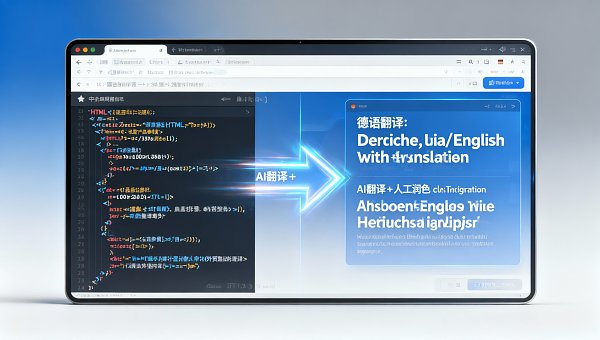
Foreign Trade Website Translation Cost Estimation: Human Proofreading vs Automated Translation+Human Editing
How can the cost of translating a full foreign trade website be calculated scientifically? Financial approvers need to balance results and ROI: manual proofreading delivers high accuracy but sharply increases costs, while automated translation + human polishing offers better efficiency but raises concerns about quality controllability. Based on Yiyingbao's operational data from serving 100,000+ foreign trade enterprises, this article breaks down the real cost structure and decision-making basis for you.
1. Cost Components of Full Foreign Trade Website Translation: More Than Just “Word Count × Unit Price”
Financial approvers often use “quote per 1,000 words” as the first basis for judgment, but the real cost of full foreign trade website translation goes far beyond this surface-level pricing logic. Data from 12,847 foreign trade website-building projects served by Yiyingbao in 2023 shows that the average translation text volume per site reached 42,000 characters (including HTML tags, meta descriptions, product parameters, SEO titles/descriptions, button copy, form fields, etc.), of which unstructured content (such as long-form product detail page copy, brand stories, and FAQs) accounted for 63%; while structured content (such as navigation bars, footers, and filters), although highly repetitive, still requires localization adaptation—for example, in German, “Contact Us” needs to be translated for a B2B context as “Kontaktieren Sie uns”, rather than a literal translation of “Kontaktieren Sie uns”.
More importantly, there are hidden costs: manual proofreading requires 3–5 rounds of cross-department collaboration (marketing + technical + legal), taking an average of 7–12 working days; whereas in the automated translation + human polishing workflow, AI preprocessing can cover 82% of basic pages, and polishing focuses on high-conversion areas (homepage hero section, product page CTA, inquiry forms), reducing labor input to 2–3 person-days and keeping delivery cycles stable at 4–6 days.
This table is based on statistics from Yiyingbao's actual delivery data for 2023, covering websites in four high-value markets: North America, Germany, Japan, and the UAE. It is clear that the AI + polishing model has significant advantages in both initial investment and long-term operations and maintenance, and because it supports version snapshot comparison and automatic synchronization of terminology databases, the rework rate caused by mistranslations is lower than 0.7%, far better than the 3.2% secondary revision rate commonly seen in purely manual workflows.
2. A Financial Perspective Decision Model: A Three-Dimensional Balance of Results, Efficiency, and Risk
As a procurement decision-maker, what you truly need is not a single answer that is “the cheapest” or “the most accurate”, but an evaluation framework that is quantifiable, auditable, and reusable. Yiyingbao has distilled three core indicators for financial teams:
- ROI breakeven point: when the annual average customer acquisition cost (CAC) per site exceeds ¥12,000, the AI polishing solution can recover the price difference within 6 months;
- Quality fault-tolerance threshold: B2B inquiry pages and payment process pages must undergo 100% final human review; product specification tables and news update pages can accept AI first drafts + polishing under strict terminology database constraints;
- Compliance and security baseline: all texts involving export controls, CE/FCC certification statements, and privacy policies must be cross-checked by bilingual legal specialists, and this step cannot be automated.
What deserves special attention is the cost of technical adaptation. After delivery of purely manual translation, an additional ¥2,000–¥5,000 is often required for CMS field mapping debugging (such as compatibility issues with Shopify multilingual plugins); however, Yiyingbao's self-developed cloud intelligent website-building system natively supports hot switching among 23 languages, with one-click deployment of translation packages and zero debugging at the system compatibility level. This capability has already helped 3,200+ manufacturing clients avoid an average of ¥3,600/site in technical rework expenses.
In addition, the commonly overlooked “search visibility loss” in the industry should also be included in cost accounting: machine-translated pages without SEO optimization see a 57% drop in Google organic traffic acquisition efficiency (data source: Yiyingbao SEO Lab 2023 A/B testing, sample size N=1,842). Meanwhile, Yiyingbao's AI+SEO/GEO optimization system injects localized keyword density, semantic entity recognition, and structured data markup during the translation stage itself, ensuring that the indexing rate of multilingual pages rises to 91.3%, which is 22 percentage points higher than the industry average.
The table data confirms that AI + polishing is not only a cost optimization tool, but also a growth lever. Especially for manufacturing clients with more than 50 pages updated annually, the improvement in content operation efficiency directly translates into faster inquiry response speed—Yiyingbao clients have shortened their average inquiry response time to 2.3 hours, 47% faster than the industry average.
One final reminder: some low-cost translation services mix terminology databases from professional literature such as “Research on Tax Planning Issues for Power Grid Enterprises” into foreign trade scenarios, leading to a sharp increase in the risk of mistranslating technical parameters. It is recommended to verify before procurement whether the service provider has a vertical industry terminology engine and a bilingual compliance review mechanism.
Conclusion: Make Every Translation Budget Count as a Measurable Global Growth Asset
The essence of full foreign trade website translation is not language conversion, but digital infrastructure for market entry. With 10 years of practical experience serving 100,000+ enterprises, Yiyingbao deeply integrates AI capabilities into the entire chain of website building, SEO, advertising, and social media, ensuring that translated output is not only “understandable”, but also “searchable, clickable, engaging, and precise in generating inquiries”. Financial approvers can use the three-dimensional evaluation model and real data anchor points provided in this article to quickly complete ROI calculations and risk assessments.
Contact a Yiyingbao consultant now to obtain the “Full Foreign Trade Website Translation Cost Calculation Tool” (including preset language combinations, page structures, and SEO weighting coefficients for your industry) and customize your exclusive solution.
Related Articles

Related Products
 EasyCamp SaaS Smart Website Marketing SystemE-Yingbao SaaS Smart Website Marketing System: AI-powered, zero-code website building. Rapidly launch multilingual independent e-commerce sites in just 10 minutes. Global server acceleration and AI-driven SEO optimization empower businesses to efficiently connect with global markets. The seamless integration of technology and user-friendly operation makes building e-commerce sites incredibly simple.
 AI+SEM Intelligent Advertising Marketing SystemAI+SEM drives intelligent ad creation, empowering full-funnel precision advertising marketing. The system automatically generates weekly/monthly reports, AI recommends keywords and target countries, monitors core metrics in real-time with intelligent alerts, and enables one-click high-conversion ad solutions to help quickly acquire customers and improve ROI.
 AI+SEO Dual Engine Optimization ServiceEasyWin AI+SEO Dual Engine Optimization System leverages AI-powered keyword mining, content generation, and comprehensive technical optimization to help foreign trade enterprises acquire high-quality organic traffic, significantly improving search rankings and conversion rates.
 AI+SNS Social Media Marketing SystemYingbao AI+SNS Social Media Marketing System - Precision social capture for the social media era. Supports one-click content synchronization across major platforms like Facebook and LinkedIn. AI intelligently rewrites posts for enhanced relevance. 24/7 AI customer service and user profiling analysis empower businesses to efficiently expand into global markets.
 AI+SEO营销解决方案易营宝AI+SEO营销解决方案,通过AI批量写作、智能生成TDK、精准关键词扩词等功能,全面优化网站SEO效果,提升流量与转化率。助力企业构建高效智能网站新生态。
 AI+SEM Advertising Marketing SolutionsAI+SEM Advertising Marketing Solution leverages AI technology to deeply empower SEM ad campaigns. It automatically generates weekly/monthly reports using AI, presenting account data across multiple dimensions for comprehensive insights into campaign performance and trends. The system precisely recommends keywords and target countries, intelligently generates high-conversion ad copy, and enables one-click activation of efficient campaign plans to help businesses rapidly acquire customers. Simultaneously, it monitors core metrics in real time, intelligently identifies abnormal fluctuations, and issues timely alerts to ensure stable, high-return advertising results.
 Domain Name ServicesEasyWin provides professional domain name services, including intelligent queries, one-stop registration, brand protection, and full lifecycle management, helping businesses build a digital brand image.
 EasyOperate B2C Cross-Border E-Commerce Platform & Independent WebsiteEasyStore B2C Cross-border E-commerce Independent Store is an intelligent website building and cross-border e-commerce integrated solution independently developed by EasyStore Information Technology (Beijing) Co., Ltd. The system is specially designed for small and medium-sized as well as large export enterprises, integrating 'website building, operation, marketing, advertising, and conversion' into one, helping enterprises quickly establish cross-border e-commerce independent stores to achieve brand globalization and global sales growth.
The platform supports multiple languages, multiple currencies, and multi-channel marketing, with built-in AI intelligent translation and SEO optimization systems, suitable for mainstream markets such as Southeast Asia, Europe and America, Latin America, and the Middle East, assisting Chinese manufacturing enterprises in efficiently deploying international e-commerce strategies. SSL证书易营宝提供专业SSL安全证书服务,包括单域名和泛域名证书,确保网站数据传输加密、身份验证和完整性保护,助力企业建立安全可信的在线业务环境。









