









- The China-US tariff arrangement has reached a preliminary consensus, and the trade association will be establishedJun 15, 2026View details
- What determines B2C cross-border e-commerce website development costs? A breakdown of features, interfaces, and deployment methodsJun 17, 2026View details
- China-Morocco zero-tariff access, a breakthrough in the cost of Moroccan goods exports to ChinaJun 11, 2026View details
- What signal should be released for the suspension of exports to JapanJun 10, 2026View details
- China's May LNG imports rebounded, with increased volumes from Russia and Canada filling the Middle East supply gapJun 10, 2026View details
- Will GEO change its SEO strategy?Jun 04, 2026View details
What effective channels are there for building materials foreign trade marketing? How should SEO, advertising, and exhibitions be coordinated
Why Building Materials Foreign Trade Marketing Can't Rely on Just One Channel
The core of building materials foreign trade marketing is not finding a single “best” channel, but building a combination strategy that can continuously generate leads. Many companies rely on platform inquiries in the early stage, then aggressively invest in ads later, only to find that costs keep rising while customer quality remains unstable.
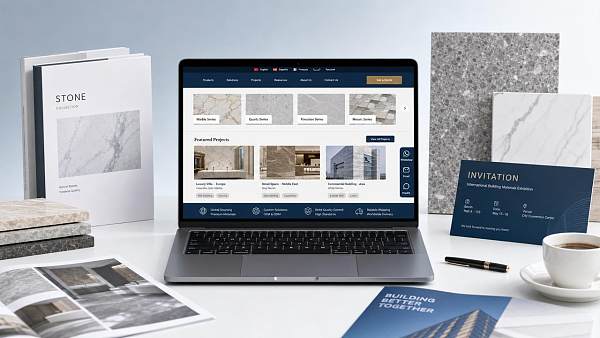
Recent changes show that overseas procurement decisions are becoming more and more cautious. Building materials have high unit prices, complex specifications, and long delivery cycles, so customers usually will not place an order immediately after one ad click. This also means building materials foreign trade marketing must solve three problems at the same time: “being seen, being trusted, and being converted”.
SEO is responsible for long-term exposure and content accumulation, advertising is responsible for rapid market testing and lead generation, and exhibitions help companies build trust offline and advance large customer deals. The three do not replace each other; they amplify each other.
If a company is evaluating building materials foreign trade marketing channels, the focus is not on “choosing one”, but on first clarifying the role each channel plays in the customer acquisition journey, and then deciding the budget, pace, and team structure.
SEO: Turning Building Materials Foreign Trade Marketing into an Accumulable Long-Term Asset
In building materials foreign trade marketing, SEO is the easiest to underestimate. Because it does not deliver results as fast as ads, but what truly lowers inquiry costs and keeps traffic growing is often the website and content system.
When overseas buyers search, they do not just search product terms. They also search application scenarios, material standards, installation methods, certification requirements, project cases, and supplier comparisons. Whoever appears at these search touchpoints enters the customer's field of vision earlier.
SEO Needs to Focus on Three Things
- First, build a multilingual marketing website to ensure the page structure is clear, loads quickly, and delivers a stable mobile experience.
- Then set up a keyword system covering product terms, regional terms, scenario terms, question terms, and brand terms.
- Finally, keep producing content, including case pages, certification pages, FAQ, purchasing guides, and industry solution pages.
At this stage, the website is no longer just a company profile page, but the traffic base of building materials foreign trade marketing. A website plus marketing service integrated platform like Yi Ying Bao can put AI smart website building, Google SEO optimization, and multilingual content layout into the same system for promotion, which is more efficient, especially for companies that want to do overseas markets for the long term.
The advantage of SEO is that once keywords and page authority become stable, traffic will continue to bring in inquiries. For the building materials industry, this accumulative nature is often more important than short-term traffic spikes.
Advertising: Improving the Inquiry Speed and Market Validation Efficiency of Building Materials Foreign Trade Marketing
If SEO solves the question of “whether there will be traffic in the long run,” then advertising solves the question of “whether you can quickly get customer feedback in the short run.” When building materials foreign trade marketing enters a new market, advertising is especially valuable because it can quickly validate products, regions, and audience segments.
Google Ads are suitable for capturing clear intent, such as when customers are searching for tiles, panels, windows and doors, stone materials, sanitary ware, and other procurement terms. Facebook Ads are more suitable for brand exposure, sample promotion, and remarketing retargeting.
Common Mistakes in Ad Placement
- Only looking at clicks, not inquiry quality, resulting in many leads but few deals.
- Landing page content is too simple to support high-ticket purchasing decisions.
- Keywords are too broad, causing the budget to be quickly consumed by invalid traffic.
- Ad data is not fed back into website content and sales script optimization.
A more effective approach is to treat advertising as the data radar of building materials foreign trade marketing. First use a small budget to test different countries, product selling points, and form designs, then feed the high-conversion information back into SEO content, the official website pages, and the sales follow-up process.
In actual business, more ads are not better; more precision is better. Especially when there are many building materials SKUs and complex applications, AI ad systems are needed for keyword filtering, audience segmentation, and retargeting optimization so that every dollar of budget is spent on customers who are truly likely to convert.
This is very similar to how a company handles other major decisions: it may look like a chance to seize opportunities on the surface, but in essence it is more about risk control. The thinking emphasized in financial risks and response measures for state-owned enterprises co-investing and holding shares is similar: early judgment and process management are often more important than post-event remediation.
Exhibitions: Filling the Trust Gap in Building Materials Foreign Trade Marketing Offline
Exhibitions are still important in building materials foreign trade marketing for a simple reason: many customers still want to see the physical product, touch the material, confirm the craftsmanship, and communicate face-to-face with the supplier about delivery capability before placing an order.
Especially for engineering projects, bulk purchasing, and customized cooperation, exhibitions are not just a place to hand out business cards, but an important node for advancing cooperation trust. The problem is that many companies treat exhibitions as one-off events, without creating a closed loop before, during, and after the show.
Exhibitions Must Work Together with Online Channels
- Before the show, use the website and ads to warm up prospects and tell target customers which booth you will be at.
- During the show, guide customers to visit the official website's case pages, product pages, and certification pages to complete initial screening on site.
- After the show, continue follow-up through email, remarketing ads, and social media content to prevent lead loss.
The benefit of doing this is turning short-term exhibition exposure into trackable, reusable, and remarketable digital assets. For building materials foreign trade marketing, exhibitions should not just be about “meeting face to face”; they should become an accelerator for online conversion.
If a company lacks a complete overseas website, landing pages, and lead management system, then even if it participates in a high-quality exhibition, the later conversion efficiency is still hard to truly improve.
SEO, Advertising, and Exhibitions: How Building Materials Foreign Trade Marketing Should Coordinate
Truly mature building materials foreign trade marketing is not about the three channels each doing their own thing, but about advancing in coordination according to the customer decision path. Simply put, different stages solve different problems.
The key to this coordinated logic is that all channels point to the same destination site, the same data pipeline, and the same sales follow-up mechanism. Otherwise, traffic arrives, and leads arrive, but it is hard to tell which action actually brought the deal.
For building materials companies, first having a promotable, indexable, and convertible independent site, and then adding SEO, advertising, and exhibitions, is usually more stable and reliable than relying on a single platform alone.
How Building Materials Companies Choose the Most Suitable Foreign Trade Marketing Solution for Themselves
If the budget is limited, it is recommended to first build a solid website and core SEO foundation, then use small-scale ads to test the market. Without a website foundation, ad traffic is difficult to retain; without content assets, customers after the exhibition are also hard to follow up continuously.
If you already have a stable product line and want to expand into new country markets, you can adopt a combined approach of “SEO groundwork, ad testing, and exhibition breakthrough”. This can both take care of short-term results and preserve long-term growth potential.
If a company cares more about execution efficiency, choosing integrated services for website development, SEO optimization, ad placement, and social media operations will make the closed loop easier to form. Especially on platforms with AI website building, AI advertising, and AI+SEO capabilities, the efficiency of building materials foreign trade marketing can be significantly improved.
No matter which solution is used, the evaluation criteria should not only be surface-level traffic, but should look at three results: whether inquiries keep growing, whether customers are more accurate, and whether the sales cycle is shortened.
In the end, there is no one-size-fits-all winning formula for building materials foreign trade marketing. The truly effective method is to use SEO for long-term accumulation, advertising for rapid amplification, exhibitions to supplement trust, and then use systematic tools to manage the data and leads.
When the channels start to work together, building materials foreign trade marketing can evolve from “getting inquiries by luck” into a “replicable customer acquisition system”. If a company is currently in a channel reconstruction phase, it may wish to start with website foundation, keyword layout, and ad testing, and then gradually connect exhibition resources into the entire growth chain.
Related Articles
 Southeast Asia's five countries launch DTSC certification, Chinese enterprise website service providers enter the first batch of evaluation partners
 Southeast Asia’s five nations launch DTSC certification; foreign trade independent sites welcome a new threshold
 Why should mechanical foreign trade websites emphasize application scenarios? Demonstrating scenarios is more persuasive to buyers than listing parameters.



Related Products
 EasyCamp SaaS Smart Website Marketing SystemE-Yingbao SaaS Smart Website Marketing System: AI-powered, zero-code website building. Rapidly launch multilingual independent e-commerce sites in just 10 minutes. Global server acceleration and AI-driven SEO optimization empower businesses to efficiently connect with global markets. The seamless integration of technology and user-friendly operation makes building e-commerce sites incredibly simple.
 AI+SEM Intelligent Advertising Marketing SystemAI+SEM drives intelligent ad creation, empowering full-funnel precision advertising marketing. The system automatically generates weekly/monthly reports, AI recommends keywords and target countries, monitors core metrics in real-time with intelligent alerts, and enables one-click high-conversion ad solutions to help quickly acquire customers and improve ROI.
 AI+SEO Dual Engine Optimization ServiceEasyWin AI+SEO Dual Engine Optimization System leverages AI-powered keyword mining, content generation, and comprehensive technical optimization to help foreign trade enterprises acquire high-quality organic traffic, significantly improving search rankings and conversion rates.
 AI+SNS Social Media Marketing SystemYingbao AI+SNS Social Media Marketing System - Precision social capture for the social media era. Supports one-click content synchronization across major platforms like Facebook and LinkedIn. AI intelligently rewrites posts for enhanced relevance. 24/7 AI customer service and user profiling analysis empower businesses to efficiently expand into global markets.
 AI+SEO营销解决方案易营宝AI+SEO营销解决方案,通过AI批量写作、智能生成TDK、精准关键词扩词等功能,全面优化网站SEO效果,提升流量与转化率。助力企业构建高效智能网站新生态。
 AI+SEM Advertising Marketing SolutionsAI+SEM Advertising Marketing Solution leverages AI technology to deeply empower SEM ad campaigns. It automatically generates weekly/monthly reports using AI, presenting account data across multiple dimensions for comprehensive insights into campaign performance and trends. The system precisely recommends keywords and target countries, intelligently generates high-conversion ad copy, and enables one-click activation of efficient campaign plans to help businesses rapidly acquire customers. Simultaneously, it monitors core metrics in real time, intelligently identifies abnormal fluctuations, and issues timely alerts to ensure stable, high-return advertising results.
 Domain Name ServicesEasyWin provides professional domain name services, including intelligent queries, one-stop registration, brand protection, and full lifecycle management, helping businesses build a digital brand image.
 EasyOperate B2C Cross-Border E-Commerce Platform & Independent WebsiteEasyStore B2C Cross-border E-commerce Independent Store is an intelligent website building and cross-border e-commerce integrated solution independently developed by EasyStore Information Technology (Beijing) Co., Ltd. The system is specially designed for small and medium-sized as well as large export enterprises, integrating 'website building, operation, marketing, advertising, and conversion' into one, helping enterprises quickly establish cross-border e-commerce independent stores to achieve brand globalization and global sales growth.
The platform supports multiple languages, multiple currencies, and multi-channel marketing, with built-in AI intelligent translation and SEO optimization systems, suitable for mainstream markets such as Southeast Asia, Europe and America, Latin America, and the Middle East, assisting Chinese manufacturing enterprises in efficiently deploying international e-commerce strategies. SSL证书易营宝提供专业SSL安全证书服务,包括单域名和泛域名证书,确保网站数据传输加密、身份验证和完整性保护,助力企业建立安全可信的在线业务环境。









