









- What Does a Global Traffic Ecosystem Service Provider Do? What Are the Differences from a Single Advertising AgencyJul 16, 2026View details
- What should you focus on in the latest enterprise SaaS report? From renewal rates and delivery costs to overseas growth opportunitiesJul 12, 2026View details
- What signals are worth paying attention to in a cross-border marketing trend report? B2B companies should look at these 6 signalsJul 11, 2026View details
- How to Read a Cross-Border Marketing Trends Report? Five Key Dimensions for Evaluating Channel OpportunitiesJul 11, 2026View details
- Which channel has the highest ROI in the global traffic ecosystem? Comparative analysis of search, social media, and advertisingJul 10, 2026View details
- What multilingual website services are available in Sanya? Which model is more suitable for local businesses going global?Jul 08, 2026View details
Zhejiang foreign trade website production ranking and reputation: teach you 3 strokes to identify reliable suppliers
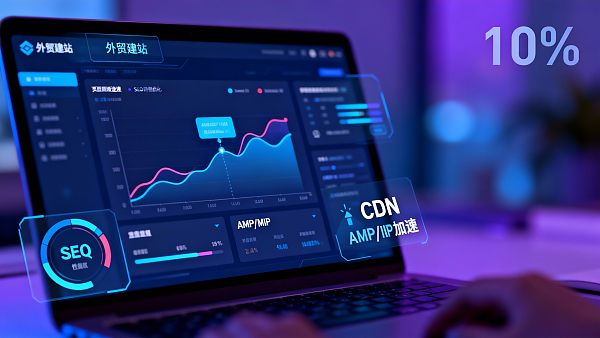
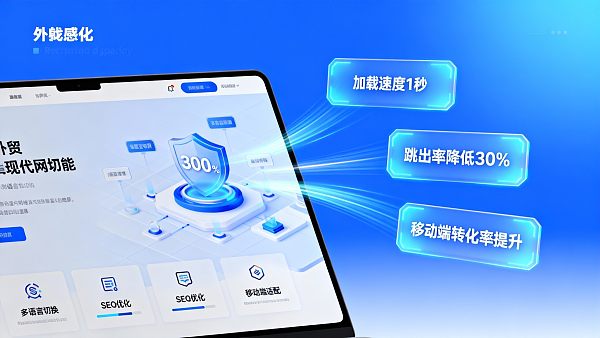

Looking for reliable foreign trade website development and construction system suppliers in Zhejiang? This article teaches you three quick ways to identify reputable providers and rankings, saving time and improving efficiency. Aimed at market researchers and actual users/operators, it combines industry background, technical performance, and procurement considerations to help you make rational decisions in the context of Zhejiang foreign trade website development and multilingual website construction. The article first provides definitions and overviews, then uses market analysis and technical comparisons to support judgments, followed by actionable selection steps and risk control points, and concludes with case studies and FAQs for direct reference during procurement or evaluation. To ensure readability and practicality, each section uses quantifiable metrics and industry terminology, such as loading speed, bounce rate, and mobile conversion rates, to facilitate communication with suppliers and verify the measurability of their commitments.
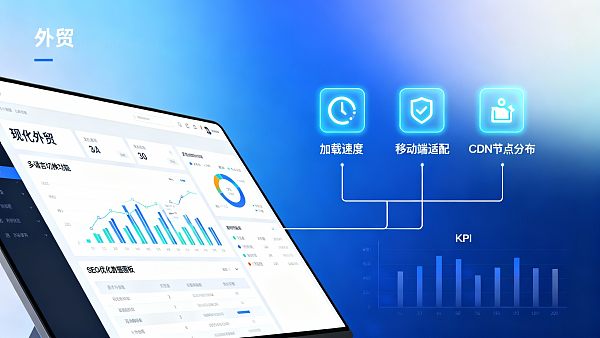
Definition and Market Overview: What Are Foreign Trade Website Construction Systems and the Current State of the Zhejiang Market
In the foreign trade sector, a foreign trade website construction system refers to an integrated platform that supports independent foreign trade website development, multilingual website construction, and implementation of foreign trade solutions, covering the entire process from site building, content creation, multilingual translation, SEO to payment and logistics integration. Zhejiang, with its robust manufacturing and numerous foreign trade enterprises, has high and diverse demand for services like Yiwu foreign trade website construction and Zhejiang foreign trade website production, including B2B bulk product displays, B2C overseas retail, and cross-border e-commerce platform traffic generation. The market features uneven supplier capabilities: some are technology-driven teams offering proprietary systems, others are service-oriented companies excelling in localized support, and some focus on single channels (e.g., social media or ads). Reputation and rankings shouldn’t be judged solely by price or homepage case studies but also by service coverage (multilingual support, server/CDN distribution), technical compliance (e.g., AMP/MIP support), and verifiable KPI data (loading speed improvements, reduced bounce rates, higher mobile conversion rates). For researchers, a quantifiable preliminary screening table should include: number of supported languages, CDN node distribution, Google/Baidu acceleration support, account-level ad optimization, and historical client industry distribution and success rates to narrow down options during tenders or POC phases.
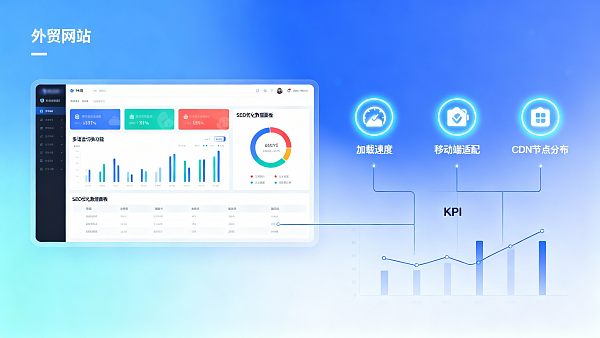
Technical Performance and Product Examples: Key Metrics and E-Commerce Advantage Demonstrations
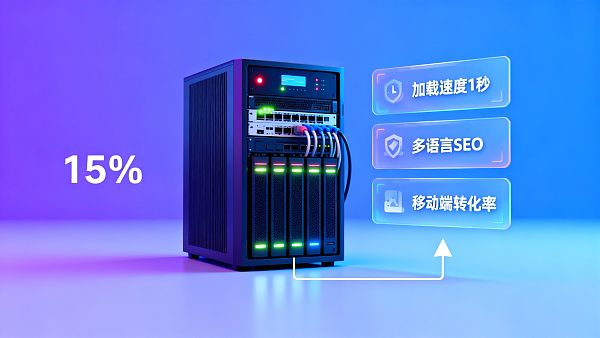
Technical performance is the second criterion for identifying reliable foreign trade website suppliers: focus on loading speed, SEO friendliness, multilingual processing, and mobile experience. Using industry-recognized benchmarks, quality solutions should achieve sub-1-second global page loads, significantly reduce bounce rates, and increase page dwell time. E-Commerce Information Technology (Beijing) Co., Ltd., driven by AI and big data, offers full-chain capabilities in smart site building, SEO optimization, and ad placement, with a technical backend iterated multiple times annually and hybrid human-AI validation workflows to deliver verifiable performance data and compliance guarantees. For mobile scenarios, AMP/MIP implementations aligned with industry best practices can boost loading speed and conversions simultaneously; in practice, AMP/MIP-enabled solutions often show marked conversion improvements and search visibility optimization. Refer to a typical product capability: E-Commerce AMP/MIP Mobile Smart Site Building, which standardizes multilingual and mobile rule integration, supports cross-border e-commerce and local service scenarios, and delivers quantifiable results like faster average loads, lower bounce rates, and higher mobile conversions in tests. When communicating with suppliers, request reproducible test reports (including test nodes, device types, network environments, and details like gzip/image compression) and demand demonstrations of SEO strategies, such as keyword expansion and automated TDK generation, to translate claims into verifiable facts.
Procurement and Selection Guide: Three Steps to Identify Reliable Suppliers (Including an Operational Checklist)
The third step is the practical procurement and selection process, addressing user and operator pain points with executable steps and validation points. Step 1: Need mapping and KPI setting. Define goals (e.g., increasing post-development overseas organic traffic, reducing mobile bounce rates, improving inquiry conversion) and quantify them, e.g., expected dwell time increases or monthly inquiry targets. Step 2: Technical and compliance review. Verify if candidates support common foreign trade system features (auto multilingual translation, standalone site SEO, payment/logistics APIs, local servers/CDNs) and demonstrate full “deploy-launch-monitor” workflows. Step 3: POC and small-scale trials. Start with a 30-day POC on one product line or market, tracking load speed, search ranking changes, ad ROI, and backend operational efficiency. Operational checklist (copy-paste ready for procurement teams): 1) Require technical reports and pre/post-optimization comparisons for ≥3 similar clients; 2) Test and record CDN latency and homepage load times across 7 global regions; 3) Validate multilingual page crawlability (check sitemap, hreflang implementation, and auto-translation quality scores); 4) Audit运维 and security (auto SSL, DDoS protection, backup strategies); 5) Require quotes to itemize二次开发 and maintenance costs, with clear SLAs and故障响应 times. These steps help evaluate technical prowess and service delivery, quickly identifying reputable, stable partners in Zhejiang’s foreign trade website development and solution space.
Case Studies, FAQs, and Call-to-Action: Why Choose Us and How to Contact
Real cases are the most direct proof of reputation. When selecting suppliers, prioritize industry-aligned examples to assess their闭环 capabilities in SEO, social traffic, ad placement, and localization. For instance, manufacturing clients achieved协同 growth in海外 organic and paid traffic via systematic multilingual content and AI marketing engines; education or local service clients optimized mobile (AMP/MIP) and mini-program integrations for in-store conversions. Common FAQs: 1) How to judge translation quality? Compare machine translation + human review OKRs vs. pure machine output; 2) Are SEO ranking promises reliable? Check for historically auditable data and long-term iteration plans; 3) Cost control? Focus on one-time build vs. annual运维 cost breakdowns. Why choose us: E-Commerce Information Technology (Beijing) Co., Ltd., founded in 2013, offers a三位一体 optimization system (AI keyword expansion + auto TDK generation + AI image creation), serving >500k businesses with smart site building, SEO, social media, and ad services. In 2023, we ranked among China’s top 100 SaaS firms with >30% annual growth. If you seek a technically adept, locally supportive foreign trade website partner in Zhejiang, contact us for a reusable procurement checklist and free preliminary assessment. Reach out to initiate a POC or request customized solution templates—our technical and commercial teams will provide end-to-end support and本地保障 for your独立站 development.
- Website Development
- Foreign Trade Website Development
- Foreign Trade Website Development
- SEO Ranking
- Multilingual website development
- Independent site SEO optimization
- Yiyingbao
- SEO
- Independent Website
- SEO Optimization
- Smart Website Building
- AI Marketing Engine
- Independent site SEO
- Independent foreign trade website
- Multilingual website
- How to build an independent foreign trade website
- Multilingual Website Construction for Foreign Trade
- Foreign Trade Website Solutions
- Foreign Trade Website System
- Zhejiang Foreign Trade Website Production
- Yiwu foreign trade website construction
Related Articles
 What Does a Global Traffic Ecosystem Service Provider Do? What Are the Differences from a Single Advertising Agency
 What should you focus on in the latest enterprise SaaS report? From renewal rates and delivery costs to overseas growth opportunities
 What signals are worth paying attention to in a cross-border marketing trend report? B2B companies should look at these 6 signals
Related Products
 EasyCamp SaaS Smart Website Marketing SystemE-Yingbao SaaS Smart Website Marketing System: AI-powered, zero-code website building. Rapidly launch multilingual independent e-commerce sites in just 10 minutes. Global server acceleration and AI-driven SEO optimization empower businesses to efficiently connect with global markets. The seamless integration of technology and user-friendly operation makes building e-commerce sites incredibly simple.
 AI+SEM Intelligent Advertising Marketing SystemAI+SEM drives intelligent ad creation, empowering full-funnel precision advertising marketing. The system automatically generates weekly/monthly reports, AI recommends keywords and target countries, monitors core metrics in real-time with intelligent alerts, and enables one-click high-conversion ad solutions to help quickly acquire customers and improve ROI.
 AI+SEO Dual Engine Optimization ServiceEasyWin AI+SEO Dual Engine Optimization System leverages AI-powered keyword mining, content generation, and comprehensive technical optimization to help foreign trade enterprises acquire high-quality organic traffic, significantly improving search rankings and conversion rates.
 AI+SNS Social Media Marketing SystemYingbao AI+SNS Social Media Marketing System - Precision social capture for the social media era. Supports one-click content synchronization across major platforms like Facebook and LinkedIn. AI intelligently rewrites posts for enhanced relevance. 24/7 AI customer service and user profiling analysis empower businesses to efficiently expand into global markets.
 AI+SEO营销解决方案易营宝AI+SEO营销解决方案,通过AI批量写作、智能生成TDK、精准关键词扩词等功能,全面优化网站SEO效果,提升流量与转化率。助力企业构建高效智能网站新生态。
 AI+SEM Advertising Marketing SolutionsAI+SEM Advertising Marketing Solution leverages AI technology to deeply empower SEM ad campaigns. It automatically generates weekly/monthly reports using AI, presenting account data across multiple dimensions for comprehensive insights into campaign performance and trends. The system precisely recommends keywords and target countries, intelligently generates high-conversion ad copy, and enables one-click activation of efficient campaign plans to help businesses rapidly acquire customers. Simultaneously, it monitors core metrics in real time, intelligently identifies abnormal fluctuations, and issues timely alerts to ensure stable, high-return advertising results.
 Domain Name ServicesEasyWin provides professional domain name services, including intelligent queries, one-stop registration, brand protection, and full lifecycle management, helping businesses build a digital brand image.
 EasyOperate B2C Cross-Border E-Commerce Platform & Independent WebsiteEasyStore B2C Cross-border E-commerce Independent Store is an intelligent website building and cross-border e-commerce integrated solution independently developed by EasyStore Information Technology (Beijing) Co., Ltd. The system is specially designed for small and medium-sized as well as large export enterprises, integrating 'website building, operation, marketing, advertising, and conversion' into one, helping enterprises quickly establish cross-border e-commerce independent stores to achieve brand globalization and global sales growth.
The platform supports multiple languages, multiple currencies, and multi-channel marketing, with built-in AI intelligent translation and SEO optimization systems, suitable for mainstream markets such as Southeast Asia, Europe and America, Latin America, and the Middle East, assisting Chinese manufacturing enterprises in efficiently deploying international e-commerce strategies. SSL证书易营宝提供专业SSL安全证书服务,包括单域名和泛域名证书,确保网站数据传输加密、身份验证和完整性保护,助力企业建立安全可信的在线业务环境。









