









- What Does a Global Traffic Ecosystem Service Provider Do? What Are the Differences from a Single Advertising AgencyJul 16, 2026View details
- What should you focus on in the latest enterprise SaaS report? From renewal rates and delivery costs to overseas growth opportunitiesJul 12, 2026View details
- What signals are worth paying attention to in a cross-border marketing trend report? B2B companies should look at these 6 signalsJul 11, 2026View details
- How to Read a Cross-Border Marketing Trends Report? Five Key Dimensions for Evaluating Channel OpportunitiesJul 11, 2026View details
- Which channel has the highest ROI in the global traffic ecosystem? Comparative analysis of search, social media, and advertisingJul 10, 2026View details
- What multilingual website services are available in Sanya? Which model is more suitable for local businesses going global?Jul 08, 2026View details
- How to view the complete list of China SaaS companies in the top 100? Practical methods for screening website-building and marketing service providersJul 08, 2026View details
- How to view pricing in the global traffic ecosystem? Cost comparison of search, social media, and content channel advertisingJul 06, 2026View details
A low quote from a website SEO optimization company does not necessarily save more money
When choosing an website SEO optimization company, you cannot focus only on low-price quotes. What truly affects results is the provider’s search engine optimization service capability, the website SEO optimization plan, and long-term traffic growth. This article will analyze search engine ranking factors to explain why a low price does not necessarily mean lower overall costs.
Why can a low quote from a website SEO optimization company actually lead to higher total costs?

For information researchers and business decision-makers, seeing a “low SEO quote” often first suggests budget savings. But in the integrated website + marketing services industry, SEO is not a one-time purchase, but a systematic project that usually requires at least 3–6 months before stable trends can be observed. A low quote only indicates lower short-term investment; it does not mean the final customer acquisition cost will be lower.
Many problems with low-cost services are not about “whether the work is done,” but “whether it is done effectively.” If keyword research is rough, page structure is not improved, content strategy is weak, and backlink handling is non-compliant, a company may still see no effective inquiries after 2–4 months, and may even experience reduced indexation, ranking fluctuations, and poor lead quality, causing follow-up repair costs to rise further.
For technical evaluators, project managers, and quality control personnel, what truly deserves attention is execution depth, delivery boundaries, and risk control. A very low-priced SEO project often cuts out four core tasks: foundational diagnosis, technical optimization, content planning, and data review. It may look cheaper on the surface, but in reality it shifts the risk to the company’s internal team.
EasyBMB Information Technology (Beijing) Co., Ltd. has been deeply engaged in global digital marketing services since 2013. Driven by artificial intelligence and big data, it has built full-chain capabilities that integrate smart website building, SEO optimization, social media marketing, and advertising campaigns. For businesses, this means SEO is no longer an isolated action, but can be optimized in coordination with website infrastructure, content production, and conversion paths.
What key services are commonly omitted in low-price quotes?
When screening website SEO optimization companies, businesses should at least verify whether 5 work items are clearly written into the proposal, rather than only looking at vague promises such as “guaranteed keyword optimization” or “guaranteed article posting.” If more than 2 of these items are missing, the later results are usually significantly discounted.
- Website technical diagnosis: including basic checks on crawling, indexing, URL structure, broken links, redirects, mobile compatibility, etc.
- Keyword strategy: distinguishing brand keywords, product keywords, question keywords, and scenario keywords to avoid focusing only on highly competitive broad terms.
- Content structure: not simply publishing articles, but building a content matrix around category pages, product pages, and solution pages.
- Conversion path optimization: whether forms, inquiry entry points, phone buttons, and landing page structures support inquiry conversion.
- Data review mechanism: usually monthly reporting is required, with optimization execution arranged in 30-day, 60-day, and 90-day phases.
If these elements are not included in the scope of service, the so-called low price usually just means cutting the workload, rather than reducing costs through technical efficiency. In the end, what the business saves may only be the contract amount, while potentially losing organic traffic opportunities and sales chances.
When purchasing website SEO optimization services, how should you compare quotes to determine whether they are truly cost-effective?

The most common issue faced by technical evaluators and corporate procurement teams is this: the quotes from several website SEO optimization companies vary greatly, but the service descriptions all seem similar. At this point, you cannot compare only the total price; you need to break it down by delivery granularity, implementation cycle, collaboration scope, and trackable results.
Usually, quotes can be divided into 3 layers: the foundational execution layer, the growth optimization layer, and the collaborative conversion layer. The foundational execution layer determines whether the website can be properly understood by search engines; the growth optimization layer addresses keyword coverage and content expansion; and the collaborative conversion layer determines whether visitors can leave leads after arriving. If only the first layer is provided, the price will of course be lower, but the commercial value will also be limited.
The following table is more suitable for procurement, project management, and after-sales maintenance roles to make quick judgments: for the same SEO service, where exactly do the differences behind different quotes lie? The table is not meant to show which option is always the best, but to help businesses distinguish between “cheap” and “cost-effective.”
From a procurement perspective, a comprehensive solution does not necessarily mean an unlimited budget increase, but rather allocating more budget to key points that improve search engine understanding, page indexation, keyword coverage, and conversion enhancement. In this way, even if the unit price is higher, there is a better chance of reducing the overall customer acquisition cost over a 6–12 month period.
4 key questions recommended for evaluating quotes
1. Whether the delivery boundaries are clearly written
For example, whether it includes on-site structure adjustments, TDK optimization, content planning, special page recommendations, log analysis, data reports, etc. The more vaguely it is written, the more likely disputes such as “this item is not included in the service” will arise later.
2. Whether result metrics are trackable
It is recommended to track at least 4 types of indicators: index volume, target keyword coverage, organic traffic trends, and effective inquiry changes. If you only discuss “ranking improvement” without looking at traffic and leads, it is easy to make misjudgments.
3. Whether it has website and marketing collaboration capabilities
If a service provider only knows how to publish content, but does not understand website systems, page performance, conversion entry points, and data tracking, SEO results will be dragged down by the website’s foundational capabilities. An integrated website + marketing services team has greater advantages in this regard.
4. Whether security and trust building are considered
When doing SEO for corporate websites, membership systems, e-commerce platforms, and API interfaces, HTTPS environment and access credibility should also be considered simultaneously. For websites that need to improve browser trust, encrypt data transmission, and enhance page security experience, a foundational security upgrade can be implemented with an SSL certificate solution to avoid certificate, redirect, or mixed content issues affecting crawling and conversion.
Which scenarios are most likely to be dragged down by low-cost SEO services? How can businesses avoid pitfalls?
Not all businesses are suited to the same website SEO optimization plan. For distributors, manufacturers, project-based companies, brand official websites, and multilingual business sites, page quantity, product structure, inquiry paths, and update frequency all differ. The biggest risk of low-cost solutions is applying one fixed template to all industries.
Take project-based businesses as an example: the customer decision cycle is often 2–8 weeks, and search behavior usually starts from “question keywords” and then shifts to “solution keywords” and “supplier keywords.” If the SEO company only lays out a few product keywords and cannot cover the real procurement path, rankings may improve, but they still may not generate convertible leads.
For quality control personnel and security management roles, another overlooked point is website security and access stability. Search engine optimization does not only look at content, but also at site accessibility, protocol security, page completeness, and mobile experience. If the website has issues such as incomplete HTTPS configuration, overly long redirect chains, or missing certificate expiration reminders, it will also affect user trust and search performance.
Therefore, when selecting a website SEO optimization company, businesses should treat “scenario adaptability” as a hard indicator. EasyBMB has long served cross-border expansion and localized growth projects in multiple industries. Relying on smart website building and marketing collaboration capabilities, it is more suitable for handling complex website optimization needs involving multiple products, multiple regions, and multiple stakeholder roles.
SEO priorities in different business scenarios
The following table is suitable for internal business discussions during project initiation. By breaking down scenarios, it becomes clearer why low-cost solutions in some businesses are more likely to “seem like a lot has been done, yet the results are only average.”
If a corporate website involves payment, registration, login, API calls, and other processes, it is recommended to simultaneously review certificates, redirects, and content security policies before implementing SEO. For example, an HTTPS solution that supports SHA-256, 2048-bit keys, OCSP stapling technology, and HSTS is more conducive to foundational security and access trust building, and these capabilities are also suitable for coordinated configuration with the EasyBMB website building system.
Pitfall-avoidance checklist: 6 items recommended for confirmation before signing a contract
- Whether there is an initial website diagnosis, which should usually produce a problem list and priorities within 7–15 days.
- Whether the monthly deliverables are clearly defined, rather than only stating “continuous optimization.”
- Whether it can explain how keywords will be tiered, at least distinguishing core keywords from long-tail keywords.
- Whether there is technical rectification collaboration, rather than shifting all implementation pressure to the business internally.
- Whether website security, mobile experience, and page loading experience are taken into account.
- Whether it can coordinate with advertising campaigns, social media marketing, or website revamps, rather than executing SEO in isolation.
How to choose a website SEO optimization company? A decision-making approach that moves from pricing to results
To avoid “low price does not mean savings,” the core is not blindly pursuing high prices, but establishing an executable selection method. It is recommended to divide the selection process into 4 steps: clarify goals, verify the proposal, evaluate collaboration, and confirm the timeline. This helps turn emotional price judgments into rational result-based judgments.
The first step is to clarify goals. Is the aim to increase brand exposure or to acquire effective inquiries? Is it about optimizing an existing site, or advancing website building and SEO simultaneously? Different goals correspond to different budget structures. If a business simultaneously has needs for website building, SEO, and advertising campaigns, adopting an integrated service usually reduces communication loss and execution deviation.
The second step is to verify the proposal. It is recommended to require the service provider to offer a 90-day implementation plan, at least explaining the first month’s diagnosis, the second month’s content and structural optimization, and the third month’s data review and growth plan. A quotation without a phased plan is difficult to judge for real value, no matter how cheap it is.
The third step is to evaluate collaboration. SEO results often depend on the coordination of website systems, content production capacity, data tracking, and security configuration. For example, within the EasyBMB smart website building system, certificate application, verification, deployment, and HTTP to HTTPS redirection can be coordinated more smoothly, making it suitable for businesses that want to shorten the technical communication chain.
An evaluation framework businesses can use for vendor selection
- First, see whether they understand the industry: can they understand your procurement cycle, customer search path, and page conversion logic.
- Then see whether they understand websites: can they handle structure, speed, mobile compatibility, HTTPS, and content-carrying capacity.
- Then see whether they understand growth: can they consider SEO together with social media, advertising, and on-site conversion.
- Finally, see whether they are sustainable: whether they provide monthly reviews, renewal recommendations, risk warnings, and data dashboards.
For distributors, agents, and consumer-oriented businesses, a website should not only have rankings, but also trust. If the site includes registration, ordering, or information submission actions, deploying an SSL certificate, enabling automatic redirects, and reducing mixed content risks can also help improve access stability and users’ willingness to submit information. These details are often the parts most easily overlooked in low-cost solutions.
Common questions and action suggestions: when the budget is limited, how can you find a more suitable SEO cooperation model?
A limited budget does not mean you can only choose the lowest quote. A more practical approach is to first clarify priorities and focus the budget on the links with the greatest impact. For example, first complete technical diagnosis and core page optimization, then gradually expand the content matrix; or first focus on key product lines and key regional markets, rather than pursuing full coverage from the very beginning.
FAQ 1: How long does it usually take to see changes from SEO services?
Usually, within 30 days you can see changes in technical issue fixes and crawling/indexation levels; 2–3 months is more suitable for observing keyword coverage and organic traffic trends; and 3–6 months is more suitable for evaluating inquiry quality and conversion contribution. If a service provider promises dramatic results in an extremely short cycle, businesses should carefully verify whether the execution method is sound.
FAQ 2: Does a higher quote always mean better SEO results?
Not necessarily. The key lies in what level of service depth the quote corresponds to. A high price with vague boundaries may still offer poor cost performance. Businesses should evaluate against four core modules—early-stage diagnosis, content strategy, technical collaboration, and data review—rather than judging solely by the price level.
FAQ 3: Can integrated optimization still be done if we already have a website?
Yes. Many businesses do not need to start over from scratch, but can gradually improve through structural adjustments, content enhancement, HTTPS improvements, conversion entry point optimization, and data tracking upgrades. If website building, SEO, advertising, and social media can be coordinated by the same team, it is usually more helpful for reducing repeated revisions and internal communication costs.
Why choose us
EasyBMB Information Technology (Beijing) Co., Ltd. was established in 2013 and is headquartered in Beijing. It has long provided full-chain digital marketing services centered on smart website building, SEO optimization, social media marketing, and advertising campaigns, and has already helped more than 100,000 businesses advance global growth. For businesses that need to balance website construction, traffic growth, lead conversion, and foundational security, this integrated capability is more suitable for complex business scenarios.
If you are comparing quotes from website SEO optimization companies, you may further consult on the following: current website diagnosis priorities, keyword and category structure planning, 90-day implementation timeline, HTTPS and certificate configuration recommendations, delivery cycle, budget allocation methods, and whether it is necessary to combine website revamping or multi-channel marketing for synchronized advancement. Only by clarifying these questions can you have a better chance of truly saving money, rather than simply buying a quote that only appears cheap.
Related Articles
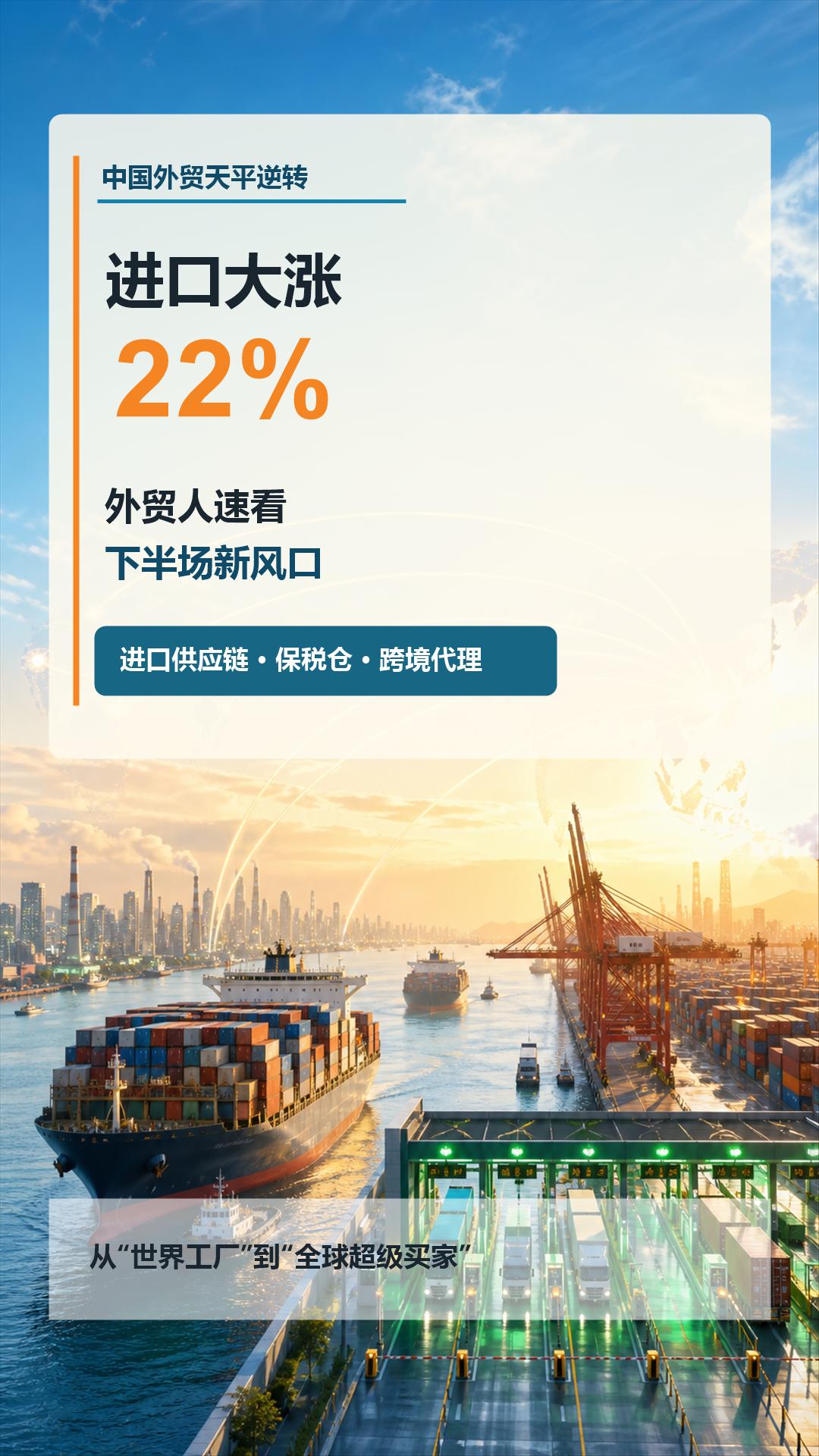
 China's foreign trade sees a turnaround: imports surge by 22%! Foreign trade professionals should quickly take note of the new trends in the second half of the year
 What Does a Global Traffic Ecosystem Service Provider Do? What Are the Differences from a Single Advertising Agency
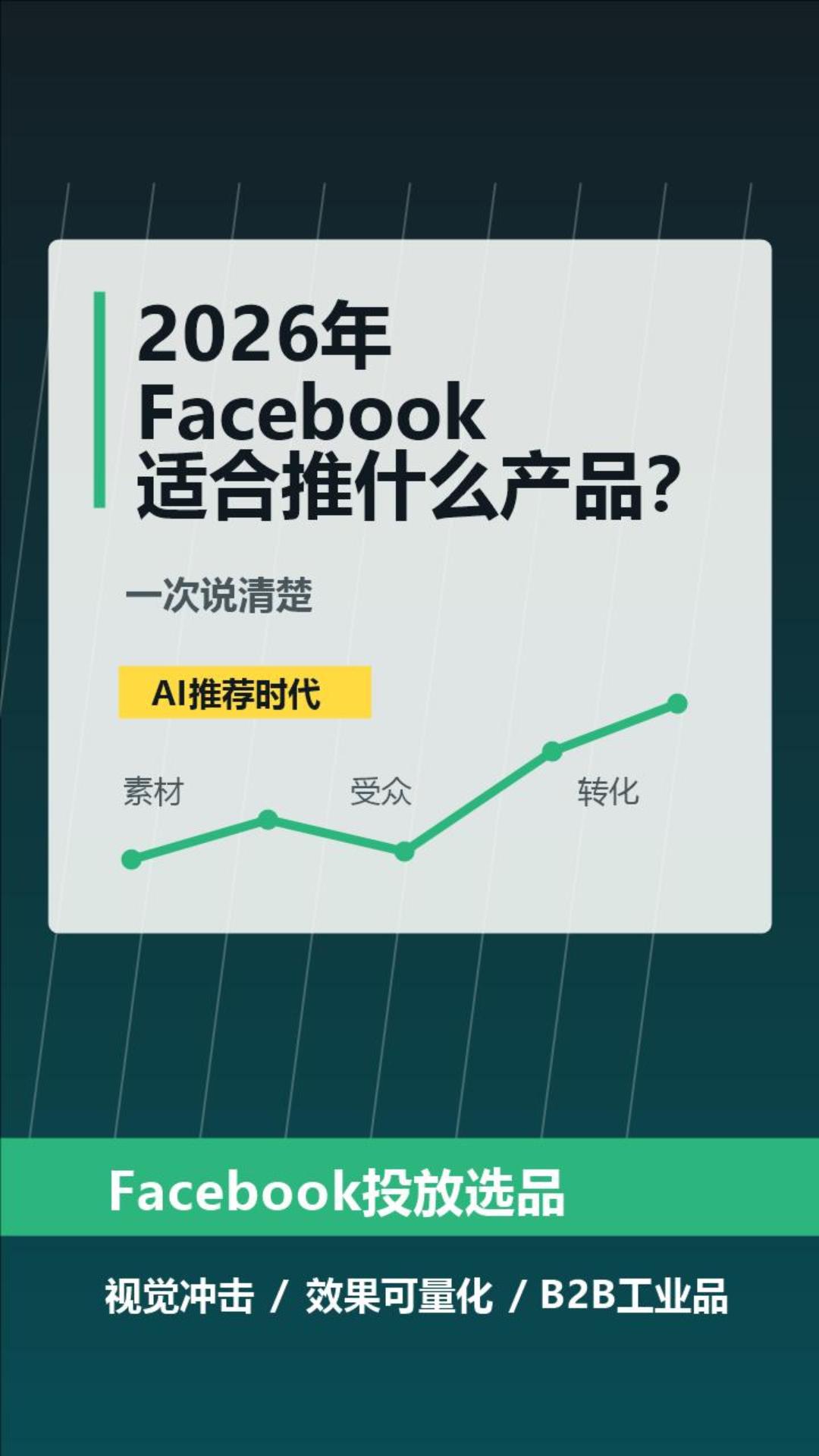
 What Products Are Suitable for Facebook in 2026? Explained Clearly at Once
Related Products
 EasyCamp SaaS Smart Website Marketing SystemE-Yingbao SaaS Smart Website Marketing System: AI-powered, zero-code website building. Rapidly launch multilingual independent e-commerce sites in just 10 minutes. Global server acceleration and AI-driven SEO optimization empower businesses to efficiently connect with global markets. The seamless integration of technology and user-friendly operation makes building e-commerce sites incredibly simple.
 AI+SEM Intelligent Advertising Marketing SystemAI+SEM drives intelligent ad creation, empowering full-funnel precision advertising marketing. The system automatically generates weekly/monthly reports, AI recommends keywords and target countries, monitors core metrics in real-time with intelligent alerts, and enables one-click high-conversion ad solutions to help quickly acquire customers and improve ROI.
 AI+SEO Dual Engine Optimization ServiceEasyWin AI+SEO Dual Engine Optimization System leverages AI-powered keyword mining, content generation, and comprehensive technical optimization to help foreign trade enterprises acquire high-quality organic traffic, significantly improving search rankings and conversion rates.
 AI+SNS Social Media Marketing SystemYingbao AI+SNS Social Media Marketing System - Precision social capture for the social media era. Supports one-click content synchronization across major platforms like Facebook and LinkedIn. AI intelligently rewrites posts for enhanced relevance. 24/7 AI customer service and user profiling analysis empower businesses to efficiently expand into global markets.
 AI+SEO营销解决方案易营宝AI+SEO营销解决方案,通过AI批量写作、智能生成TDK、精准关键词扩词等功能,全面优化网站SEO效果,提升流量与转化率。助力企业构建高效智能网站新生态。
 AI+SEM Advertising Marketing SolutionsAI+SEM Advertising Marketing Solution leverages AI technology to deeply empower SEM ad campaigns. It automatically generates weekly/monthly reports using AI, presenting account data across multiple dimensions for comprehensive insights into campaign performance and trends. The system precisely recommends keywords and target countries, intelligently generates high-conversion ad copy, and enables one-click activation of efficient campaign plans to help businesses rapidly acquire customers. Simultaneously, it monitors core metrics in real time, intelligently identifies abnormal fluctuations, and issues timely alerts to ensure stable, high-return advertising results.
 Domain Name ServicesEasyWin provides professional domain name services, including intelligent queries, one-stop registration, brand protection, and full lifecycle management, helping businesses build a digital brand image.
 EasyOperate B2C Cross-Border E-Commerce Platform & Independent WebsiteEasyStore B2C Cross-border E-commerce Independent Store is an intelligent website building and cross-border e-commerce integrated solution independently developed by EasyStore Information Technology (Beijing) Co., Ltd. The system is specially designed for small and medium-sized as well as large export enterprises, integrating 'website building, operation, marketing, advertising, and conversion' into one, helping enterprises quickly establish cross-border e-commerce independent stores to achieve brand globalization and global sales growth.
The platform supports multiple languages, multiple currencies, and multi-channel marketing, with built-in AI intelligent translation and SEO optimization systems, suitable for mainstream markets such as Southeast Asia, Europe and America, Latin America, and the Middle East, assisting Chinese manufacturing enterprises in efficiently deploying international e-commerce strategies. SSL证书易营宝提供专业SSL安全证书服务,包括单域名和泛域名证书,确保网站数据传输加密、身份验证和完整性保护,助力企业建立安全可信的在线业务环境。









