









- What Does a Global Traffic Ecosystem Service Provider Do? What Are the Differences from a Single Advertising AgencyJul 16, 2026View details
- What should you focus on in the latest enterprise SaaS report? From renewal rates and delivery costs to overseas growth opportunitiesJul 12, 2026View details
- What signals are worth paying attention to in a cross-border marketing trend report? B2B companies should look at these 6 signalsJul 11, 2026View details
- How to Read a Cross-Border Marketing Trends Report? Five Key Dimensions for Evaluating Channel OpportunitiesJul 11, 2026View details
- Which channel has the highest ROI in the global traffic ecosystem? Comparative analysis of search, social media, and advertisingJul 10, 2026View details
- What multilingual website services are available in Sanya? Which model is more suitable for local businesses going global?Jul 08, 2026View details
What is a multilingual website? A quick decision checklist for project managers
What is a Multilingual Website? A Quick Decision Checklist for Project Managers, Covering Foreign Trade Value, SEO Benefits, AI Website Building, and Content Management Key Points.
What is a Multilingual Website? A Quick Decision Checklist for Project Managers, Covering Foreign Trade Value, SEO Benefits, AI Website Building, and Content Management Key Points. As a project manager or procurement decision-maker, your concern isn't just whether the page can switch languages, but whether a multilingual site can bring overseas inquiries, comply with local regulations, facilitate later maintenance, and consider setup costs and launch timelines. Common questions include: How to build a multilingual website? Why should businesses create multilingual websites? This section helps you quickly assess feasibility from three dimensions—goals, benefits, and risks—avoiding critical constraints overlooked during requirement reviews.

Definition and Implementation Path: How to Build a Multilingual Website?
A multilingual website isn't just text translation; it's a complete system with independent URL structures, localized meta tags, cultural adaptation, and regional features. When evaluating "How to build a multilingual website?", project managers should focus on: language architecture (subdomains, subdirectories, or ccTLDs), URL standardization and hreflang implementation, content synchronization strategies and translation quality control, and localized payment and logistics integration. Implementation typically involves requirement analysis, architecture design, template and component localization, automated translation with manual review, SEO configuration and performance optimization, and pre-launch compliance and security checks. Each step requires clear acceptance criteria, such as whether multilingual SEO includes localized keyword research, auto-generated meta tag rules, and automated rollback mechanisms to prevent incorrect content releases.
Foreign Trade Value and ROI: How Do Multilingual Websites Help Exporters?
Multilingual websites boost foreign trade through measurable traffic and conversion improvements: accurate language presentation reduces communication costs, increases inquiry rates, and enhances client trust. Data shows that systematic multilingual solutions lead to significant inquiry growth, with higher conversions from localized product descriptions and ad creatives. When asked "How do multilingual websites help foreign trade?", key benefits include market coverage expansion, localized SEO rankings, multi-language ad efficiency, and faster post-sales response. Teams prioritizing rapid deployment and low maintenance costs should consider solutions like Multilingual Foreign Trade Standalone Site Solutions, which promise 60%+ translation accuracy, sub-2-second load speeds (reducing bounce rates and improving search engine ratings), and short-term inquiry growth with lower acquisition costs.

Tech Choices and Reliability: AI vs. Traditional Website Development—What's the Difference? Are AI Translations Reliable for Multilingual Sites? Do AI-Built Sites Support SEO?
AI and traditional development differ in automation and iteration speed. Traditional sites emphasize templates and manual coding (highly customizable but costly/long-cycle); AI sites leverage NLP and multimodal generation for rapid page construction, auto-generated TDK/multilingual meta tags, and high-CTR ad copy with localized product descriptions. For "Are AI translations reliable for multilingual sites?", standardized product descriptions and high-SKU scenarios achieve reliability when combined with localization rules and human review—especially with platforms offering localized content audits and auto-sync. Regarding "Do AI-built sites support SEO?", mature systems should include multilingual SEO diagnostics, automated keyword expansion, hreflang generation, sitemap management, server-side rendering, and CDN acceleration to meet indexing and performance needs. Technical reviews should prioritize AI model training data, meta tag automation, localized template libraries, and cross-language sync mechanisms to ensure controllable, trackable post-launch SEO.
Content and Operations Strategy: How to Manage Multilingual Content? How Many Languages Are Typically Needed? Do Multilingual Sites Benefit SEO?
Multilingual content management goes beyond translation—it requires version control, trigger-based sync, quality review, and localized optimization. When addressing "How to manage multilingual content?", establish a central content repository, language-specific branches, and change rollback mechanisms. Common practices include CMS-enabled one-click translation sync, market-customized meta tags, and regional reviewers for cultural fit. For "How many languages are typically needed?", prioritize target markets and resources: exporters often start with English, Spanish, French, German, Russian, and Arabic, but platforms should support 300+ languages for expansion. As for "Do multilingual sites benefit SEO?", properly implemented sites significantly expand long-tail keyword coverage, improve local search relevance, and reduce PPC costs—if domain structures, hreflang, localized hosting, and content strategies are correct. Automated tools can save 90% of maintenance time, with auto-generated meta tags precisely matching regional search habits for stable organic traffic growth.
Project Manager Quick Decision Checklist and Implementation Tips
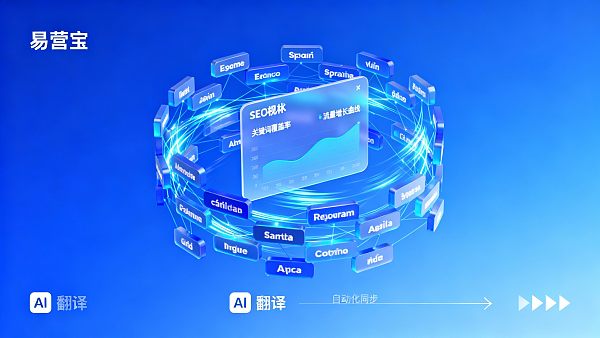
Actionable checklist for project managers: 1) Prioritize markets/languages based on sales/channel data; 2) Choose architecture (subdomain/subdirectory/ccTLD) and implement hreflang; 3) Adopt AI translation + human review with quality KPIs; 4) Integrate SEO requirements (auto meta tags, local keyword libraries, sitemaps); 5) Validate performance/compliance (sub-2-second loads, GDPR/regional data laws); 6) Define ops models (auto-sync, real-time dashboards, localized content review); 7) Calculate ROI with ad/localization budgets. Implementation tip: Use scalable AI platforms to prioritize product info sync and multilingual SEO diagnostics, complementing localized ad management for measurable inquiry/conversion growth.
Conclusion and Call-to-Action
Summary: Multilingual websites are cross-cultural marketing systems, not just technical projects. When evaluating "Why should businesses create multilingual websites?", judge by market coverage, SEO gains, and long-term ops costs. Choosing AI platforms with automated translation and localized audits significantly reduces launch time and improves conversions. EasyTrade offers smart site-building, AI marketing engines, and global deployment capabilities for end-to-end growth. Contact us for customized solutions or click for product details: Multilingual Foreign Trade Standalone Site Solutions. Start your global growth journey today.
Related Articles
 What Does a Global Traffic Ecosystem Service Provider Do? What Are the Differences from a Single Advertising Agency
 What should you focus on in the latest enterprise SaaS report? From renewal rates and delivery costs to overseas growth opportunities
 What signals are worth paying attention to in a cross-border marketing trend report? B2B companies should look at these 6 signals


Related Products
 EasyCamp SaaS Smart Website Marketing SystemE-Yingbao SaaS Smart Website Marketing System: AI-powered, zero-code website building. Rapidly launch multilingual independent e-commerce sites in just 10 minutes. Global server acceleration and AI-driven SEO optimization empower businesses to efficiently connect with global markets. The seamless integration of technology and user-friendly operation makes building e-commerce sites incredibly simple.
 AI+SEM Intelligent Advertising Marketing SystemAI+SEM drives intelligent ad creation, empowering full-funnel precision advertising marketing. The system automatically generates weekly/monthly reports, AI recommends keywords and target countries, monitors core metrics in real-time with intelligent alerts, and enables one-click high-conversion ad solutions to help quickly acquire customers and improve ROI.
 AI+SEO Dual Engine Optimization ServiceEasyWin AI+SEO Dual Engine Optimization System leverages AI-powered keyword mining, content generation, and comprehensive technical optimization to help foreign trade enterprises acquire high-quality organic traffic, significantly improving search rankings and conversion rates.
 AI+SNS Social Media Marketing SystemYingbao AI+SNS Social Media Marketing System - Precision social capture for the social media era. Supports one-click content synchronization across major platforms like Facebook and LinkedIn. AI intelligently rewrites posts for enhanced relevance. 24/7 AI customer service and user profiling analysis empower businesses to efficiently expand into global markets.
 AI+SEO营销解决方案易营宝AI+SEO营销解决方案,通过AI批量写作、智能生成TDK、精准关键词扩词等功能,全面优化网站SEO效果,提升流量与转化率。助力企业构建高效智能网站新生态。
 AI+SEM Advertising Marketing SolutionsAI+SEM Advertising Marketing Solution leverages AI technology to deeply empower SEM ad campaigns. It automatically generates weekly/monthly reports using AI, presenting account data across multiple dimensions for comprehensive insights into campaign performance and trends. The system precisely recommends keywords and target countries, intelligently generates high-conversion ad copy, and enables one-click activation of efficient campaign plans to help businesses rapidly acquire customers. Simultaneously, it monitors core metrics in real time, intelligently identifies abnormal fluctuations, and issues timely alerts to ensure stable, high-return advertising results.
 Domain Name ServicesEasyWin provides professional domain name services, including intelligent queries, one-stop registration, brand protection, and full lifecycle management, helping businesses build a digital brand image.
 EasyOperate B2C Cross-Border E-Commerce Platform & Independent WebsiteEasyStore B2C Cross-border E-commerce Independent Store is an intelligent website building and cross-border e-commerce integrated solution independently developed by EasyStore Information Technology (Beijing) Co., Ltd. The system is specially designed for small and medium-sized as well as large export enterprises, integrating 'website building, operation, marketing, advertising, and conversion' into one, helping enterprises quickly establish cross-border e-commerce independent stores to achieve brand globalization and global sales growth.
The platform supports multiple languages, multiple currencies, and multi-channel marketing, with built-in AI intelligent translation and SEO optimization systems, suitable for mainstream markets such as Southeast Asia, Europe and America, Latin America, and the Middle East, assisting Chinese manufacturing enterprises in efficiently deploying international e-commerce strategies. SSL证书易营宝提供专业SSL安全证书服务,包括单域名和泛域名证书,确保网站数据传输加密、身份验证和完整性保护,助力企业建立安全可信的在线业务环境。









