









- What Does a Global Traffic Ecosystem Service Provider Do? What Are the Differences from a Single Advertising AgencyJul 16, 2026View details
- What should you focus on in the latest enterprise SaaS report? From renewal rates and delivery costs to overseas growth opportunitiesJul 12, 2026View details
- What signals are worth paying attention to in a cross-border marketing trend report? B2B companies should look at these 6 signalsJul 11, 2026View details
- How to Read a Cross-Border Marketing Trends Report? Five Key Dimensions for Evaluating Channel OpportunitiesJul 11, 2026View details
- Which channel has the highest ROI in the global traffic ecosystem? Comparative analysis of search, social media, and advertisingJul 10, 2026View details
- What multilingual website services are available in Sanya? Which model is more suitable for local businesses going global?Jul 08, 2026View details
- How to view the complete list of China SaaS companies in the top 100? Practical methods for screening website-building and marketing service providersJul 08, 2026View details
- How to view pricing in the global traffic ecosystem? Cost comparison of search, social media, and content channel advertisingJul 06, 2026View details
International digital marketing service pricing varies widely, and service depth is often hidden in the details
There are major differences in pricing for international digital marketing services, and the gap often lies not only in the number of channels, but more importantly in strategic depth, execution details, and result attribution. For financial approvers, only by understanding service boundaries, technical capabilities, and the input-output logic can they avoid low-price traps and make more sound budgeting decisions.
In integrated procurement of website + marketing services, many budget disagreements do not stem from “whether to invest,” but from “why pricing can differ by 2x to 5x for what is all called international digital marketing services.” If approval is based only on the number of channels, ad spend, or homepage promises, it is easy to overlook the underlying capabilities that truly determine results.
For financial approvers who need to control cash flow, review payment collection cycles, and balance customer acquisition costs, judging whether a service provider is worth the investment should focus on 4 aspects: website foundation, data capabilities, execution mechanism, and attribution standards. Price is only the result; service depth is the real source of the cost structure.
Why international digital marketing service pricing shows clear tiering
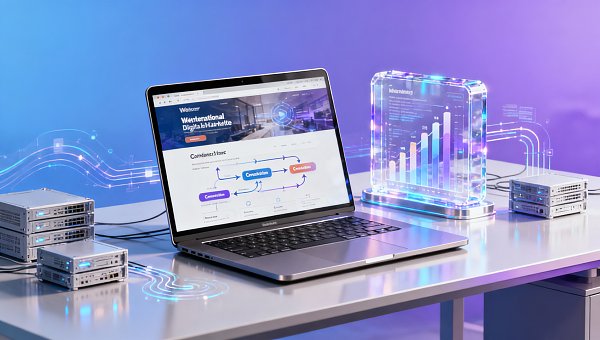
International digital marketing services are not a single product, but a combination of multiple modules such as website development, SEO optimization, social media operations, advertising, data tracking, and content localization. Pricing differences among service providers are often first reflected in whether the delivery scope is complete, usually forming 3 structures: basic version, growth version, and integrated version.
Even for advertising, the difference is more than account operations
Low-cost solutions are commonly characterized by only handling account setup, uploading creatives, and adjusting budgets, with service cycles mostly ranging from 30 days to 90 days, focusing on execution actions. Mid-to-high-end solutions add market research, keyword segmentation, landing page conversion design, remarketing strategies, and weekly review reports, usually advancing on a quarterly or half-year basis, with personnel input increased by at least 2 to 3 additional roles.
In other words, although both appear to be providing international digital marketing services, one is “operating on behalf of the client,” while the other is “building a growth system.” For the finance department, the budgeting logic for these two is completely different: the former has lower costs but a higher trial-and-error rate, while the latter has a higher unit price but is more likely to create reusable data assets.
Website capabilities determine subsequent marketing costs
Many companies procure website development and marketing separately, which often leads to problems after the front-end website goes live, such as unsupported SEO structure, incomplete form tracking, page load times exceeding 4 seconds, and high mobile bounce rates. Subsequent technical remediation often adds 20% to 40% in hidden costs.
The value of integrating website + marketing services lies in one-time planning from domain structure, content templates, and tracking deployment to ad conversion paths. Although this approach may not have the lowest upfront quote, it can reduce the rework cycle caused by collaboration across multiple vendors, commonly saving 2 to 6 weeks of project coordination time.
If broken down from an approval perspective, the following comparison makes it easier to see the real reasons behind pricing differences in international digital marketing services.
On the surface, low-cost solutions are easier to get approved; but from the perspective of full-year input-output, solutions lacking support in website development, tracking, and review often increase the cost of every subsequent lead. Financial approval should not only ask “is it cheap,” but also “can this spending build sustainable growth capability.”
The provider’s background also affects the cost structure
Taking Easy Marketing Tech Information Technology (Beijing) Co., Ltd. as an example, the company was established in 2013 and is headquartered in Beijing, with artificial intelligence and big data as its core driving forces, maintaining a long-term focus on global digital marketing. Its advantage does not lie in pricing for a single channel, but in forming a unified delivery chain across intelligent website building, SEO optimization, social media marketing, and advertising, making it more suitable for companies that value budget efficiency and long-term growth.
For approvers, service providers with more than 10 years of deep industry experience and dual capabilities in technology and localized services can usually identify risks in advance during the requirements analysis stage and reduce mid-project add-on items. Its selection into the “Top 100 China SaaS Companies” in 2023 and average annual growth rate of over 30% also indicate that its service system already has strong market validation capabilities.
5 cost details financial approvers should focus on reviewing
Understanding international digital marketing services does not necessarily require mastering every platform algorithm, but it does require the ability to identify whether costs are transparent. In actual approvals, what is most easily overlooked is not the total price, but off-contract expenses, rework risks, and the long-term losses caused by unclear attribution.
1. Whether preliminary research and strategy design are included
Qualified international digital marketing services usually conduct 1 to 2 weeks of research before launch, including target markets, competitors, keyword segmentation, user journeys, and content frameworks. If this part is not included in the quotation, subsequent campaigns will mostly rely on experience-based trial and error, and the probability of budget waste in the first 3 months will be higher.
2. Whether there is a traceable website conversion path
Before approving an advertising budget, it should first be confirmed whether the website supports tracking for at least 4 types of conversion events such as forms, phone calls, online inquiries, downloads, and emails. If the website cannot record traffic sources and visitor behavior, even high traffic will be difficult to prove investment effectiveness, and finance will ultimately only see spending, not contribution.
3. Whether monthly optimization frequency and response timeliness are clearly defined
Many quotations only state “routine maintenance” without specifying concrete actions. It is recommended to clearly specify in the contract: how many optimizations are done each week, how many reviews are conducted each month, whether major issues are responded to within 24 hours or 48 hours, and whether the creative update cycle is 7 days or 15 days. Without action standards, it will be difficult to quantify service value later.
4. Whether multilingual and localization scope is explained
International markets are not simply about translation. English-language sites, Southeast Asian markets, and European markets differ significantly in keyword habits, form length, and page trust elements. If the quotation only covers “content translation” but does not include localization rewriting, landing page adaptation, and advertising creative adjustments, the actual conversion rate may differ by more than 30%.
5. Whether phased attribution and budget allocation recommendations are provided
Mature service providers do not fix all budgets into a single channel, but dynamically allocate them based on data performance over 30 days, 60 days, and 90 days. Financial approvers need to pay attention to whether there is a channel elimination mechanism, whether adjustments are made based on customer acquisition cost and lead quality, rather than continuously “burning budget in exchange for leads.”
To facilitate quick verification during approval, supplier proposals can be scored according to the following checklist.
The value of this kind of review table lies in converting abstract marketing services into comparable procurement terms. As long as the finance department verifies the 5 items of cycle, frequency, attribution, roles, and deliverables, it can filter out many solutions that are “low-cost but uncontrollable.”
How integrated services improve budget controllability and result certainty
For medium-to-large enterprises or growth-oriented companies expanding overseas, the biggest fear in international digital marketing services is not spending money, but being unable to determine after spending whether the problem lies in the website, content, channels, or sales follow-up. The core advantage of integrated services is that they consolidate what were originally fragmented chains of responsibility into one unified delivery framework.
A more complete path from traffic to leads
When intelligent website building, SEO, social media, and advertising are coordinated by the same team, page structure, keyword layout, form design, and remarketing tags can be planned in sync. This approach usually helps identify high-conversion pages faster within the first 90 days and reduces waste caused by “pages that cannot be changed, disconnected data, and mismatched content.”
Budget allocation is closer to an operational perspective
What financial approval cares most about is whether there is a logical closed loop between cash input and business return. Integrated teams usually break the budget into 3 layers: foundational setup costs, ongoing operational costs, and media spend, making it easier to distinguish between one-time investment and adjustable investment, and thus flexibly contract or expand within a quarter.
A 3-step method for decision-making
The first step is to check whether the website can support marketing; if the website is not qualified, fix it before investing. The second step is to confirm whether the service provider can offer at least a 90-day data observation cycle. The third step is to require evaluation based on lead quality rather than purely on lead quantity. Budgets approved this way are closer to operational investment rather than trial spending.
In some organizations with relatively strong internal management, this way of thinking—“first look at the control framework, then look at execution actions”—is not unfamiliar. For example, teams with research needs related to process standardization and risk control often refer to Discussion on Development Strategies for Building Internal Control Systems in Public Institutions and similar materials to help establish clearer review logic. The same applies to procurement of international digital marketing services.
Common misconception: treating the lowest quotation as the lowest cost
The true lowest cost is not the lowest contract amount, but controllable cost per effective lead, low team communication loss, less project rework, and reusable data. If one solution has a monthly fee that is 30% cheaper, but leads to website rebuilding, tracking reconfiguration, and multiple rounds of ad trial and error, the total annual cost may actually be higher.
Service providers like Easy Marketing Tech that cover full-chain solutions are more suitable for enterprises that want to unify website building and growth rhythm while reducing friction across teams. Especially for financial approvers who need to explain budget effectiveness to management, being able to see a complete chain, clear responsibility boundaries, and a continuous optimization mechanism has more decision-making value than looking at the quotation alone.
When procuring international digital marketing services, pricing differences often correspond to different strategic capabilities, technical depth, and delivery responsibilities. If financial approvers can review from 5 dimensions—website foundation, data tracking, optimization frequency, attribution mechanism, and team configuration—they will be more likely to identify solutions with real long-term value.
If you are evaluating investment in integrated website and marketing services, it is recommended to prioritize a service model that can coordinate and connect intelligent website building, SEO, social media, and advertising. If you want to further understand an international digital marketing service solution that better fits your own budget structure, please contact us now to obtain a customized solution and a detailed explanation of service boundaries.
Related Articles


Related Products
 EasyCamp SaaS Smart Website Marketing SystemE-Yingbao SaaS Smart Website Marketing System: AI-powered, zero-code website building. Rapidly launch multilingual independent e-commerce sites in just 10 minutes. Global server acceleration and AI-driven SEO optimization empower businesses to efficiently connect with global markets. The seamless integration of technology and user-friendly operation makes building e-commerce sites incredibly simple.
 AI+SEM Intelligent Advertising Marketing SystemAI+SEM drives intelligent ad creation, empowering full-funnel precision advertising marketing. The system automatically generates weekly/monthly reports, AI recommends keywords and target countries, monitors core metrics in real-time with intelligent alerts, and enables one-click high-conversion ad solutions to help quickly acquire customers and improve ROI.
 AI+SEO Dual Engine Optimization ServiceEasyWin AI+SEO Dual Engine Optimization System leverages AI-powered keyword mining, content generation, and comprehensive technical optimization to help foreign trade enterprises acquire high-quality organic traffic, significantly improving search rankings and conversion rates.
 AI+SNS Social Media Marketing SystemYingbao AI+SNS Social Media Marketing System - Precision social capture for the social media era. Supports one-click content synchronization across major platforms like Facebook and LinkedIn. AI intelligently rewrites posts for enhanced relevance. 24/7 AI customer service and user profiling analysis empower businesses to efficiently expand into global markets.
 AI+SEO营销解决方案易营宝AI+SEO营销解决方案,通过AI批量写作、智能生成TDK、精准关键词扩词等功能,全面优化网站SEO效果,提升流量与转化率。助力企业构建高效智能网站新生态。
 AI+SEM Advertising Marketing SolutionsAI+SEM Advertising Marketing Solution leverages AI technology to deeply empower SEM ad campaigns. It automatically generates weekly/monthly reports using AI, presenting account data across multiple dimensions for comprehensive insights into campaign performance and trends. The system precisely recommends keywords and target countries, intelligently generates high-conversion ad copy, and enables one-click activation of efficient campaign plans to help businesses rapidly acquire customers. Simultaneously, it monitors core metrics in real time, intelligently identifies abnormal fluctuations, and issues timely alerts to ensure stable, high-return advertising results.
 Domain Name ServicesEasyWin provides professional domain name services, including intelligent queries, one-stop registration, brand protection, and full lifecycle management, helping businesses build a digital brand image.
 EasyOperate B2C Cross-Border E-Commerce Platform & Independent WebsiteEasyStore B2C Cross-border E-commerce Independent Store is an intelligent website building and cross-border e-commerce integrated solution independently developed by EasyStore Information Technology (Beijing) Co., Ltd. The system is specially designed for small and medium-sized as well as large export enterprises, integrating 'website building, operation, marketing, advertising, and conversion' into one, helping enterprises quickly establish cross-border e-commerce independent stores to achieve brand globalization and global sales growth.
The platform supports multiple languages, multiple currencies, and multi-channel marketing, with built-in AI intelligent translation and SEO optimization systems, suitable for mainstream markets such as Southeast Asia, Europe and America, Latin America, and the Middle East, assisting Chinese manufacturing enterprises in efficiently deploying international e-commerce strategies. SSL证书易营宝提供专业SSL安全证书服务,包括单域名和泛域名证书,确保网站数据传输加密、身份验证和完整性保护,助力企业建立安全可信的在线业务环境。









