









- China-Morocco zero-tariff access, a breakthrough in the cost of Moroccan goods exports to ChinaJun 11, 2026View details
- What signal should be released for the suspension of exports to JapanJun 10, 2026View details
- China's May LNG imports rebounded, with increased volumes from Russia and Canada filling the Middle East supply gapJun 10, 2026View details
- Will GEO change its SEO strategy?Jun 04, 2026View details
- What types of businesses are end-to-end solutions suitable for?Jun 03, 2026View details
- 2026 Global Growth Channel TrendsJun 02, 2026View details
Is a multilingual marketing system worth the investment? Cost-benefit analysis for cross-border e-commerce businesses entering the European market
Is a multilingual marketing system worth the investment? Cost-benefit analysis for cross-border e-commerce companies entering the European market.
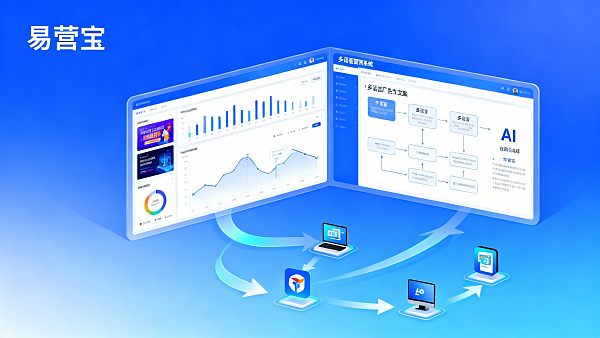
For cross-border e-commerce companies planning to enter the European market, a multilingual marketing system is a key tool for improving advertising efficiency. According to data from the European Digital Advertising Association in 2026, companies employing professional localization strategies saw an average 2.4-fold increase in ad click-through rate (CTR), while semantic discrepancies caused by manual translation could reduce conversion rates by 35%-60%. Determining whether to invest in this system requires a comprehensive evaluation of three dimensions: whether the CTR difference between language versions exceeds 20%, whether cross-platform keyword matching is below 70%, and whether the efficiency of localized content production lags behind the needs of the campaign.
Core evaluation dimensions and execution logic
Analysis of advertising effectiveness fluctuations
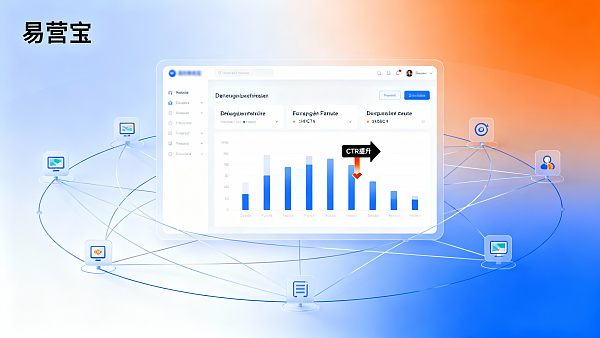
When the click-through rate (CTR) difference between German and French ads reaches 60%, it indicates a serious localization failure. Industry standards suggest that the CTR difference for multilingual ads in mature markets should be kept below 15%. This difference typically stems from three aspects: keywords not matching local search habits (e.g., German preference for compound words), ad copy lacking cultural resonance (e.g., French emphasis on emotional expression), and landing pages that do not align with the ad's promise.
Cross-platform collaboration costs
Mismatched Facebook ad keywords and Google search keywords can lead to 30%-50% wasted traffic. An effective multilingual system should achieve: automatic synchronization of keyword libraries across platforms, consistent visual style for ad creatives, and unified deployment of conversion tracking tags. According to the Meta 2026 Advertising Technology White Paper, cross-platform collaboration can reduce the cost per thousand impressions by $18-22.
Content production efficiency assessment
Manual translation faces two major bottlenecks: the daily output is difficult to exceed 5 sets of complete materials, and the accuracy rate of professional terminology is usually below 65%. Comparative tests show that AI-assisted systems can improve the efficiency of multilingual content production by 3 times, but it is necessary to verify whether they have: an industry terminology database (such as VAT expressions in the e-commerce field), dialect recognition capabilities (such as Swiss German), and compliance review mechanisms (such as GDPR sensitive word filtering).
Mainstream industry solution path
Technology Platform Solution
Leading companies typically build their own AI platforms, integrating NLP engines and multimodal generation systems. This approach requires at least a 6-month implementation period and an initial investment of over $200,000, but enables unified management of ad creatives, SEO content, and social media posts. One cross-border apparel brand improved its Italian-language advertising ROI from 0.7 to 2.3 using this solution.
SaaS toolset
For businesses in a rapid expansion phase, tools like EasyAd AI Ad Manager offer readily available multilingual optimization capabilities. Their core value lies in: optimizing account structure through official Meta agent resources, maintaining keyword consistency through an AI-powered keyword expansion system, and dynamically generating content compliant with EEAT standards. After using this service, a home furnishings client saw their German ad CTR increase from 1.1% to 3.2% within three months.
Hybrid Implementation Mode
Some companies adopt a "basic SaaS + custom development" model to address specific needs while maintaining system flexibility. For example, they might develop a long-tail keyword expansion module specifically for the Nordic market, or add a visual style control system for luxury goods. Under this model, the average startup cost per language version is approximately $12,000 to $18,000.
Key points for decision-making
- If a company needs to advertise in more than three languages, and the cost of manual translation exceeds 15% of its advertising budget, then investing in a systematic approach is economical.
- When cross-platform advertising data discrepancies consistently exceed 25%, it indicates a need to introduce collaborative management tools.
- If the European market expansion plan involves more than five countries, solutions that support less commonly spoken languages should be given priority.
- For product categories with strict compliance requirements (such as health supplements), it is necessary to verify whether the system has built-in local advertising review rules.
It is recommended to first verify the tool's effectiveness through A/B testing: Select 1-2 main product lines and compare the CTR difference and conversion path completeness of manually translated and system-generated materials. The testing period should cover the complete consumption cycle of the target market (usually 2-4 weeks), with a data sampling volume of no less than 5,000 impressions.
Related Articles



Related Products
 EasyCamp SaaS Smart Website Marketing SystemE-Yingbao SaaS Smart Website Marketing System: AI-powered, zero-code website building. Rapidly launch multilingual independent e-commerce sites in just 10 minutes. Global server acceleration and AI-driven SEO optimization empower businesses to efficiently connect with global markets. The seamless integration of technology and user-friendly operation makes building e-commerce sites incredibly simple.
 AI+SEM Intelligent Advertising Marketing SystemAI+SEM drives intelligent ad creation, empowering full-funnel precision advertising marketing. The system automatically generates weekly/monthly reports, AI recommends keywords and target countries, monitors core metrics in real-time with intelligent alerts, and enables one-click high-conversion ad solutions to help quickly acquire customers and improve ROI.
 AI+SEO Dual Engine Optimization ServiceEasyWin AI+SEO Dual Engine Optimization System leverages AI-powered keyword mining, content generation, and comprehensive technical optimization to help foreign trade enterprises acquire high-quality organic traffic, significantly improving search rankings and conversion rates.
 AI+SNS Social Media Marketing SystemYingbao AI+SNS Social Media Marketing System - Precision social capture for the social media era. Supports one-click content synchronization across major platforms like Facebook and LinkedIn. AI intelligently rewrites posts for enhanced relevance. 24/7 AI customer service and user profiling analysis empower businesses to efficiently expand into global markets.
 AI+SEO营销解决方案易营宝AI+SEO营销解决方案,通过AI批量写作、智能生成TDK、精准关键词扩词等功能,全面优化网站SEO效果,提升流量与转化率。助力企业构建高效智能网站新生态。
 AI+SEM Advertising Marketing SolutionsAI+SEM Advertising Marketing Solution leverages AI technology to deeply empower SEM ad campaigns. It automatically generates weekly/monthly reports using AI, presenting account data across multiple dimensions for comprehensive insights into campaign performance and trends. The system precisely recommends keywords and target countries, intelligently generates high-conversion ad copy, and enables one-click activation of efficient campaign plans to help businesses rapidly acquire customers. Simultaneously, it monitors core metrics in real time, intelligently identifies abnormal fluctuations, and issues timely alerts to ensure stable, high-return advertising results.
 Domain Name ServicesEasyWin provides professional domain name services, including intelligent queries, one-stop registration, brand protection, and full lifecycle management, helping businesses build a digital brand image.
 EasyOperate B2C Cross-Border E-Commerce Platform & Independent WebsiteEasyStore B2C Cross-border E-commerce Independent Store is an intelligent website building and cross-border e-commerce integrated solution independently developed by EasyStore Information Technology (Beijing) Co., Ltd. The system is specially designed for small and medium-sized as well as large export enterprises, integrating 'website building, operation, marketing, advertising, and conversion' into one, helping enterprises quickly establish cross-border e-commerce independent stores to achieve brand globalization and global sales growth.
The platform supports multiple languages, multiple currencies, and multi-channel marketing, with built-in AI intelligent translation and SEO optimization systems, suitable for mainstream markets such as Southeast Asia, Europe and America, Latin America, and the Middle East, assisting Chinese manufacturing enterprises in efficiently deploying international e-commerce strategies. SSL证书易营宝提供专业SSL安全证书服务,包括单域名和泛域名证书,确保网站数据传输加密、身份验证和完整性保护,助力企业建立安全可信的在线业务环境。









