









- What Does a Global Traffic Ecosystem Service Provider Do? What Are the Differences from a Single Advertising AgencyJul 16, 2026View details
- What should you focus on in the latest enterprise SaaS report? From renewal rates and delivery costs to overseas growth opportunitiesJul 12, 2026View details
- What signals are worth paying attention to in a cross-border marketing trend report? B2B companies should look at these 6 signalsJul 11, 2026View details
- How to Read a Cross-Border Marketing Trends Report? Five Key Dimensions for Evaluating Channel OpportunitiesJul 11, 2026View details
- Which channel has the highest ROI in the global traffic ecosystem? Comparative analysis of search, social media, and advertisingJul 10, 2026View details
- What multilingual website services are available in Sanya? Which model is more suitable for local businesses going global?Jul 08, 2026View details
- How to view the complete list of China SaaS companies in the top 100? Practical methods for screening website-building and marketing service providersJul 08, 2026View details
- How to view pricing in the global traffic ecosystem? Cost comparison of search, social media, and content channel advertisingJul 06, 2026View details
Website Building Tips: Three Optimization Strategies for Efficient Customer Acquisition and Retention
In the digital era, website construction has become a crucial means for businesses to acquire and retain customers. An excellent website not only attracts potential clients but also fosters long-term retention through superior user experience. Below, we will delve into how to build an effective customer acquisition and retention website through three key points.
I. Optimized User Experience Design
User experience is the core of website construction. A website with intuitive navigation, strong visual appeal, and rich content can significantly enhance user dwell time and conversion rates.
Clear and Simple Navigation Structure: Design a straightforward and intuitive menu to ensure users can easily find the information they need. Avoid excessive layers and complex operations to reduce cognitive load.
Visually Appealing Design: Adopt a design style that aligns with the brand image, incorporating color psychology to select an appropriate color scheme. Ensure the layout is clean and orderly for a pleasant visual experience.
Rich and Valuable Content: Provide high-quality, original content that addresses user problems and needs. Showcase professional expertise through blogs, case studies, and whitepapers to establish industry authority.
1. Adopt Responsive Website Design
Given that mobile search traffic far exceeds desktop, responsive design has become the standard for modern websites. We recommend using responsive templates that automatically adapt to different screen sizes, from desktops to mobile devices, ensuring a consistent user experience. This design not only improves usability but also enhances search engine rankings and overall site indexing.
2. Optimize the "Nine Modules" of Marketing-Oriented Homepages
1) Top Navigation: Includes a welcome message, social media links, and search functionality for quick user navigation. A simple and clear navigation structure requires a straightforward menu design to ensure users can easily locate information.
2) Header: Display the company logo and contact details to enhance brand recognition.
3) Main Navigation: A clear main menu incorporating keywords to boost SEO effectiveness.

4) Slideshow: Use three slides to showcase products, company highlights, and case studies, quickly conveying core value propositions.
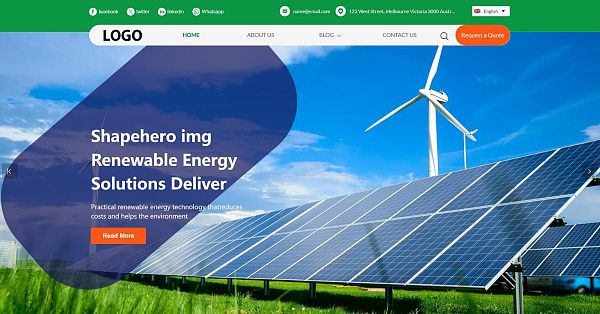
5) Product Display: Multi-dimensional categorization with images to meet diverse user needs.
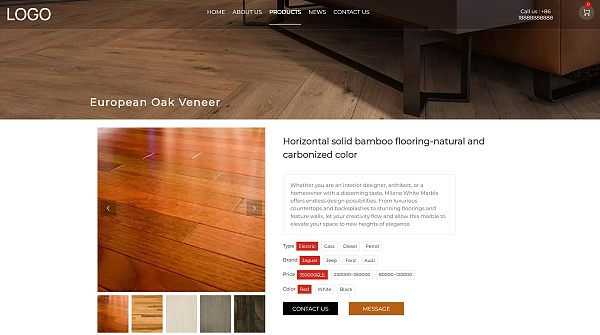
6) Advantage Showcase: Highlight company strengths with graphics to enhance persuasiveness.
7) Case Studies: Categorized successful cases to boost user trust.
8) Partners: Display friendly links and collaborations to expand business scope.
9) Footer: Include essential company information and contact details for user convenience.
3. Product Page Optimization Recommendations
1) URL Structure: Use standardized URL structures for easier search engine crawling and indexing. For example: www.xxx.com/pruduct/id.... Replace "Pruduct" with industry-specific attributes; abbreviate if too long (e.g., "pd"). One attribute per website suffices.
2) Keyword Strategy: Product page titles should include product names, search terms, attributes, and extended keywords to improve rankings.
Product Page Keywords: Equal to the product page title.
Product Page Title: Equal to product name + search term + attribute + extended keyword.
Example: Panasonic Projector for Office and Conference Room Use PT-WX3400 Official Bundle + 10m VGA Cable + 100" Electric Screen (Images, Price, Brand, Quote).
JD Product Name: The product's name.
Search Term: Terms users search for, e.g., "office projector," "projector."
Attributes: Product features like model, selling points, size, etc.
Extended Keywords: E.g., "Panasonic projector images," "Panasonic projector price."
3) Page Content Optimization: Combine text and visuals for rich product information. Modularize content with short paragraphs and subheadings. Showcase products from multiple angles, including introductions, features, and use cases. Recommend related products at the bottom to increase user stickiness and internal linking via anchor text.
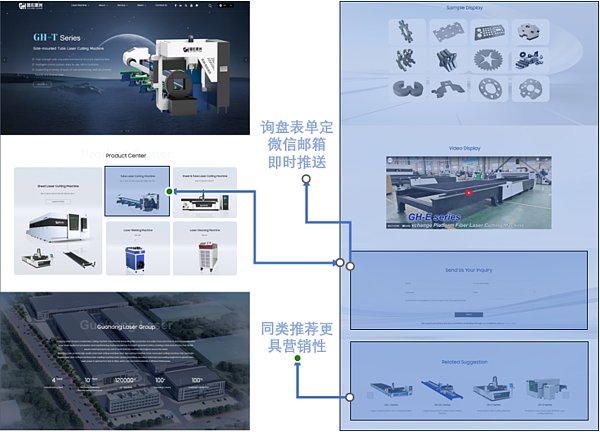
Text and Visuals: Combine text and images for richer information.
Modular Content: Short paragraphs and subheadings to highlight key points.
Multi-Dimensional Descriptions: Showcase products comprehensively from introductions to use cases.
Related Recommendations: Suggest related products at the bottom to increase user stickiness.
Anchor Text Links: Add anchor text within content to improve internal linking.
II. Enhance Website Interactivity
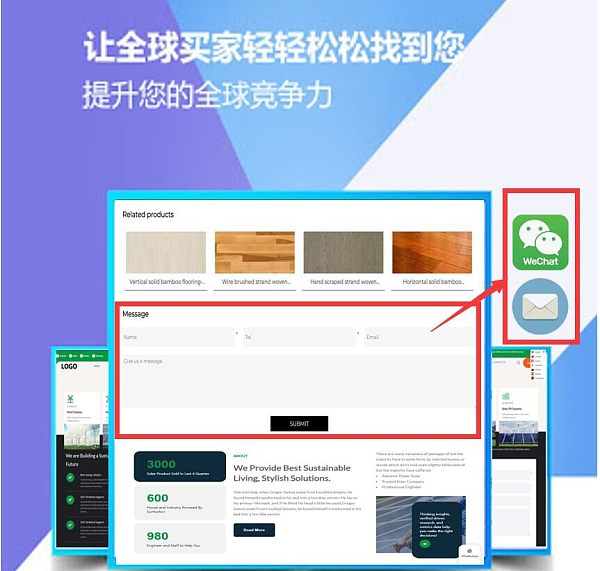
Interactivity is key to boosting user engagement and retention. Adding interactive elements encourages deeper participation.
Live Chat and Customer Support: Integrate live chat tools for instant assistance, building trust and satisfaction.
User Reviews and Feedback Forms: Encourage comments and feedback to foster engagement and provide valuable insights.

Personalized Recommendations and Custom Services: Use data analytics to offer tailored content and services, enhancing loyalty and retention.
III. Optimize SEO and Marketing Strategies
To improve visibility and appeal, prioritize search engine optimization (SEO) and digital marketing.
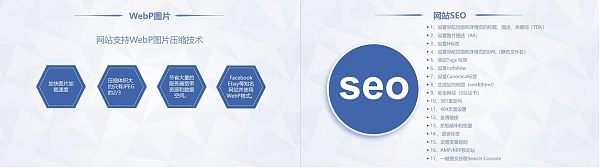
Keyword Optimization and Content Marketing: Research target audience search habits and optimize for core and long-tail keywords. Regularly publish high-quality content to attract and retain users.
External Links and Social Media Integration: Build backlinks from reputable sites to boost authority and rankings. Integrate with social media to expand brand influence.
Data Analytics and Continuous Optimization: Use analytics to track user behavior and refine website design and content for better conversions and retention.
In summary, optimizing user experience, enhancing interactivity, and implementing effective SEO and marketing strategies can significantly improve customer acquisition and retention. In a competitive market, these strategies will help businesses stand out and achieve sustainable growth.
For inquiries about foreign trade website construction and operations, contact EasyBao Tech Support via WeChat: Ieyingbao18661939702. Our team is ready to assist!
Image sources are from the internet. For copyright issues, contact 400-655-2477.
Related Articles
Related Products
 EasyCamp SaaS Smart Website Marketing SystemE-Yingbao SaaS Smart Website Marketing System: AI-powered, zero-code website building. Rapidly launch multilingual independent e-commerce sites in just 10 minutes. Global server acceleration and AI-driven SEO optimization empower businesses to efficiently connect with global markets. The seamless integration of technology and user-friendly operation makes building e-commerce sites incredibly simple.
 AI+SEM Intelligent Advertising Marketing SystemAI+SEM drives intelligent ad creation, empowering full-funnel precision advertising marketing. The system automatically generates weekly/monthly reports, AI recommends keywords and target countries, monitors core metrics in real-time with intelligent alerts, and enables one-click high-conversion ad solutions to help quickly acquire customers and improve ROI.
 AI+SEO Dual Engine Optimization ServiceEasyWin AI+SEO Dual Engine Optimization System leverages AI-powered keyword mining, content generation, and comprehensive technical optimization to help foreign trade enterprises acquire high-quality organic traffic, significantly improving search rankings and conversion rates.
 AI+SNS Social Media Marketing SystemYingbao AI+SNS Social Media Marketing System - Precision social capture for the social media era. Supports one-click content synchronization across major platforms like Facebook and LinkedIn. AI intelligently rewrites posts for enhanced relevance. 24/7 AI customer service and user profiling analysis empower businesses to efficiently expand into global markets.
 AI+SEO营销解决方案易营宝AI+SEO营销解决方案,通过AI批量写作、智能生成TDK、精准关键词扩词等功能,全面优化网站SEO效果,提升流量与转化率。助力企业构建高效智能网站新生态。
 AI+SEM Advertising Marketing SolutionsAI+SEM Advertising Marketing Solution leverages AI technology to deeply empower SEM ad campaigns. It automatically generates weekly/monthly reports using AI, presenting account data across multiple dimensions for comprehensive insights into campaign performance and trends. The system precisely recommends keywords and target countries, intelligently generates high-conversion ad copy, and enables one-click activation of efficient campaign plans to help businesses rapidly acquire customers. Simultaneously, it monitors core metrics in real time, intelligently identifies abnormal fluctuations, and issues timely alerts to ensure stable, high-return advertising results.
 Domain Name ServicesEasyWin provides professional domain name services, including intelligent queries, one-stop registration, brand protection, and full lifecycle management, helping businesses build a digital brand image.
 EasyOperate B2C Cross-Border E-Commerce Platform & Independent WebsiteEasyStore B2C Cross-border E-commerce Independent Store is an intelligent website building and cross-border e-commerce integrated solution independently developed by EasyStore Information Technology (Beijing) Co., Ltd. The system is specially designed for small and medium-sized as well as large export enterprises, integrating 'website building, operation, marketing, advertising, and conversion' into one, helping enterprises quickly establish cross-border e-commerce independent stores to achieve brand globalization and global sales growth.
The platform supports multiple languages, multiple currencies, and multi-channel marketing, with built-in AI intelligent translation and SEO optimization systems, suitable for mainstream markets such as Southeast Asia, Europe and America, Latin America, and the Middle East, assisting Chinese manufacturing enterprises in efficiently deploying international e-commerce strategies. SSL证书易营宝提供专业SSL安全证书服务,包括单域名和泛域名证书,确保网站数据传输加密、身份验证和完整性保护,助力企业建立安全可信的在线业务环境。









