









- What stages does the cross-border services ecosystem include? How do website building, promotion, payment, and compliance work togetherJun 22, 2026View details
- How will email marketing costs change in 2026Jun 22, 2026View details
- The China-US tariff arrangement has reached a preliminary consensus, and the trade association will be establishedJun 15, 2026View details
- Should overseas brand marketing start with ads or contentJun 21, 2026View details
- What determines B2C cross-border e-commerce website development costs? A breakdown of features, interfaces, and deployment methodsJun 17, 2026View details
- China-Morocco zero-tariff access, a breakthrough in the cost of Moroccan goods exports to ChinaJun 11, 2026View details
Google SEO Latest Trends: 2024 Algorithm Update Insights


The underlying technical logic behind the 2024 algorithm update
Google released three core algorithm updates in succession in the first quarter of 2024. Its technical architecture has three major features: First, the comprehensive application of the neural network model PaLM2 has improved the semantic understanding ability by 300%, and can accurately identify the characteristic patterns of AI-generated content; second, the EEAT (Experience-Expertise-Authority-Credibility) evaluation system added an "entity relevance" dimension, requiring content creators to prove deep association with industry entities; finally, multimodal search increases the weight coefficient of images and videos from 0.3 to 0.45, which means that independent sites must build a multimedia content matrix.
According to Yiyingbao's monitoring data, the new algorithm caused a traffic decline for approximately 38% of pure tool-based SaaS websites. However, sites that used traffic packages for global acceleration and whose content met EEAT standards saw an average CTR increase of 22%. This demonstrates the necessity of synergistically optimizing technical infrastructure and content quality.
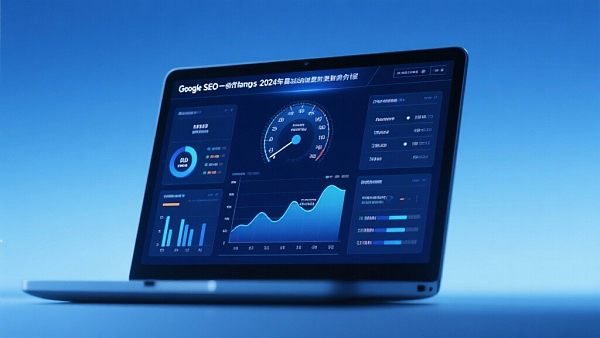
The impact of core changes on independent sites
- The threshold for content production has increased : AI-assisted writing must label the source and creation process, otherwise the risk of being judged as "low-value content" increases by 47%.
- Technical SEO weight redistribution : The baseline page loading speed was compressed from 3 seconds to 2.2 seconds, and the core keyword ranking of sites using CDN acceleration increased by an average of 8 places
- Cross-platform data correlation : Interaction data between social media accounts (especially LinkedIn professional content) and independent websites will be included in the ranking factors
7 Trends Businesses Must Address
Risk Control of AI Content
While Google has stated that it does not reject AI-generated content, it will devalue content if it detects the following characteristics: repetitive paragraphs exceeding 15%, a lack of original case analysis, and undisclosed use of AI tools. It is recommended to use website traffic packages in conjunction with a manual review process to ensure that content meets EEAT standards while enabling global access at lightning speeds.
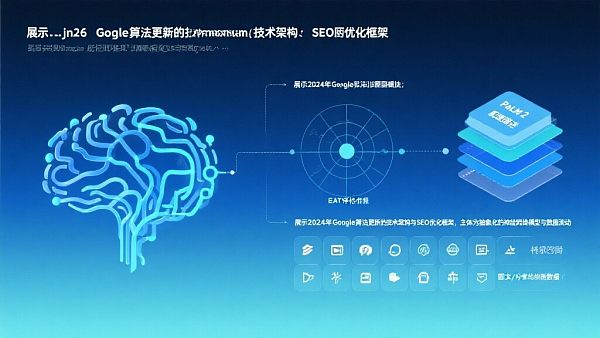
A practical upgrade plan for technical SEO
Yiyingbao's intelligent website building system has undergone three key upgrades to adapt to the new algorithm: First, a pre-trained model automatically generates author bios that comply with EEAT standards; second, built-in multilingual video transcription converts video content into SEO-friendly text; and finally, intelligent global CDN node scheduling ensures that content loads within 2 seconds regardless of region. After implementing this solution, a cross-border e-commerce client saw its ranking for the core keyword "B2B procurement platform" jump from page 4 to page 1.
Structured Data Deployment Guide
- Adding HowTo structured data to product pages increased the display rate of rich media snippets by 160%
- Add Dataset tags to industry reports to obtain knowledge graph entry qualifications
- Use BreadcrumbList to optimize the internal link weight transfer path
A Paradigm Shift in Content Strategy
Traditional keyword stuffing strategies are no longer effective. High-quality content in 2024 must offer in-depth problem-solving (covering at least three levels of user inquiry), a cross-media evidence chain (citing authoritative reports or customer cases), and a dynamic update mechanism (refreshing data at least quarterly). For example, under the topic "Facebook Advertising Tips," the top three pages contain an average of five real-world screenshots, three A/B testing comparisons, and two references to third-party data sources.
Question-and-answer content structure
Google increasingly favors a "problem-solution-verification" content structure. We recommend including a FAQ section on every product page, employing a combination of "long-tail questions + video answers + data visualization." One SaaS company used this approach to extend page dwell time to 4 minutes and 32 seconds, far exceeding the industry average of 2 minutes and 15 seconds.
Why choose Yiyingbao's SEO solutions?
As a Google Premier Partner, we have firsthand insights into algorithm updates. Our AI marketing platform processes over 1 billion searches per month and accurately predicts keyword fluctuations in your industry. Register now and receive a free copy of the "2024 Independent Website SEO Compliance White Paper," helping you avoid algorithmic penalties and quickly capture traffic in your target market.
Related Articles



Related Products
 EasyCamp SaaS Smart Website Marketing SystemE-Yingbao SaaS Smart Website Marketing System: AI-powered, zero-code website building. Rapidly launch multilingual independent e-commerce sites in just 10 minutes. Global server acceleration and AI-driven SEO optimization empower businesses to efficiently connect with global markets. The seamless integration of technology and user-friendly operation makes building e-commerce sites incredibly simple.
 AI+SEM Intelligent Advertising Marketing SystemAI+SEM drives intelligent ad creation, empowering full-funnel precision advertising marketing. The system automatically generates weekly/monthly reports, AI recommends keywords and target countries, monitors core metrics in real-time with intelligent alerts, and enables one-click high-conversion ad solutions to help quickly acquire customers and improve ROI.
 AI+SEO Dual Engine Optimization ServiceEasyWin AI+SEO Dual Engine Optimization System leverages AI-powered keyword mining, content generation, and comprehensive technical optimization to help foreign trade enterprises acquire high-quality organic traffic, significantly improving search rankings and conversion rates.
 AI+SNS Social Media Marketing SystemYingbao AI+SNS Social Media Marketing System - Precision social capture for the social media era. Supports one-click content synchronization across major platforms like Facebook and LinkedIn. AI intelligently rewrites posts for enhanced relevance. 24/7 AI customer service and user profiling analysis empower businesses to efficiently expand into global markets.
 AI+SEO营销解决方案易营宝AI+SEO营销解决方案,通过AI批量写作、智能生成TDK、精准关键词扩词等功能,全面优化网站SEO效果,提升流量与转化率。助力企业构建高效智能网站新生态。
 AI+SEM Advertising Marketing SolutionsAI+SEM Advertising Marketing Solution leverages AI technology to deeply empower SEM ad campaigns. It automatically generates weekly/monthly reports using AI, presenting account data across multiple dimensions for comprehensive insights into campaign performance and trends. The system precisely recommends keywords and target countries, intelligently generates high-conversion ad copy, and enables one-click activation of efficient campaign plans to help businesses rapidly acquire customers. Simultaneously, it monitors core metrics in real time, intelligently identifies abnormal fluctuations, and issues timely alerts to ensure stable, high-return advertising results.
 Domain Name ServicesEasyWin provides professional domain name services, including intelligent queries, one-stop registration, brand protection, and full lifecycle management, helping businesses build a digital brand image.
 EasyOperate B2C Cross-Border E-Commerce Platform & Independent WebsiteEasyStore B2C Cross-border E-commerce Independent Store is an intelligent website building and cross-border e-commerce integrated solution independently developed by EasyStore Information Technology (Beijing) Co., Ltd. The system is specially designed for small and medium-sized as well as large export enterprises, integrating 'website building, operation, marketing, advertising, and conversion' into one, helping enterprises quickly establish cross-border e-commerce independent stores to achieve brand globalization and global sales growth.
The platform supports multiple languages, multiple currencies, and multi-channel marketing, with built-in AI intelligent translation and SEO optimization systems, suitable for mainstream markets such as Southeast Asia, Europe and America, Latin America, and the Middle East, assisting Chinese manufacturing enterprises in efficiently deploying international e-commerce strategies. SSL证书易营宝提供专业SSL安全证书服务,包括单域名和泛域名证书,确保网站数据传输加密、身份验证和完整性保护,助力企业建立安全可信的在线业务环境。









