









- Is Brand Globalization Marketing Consulting Worth Buying? At What Stage Should Companies Bring It InJul 01, 2026View details
- Cross-Border Marketing Trend Research: Why More and More Companies Are Starting to Deploy AI Search and GEO OptimizationJun 30, 2026View details
- Cross-Border Marketing Trend Research: How Independent Sites, AI Content, and Short-Video Customer Acquisition Are ChangingJun 30, 2026View details
- How Can a Brand Updates Page Be Made More SEO-Friendly? Analysis of Update Frequency, Content Structure, and Internal Linking StrategyJun 28, 2026View details
- What stages does the cross-border services ecosystem include? How do website building, promotion, payment, and compliance work togetherJun 22, 2026View details
- How will email marketing costs change in 2026Jun 22, 2026View details
- The China-US tariff arrangement has reached a preliminary consensus, and the trade association will be establishedJun 15, 2026View details
- Should overseas brand marketing start with ads or contentJun 21, 2026View details
How can data-driven ad optimization tools improve ad delivery efficiency?
With traffic costs continuously rising, data-driven ad optimization tools are becoming key to improving campaign efficiency. They help operators quickly gain insights from data, optimize strategies, and reduce waste, making each ad campaign more precise and efficient. For integrated website building and marketing services scenarios, these tools not only affect ad results but also directly impact lead quality, page conversion rates, and overall growth efficiency.
What are data-driven ad optimization tools, and why are they becoming increasingly important?
Data-driven advertising optimization tools are essentially analysis and decision-making systems that connect campaign data, website behavior data, conversion data, and channel performance.

It's not just about looking at click-through rates. More importantly, it's about identifying which traffic is effective, which creative content generates inquiries, and which pages truly drive sales.
In the past, many advertising campaigns relied on experience. Now, with complex platforms, dispersed audiences, and rapidly updated content, relying solely on manual judgment is prone to delays and errors.
The value of data-driven ad optimization tools is mainly reflected in four aspects:
- Identify ad units with high consumption and low conversion rates in a timely manner.
- Identify high-value keywords, target audience, and optimal ad placement times.
- Promote collaborative optimization of advertising, landing pages, and form paths.
- Develop reusable growth models to reduce trial-and-error costs.
For companies that integrate website and marketing services, advertising is not an isolated activity. The page load speed after an ad is clicked, the content structure, conversion components, and tracking settings all affect the final result.
How can data-driven ad optimization tools improve ad delivery efficiency?
The core issue that many people are concerned about is not whether the tools are useful, but how data-driven ad optimization tools can improve ad delivery efficiency, and specifically where this improvement is reflected.
1. Make budget allocation more accurate
The tool can break down performance by plan, channel, region, device, and target audience, quickly showing where to increase budget and where to cut losses in a timely manner.
2. Make optimization actions more timely.
If an ad has a high click-through rate but a low form submission rate, the problem is often not with the ad placement entry point, but rather with the landing page content not matching the visitor's intent.
Data-driven ad optimization tools can expose anomalies earlier, reducing the likelihood of problems being discovered only after budgets have been continuously depleted.
3. Make creative testing more efficient
With the same budget, the faster you test your creative materials, the easier it is to scale up effective content. Tools can track the actual conversion differences between different headlines, images, and selling point copy.
4. Make the website conversion process smoother.
If a company uses intelligent website building, SEO optimization, and advertising services simultaneously, the data can be connected to see the complete user journey from search to click to inquiry.
This is why Yiyingbao Information Technology (Beijing) Co., Ltd. continuously emphasizes end-to-end growth. Only through the synergy of website building, SEO, social media, and advertising can the true value of data be amplified.
In which scenarios are data-driven ad optimization tools best suited?
Data-driven ad optimization tools aren't only needed for those with large budgets. The more limited the budget, the more important it is to spend every penny on things that are closer to conversion.
The following scenarios are particularly suitable for priority deployment:
- Simultaneous advertising across multiple channels leads to fragmented data and makes unified judgment difficult.
- The website has traffic but low inquiry volume, and the conversion path is unclear.
- The materials are updated frequently, requiring quick creative testing.
- The campaign has a short launch period, and we hope to find high-return units as soon as possible.
- It is necessary to demonstrate clear and traceable campaign results to management.
Some companies also extend their business analysis approach to other decision-making areas, such as studying the financial risks and countermeasures of mergers and acquisitions of state-owned enterprises , and using structured methods to identify risks and benefits.
The same logic applies to ad optimization. It's not based on gut feeling, but on data, stage goals, and cost structure.
When choosing a data-driven ad optimization tool, what capabilities should you look for?
Different tools vary greatly. When choosing one, don't just look at whether the interface is pretty; more importantly, consider whether it fits your actual business processes.
If a company lacks its own technical team, prioritizing partnerships that can provide localized services and strategic support will be more effective than simply purchasing tools.
What are some common misconceptions when using data-driven ad optimization tools?
The first misconception is treating data-driven ad optimization tools as a panacea. Tools can only provide a basis for decision-making; strategies, pages, and content still require continuous optimization.
The second misconception is focusing only on short-term metrics. A decrease in click cost does not equate to an overall improvement in efficiency; the quality of lead generation and subsequent conversion rates also need to be considered.
The third misconception is incomplete tracking settings. If website event tracking, form sources, or page targets are missing, even the most advanced tools will struggle to provide reliable conclusions.
The fourth misconception is having a lot of data but taking little action. The truly effective approach is to establish a fixed rhythm, such as daily monitoring, weekly reviews, and monthly strategy iterations.
How long does it take for a business to implement a system, and how can we get started more reliably?
It can generally be divided into three stages. The first stage is data integration, the second stage is baseline establishment, and the third stage is automated optimization and continuous review.
If the website has a good foundation and the initial preparations are complete, the first round of results can generally show directional changes within two to four weeks.
For a more secure startup method, please follow these steps:
- First, clarify your campaign objectives: is it for leads, sales, or brand exposure?
- Standardize website conversion metrics and complete event tracking and form tracking.
- Build a core monitoring dashboard using data-driven ad optimization tools.
- Prioritize optimizing high-consumption, low-return units.
- Simultaneously adjust the landing page structure, copy, and action buttons.
The advantage of doing this is that it addresses the issues that most affect efficiency first, and then gradually expands the scale of deployment, rather than pushing the budget to its limit from the beginning.
FAQ Quick Reference: How to determine if a data-driven ad optimization tool is truly effective?
Overall, the significance of data-driven advertising optimization tools goes beyond simply improving report visualization; it's about truly creating a closed loop between advertising, websites, and conversion management.
To continuously improve campaign efficiency, it's recommended to simultaneously advance data integration, page optimization, and strategy review. Only by observing each click within the complete campaign flow can data-driven ad optimization tools truly realize their value.
Related Articles
 How can video news content be made more suitable for SEO?Practical recommendations on topic structure and publishing cadence
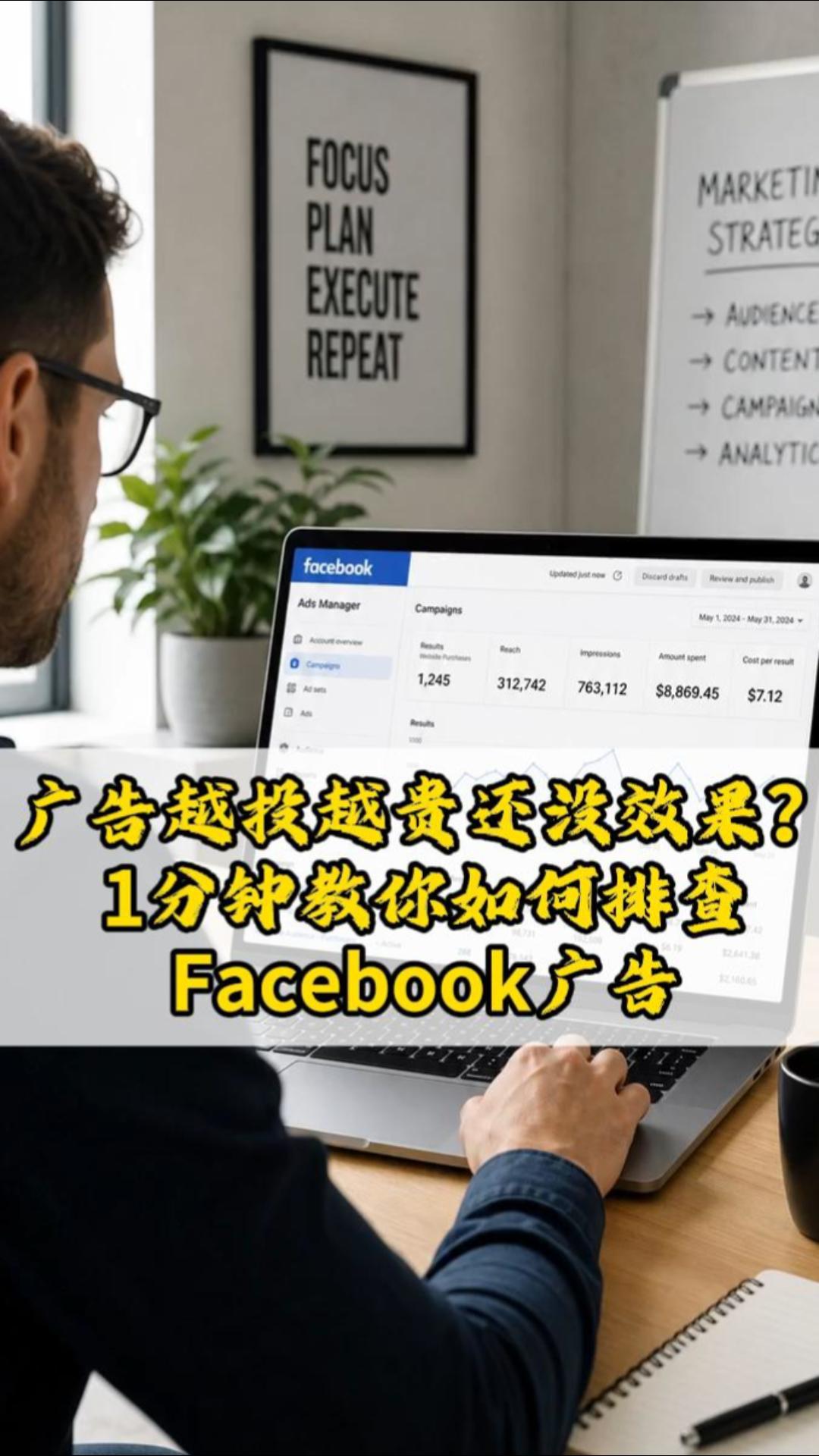
 Are your ads getting more expensive with no results?Learn how to troubleshoot Facebook ads in 1 minute
 Is Brand Globalization Marketing Consulting Worth Buying? At What Stage Should Companies Bring It In

Related Products
 EasyCamp SaaS Smart Website Marketing SystemE-Yingbao SaaS Smart Website Marketing System: AI-powered, zero-code website building. Rapidly launch multilingual independent e-commerce sites in just 10 minutes. Global server acceleration and AI-driven SEO optimization empower businesses to efficiently connect with global markets. The seamless integration of technology and user-friendly operation makes building e-commerce sites incredibly simple.
 AI+SEM Intelligent Advertising Marketing SystemAI+SEM drives intelligent ad creation, empowering full-funnel precision advertising marketing. The system automatically generates weekly/monthly reports, AI recommends keywords and target countries, monitors core metrics in real-time with intelligent alerts, and enables one-click high-conversion ad solutions to help quickly acquire customers and improve ROI.
 AI+SEO Dual Engine Optimization ServiceEasyWin AI+SEO Dual Engine Optimization System leverages AI-powered keyword mining, content generation, and comprehensive technical optimization to help foreign trade enterprises acquire high-quality organic traffic, significantly improving search rankings and conversion rates.
 AI+SNS Social Media Marketing SystemYingbao AI+SNS Social Media Marketing System - Precision social capture for the social media era. Supports one-click content synchronization across major platforms like Facebook and LinkedIn. AI intelligently rewrites posts for enhanced relevance. 24/7 AI customer service and user profiling analysis empower businesses to efficiently expand into global markets.
 AI+SEO营销解决方案易营宝AI+SEO营销解决方案,通过AI批量写作、智能生成TDK、精准关键词扩词等功能,全面优化网站SEO效果,提升流量与转化率。助力企业构建高效智能网站新生态。
 AI+SEM Advertising Marketing SolutionsAI+SEM Advertising Marketing Solution leverages AI technology to deeply empower SEM ad campaigns. It automatically generates weekly/monthly reports using AI, presenting account data across multiple dimensions for comprehensive insights into campaign performance and trends. The system precisely recommends keywords and target countries, intelligently generates high-conversion ad copy, and enables one-click activation of efficient campaign plans to help businesses rapidly acquire customers. Simultaneously, it monitors core metrics in real time, intelligently identifies abnormal fluctuations, and issues timely alerts to ensure stable, high-return advertising results.
 Domain Name ServicesEasyWin provides professional domain name services, including intelligent queries, one-stop registration, brand protection, and full lifecycle management, helping businesses build a digital brand image.
 EasyOperate B2C Cross-Border E-Commerce Platform & Independent WebsiteEasyStore B2C Cross-border E-commerce Independent Store is an intelligent website building and cross-border e-commerce integrated solution independently developed by EasyStore Information Technology (Beijing) Co., Ltd. The system is specially designed for small and medium-sized as well as large export enterprises, integrating 'website building, operation, marketing, advertising, and conversion' into one, helping enterprises quickly establish cross-border e-commerce independent stores to achieve brand globalization and global sales growth.
The platform supports multiple languages, multiple currencies, and multi-channel marketing, with built-in AI intelligent translation and SEO optimization systems, suitable for mainstream markets such as Southeast Asia, Europe and America, Latin America, and the Middle East, assisting Chinese manufacturing enterprises in efficiently deploying international e-commerce strategies. SSL证书易营宝提供专业SSL安全证书服务,包括单域名和泛域名证书,确保网站数据传输加密、身份验证和完整性保护,助力企业建立安全可信的在线业务环境。









