



What Are Localization Services: Upgrading from Translation to a Regional Growth System
In B2B scenarios, localization services are not simply about translating Chinese content into foreign languages. They are closer to a systematic adaptation project for target markets, involving the overall optimization of language expression, industry terminology, page structure, search habits, communication styles, and lead handoff processes.
When companies conduct overseas or cross-regional promotion, what users see is the combined result of the website, content, advertising, forms, customer service responses, and delivery signals. If any part does not align with local perceptions, it will increase bounce rates, weaken inquiry quality, and reduce sales conversion efficiency.
Therefore, the core of localization services is not superficial refinement at isolated points, but rather building around the goal of “making it easier for target customers to understand, trust, and contact the company.” It is both a brand communication capability and a regional customer acquisition capability, and it is also the foundational infrastructure for website and marketing collaboration.
For manufacturers, equipment companies, industrial product businesses, and overseas service providers, the earlier localization services are incorporated into the growth system, the more beneficial they are for subsequent content accumulation, advertising campaigns, organic traffic acquisition, and sales lead management.
The Technical Principles of Localization Services: The Collaborative Mechanism of Websites, Content, Traffic, and Conversion
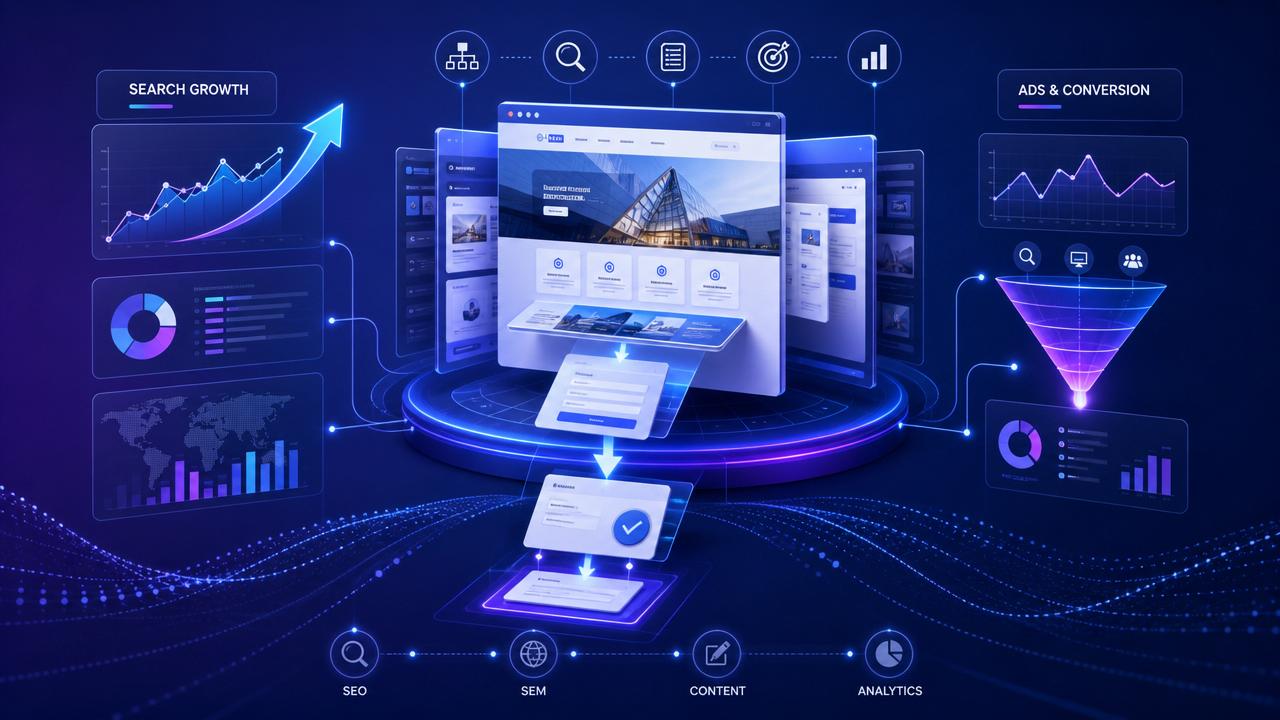
The underlying logic of localization services can be broken down into four steps: “be seen, be understood, make people willing to stay, and make conversion convenient.” First is the website access layer, which must ensure stable loading speeds for users in different countries and regions, and guarantee that pages can be properly browsed and information submitted on both mobile and desktop devices.
Second is the content comprehension layer. Different markets do not share the same naming conventions for the same product, ways of presenting parameters, case study preferences, or procurement priorities. Only when the content structure matches local search and reading habits will users continue to stay and judge whether the company is professional and reliable.
Third is the traffic matching layer. Advertising campaigns, organic search, industry keyword layout, and landing page themes must be consistent; otherwise, even if there is traffic, it will still be difficult to generate effective inquiries. The disconnect between websites and marketing is an important reason why many companies face high regional promotion costs and low conversion rates.
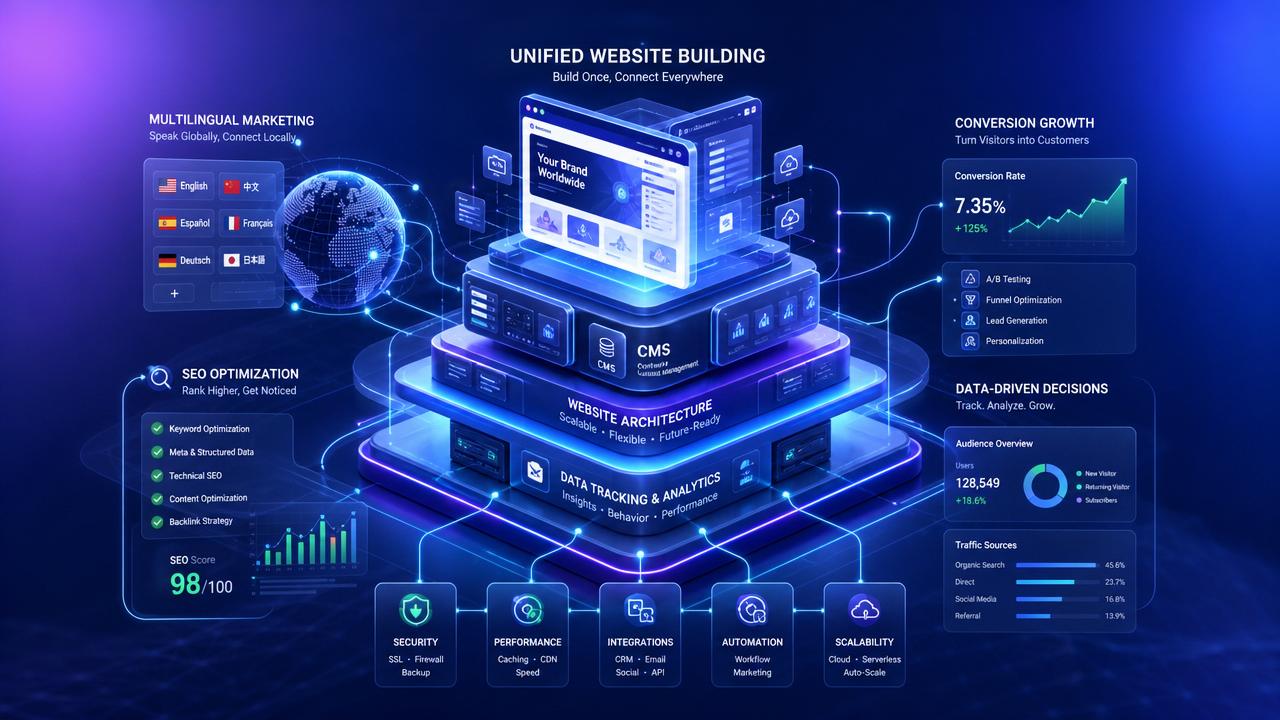
Fourth is the conversion handoff layer, including form language, display of contact methods, inquiry entry points, case-based proof, and response mechanisms. The value of EasyRank in this layer lies in combining responsive website building, content generation, regionalized pages, and marketing execution to reduce the losses caused by fragmentation across multiple systems for enterprises.
Main Categories: Four Common Localization Service Models for Enterprises
The first category is language localization, focusing on solving issues related to vocabulary, grammar, industry terminology, and business expression. This type of service is suitable for companies just entering a new market, but if it remains only at the translation level, it is often difficult to support stable customer acquisition.
The second category is website localization, including multilingual websites, mobile adaptation, regional page structures, access speed optimization, and form and navigation design. This determines the first impression after visitors enter the website and is also the foundation for subsequent conversion.
The third category is marketing localization, mainly including keyword strategy, ad creatives, landing page content, regional advertising cadence, and channel selection. Different markets do not focus on price, delivery time, certifications, after-sales service, and case studies in the same order, so marketing content must be adjusted accordingly.
The fourth category is operational localization, which revolves around building a continuous mechanism for lead grading, customer service response, inquiry attribution, content updates, and data review. Truly efficient localization services are usually not a single action, but a combined application of the above four capabilities.
Who Needs Localization Services Most: Applicable Enterprises and Typical User Groups
Localization services are most suitable for companies with clear regional customer acquisition goals, especially foreign trade manufacturers, industrial equipment suppliers, parts factories, cross-border brand owners, and data-driven enterprises that need to accumulate overseas inquiries over the long term.
If a company already has an official website, but overseas access is slow, bounce rates are high, and inquiries are few, it usually indicates a gap between the website’s presentation capability and its market communication capability. At this point, introducing localization services is more valuable than simply increasing the advertising budget.
For companies operating in multiple countries at the same time, localization services can also help establish region-specific content systems and avoid using the same set of expressions across all markets. This is beneficial not only for search visibility, but also for sales teams to manage leads by region more conveniently.
From an industry perspective, sectors such as laser engraving machines, steel, chemicals, heavy trucks, machinery, new energy, automotive, and medical industries rely more on professional and localized digital outreach methods because of their complex technical product information and long decision-making cycles.
Application Scenarios and Implementation Methods: How Enterprises Acquire Customers Through Website and Marketing Collaboration
A typical scenario is when a company enters a new national market: it first builds a multilingual or regionalized website, then lays out pages around core product keywords, application keywords, and procurement keywords, forming a closed loop of “search entry—content explanation—form conversion.”
Another typical scenario is when a company is already running advertisements but finds that although traffic exists, inquiry quality is unstable. In such cases, the problem is often not the traffic itself, but that the landing page content does not align with the target customers’ decision-making logic, requiring page restructuring through localization services.
The reason EasyRank is suitable for such needs lies in its capabilities in responsive website building, AI content generation, and global node acceleration. On the website side, it can balance the experience across different devices, while on the marketing side, it can continuously output adapted content based on search logic, thereby improving regional customer acquisition efficiency.
In terms of service experience, EasyRank covers multiple industries such as laser engraving machines, machinery, steel, chemicals, new energy, furniture, and education, and has served enterprises such as Haier, Aucma, Shandong Airlines, Yuanhe Power Station, Little Duck Group, and Sinotruk, demonstrating its greater familiarity with the digital expression needs of complex industries.
Selection Criteria: What Should Be Evaluated When Purchasing Localization Services
First, check whether the service provider has integrated capabilities in both website and marketing. If website building, content, ad placement, and analysis are handled by different teams separately, the cost of information transfer will rise significantly, regional strategies will also easily become distorted, and conversion results will ultimately be affected.
Second, check whether the technical foundation is stable, including mobile adaptation, access speed, page expansion efficiency, multilingual management, and data security. Especially for cross-regional business, access performance directly affects form submission rates and inquiry completeness.
Third, check whether the content capability truly understands search and industry context. Whether content can be produced around product parameters, application scenarios, procurement pain points, and national market habits determines whether localization services remain only at the level of surface translation.
Fourth, check whether the service provider has continuous iteration capabilities and industry accumulation. In recent years, EasyRank has continuously released versions of cloud intelligent website building, multilingual website building, and AI foreign trade marketing systems, making it suitable for evaluation by enterprises hoping to operate regional markets over the medium to long term and accumulate digital assets.
How Much: How to View the Total Cost of Ownership and Return on Investment of Localization Services
When purchasing localization services, companies should not compare only one-time quotations, but should pay attention to the total cost of ownership. The main costs usually include website construction, content production, page maintenance, advertising campaigns, data analysis, servers and acceleration capabilities, as well as the human resource investment required for subsequent version upgrades.
If a company adopts decentralized cooperation with multiple vendors, it may seem flexible in the short term, but in the long run it often increases coordination costs and duplicate investment, for example when the same product materials are rewritten multiple times, page messaging and ad messaging are inconsistent, or data definitions cannot be unified.
From the perspective of return on investment, the value of localization services is reflected not only in the number of inquiries, but also in the reduction of invalid traffic, improvement in page conversion, higher efficiency in sales communication, and the accumulation of reusable content assets. For high-ticket B2B industries, this compounding effect is more obvious.
When evaluating ROI, companies are advised to track access quality, keyword coverage, form conversion rate, effective inquiry ratio, and changes in sales cycle length at the same time, rather than looking only at monthly cost per click. This makes it easier to judge whether localization services truly support regional customer acquisition.
Future Trends: Localization Services Will Move Toward Intelligence, Collaboration, and Long-Term Development
Future localization services will no longer be outsourced content projects, but will increasingly resemble growth infrastructure for enterprises. Websites, content, advertising, data, and lead management will be further integrated to form a continuously iterative regional operations system.
The application of generative technology will improve the efficiency of multilingual content production, but market competition will also shift more quickly toward “who understands the industry better and who understands user decision-making better.” Therefore, truly valuable localization services must still be built on a foundation of professional industry understanding.
At the same time, global markets will continue to raise requirements for access experience, data security, and brand consistency. Platforms with stable website-building capabilities, global acceleration capabilities, and continuous update capabilities are better able to help companies reduce trial-and-error costs during regional expansion.
For companies preparing to expand overseas or deepen their presence in multiple regional markets, the earlier localization services shift from one-time projects to long-term mechanisms, the greater the opportunity to upgrade the website from a display tool into a digital asset for sustained customer acquisition. Integrated website and marketing solutions like EasyRank are suitable for inclusion in medium- to long-term growth planning for comparison and selection.
 What industry trends has the list of China's Top 100 SaaS Companies revealedWhat growth signals do China’s Top 100 SaaS Companies reveal? This article focuses on the trends of AI, localization, and website-marketing integration, analyzing how companies can leverage data, SEO, and intelligent ad placement to build a sustainable customer acquisition closed loop.
 How can data-driven ad optimization tools improve ad delivery efficiency?How can data-driven advertising optimization tools improve campaign efficiency? This article analyzes how to use data to reduce waste, improve lead quality and conversion rates, and help businesses achieve efficient growth, from budget allocation and creative testing to website conversion paths and implementation.
 Recommended digital marketing strategy agency, first determine whether they understand your businessWhen choosing a digital marketing strategy agency, first see whether they truly understand your business. This article shows you how to efficiently evaluate integrated website + marketing service providers from the perspectives of customer journey, website planning, SEO and advertising coordination, and data attribution, so as to reduce trial-and-error costs.
 How Multilingual Digital Marketing Websites Can Balance Conversion and SEOHow can multilingual digital marketing websites balance conversion and SEO? This article focuses on website architecture, content optimization, localization strategies, and data tracking, analyzing integrated website building and marketing solutions to help businesses improve indexing, inquiry conversion, and global growth efficiency.
 What core modules are included in the one-stop marketing platform service?The one-stop marketing platform service covers five core modules: intelligent website building, SEO optimization, social media operations, advertising, and data analytics, helping enterprises build a closed loop for customer acquisition, conversion, and growth, while enhancing brand influence and global marketing efficiency.
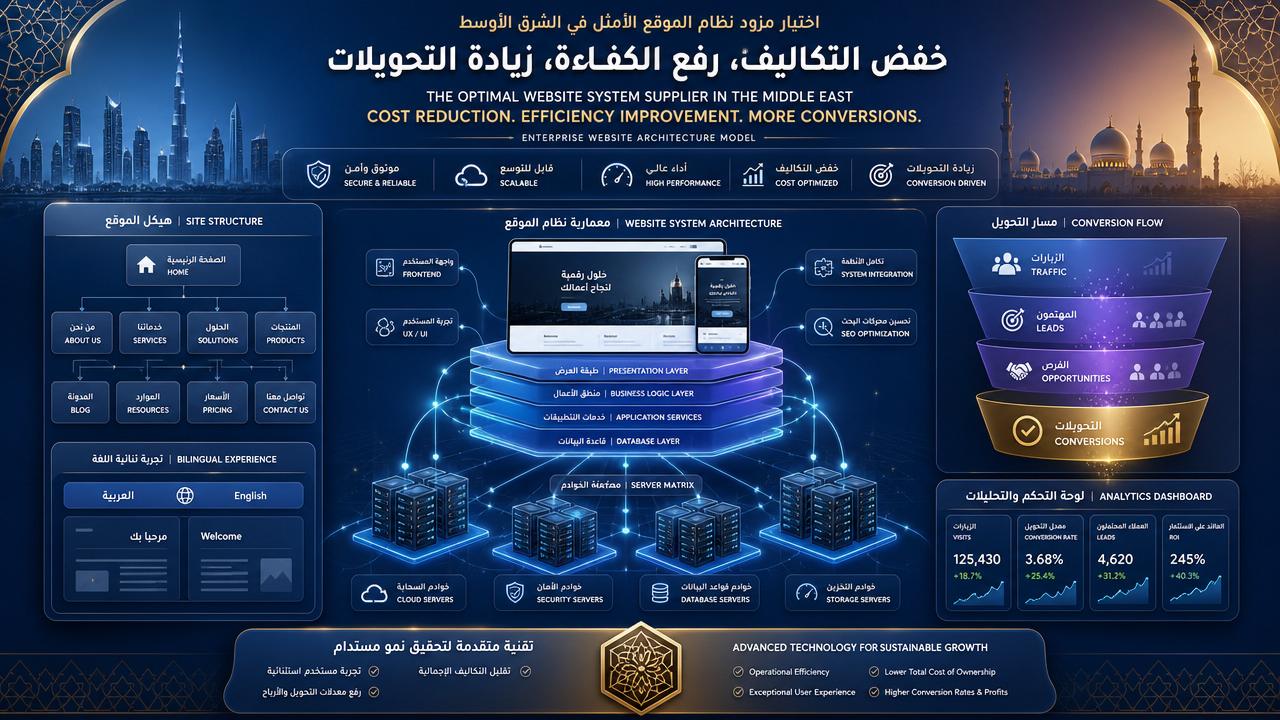
 How to Screen Middle East Website Building System Providers More Cost-EffectivelyHow can you choose a Middle East website building system provider more cost-effectively? Don’t just look at low prices; focus on evaluating Arabic adaptation, SEO architecture, server stability, marketing integration, and later-stage maintenance capabilities to help enterprises reduce rework, improve conversions, and find a truly cost-effective solution.
 What capabilities should you consider when comparing global digital marketing service providers in Beijing?How to choose a global digital marketing service provider in Beijing? Focus on their technology platform, data system, localized execution, and global delivery capabilities. This article helps you efficiently evaluate integrated website and marketing service providers and identify partners with true growth value.
 Beyond the Price of a Foreign Trade Marketing System, What Other Costs Should You CalculateWhen evaluating the price of a foreign trade marketing system, you should not only look at the purchase quote, but also consider costs such as website building, SEO, advertising, data integration, training, and operations and maintenance. This article breaks down the total cost of ownership to help businesses control budgets more accurately and improve conversions.