
In-depth definition and industry value of AI advertising optimization
AI-powered ad optimization is a technology system that automates decision-making throughout the entire ad delivery process using machine learning algorithms. Its core lies in real-time analysis of user behavior data, prediction of conversion probabilities, and dynamic adjustment of delivery strategies. According to the International Association of Digital Marketing (IAB) standards, modern AI ad systems must possess three fundamental capabilities: real-time bidding (RTB), cross-channel attribution analysis, and dynamic creative optimization.
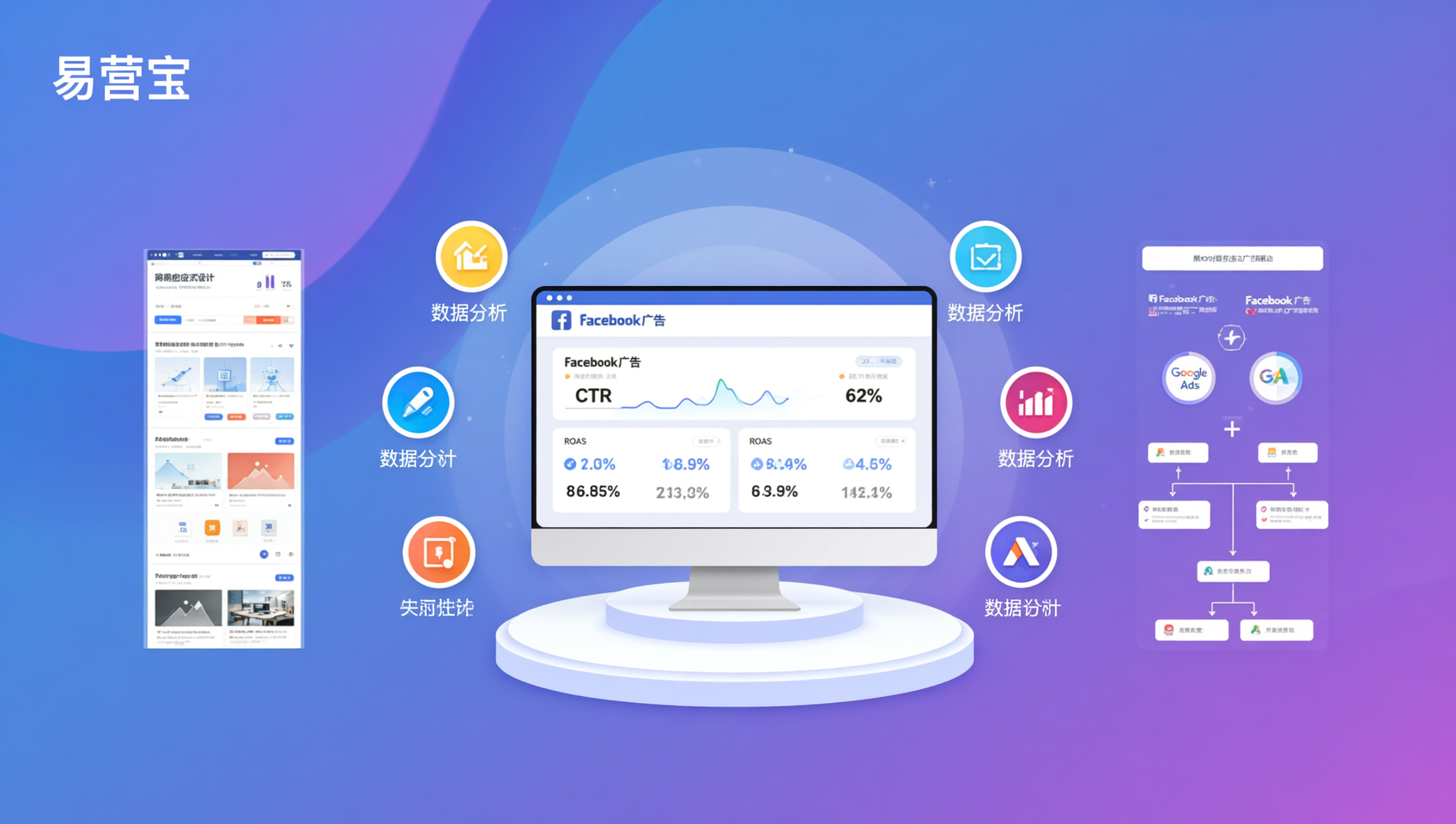
Compared to traditional manual optimization, AI systems can handle over 200 dimensions of feature variables, including explicit features such as time period, region, and device type, as well as implicit features such as user browsing path and dwell time. YiYingBao's AI marketing algorithm module, through the integration of the Transformer architecture, can achieve over 100,000 campaign strategy iterations per hour, reducing advertisers' average customer acquisition cost by 37%.
Technical principles and mainstream implementation schemes
Current mainstream solutions in the industry can be divided into three categories: automated tools based on rule engines, predictive models using supervised learning, and dynamic optimization systems combining reinforcement learning. Among them, the Deep Reinforcement Learning (DRL) solution had a market share of 42% in 2024, and it continuously optimizes long-term ROI through the Q-Learning algorithm.
YiYingBao's solution innovatively combines generative AI with predictive models: first, it generates ad creative variations tailored to different audiences using the GPT architecture, and then uses a Bayesian optimization algorithm for multivariate testing. This hybrid architecture, used in Shandong Airlines' overseas route promotions, reduced the cost-per-click (CPC) by 28% compared to the industry average.

Typical application scenarios and customer cases
In the heavy machinery industry, China National Heavy Duty Truck Group (CNHTC) has achieved precise audience targeting through YiYingBao's AI advertising system: the system automatically identifies key roles in the decision-making chain, such as engineering contractors and mining companies, increasing the conversion rate of Facebook ads to 2.3 times the industry average. Its core lies in the deep correlation analysis between equipment parameter keywords and the professional characteristics of purchasing decision-makers.
The case of chemical companies and power plants demonstrates the value of cross-channel optimization: by unifying the analysis of data streams from Google Search Ads and LinkedIn Business Accounts, the AI system automatically allocates 80% of the budget to channels with a high concentration of high-intent customers, resulting in a 156% increase in inquiries within 6 months.
Selection criteria and implementation path
When evaluating AI advertising systems, companies should focus on three key dimensions: data access capabilities (whether they support mainstream data sources such as Google Analytics 4 and Meta Pixel), model transparency (whether they provide feature importance analysis reports), and system response speed. EasyCare's global acceleration network ensures that advertising data synchronization latency from Asia to Europe and the Americas is controlled within 80ms.
The implementation phase is recommended to proceed in three steps: first, complete the historical data cleaning and tagging system construction; second, conduct small-scale A/B testing to verify the model's effectiveness; and finally, formulate automation rules based on business KPIs. Haier Group's experience shows that a complete implementation cycle typically takes 6-8 weeks, but a CTR improvement of over 15% can be observed in the first month.

Cost structure and return on investment analysis
The total cost of ownership (TCO) for AI advertising optimization comprises three parts: software subscription fees (typically 8%-15% of advertising expenditure), data cleaning service fees (a one-time investment of approximately 20,000-50,000 RMB), and ongoing optimization consulting fees. According to data from 32 manufacturing companies served by YiYingBao, the average payback period is 5.7 months.
It's worth noting that system performance is strongly correlated with data quality. When clients provide complete historical conversion data, ROI can increase by over 40%. After integrating CRM system data, Xiaoya Group's AI-optimized advertising campaigns achieved a ROAS of 11:1, far exceeding the industry benchmark of 6:1.
Industry Trends and Future Outlook
Gartner predicts that by 2026, 70% of ad optimization decisions will be made autonomously by AI. Cutting-edge developments include: creative generation based on multimodal learning (already applied to short video ads on OCOcode), federated learning optimization using privacy computing technology (compliant with GDPR requirements), and virtual ad bidding systems for metaverse scenarios.
YiYingBao's V6.0 system, to be released in 2025, innovatively introduces a Neural-symbolic system, capable of simultaneously processing structured business rules and unstructured user feedback, providing B2B enterprises with optimization solutions more aligned with the characteristics of the decision-making chain. This technological evolution is redefining the boundaries of intelligent marketing.
 Dongguan City Partner Case Study: How to Sign 20 Clients a Month?Uncover How Dongguan City Partners Achieve Remarkable Results: Signing 20 Clients Monthly Using the EasyCamp AI Website Builder! From precision customer acquisition strategies to technological empowerment and standardized operational workflows, this article delves into the success formula for building independent foreign trade websites. Drawing on real-world experiences from city partners in Foshan, Shenzhen, Hangzhou, Shanghai, and beyond, it empowers you to rapidly penetrate markets and boost conversion rates. Discover now how the AI+SNS Social Media Full-Spectrum Marketing System shortens inquiry cycles and attracts more high-quality clients!
 Is a SaaS Website System Suitable for Cross-Border E-Commerce? Analyzing Product Performance and Fit with Foreign Trade ScenariosIs a SaaS Website System Suitable for Cross-Border E-Commerce? This Article Analyzes Which Global Website-Building SaaS Platform is Best, Covering Independent Site Content Localization, Ad Placement Costs, Social Media Marketing Strategies to Website Quick Indexing, Providing a Comprehensive Breakdown of Technical Performance and Fit with Foreign Trade Scenarios to Help Businesses Efficiently Build International Brands, Achieve Cost Reduction and Efficiency Gains Along with Global Growth.
 How much can ad conversion rates improve after using Eyingbao? Real data reveals the true effectiveness of AI optimizationHow much can ad conversion rates improve after using Eyingbao? Actual data shows that Eyingbao's intelligent website system and AI ad intelligence assistant help global website SaaS platforms improve SEO scores, reduce ad costs, achieve digital growth for B2B export enterprises, and create a new intelligent marketing model with high ROI and brand competitiveness.
 How to Improve Conversion Rates After Building a Foreign Trade Website? 5 Practical Techniques to Break Through BottlenecksLow Conversion Rates After Building a Foreign Trade Website? Master 5 Key Techniques: Global Server Deployment Boosts Speed by 40%, AI Marketing Generates Thousands of Daily Content Pieces, Automated Social Media Operations Build Fan Matrices, AI Ad Targeting for Precise Lead Generation, Break Through Growth Barriers! EasyMarketing Smart Website Building—Technology, Service, and Ecosystem Triple Guarantee to Help You Achieve Global Growth!
 Is the cost of independent website ad placement too high? Even small-budget enterprises can leverage precise exposure.Is the cost of independent website ad placement too high? Small-budget enterprises can achieve precise exposure and localized content production with AI technology, optimize independent website social media marketing strategies and B2B website construction costs, and efficiently improve search rankings and ad conversion rates.
 How to increase the volume of foreign trade inquiries? Can the issue of mismatched keywords on Facebook and Google be resolved after using the AI Advertising Intelligence Manager?How to Increase the Volume of Foreign Trade Inquiries? EasyYingbao offers transparent pricing for Arabic-language independent website development. Detailed breakdown of independent site construction essentials and SaaS customer acquisition efficiency solutions. In-depth analysis of website performance impacts!
 Poor Facebook ad performance? Use these 5 data analysis tools to optimize ROILow Facebook ad ROI? Optimize with 5 data analysis tools! Covers social media marketing, multilingual websites, Google Ads, and responsive design to enhance overseas social media conversion and search engine rankings.
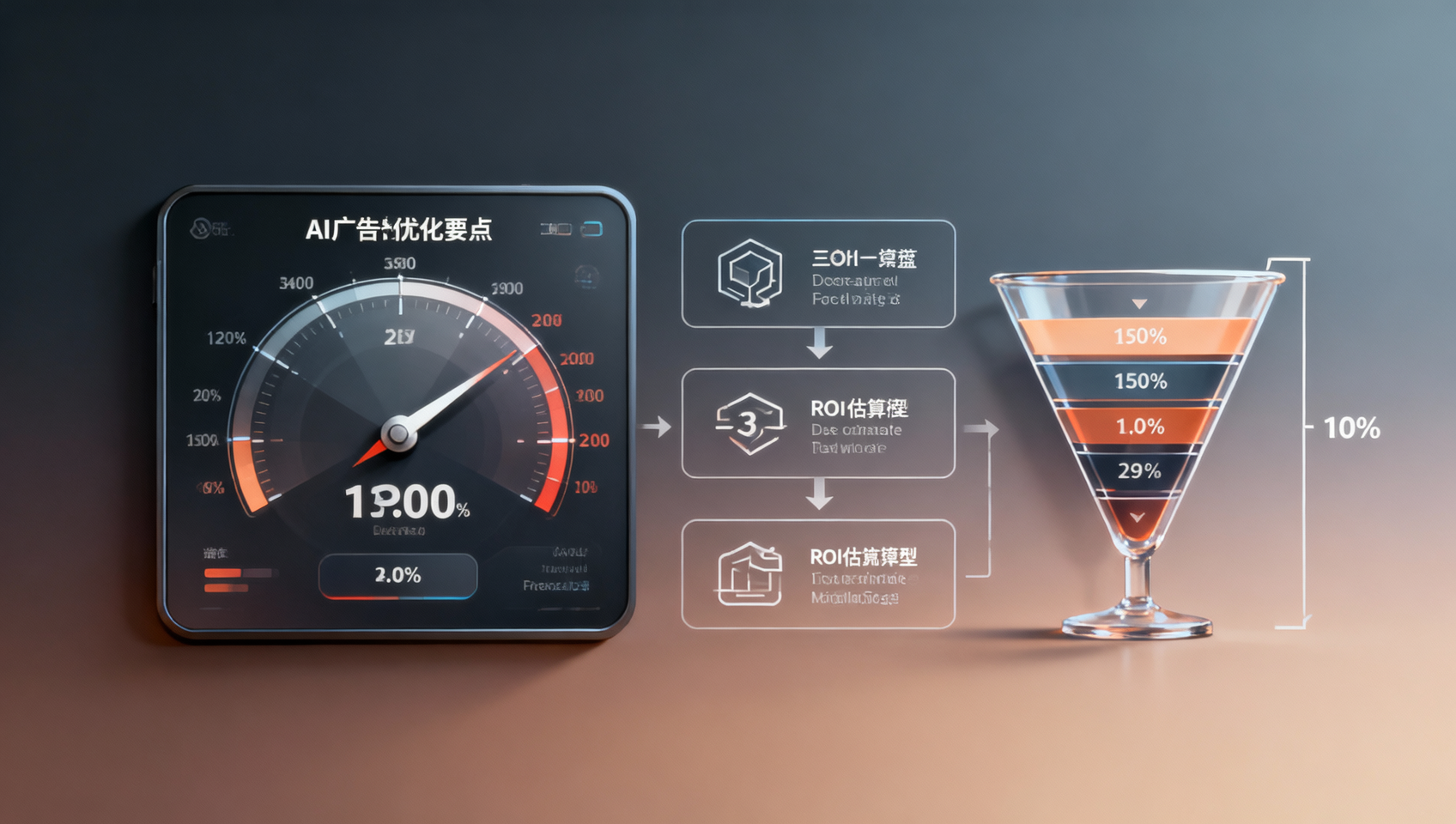
 Practical Guide: How to Calculate Budget for Foreign Trade Independent Website Advertising? 3-Step ROI Estimation Model and Sample TableHow to Measure Advertising Budget for Foreign Trade Independent Websites Targeting Vietnam and Latin America Markets? Practical Guide Teaches You 3-Step ROI Estimation Model + Vietnam/Latin America Samples, Including Eyingbao Conversion Rate Improvement Solutions and Multilingual Website Cloud Floating, Landing Page Optimization to Help Control CAC and Quickly Improve Efficiency, Free Trial Calculation and Consultation Available.