- Как выбирать темы для раздела отраслевых новостей, чтобы эффективнее привлекать органический поисковый трафикJul 29, 2026Подробнее
- Можно ли сейчас развивать независимый сайт для внешней торговли в Чжэцзяне? Оценка изменений в трафике и привлечении клиентовJul 28, 2026Подробнее
- Какие новые сигналы содержатся в маркетинговых отчетах по SaaS для корпоративных сервисовJul 27, 2026Подробнее
- Что делает поставщик глобального трафика-экосистемы? Чем он отличается от агентства по одной рекламе?Jul 16, 2026Подробнее
- На что обратить внимание в последнем отчете по SaaS для корпоративных услуг? От коэффициента продления и стоимости внедрения до возможностей роста за рубежомJul 12, 2026Подробнее
- На что стоит обратить внимание в отчёте о трендах трансграничного маркетинга? B2B-компаниям стоит посмотреть на эти 6 сигналовJul 11, 2026Подробнее
Методы ведения LinkedIn для B2B-компаний: контент и стратегии взаимодействия для привлечения клиентов на рынке Ближнего Востока
LinkedIn Marketing Methods for B2B Companies in the Middle East Market: Content and Engagement Strategies for Customer Development
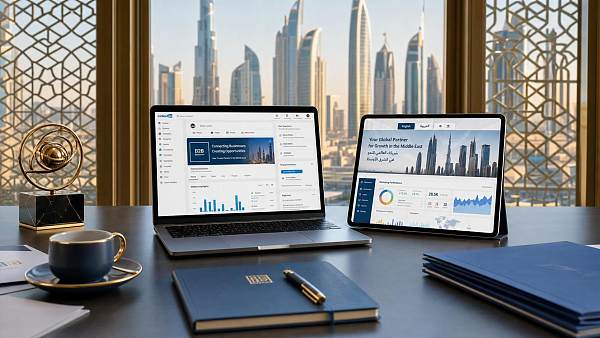
In the Middle East, B2B companies cannot rely on posting updates alone to get customers on LinkedIn. Many companies have plenty of content and a fair number of connections, but the proportion that truly leads to communication and inquiry is not high. The problem is often not effort, but method.
Procurement decisions in the Middle East place greater emphasis on trust, stability, cooperation, and delivery capability. LinkedIn here is not a single traffic channel, but more of a place to build a professional image, screen prospects, and promote initial business communication. This also means that content, homepage, and touchpoint rhythm must work together.
For website + marketing service integrated companies, the core of B2B LinkedIn Marketing Methods in the Middle East market is not pursuing exposure numbers, but making target customers see you, understand you, be willing to reply, and ultimately be willing to visit the official website, submit a form, or enter a meeting process.
First understand the Middle East market; don’t treat all customers as the same type of person
The Middle East market is not a single market. Gulf countries, North Africa, and Turkey have different business habits and industry needs. When doing B2B LinkedIn Marketing Methods in the Middle East market, the first step is not what to post, but first to clarify who you are looking for.
Usually, it can first be broken down into three types of target audiences: brand owners, channel owners, and procurement/business development owners. The first two types focus more on growth and customer acquisition, while the third type focuses more on supply capability, cases, and cooperation efficiency.
If you provide integrated services for intelligent website building, SEO optimization, social media marketing, and advertising, then it is more suitable to target these scenarios: companies preparing to enter the Middle East, existing websites but few inquiries, high advertising costs, insufficient local content adaptation, and strong social exposure but weak conversion.
- Manufacturing companies: focus on official website credibility, product presentation, and inquiry acquisition.
- Cross-border brands: focus on multilingual websites, advertising, and brand exposure.
- Channel-based companies: focus on lead cost, follow-up efficiency, and market entry speed.
The clearer the picture, the easier the execution of B2B LinkedIn Marketing Methods in the Middle East market, and the more easily the content can hit actual needs instead of staying at the level of “we are very professional” self-talk.
Optimize the homepage first, then talk about content and touchpoints
Many companies start by posting content, adding people, and sending private messages, but the homepage itself does not convince. Within a few seconds after a customer clicks in, if they cannot see what problem you solve, the follow-up touchpoint effect will drop significantly.
In the Middle East market, B2B LinkedIn Marketing Methods should ensure the homepage completes three things: explain the business, build trust, and provide the next action. Especially for the company homepage and core business personnel homepage, the information should be unified to avoid fragmented messaging.
- Write the title clearly with the service direction, such as overseas website building, SEO, advertising, and social media growth.
- The introduction should highlight service targets, coverage areas, delivery capability, and successful experience.
- Select content to place cases, solution pages, or the official website core entry point.
- The cover image should reflect Middle East market service capability, not just company slogans.
Platforms like Yiyingbao, an AI-driven intelligent website building and overseas marketing platform, are well suited to directly present the full-chain capabilities of “website building + SEO + advertising + social media” in homepage information. In this way, customers will not misunderstand you as a pure website-building company or a pure advertising agency.
How to post content in the Middle East market: focus on decision-making clues, not quantity
Effective B2B LinkedIn Marketing Methods in the Middle East market must be designed around the customer’s decision-making process. The other side is not coming to browse information, but is judging whether you are worth further communication.
A practical content structure can be arranged in four categories: awareness, capability, case, and conversion. Alternating these four types of content will make the account more stable and easier to build a trust chain.
- Awareness: talk about Middle East market trends, platform changes, and buyer behavior changes.
- Capability: talk about website building logic, SEO strategy, advertising structure, and content localization methods.
- Case: talk about how a certain industry obtained more inquiries through the official website and social media.
- Conversion: talk about common questions, cooperation process, budget judgment, and implementation suggestions.
There is one key point here. Content should not only talk about “big trends”; it should translate trends into customer actions. For example, instead of only saying that social media is active in the Middle East market, explain further why the official website must have multilingual capability and why landing pages need to respond to mobile access faster.
From recent changes, short content is more likely to gain traction, but what truly drives business opportunities is still content that can answer specific questions. Especially for B2B LinkedIn Marketing Methods in the Middle East market, customers are more willing to reply to accounts that appear to “understand the business scenario.”
Recommended content cadence
Keeping three to four updates per week is enough; there is no need to post every day. More important is a stable rhythm and layered content, so customers can repeatedly see your professionalism within a week.
How to do precise outreach: don’t pitch as soon as you connect
Many people think outreach means adding friends and sending private messages. But truly effective B2B LinkedIn Marketing Methods in the Middle East market start with building a weak relationship first, then moving into one-on-one communication. Pitching too early usually results in a very low reply rate.
A more reasonable path has four steps: screen target customers, interact to warm up, send the connection request, then move into private messages. Each step should have a purpose; don’t try to complete all actions in one day.
- First, filter the list by country, industry, job title, and company size.
- Then like and comment on their content for several consecutive days to build initial familiarity.
- When sending the connection request, explain the reason for reaching out and avoid standardized sales wording.
- After connecting, start private messages based on content or business issues.
For example, if you see that the other party is expanding into the Gulf market, the entry point can be multilingual official websites, SEO indexing, and landing page conversion, rather than directly saying “We are a service provider, would you like to cooperate?” The former is a business discussion; the latter is just sales interruption.
Private messages should be short, but specific
Middle East market customers do not reject business communication, but the premise is that what you say is relevant to their business. Don’t write private messages as long introductions, and definitely don’t copy and paste a mass message template everywhere.
- First, state the business action or market direction you noticed.
- Then raise one specific question or observation.
- Finally, give a light action, such as communication, case review, or page suggestion.
This approach is more suitable for B2B LinkedIn Marketing Methods in the Middle East market because it focuses on solving problems rather than rushing to close deals. Have a reply first, then discuss conversion; the rhythm will be more stable.
Link LinkedIn with the official website, SEO, and advertising so leads can continue to flow
LinkedIn itself is very important, but it is more like a front-end touchpoint, not the whole conversion scenario. Mature B2B LinkedIn Marketing Methods in the Middle East market will definitely be linked with independent websites, SEO, advertising landing pages, and form systems.
The reason is simple. After customers establish initial trust on LinkedIn, they usually continue to check the official website, cases, page professionalism, and submission path. If the website is weak, the content is chaotic, or the page is slow, even a good touchpoint can easily be lost.
This is exactly the value of integrated platforms like Yiyingbao. Through AI intelligent website building, multilingual website construction, Google SEO optimization, advertising placement, and overseas social media coordinated promotion, companies can turn attention on LinkedIn into in-site visits, form submissions, and subsequent follow-up assets.
In actual business, the most recommended approach is to prepare a separate landing page for LinkedIn, with content focused on Middle East market capabilities, industry cases, common questions, and contact entry points. In this way, the traffic from private messages and updates will not be diverted to a homepage that is too complex in information and too long in conversion path.
Keep an eye on these three indicators during execution
B2B LinkedIn Marketing Methods in the Middle East market should not only look at views. What really needs to be tracked continuously are connection quality, interaction depth, and conversion actions. Without these three indicators, the optimization direction can easily go off track.
- Connection quality: target job title share, target country share, pass rate.
- Interaction depth: comments, private message replies, profile page visits, content saves.
- Conversion actions: official website visits, form submissions, appointment requests, quotation requests.
If views are high but replies are low, the content is too broad. If connections pass at a high rate but there is no follow-up, the homepage and private messages are not targeted enough. If there is interaction but no inquiry, it is often because the official website’s follow-up and solution expression have problems.
In the end, B2B LinkedIn Marketing Methods in the Middle East market are not a single-point action, but a continuous process from awareness and trust to conversion. First clarify the target customers, then refine the homepage and content, and then use a lighter and more accurate approach for outreach. The result is usually much more stable than mass messaging.
If the company is still improving its official website, SEO, advertising, and social media coordination capabilities, then it is more suitable to build a unified overseas marketing base as early as possible. In this way, every exposure and every reply brought by LinkedIn will have a chance to become truly trackable and convertible Middle East market customer resources.
- Создание сайта
- Международный маркетинг
- Маркетинг в соцсетях
- Ведение социальных сетей
- Поисковая оптимизация в Google
- AI-интеллектуальное создание сайтов
- многоязычная разработка сайтов
- Yingbao
- SEO
- Независимый сайт
- SEO-оптимизация
- Интеллектуальное создание сайта
- Многоязычный веб-сайт
- Размещение рекламы
- Управление зарубежными социальными сетями
- Методы ведения LinkedIn для B2B-компаний
- Оптимизация Google SEO
- Целевая страница объявления
- Многоязычный официальный сайт
- Оптимизация конверсии сайта
Связанные статьи


Связанные продукты
 EasyCamp SaaS Интеллектуальная система создания веб-сайтов и маркетингаE-Yingbao SaaS Intelligent Website Marketing System: создание веб-сайтов с помощью искусственного интеллекта без написания кода. Быстрое создание многоязычных независимых сайтов электронной коммерции всего за 10 минут. Глобальное ускорение серверов и оптимизация SEO с помощью искусственного интеллекта позволяют компаниям эффективно выходить на мировые рынки. Безупречное сочетание технологий и удобства в использовании делает создание международного присутствия в сфере электронной коммерции удивительно простым.
 AI+SEM система интеллектуального маркетинга рекламыAI+SEM обеспечивает интеллектуальное создание и размещение рекламы, повышая точность маркетинга на всех этапах. Система автоматически генерирует еженедельные/ежемесячные отчеты, AI рекомендует ключевые слова и страны для размещения, отслеживает ключевые показатели в реальном времени и предоставляет интеллектуальные предупреждения, запуская высококонверсионные решения для размещения одним кликом, помогая быстро привлекать клиентов и повышать ROI.
 AI+SEO система оптимизации двойного двигателяYingbaobao AI+SEO система оптимизации двойного двигателя, использующая AI для интеллектуального поиска ключевых слов, генерации контента и всесторонней технической оптимизации, помогает экспортным предприятиям получать высококачественный органический трафик, значительно улучшая поисковый рейтинг и конверсию.
 Система маркетинга в социальных сетях AI+SNSYingyingbao AI+SNS — интеллектуальная система маркетинга в социальных сетях — точное охватывание социальных сетей в эпоху социальных медиа. Поддерживает синхронизацию контента в один клик на основных платформах, включая Facebook и LinkedIn. Переписывание постов с помощью искусственного интеллекта улучшает локализацию. Круглосуточная интеллектуальная служба поддержки клиентов и анализ профилей пользователей позволяют компаниям эффективно выходить на глобальные рынки.
 AI+SEO营销解决方案易营宝AI+SEO营销解决方案,通过AI批量写作、智能生成TDK、精准关键词扩词等功能,全面优化网站SEO效果,提升流量与转化率。助力企业构建高效智能网站新生态。
 Решения для рекламного маркетинга AI+SEMРешения для SEM-рекламы на базе искусственного интеллекта используют искусственный интеллект для значительного улучшения управления SEM-кампаниями. Используя ИИ для генерации еженедельных и ежемесячных отчетов, эти решения представляют данные по счетам в нескольких измерениях, что позволяет осуществлять комплексный контроль эффективности рекламы и тенденций. ИИ предоставляет точные рекомендации по ключевым словам и целевым странам, интеллектуально создает рекламные тексты с высокой конверсией и запускает эффективные кампании одним щелчком мыши, ускоряя привлечение клиентов для бизнеса. Одновременно система отслеживает основные показатели в режиме реального времени, интеллектуально выявляет аномальные колебания и своевременно выдает предупреждения, обеспечивая стабильную эффективность рекламы и высокую доходность.
 Услуги доменных именEasyYunbao предоставляет профессиональные услуги доменных имен, включая интеллектуальный поиск, регистрацию в один клик, защиту бренда и полный цикл управления, помогая предприятиям создать цифровой имидж бренда.
 EasySell B2C кроссплатформенный маркетплейс и отдельный сайтЭкосистема EasyBuy B2C для трансграничной торговли — это интегрированное решение для создания умных сайтов и кросс-бордерной электронной коммерции, разработанное компанией EasyBuy Information Technology (Пекин). Система предназначена для малых, средних и крупных экспортных предприятий, объединяя в себе функции «создания сайта, управления, маркетинга, рекламы и конверсии», чтобы помочь компаниям быстро запустить независимые трансграничные торговые платформы, реализовать выход бренда на международный рынок и глобальный рост продаж.
Платформа поддерживает многоязычность, мультивалютность и многоканальный маркетинг, оснащена системой AI-перевода и SEO-оптимизации, адаптирована для ключевых рынков, включая Юго-Восточную Азию, Европу, США, Латинскую Америку и Ближний Восток, помогая китайским производителям эффективно выстраивать международную электронную коммерцию. SSL证书易营宝提供专业SSL安全证书服务,包括单域名和泛域名证书,确保网站数据传输加密、身份验证和完整性保护,助力企业建立安全可信的在线业务环境。