









- Hengqin Cooperation Zone Shares Cross-Border E-Commerce Developments, Focusing on Macao-Hengqin Collaboration and International MarketsOct 24, 2026View details
- A Shenyang study highlights the development of the “cross-border e-commerce + industrial cluster” modelOct 24, 2026View details
- Three China Advertising Association GEO group standards take effect on October 23Oct 24, 2026View details
- Amazon Raises Fulfillment Fees Twice, Yet the Median Platform Fee Remains Around 40%Oct 22, 2026View details
- AliExpress and YouTube Partner to Expand Marketing Opportunities for Chinese Brands Going GlobalOct 22, 2026View details
- Publicis says AI marketing is developing at two speeds, with agentic AI helping win clientsOct 21, 2026View details
Which channel should you invest in first when your export digital marketing budget is limited?
When budgets are limited, the most common mistake in foreign trade online marketing is spreading funds evenly across every channel—website development, Google Ads, SEO, social media, short videos, and more. The result is that every channel merely exists, without generating a steady flow of inquiries. For most companies evaluating overseas customer acquisition solutions, the real question is not “which channel is the most popular,” but rather: at this stage, are you lacking traffic, trust, leads, or the ability to convert opportunities into orders?
Channel priorities are not fixed. Companies selling standardized products with lower order values and needing to validate the market quickly are generally better suited to using search ads first for immediate feedback. Factories producing industrial equipment, components, or customized projects, however, often need to build a solid website and product content foundation first. Otherwise, even if ads generate clicks, procurement professionals will find it difficult to confirm specifications, applications, delivery capabilities, and contact information on the page. A limited budget does not mean placing all bets on only one channel; it means identifying a primary channel first and allocating the necessary investment to infrastructure.
First determine: Is your budget buying “validation” or “long-term assets”?
If a company is entering a new market and does not know which keywords overseas customers use or which product models are in greater demand, Google Ads is usually a relatively direct testing tool. It can quickly answer several practical questions: whether people in the target market are searching, which terms generate qualified visits, which product pages receive the most inquiries, and whether click-cost differences among countries are affordable. However, ad-generated traffic is only traffic; it does not necessarily mean qualified business opportunities. If landing pages lack clear product specifications, inquiry forms are complicated, or response times are too slow, advertising spend can easily become “buying a batch of traffic that leaves after viewing.”
If a company already has clearly defined key product categories and market directions, and the purchasing cycle is relatively long, prioritizing a marketing-oriented standalone website while simultaneously developing SEO is often more aligned with cost considerations. SEO does not produce results as immediately as paid search advertising, but a page that clearly explains materials, processes, models, and application scenarios can continuously capture organic search traffic after ongoing optimization. In particular, B2B buyers often compare suppliers repeatedly. The technical content of a website, introduction of production capabilities, presentation of certifications, and inquiry response path all affect whether they are willing to leave their contact details.
When the budget is insufficient, a website is not something to “build later”
Many companies regard their official website as a one-time showcase, believing that opening an ad account and supplementing the website after receiving inquiries will save money. In practice, this sequence often increases customer acquisition costs. After clicking an ad, overseas buyers typically review the company background, product ranges, detailed images, technical documentation, service regions, and contact information. If pages load slowly, the mobile experience is poor, English copy reads like a literal translation, or all products are crowded onto one page, visitors will struggle to assess whether the company is professional. No matter how finely optimized the ad account is, it will be difficult to compensate for this.
With a tight budget, companies can start with a “minimum viable website for advertising,” but they cannot build an “empty-shell website.” It is advisable to prioritize the homepage, core product category pages, key product pages, application or industry pages, About Us, and Contact Us. For manufacturing companies, product pages should at least explain application scenarios, primary specification ranges, customization boundaries, and inquiry access points. For technical information that cannot be publicly disclosed, companies can state that “documentation can be provided upon request,” without exposing details that should not be made public merely to enrich the content.
The same principle applies to organizational resource allocation: limited personnel should be assigned to areas that affect results, rather than launching a large number of accounts that no one maintains. In cross-industry management discussions, the resource coordination approach involved in Exploring Optimization Strategies for Human Resource Management in Police Stations in the New Era also offers a simple reminder—tools and positions can be added, but if responsibility ownership, process coordination, and evaluation criteria are not clearly defined, investment will be difficult to convert into actual output.

Google Ads can be launched first, but do not treat “clicks” as results
For foreign trade companies with limited budgets, ad testing should begin with a small number of high-intent keywords rather than broadly covering generic industry terms from the start. For example, when customers specifically search for product names, models, customization requirements, or supplier-related terms, their purchasing intent is usually clearer than that of people broadly searching for “industry trends” or “solutions.” Search habits vary greatly across languages and markets. A direct translation of the same Chinese product name may not be the expression commonly used by local procurement professionals, so keywords need continual adjustment based on advertising data and actual inquiries.
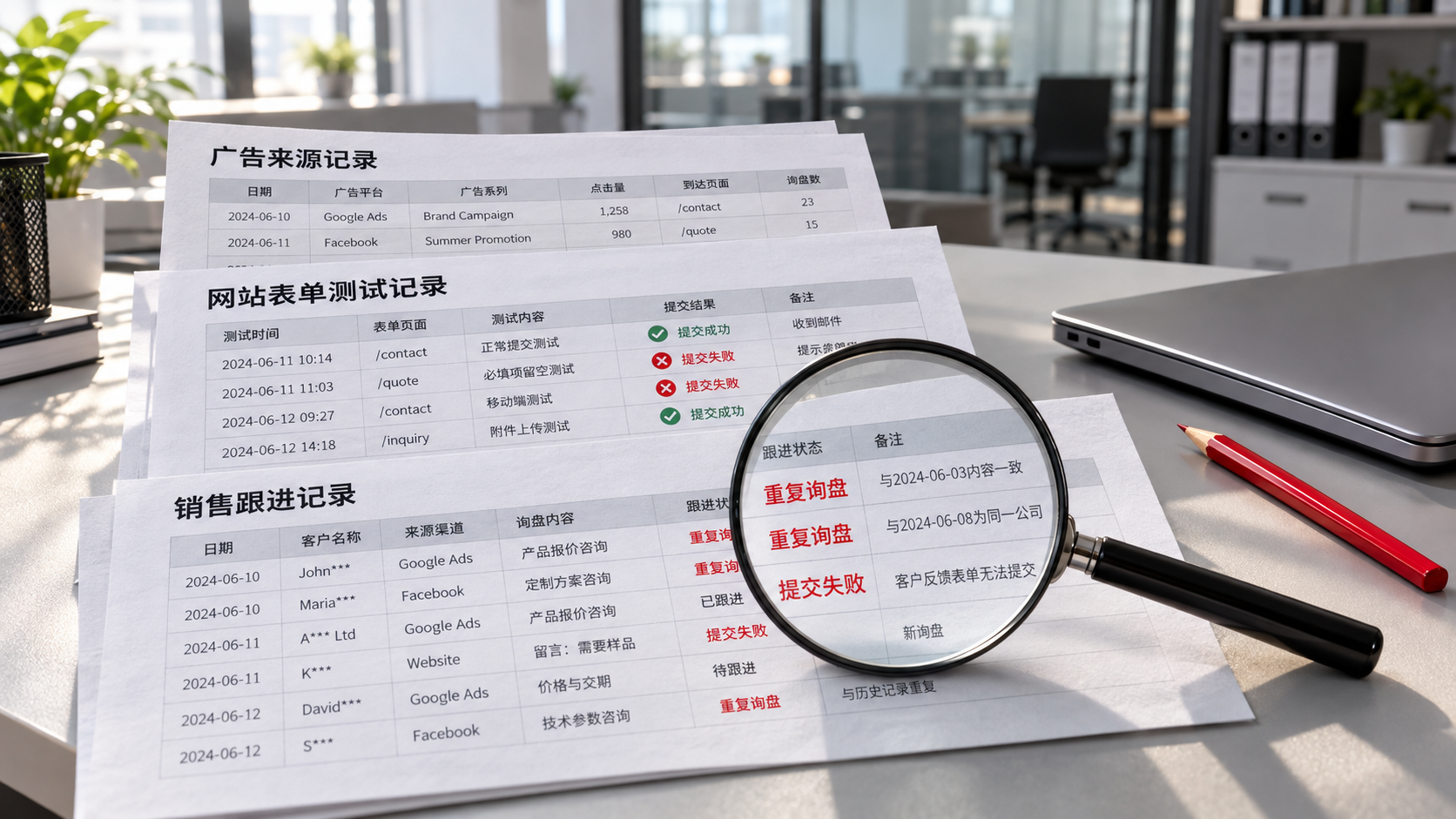
An advertising account should at least distinguish among three actions: submitting an inquiry, clicking WhatsApp or email, and downloading materials or visiting key pages. Without these basic conversion records, it will be difficult to determine later whether the issue lies with keywords, insufficient page persuasiveness, or the sales team failing to follow up on leads. For categories with high order values and long sales cycles, companies should not focus only on the number of form submissions. Spam inquiries, visits from irrelevant regions, and mismatched requirements should be progressively filtered through negative keywords, geographic settings, and form questions.
When are SEO and social media worth investing in early?
SEO is not a “free substitute” when advertising budgets are insufficient. It requires ongoing organization of product structures, addition of original content, management of multilingual page relationships, and observation of indexing and search-term changes. The situations truly suitable for prioritizing SEO are those in which a company can consistently provide product information, is willing to update core pages over the long term, and will not make major adjustments to its key product categories every few months. Otherwise, content optimized today may no longer match the product line tomorrow, resulting in higher maintenance costs.
Social media marketing likewise requires trade-offs. Products with strong visual appeal and easily demonstrated applications can build brand awareness through channels such as LinkedIn, Facebook, and short videos. Highly specialized industrial products, however, should not pursue engagement volume alone. Procurement professionals may not click “like,” but they may review a company’s profile and project content to assess supplier stability. Social media is better suited as a trust-building supplement, a remarketing touchpoint, or a content distribution channel, rather than being treated as the primary customer acquisition engine when clear content capabilities are lacking.
The value of integrated services lies in reducing waste between channels
When websites, advertising, and SEO are handled separately by different suppliers, common problems arise: the advertising provider says the pages do not convert, the website provider says the traffic is not precise, and the content provider cannot obtain search-term or inquiry feedback. For companies with limited budgets, this coordination loss is especially costly. A more practical approach is to center operations on website data, use advertising tests to inform keyword selection, use inquiry questions to improve product page content, and then turn effective content into SEO assets.
Yiyingbao Information Technology (Beijing) Co., Ltd. has provided digital marketing services for overseas markets since 2013. Its services cover AI-powered website development, multilingual websites, Google SEO, Google Ads, social media operations, and GEO generative engine optimization. For companies seeking to reduce switching between multiple systems, the significance of an integrated platform is not merely centralized functionality, but also the ability to configure websites, promotional pages, and data tracking along the same customer acquisition process. Specific investments should still be evaluated based on product complexity, target countries, team follow-up capabilities, and existing content foundations.
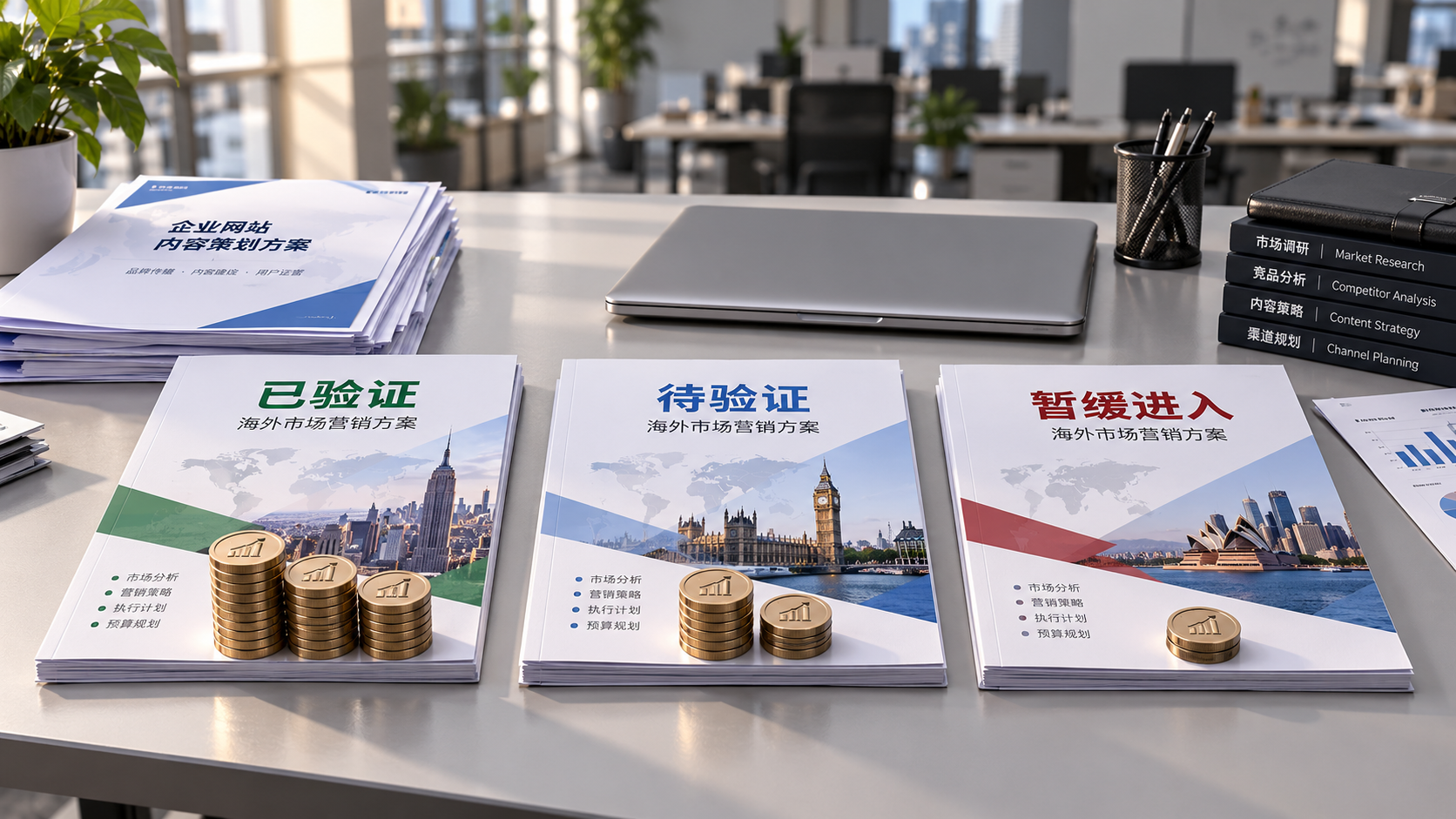
If only one order of priority can be given, it is generally this: first build a standalone website capable of handling inquiries, then use a small search advertising budget to validate the market, while implementing basic SEO for core pages. After confirming which products, countries, and search terms are truly effective, gradually increase investment in content, social media, and remarketing. Only by first spending every dollar on trackable and reviewable activities can a company be ready to discuss expanding its budget.
Related Articles
 How Can Digital Marketing Consulting Use Data Analytics to Identify Ineffective Ad Spend?
 How Should You Allocate a Global Digital Marketing Budget Across Target Markets?
 How Can Foreign Trade Companies Track Lead Sources with a Multilingual Marketing System?

Related Products
 Yiyingbao SaaS Intelligent Website Building and Marketing SystemYiyingbao SaaS Intelligent Website Building and Marketing System, AI-powered no-code website building, rapid creation of multilingual B2B international websites in 10 minutes, global server acceleration, AI-powered SEO optimization, helping businesses connect efficiently with global markets. The perfect integration of technology and operation makes building an international trade website remarkably simple
 AI+SEM Intelligent Advertising Marketing SystemAI+SEM drives intelligent ad creation, empowering full-funnel precision advertising marketing. The system automatically generates weekly/monthly reports, AI recommends keywords and target countries, monitors core metrics in real-time with intelligent alerts, and enables one-click high-conversion ad solutions to help quickly acquire customers and improve ROI.
 AI+SEO Dual-Engine System Optimization ServicesYiyingbao’s AI+SEO dual-engine optimization system helps foreign trade enterprises acquire high-quality organic traffic through AI-powered keyword research, content generation, and comprehensive technical optimization, significantly improving search rankings and conversion rates.
 AI+SNS Social Media Marketing SystemYingbao AI+SNS Social Media Marketing System - Precision social capture for the social media era. Supports one-click content synchronization across major platforms like Facebook and LinkedIn. AI intelligently rewrites posts for enhanced relevance. 24/7 AI customer service and user profiling analysis empower businesses to efficiently expand into global markets.
 AI+SEO营销解决方案易营宝AI+SEO营销解决方案,通过AI批量写作、智能生成TDK、精准关键词扩词等功能,全面优化网站SEO效果,提升流量与转化率。助力企业构建高效智能网站新生态。
 AI+SEM Advertising Marketing SolutionsAI+SEM Advertising Marketing Solution leverages AI technology to deeply empower SEM ad campaigns. It automatically generates weekly/monthly reports using AI, presenting account data across multiple dimensions for comprehensive insights into campaign performance and trends. The system precisely recommends keywords and target countries, intelligently generates high-conversion ad copy, and enables one-click activation of efficient campaign plans to help businesses rapidly acquire customers. Simultaneously, it monitors core metrics in real time, intelligently identifies abnormal fluctuations, and issues timely alerts to ensure stable, high-return advertising results.
 Domain Name ServicesEasyWin provides professional domain name services, including intelligent queries, one-stop registration, brand protection, and full lifecycle management, helping businesses build a digital brand image.
 EasyOperate B2C Cross-Border E-Commerce Platform & Independent WebsiteEasyStore B2C Cross-border E-commerce Independent Store is an intelligent website building and cross-border e-commerce integrated solution independently developed by EasyStore Information Technology (Beijing) Co., Ltd. The system is specially designed for small and medium-sized as well as large export enterprises, integrating 'website building, operation, marketing, advertising, and conversion' into one, helping enterprises quickly establish cross-border e-commerce independent stores to achieve brand globalization and global sales growth.
The platform supports multiple languages, multiple currencies, and multi-channel marketing, with built-in AI intelligent translation and SEO optimization systems, suitable for mainstream markets such as Southeast Asia, Europe and America, Latin America, and the Middle East, assisting Chinese manufacturing enterprises in efficiently deploying international e-commerce strategies. SSL证书易营宝提供专业SSL安全证书服务,包括单域名和泛域名证书,确保网站数据传输加密、身份验证和完整性保护,助力企业建立安全可信的在线业务环境。









