









- Amazon Reportedly Sends Exclusivity Warning Letters to Multiplatform SellersNov 03, 2026View details
- New TikTok Shop Cross-Border Returns Rules for Southeast Asia Take Effect on November 5Nov 03, 2026View details
- U.S. Tightens De Minimis Exemption Channel and Revises Section 321 Data PilotNov 03, 2026View details
- Amazon FBA Fuel and Logistics Surcharge in 10 European Countries to Increase to 2% on November 2Nov 02, 2026View details
- EU Customs Code reform to take effect on November 1, with new handling fees for direct-mail small parcelsNov 01, 2026View details
- EU Plans to Raise Tax on Incoming Small Parcels to €5Oct 31, 2026View details
Which Channel Should You Choose for Overseas Promotion of Cross-Border E-Commerce? First Assess Search Demand for Your Products
Which channel is most effective for promoting cross-border e-commerce overseas? The key is to assess search demand for your products, then choose channels based on your budget, target markets, and conversion cycle. If customers already know what they want to buy, search channels are often worth testing first. If they do not yet know what problem a product can solve, relying on search alone may not generate enough traffic.
When evaluating your options, consider reframing the question: What terms will target customers use to find the product? Can they buy as soon as they see the content? How long can the business afford to wait for a return? There is no universal ranking of channels; what matters is whether a channel fits your business right now.
Start by asking: Are customers actively searching, or do they need to be made aware?
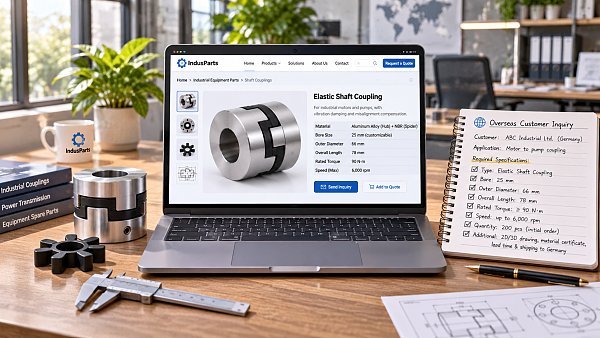
Customers are more likely to search proactively for products with a specific model, specification, application, or replacement need. For example, when looking for a particular equipment component, a purchasing manager might search directly for a model number, compatible equipment, or material requirements. Search ads can capture this type of demand, and it is also worth building organic search traffic around specific product pages.
However, search volume does not necessarily mean orders. Some terms are used to look up definitions, images, or repair instructions; others are closer to a purchase, such as searches that include supplier, quotation, wholesale, or specification requirements. The same applies to B2C products: someone searching for “how to clean” is at a different stage of the buying process from someone searching for a specific cleaning tool.
The situation is different for novel products, visually appealing products, or products that need to be demonstrated. Users may have a problem but not know what the product is called. In this case, short videos, social media content, or influencer demonstrations are better for explaining the use case. Once users become interested, search and your website can help those who want to learn more.
Another situation that is easy to misjudge: a search tool may show little demand, but the product may serve a specialized niche with infrequent purchases and high order values. Do not decide to give up based only on search volume. Consider the terms customers commonly use, industry directories, and the quality of actual inquiries. Conversely, a popular term with high search volume may be too broad and attract many irrelevant clicks.
Use search results to validate demand, not just keyword tools
Start by compiling product names, applications, model numbers, problem descriptions, and purchase-related terms, then research them in the target country and local language. Tools such as Google Ads Keyword Planner and Google Trends can help you explore related terms and trends, but estimates are not the same as the number of orders you can actually secure; results for low-volume keywords may also be limited.
A more useful next step is to check local search results and see what ranks at the top: online stores, procurement platforms, brand websites, or tutorials and reviews. If the top results are mainly retail product pages, while your business only offers large-volume customization, the term may be relevant but still not match customer intent. Search results can also vary by region, language, and query date. Keep a record of your search conditions during evaluation, and do not draw conclusions from a single search.
Pay particular attention to local terminology when entering multiple markets. The same product may be called by different names in different regions. Even if a translated term is grammatically correct, it may not be the expression local customers commonly use when buying. Compare competitors’ product pages, customer inquiries, and on-site search records, then ask someone familiar with the local market to verify the terms.
How to choose channels: consider both demand and how customers buy
Search ads are suitable for validating clear demand, but you need to control the scope of your traffic. For products with established purchase-related search terms, test the market with a small set of highly relevant keywords, and review actual search terms to exclude mismatched queries about jobs, tutorials, second-hand products, and other irrelevant needs. After ads generate clicks, check whether the inquiries or orders are qualified. Cheap clicks still cost you if users are looking for something you do not sell.
SEO is better suited to businesses that can maintain content and pages over the long term. Product specifications, use cases, selection questions, and delivery information can all serve as entry points from organic search. But publishing a few articles is not enough: pages need to be crawlable, information must be accurate and complete, and the content must match search intent in the target market. The time it takes to see results depends on factors such as competition and the website’s existing foundations, so a fixed timeline should not be promised.
Social media ads and short videos are suitable for showcasing products, but may not lead to immediate sales. Consumer products can be presented through before-and-after comparisons, size, and authentic demonstrations. For professional equipment, it is more suitable to show the process, application environment, and key specifications. High engagement on social media does not necessarily indicate strong purchase intent. For B2B businesses in particular, the company, application, and purchasing stage provided in a form are more useful indicators than likes.
Marketplace channels are also worth considering. Standardized products with established demand can be tested on cross-border platforms for pricing, customer feedback, and fulfillment capabilities. An independent website makes it easier to build a lasting brand presence and capture traffic from multiple channels, but you will need to plan traffic acquisition, payments, logistics, and after-sales service yourself. The two approaches are not mutually exclusive. The key is to calculate the actual margin remaining after platform fees, promotional spending, and fulfillment costs.
With a limited budget, start by calculating an affordable customer acquisition cost
Do not treat your entire promotional budget as ad spend. Content production, landing pages, multilingual content, data tracking, and follow-up can also consume resources. For B2C sellers, subtract related costs such as shipping, payment processing, and returns from the gross margin on each order to determine how much can be allocated to customer acquisition. For products with repeat purchases, assess carefully whether repeat business can cover the cost of acquiring the first order.
For B2B, evaluate the entire funnel: “click— inquiry—qualified opportunity—sale.” A low-cost inquiry that lacks purchasing authority, does not match your offering, or cannot be contacted should not be treated as a qualified opportunity. For high-value projects with long decision-making cycles, short-term order numbers alone are not enough to rule out a channel. However, if you continue to receive large numbers of irrelevant inquiries, review your keywords, targeting, and landing-page claims.
During the test period, focus on a small number of target markets and a clearly defined product range. Set a budget limit, evaluation period, and stopping criteria in advance. When there is not enough data, do not declare a winner based on a few clicks or one or two inquiries. If tracking is not working, inventory is insufficient, or the delivery scope does not match what was promised, fix the issue before comparing channels.
Whether your website can convert visitors determines how reliable your promotion results are
Choosing the right channel will still waste budget if the landing page is not right. Users searching for a specific model should be taken directly to its specifications, compatibility information, and inquiry form. Users drawn in by a social media video may need to see use cases, demonstrations, and answers to common questions first. B2C pages should also make information on shipping costs, payment methods, delivery areas, and returns easy to find.
When evaluating website and marketing services, confirm who is responsible for page updates, review of multilingual content, conversion event setup, and lead handover, as well as who owns the ad accounts, website domain, and data. 易营宝 provides services including intelligent website building, multilingual websites, SEO, and advertising, and can be evaluated as an integrated solution. You should still verify the scope of services, deliverables, fees, and account permissions; bundling website development and advertising does not guarantee results.
When you are ready to get started, choose a market and product with relatively clear demand, check local search terms and search results, and run a small-scale test with a page designed to meet that demand. Once you have confirmed traffic quality, follow-up capabilities, and unit economics, decide whether to increase your search investment or add social media content to build demand.
Related Articles
 Which Channel Should You Choose for Overseas Promotion of Cross-Border E-Commerce? First Assess Search Demand for Your Products
 Indonesian E-commerce Platforms Plan to Withhold 0.5% Income Tax Starting in November
 Protocol Upgrading the China–Peru Free Trade Agreement Enters into Force, Adding Digital Trade and Supply Chain Topics


Related Products
 Yiyingbao SaaS Intelligent Website Building and Marketing SystemYiyingbao SaaS Intelligent Website Building and Marketing System, AI-powered no-code website building, rapid creation of multilingual B2B international websites in 10 minutes, global server acceleration, AI-powered SEO optimization, helping businesses connect efficiently with global markets. The perfect integration of technology and operation makes building an international trade website remarkably simple
 AI+SEM Intelligent Advertising Marketing SystemAI+SEM drives intelligent ad creation, empowering full-funnel precision advertising marketing. The system automatically generates weekly/monthly reports, AI recommends keywords and target countries, monitors core metrics in real-time with intelligent alerts, and enables one-click high-conversion ad solutions to help quickly acquire customers and improve ROI.
 AI+SEO Dual-Engine System Optimization ServicesYiyingbao’s AI+SEO dual-engine optimization system helps foreign trade enterprises acquire high-quality organic traffic through AI-powered keyword research, content generation, and comprehensive technical optimization, significantly improving search rankings and conversion rates.
 AI+SNS Social Media Marketing SystemYingbao AI+SNS Social Media Marketing System - Precision social capture for the social media era. Supports one-click content synchronization across major platforms like Facebook and LinkedIn. AI intelligently rewrites posts for enhanced relevance. 24/7 AI customer service and user profiling analysis empower businesses to efficiently expand into global markets.
 AI+SEO营销解决方案易营宝AI+SEO营销解决方案,通过AI批量写作、智能生成TDK、精准关键词扩词等功能,全面优化网站SEO效果,提升流量与转化率。助力企业构建高效智能网站新生态。
 AI+SEM Advertising Marketing SolutionsAI+SEM Advertising Marketing Solution leverages AI technology to deeply empower SEM ad campaigns. It automatically generates weekly/monthly reports using AI, presenting account data across multiple dimensions for comprehensive insights into campaign performance and trends. The system precisely recommends keywords and target countries, intelligently generates high-conversion ad copy, and enables one-click activation of efficient campaign plans to help businesses rapidly acquire customers. Simultaneously, it monitors core metrics in real time, intelligently identifies abnormal fluctuations, and issues timely alerts to ensure stable, high-return advertising results.
 Domain Name ServicesEasyWin provides professional domain name services, including intelligent queries, one-stop registration, brand protection, and full lifecycle management, helping businesses build a digital brand image.
 EasyOperate B2C Cross-Border E-Commerce Platform & Independent WebsiteEasyStore B2C Cross-border E-commerce Independent Store is an intelligent website building and cross-border e-commerce integrated solution independently developed by EasyStore Information Technology (Beijing) Co., Ltd. The system is specially designed for small and medium-sized as well as large export enterprises, integrating 'website building, operation, marketing, advertising, and conversion' into one, helping enterprises quickly establish cross-border e-commerce independent stores to achieve brand globalization and global sales growth.
The platform supports multiple languages, multiple currencies, and multi-channel marketing, with built-in AI intelligent translation and SEO optimization systems, suitable for mainstream markets such as Southeast Asia, Europe and America, Latin America, and the Middle East, assisting Chinese manufacturing enterprises in efficiently deploying international e-commerce strategies. SSL证书易营宝提供专业SSL安全证书服务,包括单域名和泛域名证书,确保网站数据传输加密、身份验证和完整性保护,助力企业建立安全可信的在线业务环境。









