









- Is the EV SSL certificate market shrinking or upgrading? How should companies assess certificate procurement?Aug 11, 2026View details
- Why the old AMP SEO 2020 practices no longer work and what has changed in current optimization prioritiesAug 02, 2026View details
- How to Choose Topics for an Industry News Section to Attract More Organic Search TrafficJul 29, 2026View details
- Digital Marketing Shenzhen Market Insights: Why Are Companies Expanding Overseas Looking for Growth Teams in Shenzhen?Jul 31, 2026View details
- Can Zhejiang foreign trade independent websites still be developed today? Look at changes in traffic and lead generationJul 28, 2026View details
- What New Signals Are Emerging in Enterprise Services SaaS Marketing ReportsJul 27, 2026View details
- What Does a Global Traffic Ecosystem Service Provider Do? What Are the Differences from a Single Advertising AgencyJul 16, 2026View details
- What should you focus on in the latest enterprise SaaS report? From renewal rates and delivery costs to overseas growth opportunitiesJul 12, 2026View details
Which stages before building an in-house team are suitable for digital marketing consulting and social media management?
Internet marketing consulting and social media operations are best suited to the stage when the internal growth system has not yet been fully established, but the business has already begun to require a stable flow of leads. At this stage, the common situation is not that “no one is doing marketing,” but that content, advertising, the website, private-domain operations, and lead follow-up are all handled separately, without unified standards. As a result, the same piece of content may perform very differently across different channels. Having a professional team handle social media operations first is usually more stable than rushing to build an in-house team, because account positioning, content cadence, creative specifications, and conversion paths all need to be tested and established before expanding the team.
What really needs to be assessed is not “whether to do social media,” but whether the business currently has the foundation for continuous testing and iteration. If the product value proposition is not yet clear, the website landing page is still being revised frequently, and the quotation logic, inquiry form, and lead submission path have not been finalized, an in-house team can easily become trapped in repeated rework. At this point, it is more suitable to start with internet marketing consulting and social media operations, turning the account persona, content themes, visual guidelines, and lead handoff process into executable templates before gradually transferring them to the internal team.
This approach is especially common in the early stages of taking a brand global. Many companies have a corporate website or independent site first and then begin social media marketing, but the page content, language, regional terminology, and product specifications often fail to match. For example, for the same equipment product, social media content may emphasize usage scenarios, while the website only lists technical terms. The content side may use thumbnail images, while the landing page lacks clear specification tables and installation requirements, making it difficult for visitors to determine whether the product is suitable. These issues are often difficult to correct by hastily assembling a team. It is more practical to first have external consultants and operations specialists organize the information architecture.
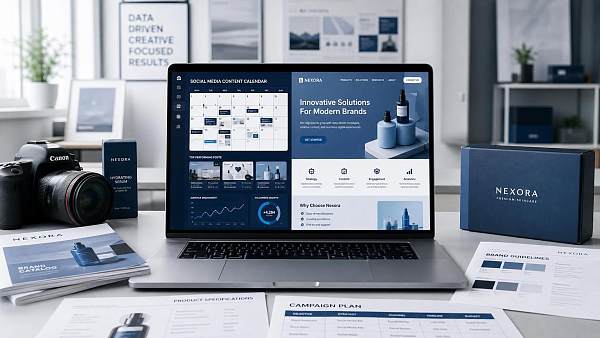
There is another stage when external involvement is appropriate: the business already has leads, but the quality of their sources is unstable and the channels interfere with one another. If the content used in advertising, social media, search, and email is inconsistent, leads will receive repeated or conflicting explanations through different entry points, while the sales team will find it difficult to determine whether the problem lies with the creative, the audience, or the website handoff. The value of internet marketing consulting and social media operations often lies in connecting these stages: first clarifying which content is responsible for reaching audiences, which content is responsible for screening them, and which content is responsible for guiding them to the website or an inquiry form.
From an execution perspective, social media operations are not simply about publishing posts. They must take into account image dimensions, video covers, subtitle density, above-the-fold information, comment-section guidance, and message response times, while also maintaining consistency with the website content. This is particularly important for foreign-trade content: if a product involves materials, processing methods, packaging methods, shipping volume, installation requirements, or maintenance cycles, social media content cannot focus only on general concepts. These details must be broken down into expressions that can be quickly understood. For example, sheet products should distinguish between thickness, tolerance, surface treatment, and moisture-proof conditions; machinery products should specify voltage, interfaces, floor space, commissioning steps, and spare-parts arrangements. The more vague the information, the more difficult it will be to achieve conversions at the later stages.
Before building an in-house team, the accumulation of content assets is the factor most likely to be underestimated. Many teams initially focus only on “what was published” and overlook “which content can be reused.” More mature social media operations separate industry terms, product terms, application terms, problem-related terms, and comparison terms: the first category is suitable for building awareness, the middle two are suitable for explaining specifications, and the latter two are suitable for generating inquiries. Once this content forms a consistent structure across website detail pages, social media profiles, short-video scripts, and landing pages, the internal team can take over with much higher efficiency.
If procurement, transportation, installation, or after-sales requirements are inherently complex, it is usually more appropriate to start with consulting before building an in-house team. Once such information is expressed incompletely at the front end, it will not only affect lead quality but also increase communication costs. For example, some products need to specify whether bulk packaging, palletized packaging, or full-container shipment is supported, whether wooden-crate reinforcement is required, and whether on-site lifting or professional commissioning is needed. If social media content only discusses selling points without explaining constraints, it will often attract not more precise inquiries but more invalid consultations.
The stages suitable for external involvement usually share another feature: internal staff are already becoming stretched, but stable role allocation has not yet been established. One person handles content, another handles advertising, another handles the website, and another handles sales. On the surface, the division of labor appears complete, but in reality, no one is responsible for the entire process. At this point, connecting internet marketing consulting and social media operations, and then linking website content, consulting forms, tagging categories, and follow-up rules, makes it easier to put each action into practice than directly hiring new employees. Once the content library, column framework, account cadence, and lead handoff process have stabilized, it will be clearer which parts should be brought back in-house and which should remain outsourced.
There are also stages when building an in-house team immediately is not advisable—for example, when the product line is still being adjusted, the audience has not yet been clearly segmented, the languages of the main markets have not been determined, or the after-sales response mechanism has not been unified. Before these conditions stabilize, it is difficult for an internal team to maintain continuous output, and time is easily consumed by coordination and trial and error. It is a more prudent approach to first validate the process through consulting and social media operations, and then gradually transition to an internal team once account positioning, website content, inquiry quality, and sales feedback can be matched with one another.
For businesses that already have an independent site or multilingual website, social media operations must also examine whether the on-site structure can effectively receive the traffic. Does the page include clear specification sections, scenario images, FAQ-style explanations, and a downloadable materials入口? Can it load quickly on mobile devices? Are there problems such as excessive image compression, overly long forms, or too many redirects? All of these factors directly affect whether visitors brought in by social media can continue moving through the conversion process. This is precisely where the integrated website and marketing services approach is important: it is neither about producing content separately nor building a website separately, but about ensuring that content, pages, and lead handoff operate within the same logic.
Once these conditions are gradually in place, building an in-house team becomes more meaningful. At that point, the team will not be starting from zero, but taking over a set of validated content rules, page structures, and operating rhythms, allowing it to avoid many unnecessary detours.
Related Articles
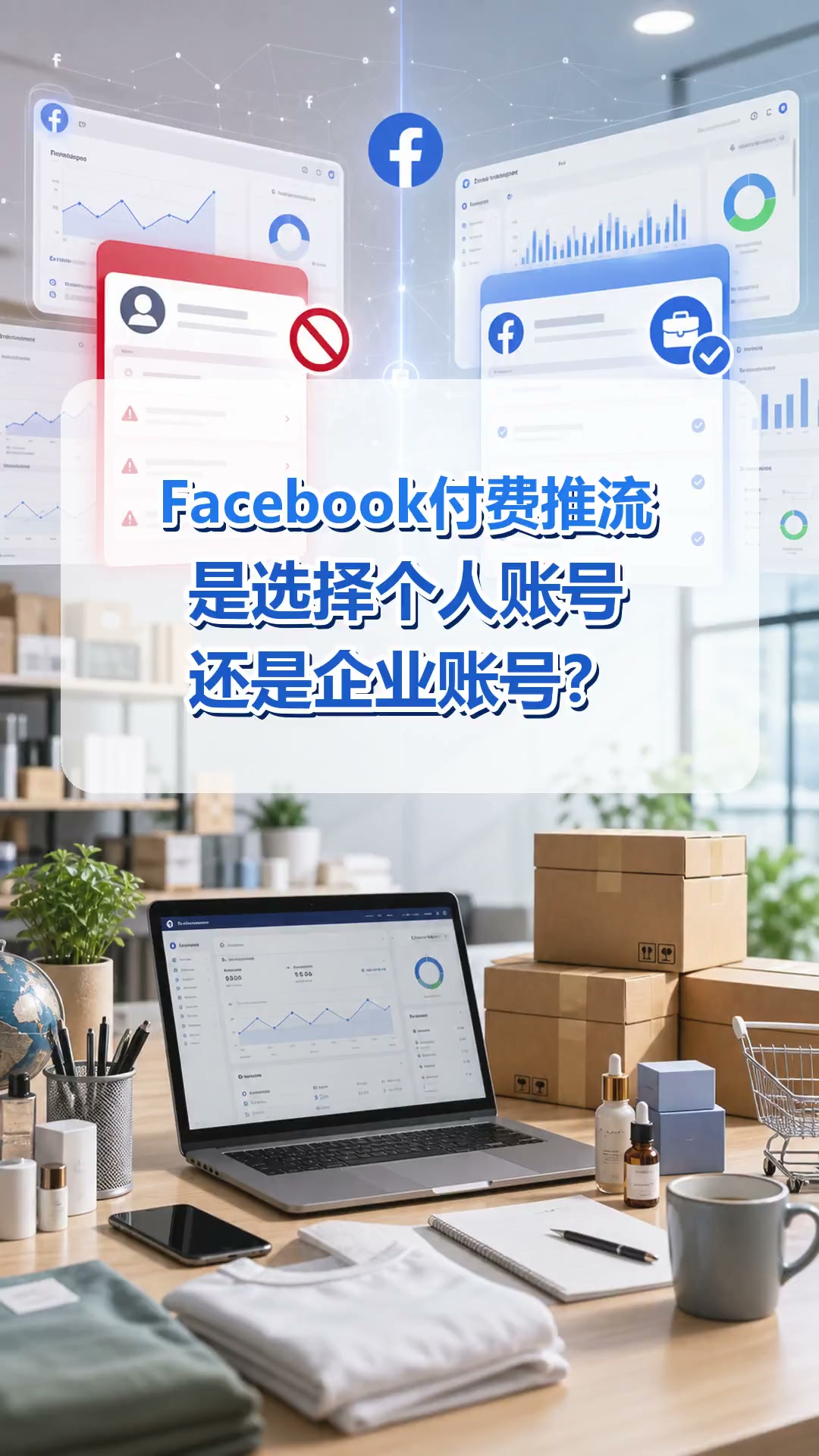
 Should you choose a personal account or a business account for Facebook paid promotion?
 No More Writing Product Copy by Hand? Yiyingbao AI Direct + 12 Major Components Deliver a Game-Changing Edge for Overseas Trade Website Building!
![]() Google Bidding Changes Dramatically on 8.17! Your Customer Acquisition Costs Are About to Rise – Part 2
Google Bidding Changes Dramatically on 8.17! Your Customer Acquisition Costs Are About to Rise – Part 2


Related Products
 Yiyingbao SaaS Intelligent Website Building and Marketing SystemYiyingbao SaaS Intelligent Website Building and Marketing System, AI-powered no-code website building, rapid creation of multilingual B2B international websites in 10 minutes, global server acceleration, AI-powered SEO optimization, helping businesses connect efficiently with global markets. The perfect integration of technology and operation makes building an international trade website remarkably simple
 AI+SEM Intelligent Advertising Marketing SystemAI+SEM drives intelligent ad creation, empowering full-funnel precision advertising marketing. The system automatically generates weekly/monthly reports, AI recommends keywords and target countries, monitors core metrics in real-time with intelligent alerts, and enables one-click high-conversion ad solutions to help quickly acquire customers and improve ROI.
 AI+SEO Dual-Engine System Optimization ServicesYiyingbao’s AI+SEO dual-engine optimization system helps foreign trade enterprises acquire high-quality organic traffic through AI-powered keyword research, content generation, and comprehensive technical optimization, significantly improving search rankings and conversion rates.
 AI+SNS Social Media Marketing SystemYingbao AI+SNS Social Media Marketing System - Precision social capture for the social media era. Supports one-click content synchronization across major platforms like Facebook and LinkedIn. AI intelligently rewrites posts for enhanced relevance. 24/7 AI customer service and user profiling analysis empower businesses to efficiently expand into global markets.
 AI+SEO营销解决方案易营宝AI+SEO营销解决方案,通过AI批量写作、智能生成TDK、精准关键词扩词等功能,全面优化网站SEO效果,提升流量与转化率。助力企业构建高效智能网站新生态。
 AI+SEM Advertising Marketing SolutionsAI+SEM Advertising Marketing Solution leverages AI technology to deeply empower SEM ad campaigns. It automatically generates weekly/monthly reports using AI, presenting account data across multiple dimensions for comprehensive insights into campaign performance and trends. The system precisely recommends keywords and target countries, intelligently generates high-conversion ad copy, and enables one-click activation of efficient campaign plans to help businesses rapidly acquire customers. Simultaneously, it monitors core metrics in real time, intelligently identifies abnormal fluctuations, and issues timely alerts to ensure stable, high-return advertising results.
 Domain Name ServicesEasyWin provides professional domain name services, including intelligent queries, one-stop registration, brand protection, and full lifecycle management, helping businesses build a digital brand image.
 EasyOperate B2C Cross-Border E-Commerce Platform & Independent WebsiteEasyStore B2C Cross-border E-commerce Independent Store is an intelligent website building and cross-border e-commerce integrated solution independently developed by EasyStore Information Technology (Beijing) Co., Ltd. The system is specially designed for small and medium-sized as well as large export enterprises, integrating 'website building, operation, marketing, advertising, and conversion' into one, helping enterprises quickly establish cross-border e-commerce independent stores to achieve brand globalization and global sales growth.
The platform supports multiple languages, multiple currencies, and multi-channel marketing, with built-in AI intelligent translation and SEO optimization systems, suitable for mainstream markets such as Southeast Asia, Europe and America, Latin America, and the Middle East, assisting Chinese manufacturing enterprises in efficiently deploying international e-commerce strategies. SSL证书易营宝提供专业SSL安全证书服务,包括单域名和泛域名证书,确保网站数据传输加密、身份验证和完整性保护,助力企业建立安全可信的在线业务环境。









