









- AI Products Drive Hong Kong Exports Up 64.9% in September, Fastest Growth in Over 40 YearsNov 17, 2026View details
- National Bureau of Statistics: Foreign trade grew rapidly in October, providing stable support for global tradeNov 17, 2026View details
- The U.S. has ended the $800 de minimis exemption for non-postal shipments; express courier packages must be formally declared.Nov 16, 2026View details
- ASEAN Signs Digital Economy Framework Agreement, Moving Toward Harmonized Cross-Border E-Commerce RulesNov 15, 2026View details
- Shenzhen Becomes the First City in Mainland China to Exceed RMB 5 Trillion in Foreign TradeNov 15, 2026View details
- Fujian Announces the First Batch of Provincial-Level Cross-Border E-Commerce Industrial Parks and Key Brands for CultivationNov 14, 2026View details
How should you choose which markets to enter first for global growth?
When choosing the first market for global expansion, prioritize markets where demand is accessible, your company can deliver, and results can be verified after investment. A large market is an advantage, but only one factor: if customer acquisition costs are too high, the product requires major modifications, or you cannot fulfill orders once they come in, strong demand alone may not make it a suitable first market.
When making a decision, first rule out markets that are clearly inaccessible, then compare the demand, competition, and investment required in the remaining markets. Select a small number of candidates for validation. This helps you avoid choosing markets based on impressions and prevents you from targeting multiple regions with your website and ads at the same time, only to be left unsure where the problem lies.
Assess Market Entry Requirements Before Comparing Market Attractiveness
Before researching search volume and advertising costs, confirm that you can sell, deliver, and provide ongoing service for your products. Depending on the product, requirements may involve market access, intellectual property, labeling, and data processing. Cross-border e-commerce stores also need to consider payment, shipping, returns, and after-sales service. For specialized equipment or industrial products, consider whether you can provide installation, training, spare parts, and technical support in the target region.
You do not need to resolve all these requirements at the start of your research, but you should estimate the time and cost involved and determine whether your company can manage them. Even if demand in a market is clear, if you cannot currently meet the necessary compliance or delivery requirements, it is better to put that market on your future plans rather than try to enter it through marketing spend.
After the initial screening, compare the candidate markets. Evaluate individual countries or regions rather than treating markets with similar languages or nearby locations as one and the same. Purchasing habits, competitors, and fulfillment requirements can all differ.

Rank Candidate Markets Using Four Groups of Questions
Does demand match your products? Search demand, purchasing information on industry platforms, competitors’ product pages, and the sources of your existing inquiries can all provide useful clues. Don’t look only at the search popularity of broad terms. Consider whether users are searching for products to buy, repairs, tutorials, or low-priced retail options. For example, industrial equipment companies should focus on searches related to specifications, applications, and suppliers—not just the number of views for product names.
Can customers find and understand your products? Demand does not necessarily mean that customer acquisition will be easy. B2B companies can look at whether target customers use search engines to find suppliers and whether they need to download specifications, request quotes, or arrange technical discussions. Consumer brands should understand whether their target users are more likely to discover products through search, social content, or advertising. Website language, messaging, and contact options should match customers’ decision-making habits.
Is the competition too strong for your current resources? Review local brands, industry platforms, and advertisers in search results, and see what products they offer, how they position their prices, and what services they promise. If the first page is consistently dominated by major platforms, a new entrant may not be suited to starting with the broadest core terms. Instead, you could create pages around niche applications, specific specifications, or differentiated services. Little competition does not necessarily indicate a good opportunity; it may also mean demand is limited or that customers mainly buy through other channels.
Can the returns from orders cover the investment? In addition to advertising and website development costs, calculate expenses for translation, content creation, sales follow-up, logistics, after-sales service, and any necessary product modifications. B2B businesses should consider customer acquisition costs alongside potential order value and sales cycle length. Cross-border e-commerce stores should include product margins, shipping, and return costs in their calculations. Use the same cost basis when comparing markets so that your conclusions are meaningful.
You can score each market across these dimensions, but treat the scores only as a tool for discussion. Factors such as delivery capability and market access requirements are better treated as thresholds: a high score for market size or search interest should not offset an issue that cannot be resolved.
Why Might Companies Choose Different First Markets Despite Similar Demand?
Suppose a manufacturer is comparing two markets. Market A has greater industry search demand, but customers generally need local installation and lengthy technical discussions. Market B has less demand, but clear purchasing needs for standardized products, and the existing team can handle inquiries and arrange delivery. With a limited budget and no overseas service network in place, Market B may be a better first choice.
If the company already has a reliable service partner in Market A and can provide installation and after-sales support, the ranking may change. Conversely, if customers in Market B mainly buy through offline channels and the company lacks local sales resources, search interest alone may not justify prioritizing entry into that market.
The considerations for a brand’s own e-commerce site are somewhat different. Even if advertising can bring in visitors, traffic is unlikely to convert into orders if local consumers’ preferred payment methods are unavailable or shipping times and return experiences are uncompetitive. When choosing a market, assess marketing capabilities and the transaction experience together.
Validate on a Small Scale Before Increasing Investment
After identifying priority candidate markets, you do not need to immediately build a multilingual website covering your entire product range. Select a group of products or applications that best match the target market, prepare landing pages in the relevant language, and explain product uses, specifications, delivery scope, and contact options. Then seek initial feedback through search content, advertising, or social channels.
Before validation, decide what to monitor and what results would justify further investment. For example, B2B companies can track qualified inquiries from the target region, customer industries, purchasing needs, and subsequent communications. E-commerce stores can monitor whether visitors from the target region view product pages, start checkout, and complete purchases. Reviewing these results alongside investment provides more insight than looking at clicks alone.
You should also distinguish traffic problems from conversion problems. A lack of visits may indicate insufficient channel coverage or poorly selected keywords. Visits without inquiries may point to product-market fit, page content, or the contact process. If inquiries are plentiful but few turn into sales, review lead quality, pricing, sales responsiveness, and delivery requirements. SEO content usually takes time to build up. Short-term advertising feedback can help identify a direction, but it cannot by itself represent long-term organic search performance.
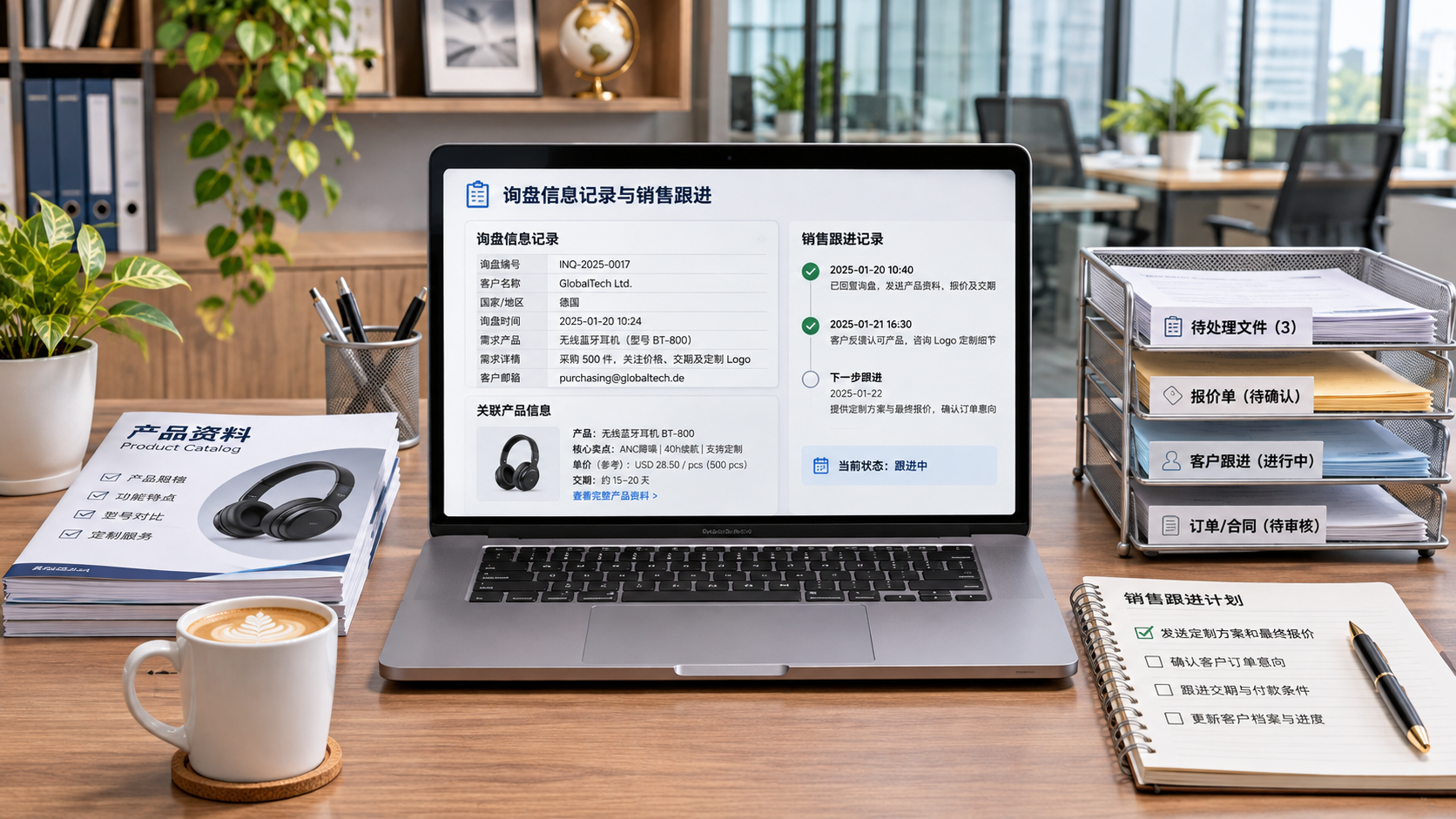
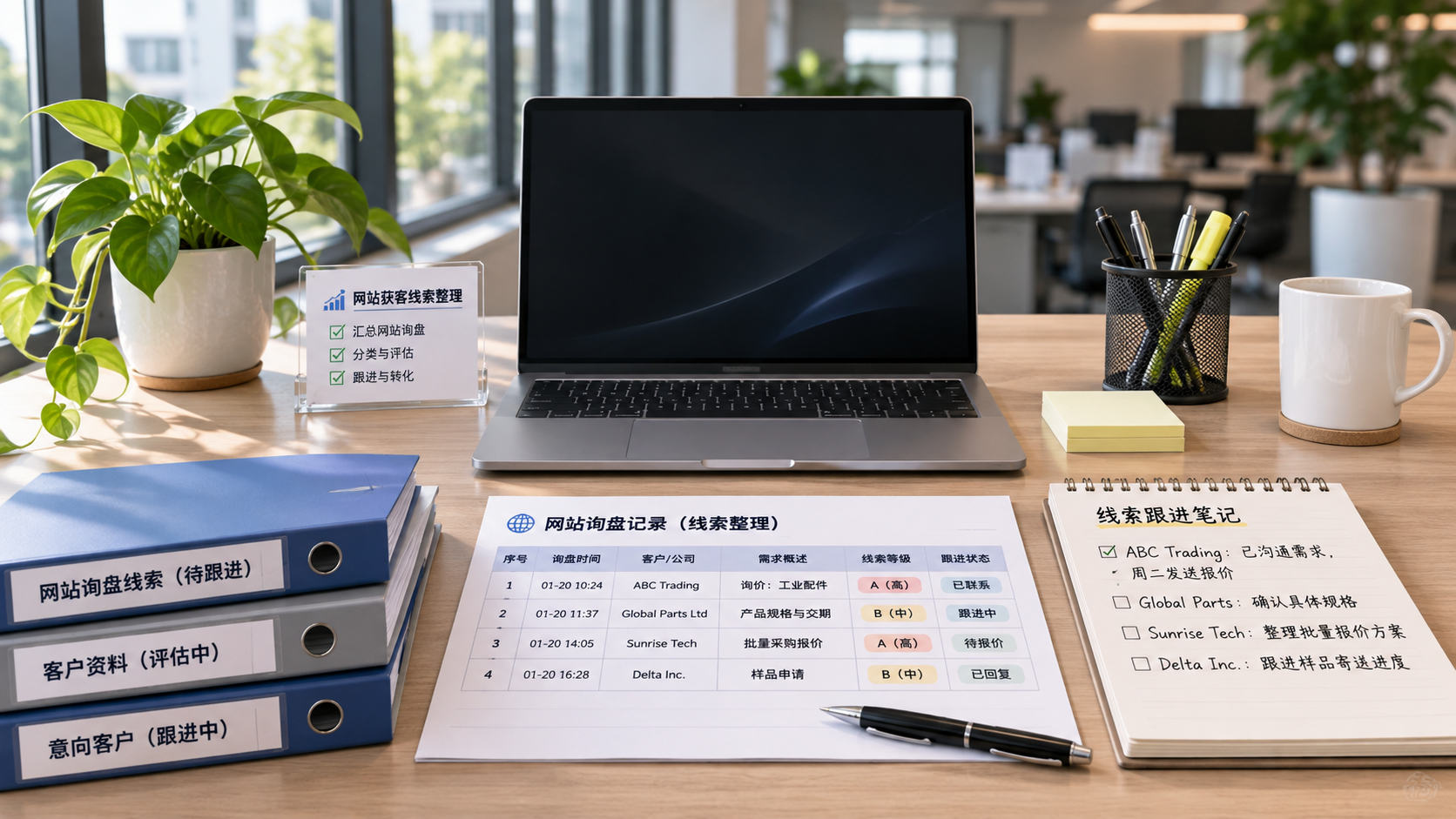
Make sure your sales and customer service teams have the capacity to handle inquiries during the validation period. If inquiries are not followed up promptly or customer locations and needs are not recorded, it will be difficult to assess the market’s potential. At the end of the test, use qualified customer feedback and customer acquisition costs to decide whether to expand, adjust, or pause your efforts.
How to Align Your Website and Marketing Resources with Market Selection
Once you have selected a priority market, your website should do more than translate content. Product pages need to answer questions that matter to local customers: B2B buyers may need specifications, application information, and inquiry forms, while cross-border consumers are more concerned with pricing, shipping, payment, and return policies. Ads and social content should also direct users to pages that match their promises, so visitors can find the information they need after clicking.
Companies without an overseas digital marketing team can consider coordinating website development, search optimization, and channel promotion. For example, 易营宝 offers multilingual website development, SEO, and overseas advertising services and can be considered when building a customer acquisition infrastructure. When choosing a service provider, take the target market, internal follow-up capabilities, and budget into account, and clarify who will be responsible for content, advertising, lead tracking, and ongoing optimization.
Before expanding into the next market, review whether your current market has developed a sustainable customer acquisition and delivery process: where customers come from, which needs you can convert into sales, and how many resources each stage requires. Once you can answer these questions, replicating the approach in markets with similar conditions is usually easier to manage than launching pages in multiple languages at the same time.
Related Articles
 Fujian Releases White Paper on Talent Shortages in Cross-Border E-Commerce, Focusing on Industry Talent Challenges
 What Features Should an Inquiry Form on a B2B Export Website Support?
 How Should Customer Conversion Performance Be Measured on a B2B Standalone Website?

Related Products
 Yiyingbao SaaS Intelligent Website Building and Marketing SystemYiyingbao SaaS Intelligent Website Building and Marketing System, AI-powered no-code website building, rapid creation of multilingual B2B international websites in 10 minutes, global server acceleration, AI-powered SEO optimization, helping businesses connect efficiently with global markets. The perfect integration of technology and operation makes building an international trade website remarkably simple
 AI+SEM Intelligent Advertising Marketing SystemAI+SEM drives intelligent ad creation, empowering full-funnel precision advertising marketing. The system automatically generates weekly/monthly reports, AI recommends keywords and target countries, monitors core metrics in real-time with intelligent alerts, and enables one-click high-conversion ad solutions to help quickly acquire customers and improve ROI.
 AI+SEO Dual-Engine System Optimization ServicesYiyingbao’s AI+SEO dual-engine optimization system helps foreign trade enterprises acquire high-quality organic traffic through AI-powered keyword research, content generation, and comprehensive technical optimization, significantly improving search rankings and conversion rates.
 AI+SNS Social Media Marketing SystemYingbao AI+SNS Social Media Marketing System - Precision social capture for the social media era. Supports one-click content synchronization across major platforms like Facebook and LinkedIn. AI intelligently rewrites posts for enhanced relevance. 24/7 AI customer service and user profiling analysis empower businesses to efficiently expand into global markets.
 AI+SEO营销解决方案易营宝AI+SEO营销解决方案,通过AI批量写作、智能生成TDK、精准关键词扩词等功能,全面优化网站SEO效果,提升流量与转化率。助力企业构建高效智能网站新生态。
 AI+SEM Advertising Marketing SolutionsAI+SEM Advertising Marketing Solution leverages AI technology to deeply empower SEM ad campaigns. It automatically generates weekly/monthly reports using AI, presenting account data across multiple dimensions for comprehensive insights into campaign performance and trends. The system precisely recommends keywords and target countries, intelligently generates high-conversion ad copy, and enables one-click activation of efficient campaign plans to help businesses rapidly acquire customers. Simultaneously, it monitors core metrics in real time, intelligently identifies abnormal fluctuations, and issues timely alerts to ensure stable, high-return advertising results.
 Domain Name ServicesEasyWin provides professional domain name services, including intelligent queries, one-stop registration, brand protection, and full lifecycle management, helping businesses build a digital brand image.
 EasyOperate B2C Cross-Border E-Commerce Platform & Independent WebsiteEasyStore B2C Cross-border E-commerce Independent Store is an intelligent website building and cross-border e-commerce integrated solution independently developed by EasyStore Information Technology (Beijing) Co., Ltd. The system is specially designed for small and medium-sized as well as large export enterprises, integrating 'website building, operation, marketing, advertising, and conversion' into one, helping enterprises quickly establish cross-border e-commerce independent stores to achieve brand globalization and global sales growth.
The platform supports multiple languages, multiple currencies, and multi-channel marketing, with built-in AI intelligent translation and SEO optimization systems, suitable for mainstream markets such as Southeast Asia, Europe and America, Latin America, and the Middle East, assisting Chinese manufacturing enterprises in efficiently deploying international e-commerce strategies. SSL证书易营宝提供专业SSL安全证书服务,包括单域名和泛域名证书,确保网站数据传输加密、身份验证和完整性保护,助力企业建立安全可信的在线业务环境。









