









- Fujian Announces the First Batch of Provincial-Level Cross-Border E-Commerce Industrial Parks and Key Brands for CultivationNov 14, 2026View details
- Amazon Global Store Announces the Launch of the 2026 Black Friday Global Shopping SeasonNov 14, 2026View details
- CCTV.com Examines APEC’s Role in China’s Foreign TradeNov 12, 2026View details
- China’s Tariff Commission of the State Council Adjusts Additional Tariffs on U.S. Goods: 24% Tariff Suspended for Two MonthsNov 10, 2026View details
- APEC Shenzhen Spotlight: Cross-Border E-Commerce Orders Promote Asia-Pacific Trade and Economic CooperationNov 08, 2026View details
- China-Europe Railway Express and CIIE Hold Business Matchmaking Event, Focusing on Cross-Border E-commerce B2B ExportsNov 07, 2026View details
How Should You Evaluate Successful Multilingual Website Projects for International Trade?
What are some successful examples of multilingual website development for export businesses? Project leads should evaluate localization, search performance, and inquiry conversion to inform project decisions. A case is successful if it can generate a sustainable stream of qualified business opportunities in the target market—not merely because a website has launched or offers a certain number of language versions.
When evaluating a case, first confirm the company’s customer types, sales cycle, and target markets, then verify the investment, changes in performance data after launch, and the metrics used. If a service provider cannot explain where the data came from, or the case differs significantly from your business, do not treat the results presented as a project guarantee.
First, check whether the case is similar to your project
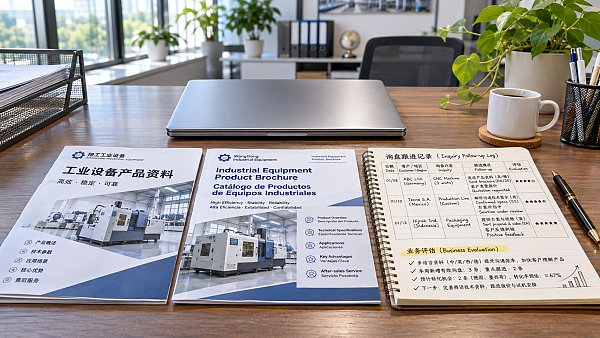
When looking for successful examples of multilingual website development for export businesses, project leads should first assess whether a case offers relevant lessons. For example, industrial equipment companies rely on technical information and inquiries to move sales forward, while cross-border e-commerce stores focus more on the shopping experience and orders. Their website structures and conversion metrics are therefore different.
Prioritize cases with similar product complexity, target markets, budget, and sales model, and find out when the project went live. A manufacturing website aimed at European buyers and available in English and German is usually more relevant than a showcase case with many language versions but little business context.
You should also distinguish website development results from overall marketing results. An increase in inquiries may come from advertising, trade shows, or sales team follow-up, and cannot all be attributed to a website redesign. Ask the service provider to explain what was done for website development, content, promotion, and operations so you can assess which practices are suitable to replicate.
Localization is about more than translation
A multilingual website should first help local purchasing professionals understand the products and build trust. Key checks include whether product names, industry terminology, units of measurement, certification information, and contact details align with target-market conventions, and whether important pages have been reviewed by people familiar with the business.
For example, overseas customers looking at exported engineering equipment may need to review specifications, operating conditions, installation requirements, and after-sales support. If a page contains only a general product description, even fluent translation may not help a purchasing team complete its initial screening, limiting the project’s practical value.
You should also check whether all language versions are complete. Key product pages, FAQs, inquiry forms, and privacy notices should be consistent across versions. If a visitor clicks through from a German product page to an English form, assess whether this could affect form submissions. When the target market has specific regulatory or certification requirements, the company should verify the relevant content.
How can you verify search performance, and which figures are more reliable?
Search performance should be reviewed by country, language, and page—not reported only as total website traffic. Project leads can ask the service provider for organic search impressions and clicks before and after launch, as well as the indexation status of key pages, and assess traffic quality against relevant search terms in the target market.
When comparing data, specify the analytics tools, date ranges, and filters used. Short-term growth may not be representative if the new site has been live for less than a month or the period coincides with the industry’s peak season. A more reliable approach is to monitor performance over time and explain fluctuations in light of the same period in previous years, promotional campaigns, and changes to website content.
For multilingual technical configuration, spot-check whether pages in different languages have unique, accessible URLs; whether language switching works correctly; and whether language and region annotations match the page content. Submitting a sitemap and implementing technical configurations can help search engines understand a website, but they cannot guarantee indexation or rankings.
How do you determine whether a website generates qualified inquiries?
The total number of inquiries only shows that people have submitted information; it does not directly represent sales opportunities. Sales teams should first agree on criteria for a qualified inquiry, such as target country, purchasing needs, completeness of contact details, and fit with the project. Then track the number and share of inquiries that meet those criteria.
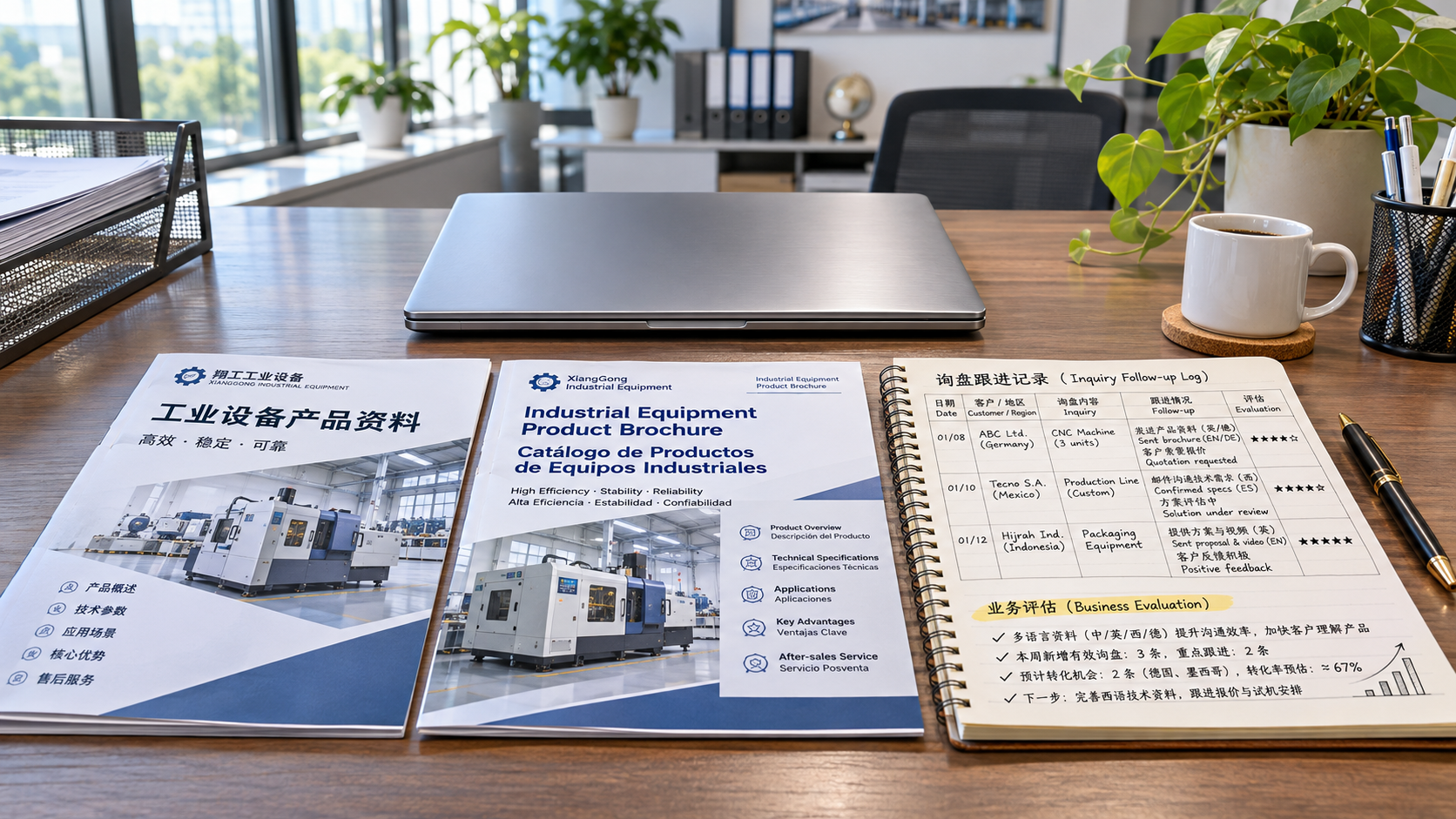
When reviewing a case, you can ask: Which page did visitors use to submit an inquiry? Did they come from organic search or advertising? Did sales confirm their needs? Did they progress to a quotation or sales opportunity? If you can see only the number of form submissions and cannot identify spam or duplicate inquiries, the results should be treated with caution.
For engineering projects with long decision cycles, you do not need to focus only on immediate sales. Actions such as downloading technical information, visiting key product pages, and submitting qualified inquiries can serve as early indicators. However, these actions are not equivalent to orders, and their business value still needs to be assessed against sales follow-up records.
How should you calculate investment and ongoing costs?
When comparing case quotes, find out whether they include the number of language versions, page scope, content production, translation review, technical configuration, and analytics tracking. The project budget should also include post-launch costs for hosting, system maintenance, content updates, advertising, and third-party tools.
One practical estimate is to divide the total website development and marketing investment over an agreed period by the number of qualified inquiries confirmed during that period. This gives the cost per qualified inquiry. To estimate returns further, you also need to consider opportunity conversion rates, sales cycles, and order gross margins, and record how revenue is attributed.
For example, if the relevant investment over the project period is RMB 100,000 and the project generates 50 qualified inquiries that meet the agreed criteria, the average cost is RMB 2,000 per inquiry. This figure still needs to be compared with the company’s historical customer acquisition costs, lead quality, and subsequent sales. It does not prove profitability on its own and should not be treated as an industry benchmark.
What evidence should project leads verify before signing?
Ask the service provider for accessible case study URLs, the project scope, and the launch date, and confirm whether the client has authorized the display of relevant data. For growth percentages, also check the figures before and after the increase: going from two inquiries to four represents 100% growth, but is not enough to demonstrate a mature lead-generation operation.
For project delivery, specify the language versions, pages to be delivered, acceptance criteria, data access rights, and maintenance responsibilities in the proposal. Ownership of the domain, website content, analytics tools, and advertising accounts should also be clearly defined to avoid handover issues when changing service providers or expanding into new markets.
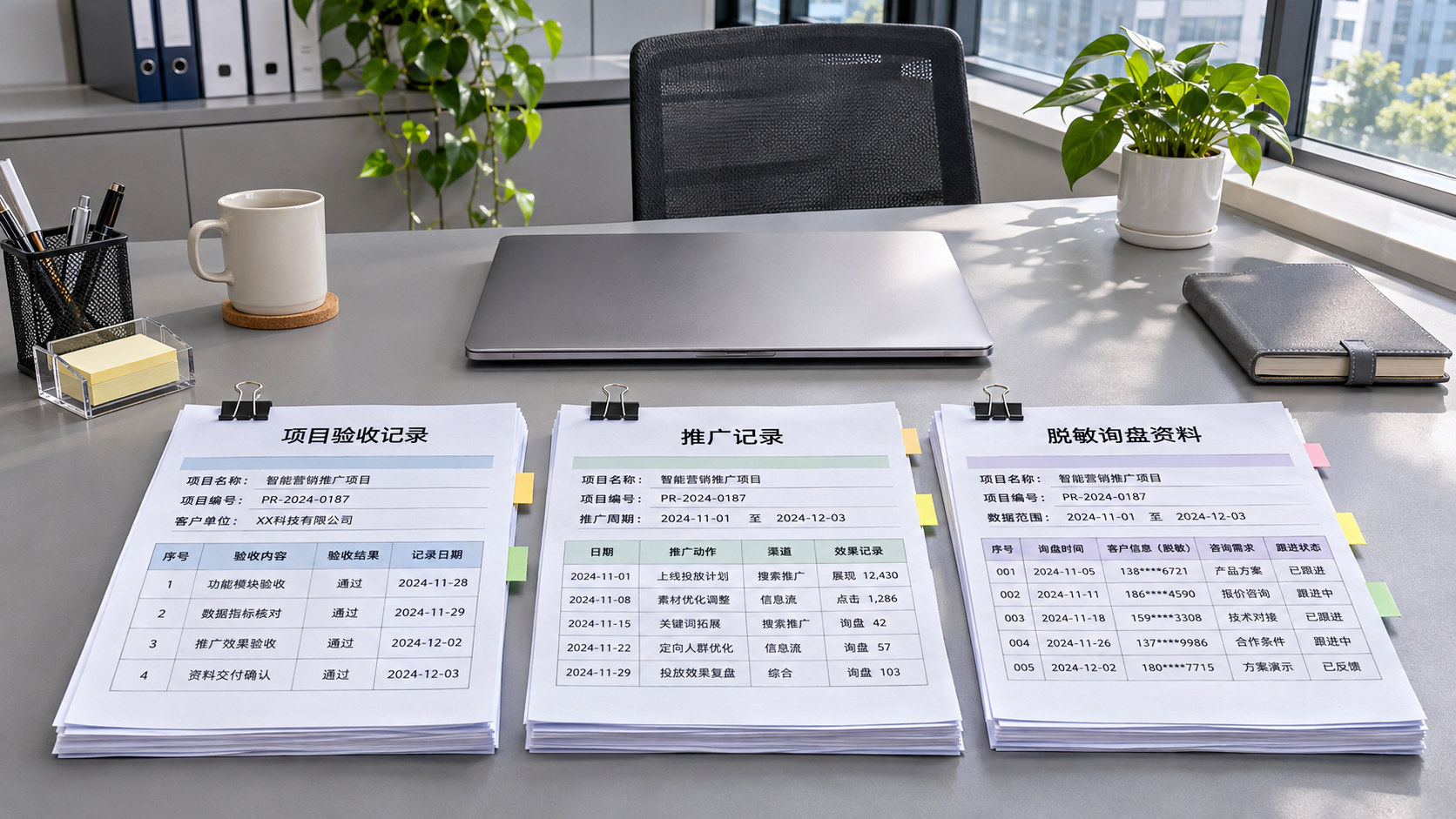
Acceptance can be divided into two stages: before launch, check pages, forms, mobile display, and language switching; after launch, verify data collection, search indexation, and inquiry routing. For metrics affected by market conditions, such as rankings and inquiry volume, agree on how they will be monitored and who is responsible for optimization. Avoid treating outcomes beyond anyone’s control as fixed deliverables.
How can you use case evaluations to inform your project decisions?
Start by selecting two or three cases with similar business backgrounds. Compare them on localization quality, search performance in target markets, qualified inquiries, investment costs, and delivery capabilities, and note whether the supporting evidence is complete. If data for any item is missing, mark it for verification rather than drawing your own conclusions.
If your company needs to combine website development, search optimization, and overseas promotion, you can evaluate teams such as EasyYingbao that provide these services. Focus on asking about specific project responsibilities, data ownership, and ongoing optimization methods. Whichever service provider you choose, base your decision on verifiable results and a plan suited to your markets.
Ultimately, a successful case worth learning from should clearly explain who it served, what problem it solved, how much was invested, how results were measured, and how the website was operated after launch. Comparing cases against the same criteria helps project leads define scope more confidently, control budgets, and establish a trackable foundation for future growth.
Related Articles
 How Should You Evaluate Successful Multilingual Website Projects for International Trade?
 Are there verifiable case studies of Yiyingbao’s integrated website development and promotion services?
 How effective are Yiyingbao's export business website development real-world cases?

Related Products
 Yiyingbao SaaS Intelligent Website Building and Marketing SystemYiyingbao SaaS Intelligent Website Building and Marketing System, AI-powered no-code website building, rapid creation of multilingual B2B international websites in 10 minutes, global server acceleration, AI-powered SEO optimization, helping businesses connect efficiently with global markets. The perfect integration of technology and operation makes building an international trade website remarkably simple
 AI+SEM Intelligent Advertising Marketing SystemAI+SEM drives intelligent ad creation, empowering full-funnel precision advertising marketing. The system automatically generates weekly/monthly reports, AI recommends keywords and target countries, monitors core metrics in real-time with intelligent alerts, and enables one-click high-conversion ad solutions to help quickly acquire customers and improve ROI.
 AI+SEO Dual-Engine System Optimization ServicesYiyingbao’s AI+SEO dual-engine optimization system helps foreign trade enterprises acquire high-quality organic traffic through AI-powered keyword research, content generation, and comprehensive technical optimization, significantly improving search rankings and conversion rates.
 AI+SNS Social Media Marketing SystemYingbao AI+SNS Social Media Marketing System - Precision social capture for the social media era. Supports one-click content synchronization across major platforms like Facebook and LinkedIn. AI intelligently rewrites posts for enhanced relevance. 24/7 AI customer service and user profiling analysis empower businesses to efficiently expand into global markets.
 AI+SEO营销解决方案易营宝AI+SEO营销解决方案,通过AI批量写作、智能生成TDK、精准关键词扩词等功能,全面优化网站SEO效果,提升流量与转化率。助力企业构建高效智能网站新生态。
 AI+SEM Advertising Marketing SolutionsAI+SEM Advertising Marketing Solution leverages AI technology to deeply empower SEM ad campaigns. It automatically generates weekly/monthly reports using AI, presenting account data across multiple dimensions for comprehensive insights into campaign performance and trends. The system precisely recommends keywords and target countries, intelligently generates high-conversion ad copy, and enables one-click activation of efficient campaign plans to help businesses rapidly acquire customers. Simultaneously, it monitors core metrics in real time, intelligently identifies abnormal fluctuations, and issues timely alerts to ensure stable, high-return advertising results.
 Domain Name ServicesEasyWin provides professional domain name services, including intelligent queries, one-stop registration, brand protection, and full lifecycle management, helping businesses build a digital brand image.
 EasyOperate B2C Cross-Border E-Commerce Platform & Independent WebsiteEasyStore B2C Cross-border E-commerce Independent Store is an intelligent website building and cross-border e-commerce integrated solution independently developed by EasyStore Information Technology (Beijing) Co., Ltd. The system is specially designed for small and medium-sized as well as large export enterprises, integrating 'website building, operation, marketing, advertising, and conversion' into one, helping enterprises quickly establish cross-border e-commerce independent stores to achieve brand globalization and global sales growth.
The platform supports multiple languages, multiple currencies, and multi-channel marketing, with built-in AI intelligent translation and SEO optimization systems, suitable for mainstream markets such as Southeast Asia, Europe and America, Latin America, and the Middle East, assisting Chinese manufacturing enterprises in efficiently deploying international e-commerce strategies. SSL证书易营宝提供专业SSL安全证书服务,包括单域名和泛域名证书,确保网站数据传输加密、身份验证和完整性保护,助力企业建立安全可信的在线业务环境。









