









- Which customer acquisition channels will be affected by cross-border marketing trends in 2026?Sep 06, 2026View details
- Which homogenization risks should be considered in an analysis of the AI-powered website building industry?Aug 30, 2026View details
- How Will AI Marketing Trends 2026 Change Advertising Budget AllocationAug 28, 2026View details
- Is the EV SSL certificate market shrinking or upgrading? How should companies assess certificate procurement?Aug 11, 2026View details
- Why the old AMP SEO 2020 practices no longer work and what has changed in current optimization prioritiesAug 02, 2026View details
- How to Choose Topics for an Industry News Section to Attract More Organic Search TrafficJul 29, 2026View details
- Digital Marketing Shenzhen Market Insights: Why Are Companies Expanding Overseas Looking for Growth Teams in Shenzhen?Jul 31, 2026View details
- Can Zhejiang foreign trade independent websites still be developed today? Look at changes in traffic and lead generationJul 28, 2026View details
What is a DTC brand, and when is it suitable to sell directly to overseas consumers?
When companies search for “dtc бренд это,” they are usually not just trying to understand an abbreviation. They are assessing whether they should reduce their reliance on distributors, platforms, or traders and sell products directly to overseas end consumers. The answer is: A DTC brand refers to Direct to Consumer, a business model in which a brand sells to, communicates with, and serves consumers directly. It is suitable for businesses seeking control over customer data, brand messaging, and repeat-purchase relationships, but it does not mean that “building an independent website allows you to bypass all channels.”
In reality, a company may already receive orders through wholesalers yet find that end consumers do not know its brand name. It may also achieve good sales on cross-border platforms, while product reviews, customer profiles, and remarketing audiences remain governed by platform rules. In this case, the core consideration of DTC is not simply eliminating intermediaries, but determining whether the company can acquire traffic directly, complete transactions, and continuously serve consumers.
What Does a DTC Brand Actually Change
In the traditional chain, a brand or factory sells products to importers, distributors, and retailers, with retailers then reaching consumers. DTC enables brands to use independent websites, brand stores, social media content, search advertising, email, or private-domain touchpoints to directly handle consumer education, ordering, payment, after-sales service, and repeat-purchase operations.
The most important change in this model is not “one less channel layer,” but that the brand begins to take direct responsibility for work previously handled by channels. For example, why consumers need a product, how to choose specifications, how long delivery takes, who to contact if issues arise, and whether they are willing to buy again must all be clearly designed by the brand itself.
Which Overseas Businesses Are Better Suited to Trying DTC
DTC is not limited to a particular product category. The key is whether end consumers can easily understand and purchase the product. Direct sales tend to proceed more smoothly when a product has clear use cases, relatively standardized specifications, and value that can be explained through images, videos, and product description pages. For example, DTC generally has greater potential when consumers can independently determine size, color, and feature combinations, or when purchase decisions are mainly driven by brand content, word of mouth, and experience.
The second condition is whether the brand has the opportunity to generate repeat purchases, additional purchases, or long-term relationships. Consumables, accessories, and product lines designed for ongoing use are often more likely to increase customer value through email reminders, membership programs, content updates, or new product recommendations. Even if repeat-purchase frequency is not high, direct reach remains meaningful as long as consumers are willing to share, review, or revisit.
The third condition is whether logistics and after-sales service can be clearly managed. When dealing with unfamiliar brands, overseas consumers pay particular attention to delivery time, shipping costs, return and exchange procedures, tax notices, and customer service responsiveness. Seemingly sufficient product margins do not mean DTC is viable; once return costs are high, damage rates are high, or after-sales explanations are complex, orders generated by front-end advertising may be consumed by back-end costs.
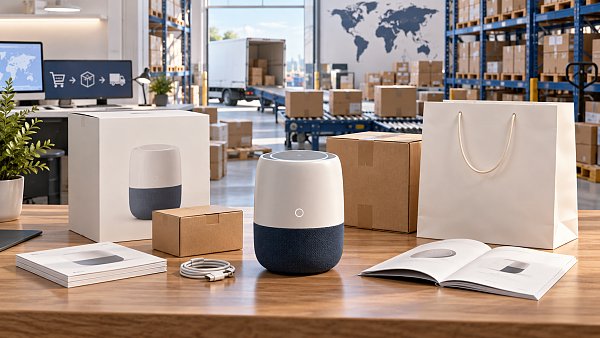
Situations Where You Should Not Rush to “Dechannelize”
Some companies interpret DTC as completely abandoning distributors, which often leads to misjudgment. Consumers generally will not place orders based solely on a product page for products with high unit prices, extensive customization, complex installation, or requirements for local certification support. Such products can have a brand website for end users to educate the market, collect leads, and showcase solutions, but transactions may still require support from local service providers, agents, or sales teams.
Another easily overlooked issue is customer acquisition cost. Channel partners already have stores, customer lists, sales personnel, or local credibility. Once a brand shifts to direct sales, it needs to solve the question of “where users will come from” on its own. Without stable content capabilities, search visibility, room to test advertising budgets, or social media operating resources, an independent website may only serve as a display window and struggle to meet sales targets.
Therefore, a more practical approach is often to adopt a hybrid model: retain channels that provide coverage and service capabilities while establishing owned sites to communicate with consumers. A brand site does not need to compete with distributors; it can handle product education, brand stories, usage guidance, after-sales entry points, and remarketing data accumulation. Transactions can then be allocated to direct online stores or local partners according to region, inventory, and product complexity.
Answer Four Business Questions Before Entering DTC
- Why would consumers actively choose you?You cannot simply write “good quality.” You need to identify purchase reasons that can be quickly understood in the hero section, product pages, and advertising materials, such as usage pain points, design differences, functional evidence, or service commitments.
- How will the first order be completed?Map out what information users need to see after entering the website through ads, search, or social media content: price, size, ingredients, usage instructions, delivery coverage, reviews, and refund terms. Missing any one of these may cause hesitation.
- Is order fulfillment stable?First clarify inventory locations, delivery lead times, package tracking, customer service languages, and return and exchange handling. When serving overseas consumers, the transaction experience affects reviews just as much as the product itself.
- What can be done after a purchase?Confirm whether user authorization can be obtained legally and clearly, and whether relationships can be maintained through subscriptions, replenishment reminders, content recommendations, or new product notifications, rather than buying traffic from scratch for every sale.
A Website Is Not All of DTC, but It Is a Key Conversion Point
The purpose of a DTC site is not to fill it with brand introductions, but to reduce users’ uncertainty about purchasing. The homepage should quickly make visitors understand what is being sold, who it is for, and why it is worth choosing. Product pages should address questions about specifications, usage, delivery, and returns, while the checkout process should avoid hidden fees, complicated redirects, or difficult mobile operations. When targeting multiple countries, language, currency, delivery information, and content messaging must also be handled according to actual market conditions, rather than simply translating Chinese pages sentence by sentence.
Traffic strategies should also match the stage of the business. When demand is still being validated, advertising landing pages can be used to test different selling points and product combinations. For categories with existing search demand, content pages centered on product questions, use cases, and purchase decisions should be continuously developed. Social media is more suitable for showing the usage process, authentic details, and brand tone. All channels should ultimately lead back to trackable and optimizable website paths, rather than focusing only on impression volume.
The value of DTC lies in enabling brands to gradually build the ability to communicate directly with consumers. The signal that a business is ready to start is not that “everyone else is building independent websites,” but that its product positioning is already relatively clear, its fulfillment chain can handle end-consumer orders, and its team is willing to manage traffic and customer relationships over the long term. If these foundations are not yet in place, the business can first build awareness through a brand website and content pages, then gradually test direct transactions rather than overturning its entire channel model at once.
Related Articles
Related Products
 Yiyingbao SaaS Intelligent Website Building and Marketing SystemYiyingbao SaaS Intelligent Website Building and Marketing System, AI-powered no-code website building, rapid creation of multilingual B2B international websites in 10 minutes, global server acceleration, AI-powered SEO optimization, helping businesses connect efficiently with global markets. The perfect integration of technology and operation makes building an international trade website remarkably simple
 AI+SEM Intelligent Advertising Marketing SystemAI+SEM drives intelligent ad creation, empowering full-funnel precision advertising marketing. The system automatically generates weekly/monthly reports, AI recommends keywords and target countries, monitors core metrics in real-time with intelligent alerts, and enables one-click high-conversion ad solutions to help quickly acquire customers and improve ROI.
 AI+SEO Dual-Engine System Optimization ServicesYiyingbao’s AI+SEO dual-engine optimization system helps foreign trade enterprises acquire high-quality organic traffic through AI-powered keyword research, content generation, and comprehensive technical optimization, significantly improving search rankings and conversion rates.
 AI+SNS Social Media Marketing SystemYingbao AI+SNS Social Media Marketing System - Precision social capture for the social media era. Supports one-click content synchronization across major platforms like Facebook and LinkedIn. AI intelligently rewrites posts for enhanced relevance. 24/7 AI customer service and user profiling analysis empower businesses to efficiently expand into global markets.
 AI+SEO营销解决方案易营宝AI+SEO营销解决方案,通过AI批量写作、智能生成TDK、精准关键词扩词等功能,全面优化网站SEO效果,提升流量与转化率。助力企业构建高效智能网站新生态。
 AI+SEM Advertising Marketing SolutionsAI+SEM Advertising Marketing Solution leverages AI technology to deeply empower SEM ad campaigns. It automatically generates weekly/monthly reports using AI, presenting account data across multiple dimensions for comprehensive insights into campaign performance and trends. The system precisely recommends keywords and target countries, intelligently generates high-conversion ad copy, and enables one-click activation of efficient campaign plans to help businesses rapidly acquire customers. Simultaneously, it monitors core metrics in real time, intelligently identifies abnormal fluctuations, and issues timely alerts to ensure stable, high-return advertising results.
 Domain Name ServicesEasyWin provides professional domain name services, including intelligent queries, one-stop registration, brand protection, and full lifecycle management, helping businesses build a digital brand image.
 EasyOperate B2C Cross-Border E-Commerce Platform & Independent WebsiteEasyStore B2C Cross-border E-commerce Independent Store is an intelligent website building and cross-border e-commerce integrated solution independently developed by EasyStore Information Technology (Beijing) Co., Ltd. The system is specially designed for small and medium-sized as well as large export enterprises, integrating 'website building, operation, marketing, advertising, and conversion' into one, helping enterprises quickly establish cross-border e-commerce independent stores to achieve brand globalization and global sales growth.
The platform supports multiple languages, multiple currencies, and multi-channel marketing, with built-in AI intelligent translation and SEO optimization systems, suitable for mainstream markets such as Southeast Asia, Europe and America, Latin America, and the Middle East, assisting Chinese manufacturing enterprises in efficiently deploying international e-commerce strategies. SSL证书易营宝提供专业SSL安全证书服务,包括单域名和泛域名证书,确保网站数据传输加密、身份验证和完整性保护,助力企业建立安全可信的在线业务环境。









