









- 21st Century Business Herald: AI and CTV Become Core Growth Engines for Digital Marketing in Overseas MarketsNov 18, 2026View details
- China Presents 25 Cooperation Outcomes in Areas Including Cross-Border E-Commerce During APECNov 18, 2026View details
- AI Products Drive Hong Kong Exports Up 64.9% in September, Fastest Growth in Over 40 YearsNov 17, 2026View details
- National Bureau of Statistics: Foreign trade grew rapidly in October, providing stable support for global tradeNov 17, 2026View details
- The U.S. has ended the $800 de minimis exemption for non-postal shipments; express courier packages must be formally declared.Nov 16, 2026View details
- ASEAN Signs Digital Economy Framework Agreement, Moving Toward Harmonized Cross-Border E-Commerce RulesNov 15, 2026View details
Which Local Payment Methods Should Be Considered First for B2C Cross-Border Online Stores?
For payment integration in B2C cross-border e-commerce store development, first determine which payment methods buyers in the target market are already accustomed to using, then discuss payment service providers and technical interfaces. Credit cards have broad coverage, but that does not mean they are the preferred option in every country; local wallets, bank transfers, buy now, pay later, and cash on delivery often determine whether users abandon their orders at checkout.
The most common misjudgment at project launch is treating “the more payment methods, the better” as the goal. Too few payment options can reduce conversions, while too many options, complicated settlement paths, and inconsistent risk control rules can also increase the costs of reconciliation, refunds, and after-sales handling. A more prudent approach is to select a “primary payment method + supplementary payment methods” for each launch market, and ensure that the store, payment gateway, order system, and financial processes form a closed loop.
Segment by market first, rather than selecting by payment brand
When the same cross-border store serves the United States, Germany, Japan, and Southeast Asia, it is not advisable to deploy only one checkout logic. Users differ in payment preferences, payment authorization methods, installment habits, and understanding of bank statements. The first checklist for payment integration should not be the names of service providers, but rather markets, currencies, average order value, fulfillment regions, and refund processes.
The methods in the table are not a market-entry checklist, but a starting point for project research. If the store plans to advertise in only one country, prioritizing commonly used local methods is generally more sensible than covering multiple regions from the outset with only a single credit card option. If entering multiple markets simultaneously is planned, the payment architecture should be able to enable or hide payment methods by country or currency.
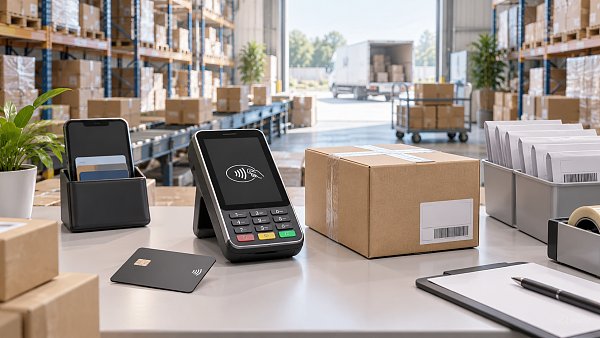
For local payment methods, consider “what happens after payment”
Being able to display a payment button only indicates that the frontend integration is complete; what a cross-border store truly needs to confirm is how payment status changes the order status. Credit card and wallet payments often return results relatively quickly, while bank transfers, offline payment vouchers, or certain local methods may involve a pending confirmation stage. If the system treats “payment created” directly as “payment completed,” it may result in goods being shipped before funds are received.
Therefore, payment integration for B2C cross-border e-commerce store development must define at least four statuses: payment initiated by the user, payment successful, payment failed or canceled, and subsequent refund or chargeback. Each status should correspond to order notifications, inventory reservation, shipping authorization, and information visible to customer service. Do not only display a success page on the frontend while overlooking exceptions such as payment service provider callbacks, order system update failures, and duplicate callbacks.
Local payments also affect after-sales service. Some methods are suitable for refunds to the original payment method, some require users to provide receiving account information, and some differ from credit cards in refund processing times. The refund entry point, refund approval, and refund result notification should all be included in the project acceptance scope. Otherwise, customer service can only rely on manual inquiries after launch, and once order volume increases, duplicate refunds or unclear refund statuses can easily occur.
Installments and cash on delivery are not simply “one more option”
High-value products often consider buy now, pay later or installment payments. Their value lies in reducing the pressure of one-time payment, but their suitability depends on product attributes, profit margins, return rates, and the payment service provider’s order review logic. An installment plan may require consumer eligibility assessment at the time of ordering, and may also create different processing paths for refunds or partial shipments. When products support pre-orders, split shipments, or custom production, verify first whether these processes are supported by the payment solution.
Cash on delivery relies even more heavily on fulfillment capabilities. It is attractive in markets with particular payment habits, but it also brings issues such as rejected deliveries, invalid addresses, cash collection, and logistics reconciliation. Without reliable local delivery and proof-of-delivery data synchronization, it should not be enabled hastily merely to increase payment coverage at checkout. A more controllable approach is to set availability conditions by region, product category, order amount, or returning customer status, and include inventory restoration after rejected deliveries and responsibility for logistics costs in operational rules.
When choosing a payment service provider, focus on verifying these six items
Payment service providers commonly claim to cover multiple countries and payment methods, but “supported” does not mean suitable for the current store. Project leaders should include the following in vendor selection and technical reviews:
- Merchant entity and payment collection capability: Whether the existing company entity can activate the target market, target currency, and required local methods, and where funds will ultimately be settled.
- Checkout experience: Whether users complete payment within the store or are redirected to a third-party page; whether wallets are smoothly invoked on mobile devices; and whether local language and amount displays are consistent.
- Order callback mechanism: Whether reliable asynchronous notifications, signature verification, and duplicate notification handling are supported, and whether the store can use them to update orders reliably.
- Refunds, reversals, and chargebacks: How full refunds, partial refunds, payment authorization cancellations, and disputed orders are handled, and whether the backend can track processing results.
- Risk control and compliance responsibilities: What verification, risk review, and document retention work are undertaken respectively by the payment provider, store platform, and merchant, avoiding restricted payment capabilities after launch due to mismatched documentation or rules.
- Operations and financial reconciliation: Whether transaction currencies, settlement currencies, fees, refunds, and chargebacks can be associated by order number, and whether finance can export reconcilable data from the backend.
The most frequently overlooked item here is reconciliation. Marketing teams view orders by advertising campaign, operations teams focus on shipments, and finance looks at actual funds received; if the order numbers, currency conversion standards, and refund statuses used by the three are inconsistent, management will lose control later no matter how quickly payment integration is completed. The payment solution should confirm data fields and export methods during project initiation, rather than relying on spreadsheet consolidation after launch.
Validate payment integration within the website-building and marketing journey
An independent website’s payment capabilities are related to its traffic sources. Advertising landing pages may bring first-time visitors, social media traffic comes more often from mobile devices, and search traffic may cover multiple countries and language versions. Checkout pages entered from different sources should maintain the same currencies, payment methods, and promotional rules, preventing users from seeing one price on a product page and then being switched to another currency or an unavailable method on the payment page.
When using an integrated platform for website building, cross-border e-commerce, and overseas marketing, payment integration should not be evaluated in isolation. Taking services such as Yiyingbao, which cover multilingual website building, B2C cross-border e-commerce stores, and overseas promotion scenarios, as an example, project reviews can focus on confirming whether the store can configure payment logic by website language, country or region, currency, and order status, and whether payment data can form consistent metrics with advertising, orders, and conversion statistics. The purpose is not to increase the number of tools, but to reduce data gaps between marketing customer acquisition, checkout conversion, and order fulfillment.
Before launch, use a real order journey for stress testing
Testing should not only verify “payment successful.” Use different country addresses, currencies, coupons, shipping fee combinations, and payment methods to complete the entire ordering process: whether inventory is locked after an order is placed, whether inventory is released after payment cancellation, how an order is displayed when a successful callback is delayed, whether the order amount is updated after a partial refund, and whether customer service and finance can find the same transaction.
For multi-market projects, one primary market can first be selected to complete the closed loop before replicating it to a second market. What is replicated is not the payment method itself, but the process of research, configuration, testing, and reconciliation. This both controls the scope of the initial launch and preserves room for subsequently expanding local wallets, installments, or bank payments.
Ultimately, payment method priorities should be determined jointly by purchasing habits in the target market, order value, and fulfillment capabilities. First enable users to complete payments using familiar methods, then ensure that orders, refunds, and reconciliation can be reliably managed by the team; that is the outcome cross-border e-commerce payment integration should truly achieve.
Related Articles
 Dongguan Opens a New Transit Logistics Route for Cross-Border E-Commerce Exports to Russia
 How Can You Identify Effective Traffic Sources When Reviewing Growth in Inquiries from Your Independent Website?
 How to Choose a Target Market for Your Cross-Border Ecommerce Store



Related Products
 Yiyingbao SaaS Intelligent Website Building and Marketing SystemYiyingbao SaaS Intelligent Website Building and Marketing System, AI-powered no-code website building, rapid creation of multilingual B2B international websites in 10 minutes, global server acceleration, AI-powered SEO optimization, helping businesses connect efficiently with global markets. The perfect integration of technology and operation makes building an international trade website remarkably simple
 AI+SEM Intelligent Advertising Marketing SystemAI+SEM drives intelligent ad creation, empowering full-funnel precision advertising marketing. The system automatically generates weekly/monthly reports, AI recommends keywords and target countries, monitors core metrics in real-time with intelligent alerts, and enables one-click high-conversion ad solutions to help quickly acquire customers and improve ROI.
 AI+SEO Dual-Engine System Optimization ServicesYiyingbao’s AI+SEO dual-engine optimization system helps foreign trade enterprises acquire high-quality organic traffic through AI-powered keyword research, content generation, and comprehensive technical optimization, significantly improving search rankings and conversion rates.
 AI+SNS Social Media Marketing SystemYingbao AI+SNS Social Media Marketing System - Precision social capture for the social media era. Supports one-click content synchronization across major platforms like Facebook and LinkedIn. AI intelligently rewrites posts for enhanced relevance. 24/7 AI customer service and user profiling analysis empower businesses to efficiently expand into global markets.
 AI+SEO营销解决方案易营宝AI+SEO营销解决方案,通过AI批量写作、智能生成TDK、精准关键词扩词等功能,全面优化网站SEO效果,提升流量与转化率。助力企业构建高效智能网站新生态。
 AI+SEM Advertising Marketing SolutionsAI+SEM Advertising Marketing Solution leverages AI technology to deeply empower SEM ad campaigns. It automatically generates weekly/monthly reports using AI, presenting account data across multiple dimensions for comprehensive insights into campaign performance and trends. The system precisely recommends keywords and target countries, intelligently generates high-conversion ad copy, and enables one-click activation of efficient campaign plans to help businesses rapidly acquire customers. Simultaneously, it monitors core metrics in real time, intelligently identifies abnormal fluctuations, and issues timely alerts to ensure stable, high-return advertising results.
 Domain Name ServicesEasyWin provides professional domain name services, including intelligent queries, one-stop registration, brand protection, and full lifecycle management, helping businesses build a digital brand image.
 EasyOperate B2C Cross-Border E-Commerce Platform & Independent WebsiteEasyStore B2C Cross-border E-commerce Independent Store is an intelligent website building and cross-border e-commerce integrated solution independently developed by EasyStore Information Technology (Beijing) Co., Ltd. The system is specially designed for small and medium-sized as well as large export enterprises, integrating 'website building, operation, marketing, advertising, and conversion' into one, helping enterprises quickly establish cross-border e-commerce independent stores to achieve brand globalization and global sales growth.
The platform supports multiple languages, multiple currencies, and multi-channel marketing, with built-in AI intelligent translation and SEO optimization systems, suitable for mainstream markets such as Southeast Asia, Europe and America, Latin America, and the Middle East, assisting Chinese manufacturing enterprises in efficiently deploying international e-commerce strategies. SSL证书易营宝提供专业SSL安全证书服务,包括单域名和泛域名证书,确保网站数据传输加密、身份验证和完整性保护,助力企业建立安全可信的在线业务环境。









