









- Can the average annual growth rate reflect real opportunities in overseas markets?Oct 07, 2026View details
- Which customer acquisition channels will be affected by cross-border marketing trends in 2026?Sep 06, 2026View details
- Which homogenization risks should be considered in an analysis of the AI-powered website building industry?Aug 30, 2026View details
- How Will AI Marketing Trends 2026 Change Advertising Budget AllocationAug 28, 2026View details
- Is the EV SSL certificate market shrinking or upgrading? How should companies assess certificate procurement?Aug 11, 2026View details
- Why the old AMP SEO 2020 practices no longer work and what has changed in current optimization prioritiesAug 02, 2026View details
What Should SMEs Evaluate Before Choosing Yiyingbao for Export-Oriented Website Development
When evaluating Easy Marketing Pro for foreign trade website development, small and medium-sized enterprises should first distinguish whether they are purchasing a “website” or overseas digital infrastructure capable of continuously acquiring customers. If a company only needs to display its factory, products, and contact information, any mature website-building tool may be sufficient; if the goal is to continuously generate inquiries through Google, social media, advertising landing pages, or multilingual content, the focus of evaluation should shift from whether the pages look attractive to whether the website can support promotion, whether the team can operate it continuously, and whether the investment matches the sales cycle.
Therefore, there is no universal answer to whether “Easy Marketing Pro foreign trade website development is suitable for SMEs” independent of business conditions. It is more suitable for companies with a clear export direction that want to advance website development and promotion within the same system. For teams with very few product lines, overseas business still in an exploratory stage, or no personnel able to manage content, follow up leads, and coordinate advertising, they should first narrow the scope of website development to avoid purchasing a package of services beyond their actual capacity to absorb.
Start with the customer acquisition path, not templates and quotations
The value of a foreign trade website depends on which stage of the sales process it serves. Manufacturing companies pursuing B2B inquiries typically need product categories, application scenarios, technical specifications, qualification documents, inquiry forms, and sales lead distribution; cross-border brands or retail sellers are more concerned with product management, payment, logistics, promotional pages, and conversion tracking. These two types of business have different requirements for system configuration, content structure, and ongoing operations.
Easy Marketing Pro covers intelligent website building, SEO, advertising, and social media marketing, making it suitable for SMEs seeking to build their official website and promotional landing pages in a unified manner. Before discussing a solution, however, companies should clarify where their primary traffic will come from: organic search traffic or Google Ads for market testing; traffic from social media such as LinkedIn and Facebook, or visits to the official website from trade show contacts and existing customers. Different traffic sources require different designs for the website homepage, product pages, and inquiry actions.
- For businesses focused on organic search, priority should be given to verifying category hierarchy, URL rules, page editability, site speed, index management, and content publishing workflows.
- For businesses focused on acquiring customers through advertising, key points to confirm include whether landing pages can be duplicated quickly, forms can be configured independently, conversion tracking can be installed, and pages can be created by country, language, and product.
- For businesses focused on B2B inquiries, confirm form fields, anti-spam mechanisms, email notifications, lead assignment, and CRM integration methods to prevent inquiries from remaining only in email inboxes.
- For businesses focused on cross-border retail, the capabilities for the online store, payments, taxes, orders, and inventory must be verified separately; the functions of a B2B showcase website should not be assumed to constitute a complete e-commerce system.
A lower-priced showcase website may not be suitable for promotional purposes; a platform with many functions may not be suitable for an export team just getting started. Clearly defining the customer acquisition methods planned for the next six to twelve months before procurement can avoid a great deal of ineffective comparison.
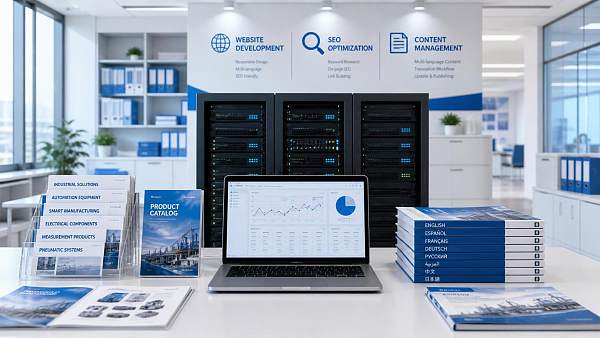
Multilingual capabilities should be evaluated by the “operating mechanism,” not just the number of languages
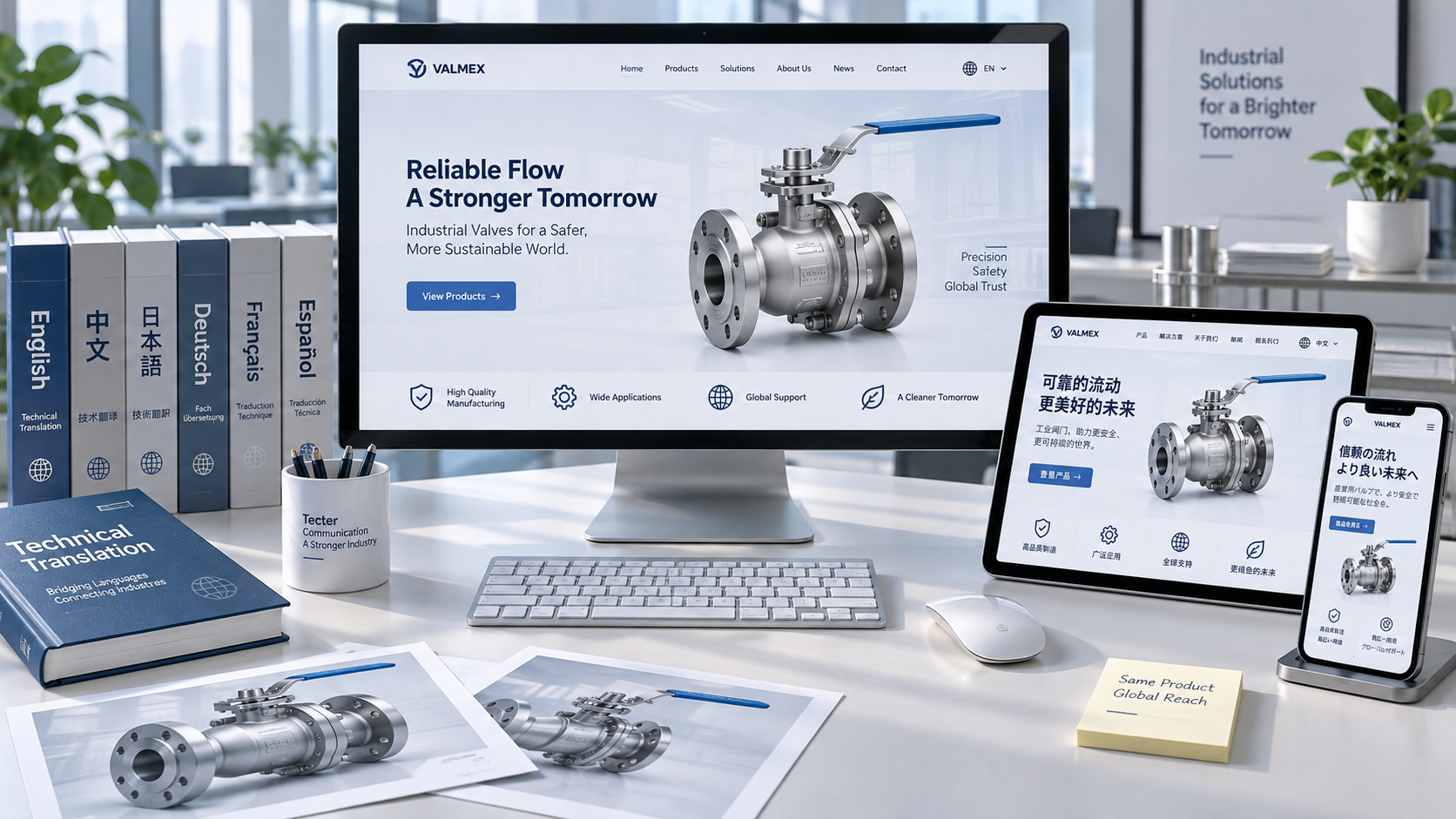
Many companies understand multilingual support as translating Chinese or English pages into more versions, but the challenge of overseas websites often does not lie in translation itself. Product names, purchasing priorities, certification wording, delivery terms, and contact information may all differ across markets. If sites in multiple languages are merely mirrored content, they will struggle to establish clear search themes and may also give buyers the impression that the information is insufficiently localized.
When evaluating platforms such as Easy Marketing Pro, companies should ask whether language versions can independently maintain titles, descriptions, images, forms, and page modules; whether different product combinations and contact information can be configured for different regions; and whether site maps, link relationships, and basic search settings are handled simultaneously when new pages are added. For SMEs primarily focused on English-speaking markets while other markets have not yet been validated, a more prudent approach is usually to develop the main English site thoroughly first, then expand into additional languages based on actual inquiry and advertising data, rather than launching a large number of low-quality pages from the outset.
SEO commitments should be broken down into verifiable deliverables
Foreign trade website development services often include statements such as “favorable for indexing” and “SEO optimization” in their proposals, but such wording alone is insufficient to support a procurement decision. Search optimization involves multiple long-term aspects, including technical foundations, content development, page iteration, and external promotion. A website-building platform can address part of these, but cannot replace all content production and market judgment for a company.
Companies should bring discussions back to verifiable items: whether the website supports custom titles, descriptions, structured information, and redirect rules; whether product pages can be organized according to genuine purchasing dimensions such as model, application, material, and industry; whether editors can conveniently publish articles, case studies, downloadable materials, and new product pages; how old links will be handled after a redesign; and who will configure and manage Google Search Console, analytics tools, and advertising accounts.
If services include AI-assisted content or SEO/GEO optimization, the human review mechanism should also be considered. AI can improve the efficiency of first drafts, translation, and page construction, but product specifications, certifications, delivery scope, and industry terminology still need to be confirmed by the company. For B2B buyers, the loss of trust caused by incorrect information is often more difficult to remedy than publishing a few fewer pieces of content.
Long-term costs are often hidden “after website development”
SMEs tend to concentrate their budgets on the initial website development fee while underestimating subsequent content, maintenance, and promotion costs. After the website goes live, product updates, material additions, inquiry follow-up, advertising page adjustments, and data reviews all require someone to take responsibility. Without a stable internal person in charge, even the most complete platform may stop being updated several months after launch.
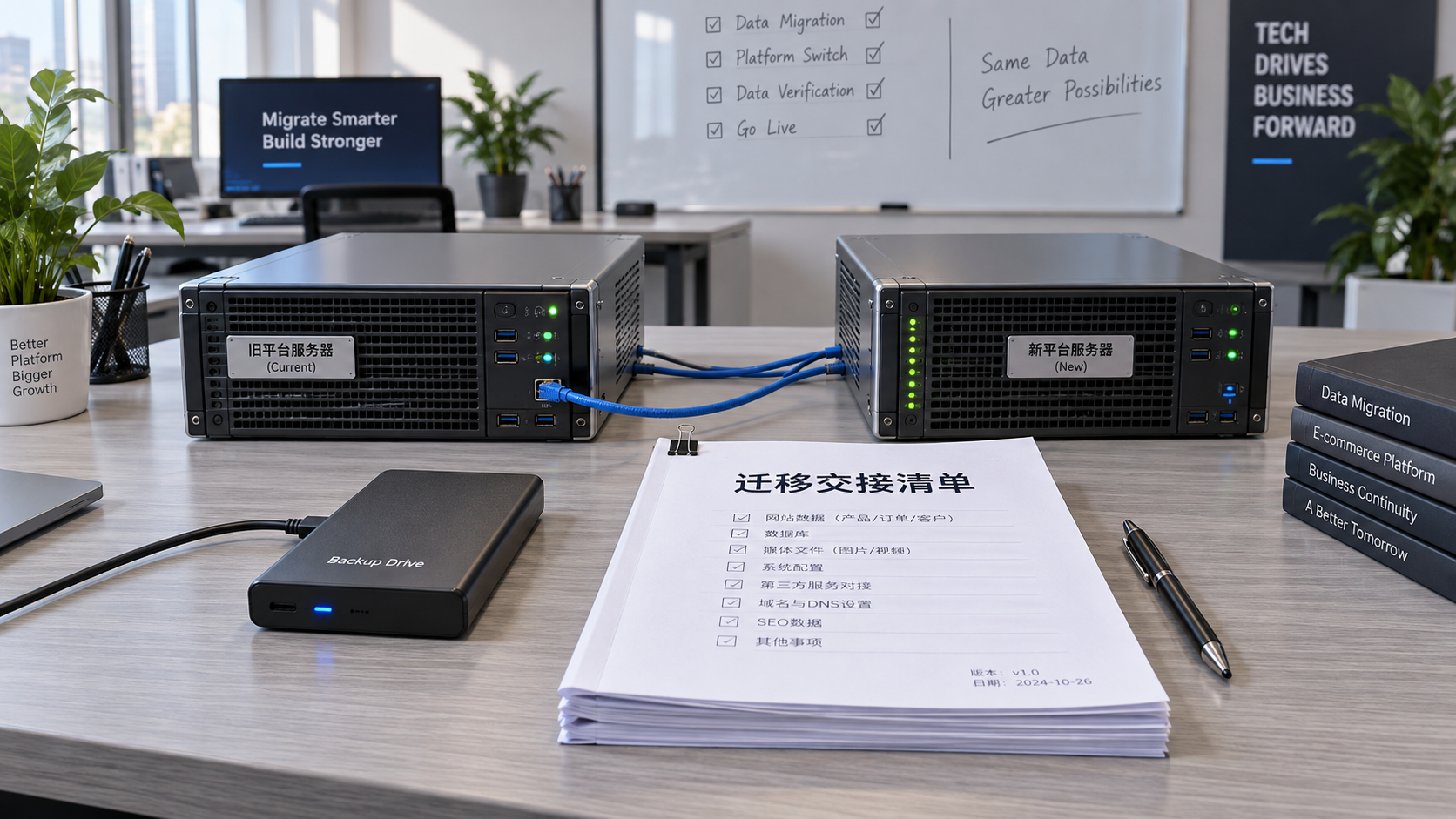
Before signing a contract, it is advisable to clarify service boundaries: how domains, hosting, SSL, system upgrades, backups, and security maintenance will each be arranged; how page revisions and new pages will be charged; whether website data, images, articles, and account permissions can be exported or handed over; whether the website can continue to be accessed and maintained after cooperation ends; and whether SEO, advertising, and social media services are delivered by project or operated continuously on a periodic basis. These are not merely contract details; they also determine whether the company may become locked into opaque long-term maintenance costs.
Suitable companies generally meet three prerequisites
First, the company already has relatively clear overseas product positioning and does not need to rely on the website as a substitute for market research. Second, it can arrange at least sales or marketing personnel to continuously provide product information, review content, and handle leads. Third, management accepts that overseas customer acquisition is a process requiring ongoing validation and optimization, rather than equating the launch of a website with the natural appearance of inquiries.
For manufacturing factories, foreign trade companies, and globalizing brands that meet these prerequisites, placing website development, SEO, advertising, and social media within the same service system can indeed help reduce gaps in coordination among multiple suppliers. Conversely, if a company has not yet determined its target market, core products, or inquiry-handling mechanism, building an English website on a smaller scale first and validating its customer acquisition path is usually more appropriate than pursuing complex functions.
Ultimately, what should be compared is not whether “a foreign trade website can be built,” but whether the website can operate over the long term under the company’s existing personnel, content, and budget conditions. After confirming the customer acquisition path, language strategy, SEO deliverables, and responsibilities for ongoing operations item by item, whether Easy Marketing Pro is a good match will become an actionable procurement decision rather than a brand-based judgment.
Related Articles

Related Products
 Yiyingbao SaaS Intelligent Website Building and Marketing SystemYiyingbao SaaS Intelligent Website Building and Marketing System, AI-powered no-code website building, rapid creation of multilingual B2B international websites in 10 minutes, global server acceleration, AI-powered SEO optimization, helping businesses connect efficiently with global markets. The perfect integration of technology and operation makes building an international trade website remarkably simple
 AI+SEM Intelligent Advertising Marketing SystemAI+SEM drives intelligent ad creation, empowering full-funnel precision advertising marketing. The system automatically generates weekly/monthly reports, AI recommends keywords and target countries, monitors core metrics in real-time with intelligent alerts, and enables one-click high-conversion ad solutions to help quickly acquire customers and improve ROI.
 AI+SEO Dual-Engine System Optimization ServicesYiyingbao’s AI+SEO dual-engine optimization system helps foreign trade enterprises acquire high-quality organic traffic through AI-powered keyword research, content generation, and comprehensive technical optimization, significantly improving search rankings and conversion rates.
 AI+SNS Social Media Marketing SystemYingbao AI+SNS Social Media Marketing System - Precision social capture for the social media era. Supports one-click content synchronization across major platforms like Facebook and LinkedIn. AI intelligently rewrites posts for enhanced relevance. 24/7 AI customer service and user profiling analysis empower businesses to efficiently expand into global markets.
 AI+SEO营销解决方案易营宝AI+SEO营销解决方案,通过AI批量写作、智能生成TDK、精准关键词扩词等功能,全面优化网站SEO效果,提升流量与转化率。助力企业构建高效智能网站新生态。
 AI+SEM Advertising Marketing SolutionsAI+SEM Advertising Marketing Solution leverages AI technology to deeply empower SEM ad campaigns. It automatically generates weekly/monthly reports using AI, presenting account data across multiple dimensions for comprehensive insights into campaign performance and trends. The system precisely recommends keywords and target countries, intelligently generates high-conversion ad copy, and enables one-click activation of efficient campaign plans to help businesses rapidly acquire customers. Simultaneously, it monitors core metrics in real time, intelligently identifies abnormal fluctuations, and issues timely alerts to ensure stable, high-return advertising results.
 Domain Name ServicesEasyWin provides professional domain name services, including intelligent queries, one-stop registration, brand protection, and full lifecycle management, helping businesses build a digital brand image.
 EasyOperate B2C Cross-Border E-Commerce Platform & Independent WebsiteEasyStore B2C Cross-border E-commerce Independent Store is an intelligent website building and cross-border e-commerce integrated solution independently developed by EasyStore Information Technology (Beijing) Co., Ltd. The system is specially designed for small and medium-sized as well as large export enterprises, integrating 'website building, operation, marketing, advertising, and conversion' into one, helping enterprises quickly establish cross-border e-commerce independent stores to achieve brand globalization and global sales growth.
The platform supports multiple languages, multiple currencies, and multi-channel marketing, with built-in AI intelligent translation and SEO optimization systems, suitable for mainstream markets such as Southeast Asia, Europe and America, Latin America, and the Middle East, assisting Chinese manufacturing enterprises in efficiently deploying international e-commerce strategies. SSL证书易营宝提供专业SSL安全证书服务,包括单域名和泛域名证书,确保网站数据传输加密、身份验证和完整性保护,助力企业建立安全可信的在线业务环境。









