









- Is the EV SSL certificate market shrinking or upgrading? How should companies assess certificate procurement?Aug 11, 2026View details
- Why the old AMP SEO 2020 practices no longer work and what has changed in current optimization prioritiesAug 02, 2026View details
- How to Choose Topics for an Industry News Section to Attract More Organic Search TrafficJul 29, 2026View details
- Digital Marketing Shenzhen Market Insights: Why Are Companies Expanding Overseas Looking for Growth Teams in Shenzhen?Jul 31, 2026View details
- Can Zhejiang foreign trade independent websites still be developed today? Look at changes in traffic and lead generationJul 28, 2026View details
- What New Signals Are Emerging in Enterprise Services SaaS Marketing ReportsJul 27, 2026View details
How to assess website conversion rate optimization costs? Is it based on problem diagnosis, page redesign, or long-term operation?
How to assess website conversion rate optimization costs? Is it based on problem diagnosis, page redesign, or long-term operation?
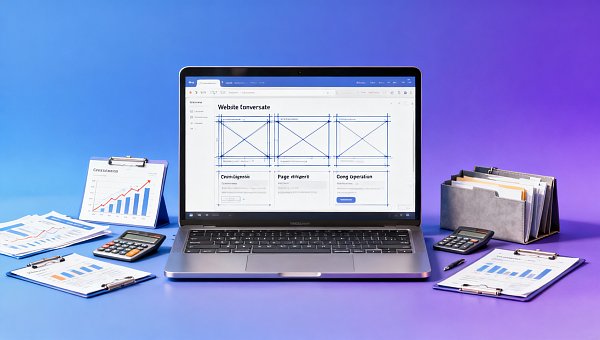
The key to evaluating website conversion rate optimization costs isn't the number of items on the quote, but whether each investment addresses a real problem. While many services may appear to be called optimization, their actual costs can vary significantly.
Some company websites have a lot of traffic but no inquiries. Others have average traffic but higher conversion rates. Website conversion rate optimization fees are often used to cover this difference.
From a procurement perspective, it is more effective to first distinguish whether it is problem diagnosis, page redesign, or long-term operation, and then judge whether the cost is reasonable, rather than directly comparing the total price.
Determine the type of fee first, rather than asking for the lowest quote.
Website conversion rate optimization fees in the market are generally divided into three categories: diagnostic, redesign, and operational. These three types of services have different objectives, and their pricing logic also differs.
1. Problem diagnosis fee
These fees primarily cover analytics capabilities. The service provider will examine traffic sources, bounce rates, form conversions, page hotspots, content persuasiveness, and technical performance.
This is suitable for businesses that already have a website but are unsure of the problems. The budget is usually relatively small, but its value lies in avoiding unnecessary redesigns and redundant investments later on.
2. Website redesign is charged.
The cost of conversion rate optimization for these types of websites is usually calculated based on the number of pages, the depth of the redesign, the complexity of the interaction, and the scope of content reconstruction.
If the homepage, product pages, inquiry pages, and case study pages all need to be redone, the cost will naturally be higher than adjusting only a landing page. Whether copywriting, design, and data tracking are included will also affect the price.
3. Long-term operating fees
Long-term operation is more like continuous service optimization. It's not a one-time delivery, but rather a continuous process involving data monitoring, content iteration, page testing, and improving inquiry efficiency.
While conversion rate optimization for these types of websites may seem more expensive, it is often more cost-effective than repeatedly redoing pages if the business has long-term customer acquisition goals.
When evaluating website conversion rate optimization costs, focus on these five aspects.
The real factors affecting website conversion rate optimization costs are not just labor hours, but also the complexity of the problem and business goals. We recommend focusing on checking the following five items.
- Is the current conversion problem clearly identified? Is it inaccurate traffic or insufficient persuasiveness of the page?
- Does the system have a complete data foundation, including visit sources, dwell time, button clicks, and form submissions?
- How extensive are the changes? Are they minor structural tweaks or a complete overhaul of the website's information architecture?
- Does it need to accommodate performance across multiple languages, regions, and devices?
- The costs should be tied to phased goals, rather than just making vague promises about the outcome.
In actual business, the problem with many low-priced solutions is not that they are cheap, but that they do not clearly explain what needs to be changed, how to inspect them, and how long it will take to see results. This will make the subsequent approval process more difficult.
What are the three pricing methods and which procurement scenarios are they suitable for?
If you only look at the price, it's easy to view website conversion rate optimization costs as mere expenses. However, considering the usage scenario will make your decision much clearer.
For example, when foreign trade companies conduct multilingual promotions, a single website redesign may not be sufficient. Page structure, loading speed, mobile experience, and performance in different regions all directly affect inquiry efficiency.
This is why some companies later shifted to integrated solutions, such as EasyCare's foreign trade marketing (super) website , which integrates website building, SEO, data tracking, and conversion optimization into a single system.
Don't just look at the total cost, but also at the hidden costs.
Many misconceptions in the approval process stem from focusing solely on the initial quote. In reality, there are several often overlooked hidden costs behind website conversion rate optimization fees.
- A low-cost diagnosis was provided, but no implementation plan was available, so a new team had to be found to execute it.
- The page redesign lacked data tracking, making it impossible to assess the effectiveness of the optimization.
- The website is slow, and traffic from ads and SEO keeps slipping away.
- Multilingual pages are costly to maintain, and updating them requires a lot of repetitive work.
Recent changes indicate that businesses are placing increasing emphasis on underlying technology. This is because conversion is not just a matter of copywriting and design; it also includes access speed, indexing capabilities, analytics loop, and content management efficiency.
If a website supports global server acceleration, marketing loop analysis, and unified multilingual management, website conversion rate optimization costs are more likely to translate into sustainable returns rather than being a one-time expense.
How to determine if a quote is worth approving?
To determine whether website conversion rate optimization costs are worthwhile, don't chase the absolute lowest price. Instead, look at whether the quote answers four key questions.
- What is the current problem, and is there any supporting data or evidence?
- Which aspects will be optimized in this round, and how will they be prioritized?
- How long will it take to see the interim results, and what metrics will be used to measure them?
- If the results are not as expected, how should adjustments be made?
A more obvious sign is that reliable solutions usually don't just talk about whether the page looks good or not, but will explain the access, indexing, conversion, lead generation, and review mechanisms together.
Taking overseas business as an example, if the platform can load within 1.5 seconds, support 100+ languages, and cover 2500+ server nodes and 120T bandwidth, then the website's traffic handling and conversion efficiency will be more fundamentally guaranteed.
Costs suitable for long-term investment typically possess these characteristics.
If a company wants to turn its official website into a stable customer acquisition channel rather than just temporarily patching up its website, then the website conversion rate optimization fee should ideally meet the following conditions.
- It can cover website building, SEO, page optimization and data analysis, eliminating the need for coordination with multiple parties.
- It supports simultaneous use on PC and mobile sites, reducing the need for repeated redesigns.
- It has automatic translation and localization capabilities, reducing the cost of maintaining overseas content.
- It allows for continuous tracking of conversion results, rather than ending once delivery is complete.
The advantage of this type of solution is that it transforms website conversion rate optimization costs from a one-off project into a long-term growth tool. For companies that prioritize cost efficiency, this structure is usually easier to pass internal evaluation.
Platforms like Yiyingbao's foreign trade marketing (super) website typically integrate AI-powered website building, multilingual management, SEO optimization, and marketing analytics to reduce subsequent recurring procurement costs.
Conclusion: Calculate the return path first, then consider the cost of website conversion rate optimization.
Ultimately, website conversion rate optimization costs are not simply website building expenses, nor are they a one-time marketing package fee. Essentially, it's about purchasing more efficient customer acquisition capabilities.
First, clarify the boundaries between problem diagnosis, page redesign, and long-term operation. Then, verify the data foundation, execution scope, acceptance methods, and long-term maintenance costs. This will make the budget assessment more stable.
The truly worthwhile investment in website conversion rate optimization is not the cheapest solution, but rather a solution that can turn visits into inquiries, traffic into growth, and whose process is traceable and whose results are reviewable.
Related Articles
 Which Is More Cost-Effective for Building a Cross-Border Website: SaaS or Custom Development? Start by Looking at These 4 Long-Term Costs
 How to Evaluate Digital Marketing Strategy Agency Services: Stage Objectives and Delivery Boundaries
 How to Assess the Cross-Time-Zone Collaboration Capabilities of an International Website Development Company


Related Products
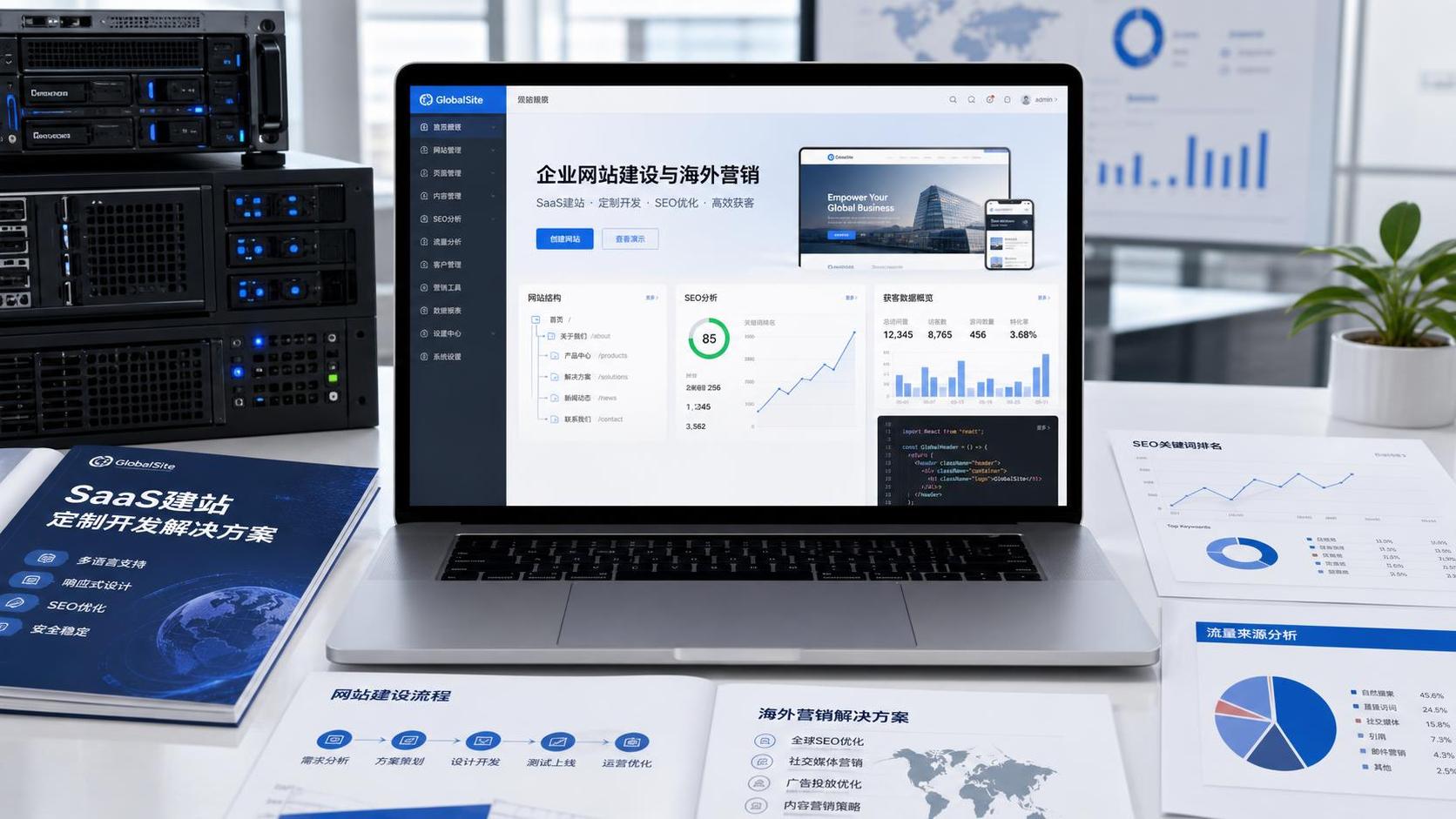
 Yiyingbao SaaS Intelligent Website Building and Marketing SystemYiyingbao SaaS Intelligent Website Building and Marketing System, AI-powered no-code website building, rapid creation of multilingual B2B international websites in 10 minutes, global server acceleration, AI-powered SEO optimization, helping businesses connect efficiently with global markets. The perfect integration of technology and operation makes building an international trade website remarkably simple
 AI+SEM Intelligent Advertising Marketing SystemAI+SEM drives intelligent ad creation, empowering full-funnel precision advertising marketing. The system automatically generates weekly/monthly reports, AI recommends keywords and target countries, monitors core metrics in real-time with intelligent alerts, and enables one-click high-conversion ad solutions to help quickly acquire customers and improve ROI.
 AI+SEO Dual-Engine System Optimization ServicesYiyingbao’s AI+SEO dual-engine optimization system helps foreign trade enterprises acquire high-quality organic traffic through AI-powered keyword research, content generation, and comprehensive technical optimization, significantly improving search rankings and conversion rates.
 AI+SNS Social Media Marketing SystemYingbao AI+SNS Social Media Marketing System - Precision social capture for the social media era. Supports one-click content synchronization across major platforms like Facebook and LinkedIn. AI intelligently rewrites posts for enhanced relevance. 24/7 AI customer service and user profiling analysis empower businesses to efficiently expand into global markets.
 AI+SEO营销解决方案易营宝AI+SEO营销解决方案,通过AI批量写作、智能生成TDK、精准关键词扩词等功能,全面优化网站SEO效果,提升流量与转化率。助力企业构建高效智能网站新生态。
 AI+SEM Advertising Marketing SolutionsAI+SEM Advertising Marketing Solution leverages AI technology to deeply empower SEM ad campaigns. It automatically generates weekly/monthly reports using AI, presenting account data across multiple dimensions for comprehensive insights into campaign performance and trends. The system precisely recommends keywords and target countries, intelligently generates high-conversion ad copy, and enables one-click activation of efficient campaign plans to help businesses rapidly acquire customers. Simultaneously, it monitors core metrics in real time, intelligently identifies abnormal fluctuations, and issues timely alerts to ensure stable, high-return advertising results.
 Domain Name ServicesEasyWin provides professional domain name services, including intelligent queries, one-stop registration, brand protection, and full lifecycle management, helping businesses build a digital brand image.
 EasyOperate B2C Cross-Border E-Commerce Platform & Independent WebsiteEasyStore B2C Cross-border E-commerce Independent Store is an intelligent website building and cross-border e-commerce integrated solution independently developed by EasyStore Information Technology (Beijing) Co., Ltd. The system is specially designed for small and medium-sized as well as large export enterprises, integrating 'website building, operation, marketing, advertising, and conversion' into one, helping enterprises quickly establish cross-border e-commerce independent stores to achieve brand globalization and global sales growth.
The platform supports multiple languages, multiple currencies, and multi-channel marketing, with built-in AI intelligent translation and SEO optimization systems, suitable for mainstream markets such as Southeast Asia, Europe and America, Latin America, and the Middle East, assisting Chinese manufacturing enterprises in efficiently deploying international e-commerce strategies. SSL证书易营宝提供专业SSL安全证书服务,包括单域名和泛域名证书,确保网站数据传输加密、身份验证和完整性保护,助力企业建立安全可信的在线业务环境。









