









- Is the EV SSL certificate market shrinking or upgrading? How should companies assess certificate procurement?Aug 11, 2026View details
- Why the old AMP SEO 2020 practices no longer work and what has changed in current optimization prioritiesAug 02, 2026View details
- How to Choose Topics for an Industry News Section to Attract More Organic Search TrafficJul 29, 2026View details
- Digital Marketing Shenzhen Market Insights: Why Are Companies Expanding Overseas Looking for Growth Teams in Shenzhen?Jul 31, 2026View details
- Can Zhejiang foreign trade independent websites still be developed today? Look at changes in traffic and lead generationJul 28, 2026View details
- What New Signals Are Emerging in Enterprise Services SaaS Marketing ReportsJul 27, 2026View details
- What Does a Global Traffic Ecosystem Service Provider Do? What Are the Differences from a Single Advertising AgencyJul 16, 2026View details
- What should you focus on in the latest enterprise SaaS report? From renewal rates and delivery costs to overseas growth opportunitiesJul 12, 2026View details
What is an "innovation engine enterprise"? Why should companies seeking overseas growth prioritize a digital foundation?
What does "innovation engine company" mean? In the context of overseas growth, it doesn't simply refer to companies that do marketing and advertising, but rather growth organizations that can integrate technology, data, content, channels, and operational processes. Truly competitive companies often first build a digital foundation before amplifying traffic, optimizing conversions, and advancing their global footprint. This understanding is particularly crucial for the integrated website and marketing services industry, because overseas growth is never a single-point action, but a long-term collaborative system.
The core of an innovation engine company lies not in "newness," but in sustainable growth.
Many people understand innovation engine companies by first thinking of technology research and development, artificial intelligence, or automation tools. But from a business results perspective, innovation engine companies are more like a growth model.
Its core characteristic is transforming innovation capabilities into replicable, measurable, and iterative operational capabilities. In other words, it doesn't just take one effective action, but can continuously produce results.
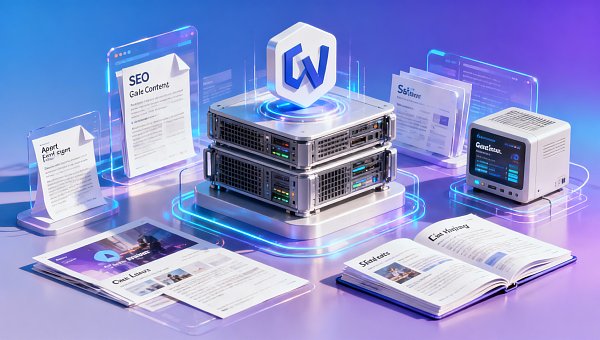
This capability is especially important in overseas markets. Because search habits, advertising rules, social media ecosystems, languages, cultures, and conversion paths differ from country to country, relying on experience alone is unlikely to lead to stable growth.
Therefore, innovative companies are not those with "many ideas," but those that can use a digital foundation to connect brand reach, user acquisition, content distribution, lead management, and conversion.
Why is overseas growth increasingly reliant on a digital foundation?
In the past, some companies focused on opening accounts, running ads, and building web pages when going global. This seemed effective in the short term, but growth would stall once budgets fluctuated or platform rules changed.
The problem often lies not in the channels themselves, but in the lack of underlying capabilities. The website structure is not conducive to indexing, the content system lacks long-term accumulation, data tracking is incomplete, and the lead distribution and follow-up mechanisms are unstable.
The value of a digital infrastructure lies in enabling businesses to possess unified online assets and continuous optimization capabilities. It serves as both the starting point for marketing activities and the basis for retrospective decision-making.
From a practical business perspective, the foundation typically includes several components: an independent website system, a multilingual content system, search visibility, advertising landing pages, social media traffic generation channels, customer data accumulation, and automated operational capabilities surrounding these aspects.
Without a base, common problems will recur.
- Traffic is coming, but pages load slowly, trust is low, and bounce rate is high.
- Advertising can generate inquiries, but it's difficult to determine which countries and keywords are more valuable.
- We created multilingual pages, but this didn't lead to sustainable indexing and long-term organic growth.
- The brand's messaging is inconsistent across different channels, leading to confusion among overseas users.
- The lack of systematic management after leads are accumulated makes it impossible to support secondary conversions and repeat purchases.
Integrating website and marketing strategies brings a closer look to the true capabilities of an innovation engine company.
To determine whether a company is an innovation engine, you can't just look at whether it has an official website or whether it's running ads. What's more important is whether its website and marketing are truly synergistic.
If a website is merely a showcase page and marketing is simply about buying traffic, without any content strategy, data feedback, or conversion design between the two, then growth will be difficult to translate into assets.
In this respect, Yiyingbao's IT path is somewhat representative. Founded in 2013 and headquartered in Beijing, the company has long been driven by artificial intelligence and big data, developing a full-chain solution encompassing intelligent website building, SEO optimization, social media marketing, and advertising.
The value of this model lies not only in providing comprehensive services, but also in integrating website building, promotion, search engine optimization, customer acquisition, and conversion into a single growth framework. For foreign trade, manufacturing, cross-border e-commerce, and brand globalization scenarios, this integration is closer to real business needs.
YiYingBao, through its cloud-based intelligent website building system, cross-border e-commerce system, AI advertising and marketing system, and AI+SEO/GEO optimization system, enables overseas independent websites not only to go online, but also to be better searched, spread, and converted.
From a practical perspective, digital infrastructure primarily addresses three types of issues.
Different business models have slightly different requirements for the underlying infrastructure. However, whether it's B2B inquiries or B2C brand retail, the underlying focus usually falls into the following categories.
This is why innovation engine companies are being discussed more and more. It doesn't just solve the problem of a single page or channel, but rather the problem of how companies can maintain their growth momentum in a complex market.
An easily underestimated underlying aspect: brand domain name and basic asset management
Many companies prioritize advertising spending but neglect the most fundamental aspect of digital asset management. In fact, a domain name is one of the starting points for overseas brand awareness, user experience, and long-term operation.
If domain names are chosen arbitrarily, suffix protection is insufficient, and DNS resolution and maintenance are scattered, brand confusion, the risk of registration squatting, abnormal access, and even the impact on advertising and search performance can easily occur.
In this foundational work, the role of domain name services is primarily reflected in the completeness of digital brand building. For example, intelligent search for available domain names, one-stop registration and purchase, and combined with multiple suffixes and spelling variant protection, reduce the risk of brand asset outflow.
When combined with automatic DNS resolution, status monitoring, and renewal reminders, the interruptions caused by manual configuration can be reduced. These details are significant for websites that need to stably handle overseas traffic.
From a cost perspective, the registration threshold for common domain extensions is not high; for example, .com costs 85, and .cn and .cc cost 35. What truly matters is not the price per transaction, but whether a standardized, continuous, and controllable asset management mechanism is established.
To determine whether a company has an "innovation engine" capability, you can look for these signals.
Being an innovation engine company is not just an empty label. From an operational perspective, it can usually be identified through several clear signals.
First, is the growth based on our own territory?
If growth relies entirely on third-party platforms, businesses will always be dictated by traffic rules. The stronger an independent website, content assets, and search engine optimization (SEO) foundation, the higher its resilience to risks.
Second, can the data be fed back into operational decision-making?
The ability to identify which pages are effective, which keywords generate inquiries, and which regions have higher conversion rates determines whether a company chooses to "spend money on trial and error" or "grow based on evidence."
Third, are the tools, content, and team in synergy?
Many businesses don't lack tools, but rather their tools are isolated. If website building systems, advertising systems, SEO strategies, and social media content cannot work together, efficiency is difficult to improve.
Fourth, does it possess localization capabilities for different markets?
Innovation-driven companies do not simply replicate their Chinese marketing methods overseas, but rather adjust their expression, channels, and pace according to the differences in regions such as North America, Europe, Southeast Asia, Japan and South Korea, and the Middle East.
From understanding to action, what should we focus on next?
Understanding innovation engine companies merely as those that "are better at using new technologies" would be a superficial assessment. A more accurate understanding is whether a company possesses a digital foundation that supports long-term overseas growth.
The next step is to address a few key questions: Is the website scalable, indexable, and convertible? Is the content consistently relevant to the target market? Are advertising and social media traffic returning to a unified site? Are the brand domain, page assets, and data links sufficiently stable?
Once you understand these fundamental issues, comparing service plans, system capabilities, and implementation efficiency will be more valuable than discussing a particular channel in isolation.
For overseas growth, what's truly worth investing in isn't just a single promotional campaign, but a sustainable growth structure. This is precisely why innovative engine companies are repeatedly mentioned, and it's also the practical logic behind why a digital foundation must be taken seriously.
Related Articles
 Should you choose a personal account or a business account for Facebook paid promotion?
 No More Writing Product Copy by Hand? Yiyingbao AI Direct + 12 Major Components Deliver a Game-Changing Edge for Overseas Trade Website Building!
![]() Google Bidding Changes Dramatically on 8.17! Your Customer Acquisition Costs Are About to Rise – Part 2
Google Bidding Changes Dramatically on 8.17! Your Customer Acquisition Costs Are About to Rise – Part 2



Related Products
 Yiyingbao SaaS Intelligent Website Building and Marketing SystemYiyingbao SaaS Intelligent Website Building and Marketing System, AI-powered no-code website building, rapid creation of multilingual B2B international websites in 10 minutes, global server acceleration, AI-powered SEO optimization, helping businesses connect efficiently with global markets. The perfect integration of technology and operation makes building an international trade website remarkably simple
 AI+SEM Intelligent Advertising Marketing SystemAI+SEM drives intelligent ad creation, empowering full-funnel precision advertising marketing. The system automatically generates weekly/monthly reports, AI recommends keywords and target countries, monitors core metrics in real-time with intelligent alerts, and enables one-click high-conversion ad solutions to help quickly acquire customers and improve ROI.
 AI+SEO Dual-Engine System Optimization ServicesYiyingbao’s AI+SEO dual-engine optimization system helps foreign trade enterprises acquire high-quality organic traffic through AI-powered keyword research, content generation, and comprehensive technical optimization, significantly improving search rankings and conversion rates.
 AI+SNS Social Media Marketing SystemYingbao AI+SNS Social Media Marketing System - Precision social capture for the social media era. Supports one-click content synchronization across major platforms like Facebook and LinkedIn. AI intelligently rewrites posts for enhanced relevance. 24/7 AI customer service and user profiling analysis empower businesses to efficiently expand into global markets.
 AI+SEO营销解决方案易营宝AI+SEO营销解决方案,通过AI批量写作、智能生成TDK、精准关键词扩词等功能,全面优化网站SEO效果,提升流量与转化率。助力企业构建高效智能网站新生态。
 AI+SEM Advertising Marketing SolutionsAI+SEM Advertising Marketing Solution leverages AI technology to deeply empower SEM ad campaigns. It automatically generates weekly/monthly reports using AI, presenting account data across multiple dimensions for comprehensive insights into campaign performance and trends. The system precisely recommends keywords and target countries, intelligently generates high-conversion ad copy, and enables one-click activation of efficient campaign plans to help businesses rapidly acquire customers. Simultaneously, it monitors core metrics in real time, intelligently identifies abnormal fluctuations, and issues timely alerts to ensure stable, high-return advertising results.
 Domain Name ServicesEasyWin provides professional domain name services, including intelligent queries, one-stop registration, brand protection, and full lifecycle management, helping businesses build a digital brand image.
 EasyOperate B2C Cross-Border E-Commerce Platform & Independent WebsiteEasyStore B2C Cross-border E-commerce Independent Store is an intelligent website building and cross-border e-commerce integrated solution independently developed by EasyStore Information Technology (Beijing) Co., Ltd. The system is specially designed for small and medium-sized as well as large export enterprises, integrating 'website building, operation, marketing, advertising, and conversion' into one, helping enterprises quickly establish cross-border e-commerce independent stores to achieve brand globalization and global sales growth.
The platform supports multiple languages, multiple currencies, and multi-channel marketing, with built-in AI intelligent translation and SEO optimization systems, suitable for mainstream markets such as Southeast Asia, Europe and America, Latin America, and the Middle East, assisting Chinese manufacturing enterprises in efficiently deploying international e-commerce strategies. SSL证书易营宝提供专业SSL安全证书服务,包括单域名和泛域名证书,确保网站数据传输加密、身份验证和完整性保护,助力企业建立安全可信的在线业务环境。









