









- Lazada 11.11 Mega Sale: LazMall Contributes Nearly Two-Thirds of GMVNov 23, 2026View details
- Shein’s European Revenue Falls 16% as Tighter Rules on Low-Value Direct Shipments Take EffectNov 23, 2026View details
- EU Low-Value Parcel Rules Impact Cargo Flows: Air Freight Volume from China to Europe Down 17% in OctoberNov 23, 2026View details
- Indonesia and the EU Sign Comprehensive Economic Partnership Agreement, 90.4% of Tariff Lines to Become Duty-Free ImmediatelyNov 23, 2026View details
- Qingdao Port's Imports and Exports Exceed RMB 23.699 Trillion in the First 10 Months, Drawing Attention to Port IntelligenceNov 22, 2026View details
- Ningbo Cross-Border E-Commerce Export Value Surges 94.87% Year on Year, Opening Up a New Billion-Yuan Growth TrackNov 22, 2026View details
How to Evaluate an SEO Provider’s Ability to Adapt to AI Search
When businesses start paying attention to AI search, they often ask: Which SEO provider truly understands how to adapt its strategy? The answer lies not in promises to “get a brand recommended by AI,” but in whether the provider can explain how users look for information, how a website can offer credible answers, and how this work ultimately relates to inquiries or sales. When choosing a provider, assess traditional search, AI search, and website conversions together rather than buying into a separate set of concepts.
Start with the strategy: Does it begin with customer questions, or just list keywords?
Traditional SEO plans often focus on keyword rankings. This still matters, but it is not enough to cover the complex questions people ask in AI search. Procurement professionals may search not only for the name of a particular piece of equipment, but also ask about suitable operating conditions, delivery lead times, maintenance requirements, and supplier comparisons. The provider should be able to explain which questions belong on product pages and which need to be addressed through technical articles, selection guides, or FAQ pages.
Test the approach with a real product line: ask prospective providers to map the main questions target customers ask as they move from initial research to comparing solutions and preparing an inquiry, and to identify what evidence is missing from your current website. If a provider offers a long list of high-volume keywords but cannot explain how product specifications and purchasing concerns relate to specific pages, its strategy is likely focused on traffic alone.
Content relevance is also worth examining firsthand. For example, even if a page about SEO for companies expanding overseas includes an article about Problems and Countermeasures in the Management of Fixed Assets in Public Institutions, that does not prove the website has greater expertise in international marketing. The provider should explain how a link serves readers’ needs, rather than treating links between any pages as an optimization achievement.
Then assess the website: Can its content be accessed, understood, and verified?
Well-written content is not necessarily accessible to search engines or other crawlers. Ask the provider to check the website’s indexing status, crawl restrictions on important pages, page loading speed, and mobile experience. They should also explain who will fix any issues and how the fixes will be verified. Businesses using a website-building platform should especially confirm that page titles, body content, redirects, and technical settings can be edited, so that recommendations in the audit report can actually be implemented.
For multilingual websites, also check that language versions correspond correctly, regional wording is appropriate, and content is complete. A page targeting Japanese customers should not simply translate the Chinese introduction directly; product units, purchasing practices, and after-sales information must also suit the local market and can affect users’ decisions. Automatically generated pages can serve as drafts, but the company should verify technical specifications, certification statements, and delivery terms.
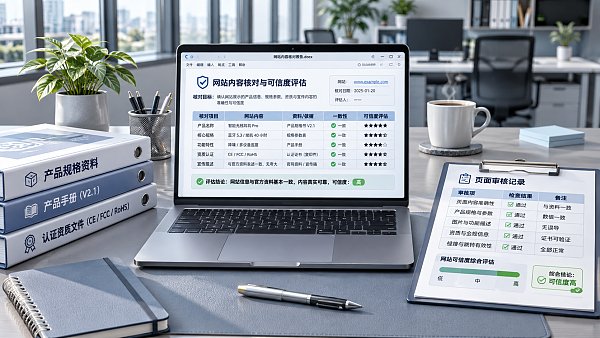
It is worth asking where the evidence comes from. For manufacturers, specification sheets, application limitations, test conditions, maintenance instructions, and verifiable company information usually help buyers make decisions more than a large volume of generic industry articles. Structured data can help search engines understand a page, but it does not guarantee AI citations. Be especially cautious of proposals claiming that simply adding a piece of code will ensure consistent inclusion in AI answers.
Ask for methods that can be reviewed, not just a few screenshots
AI answers vary with the wording of a question, location, language, timing, and product. A single screenshot can serve as an observation, but it cannot prove that a brand is consistently recommended. When evaluating a provider, ask them to prepare a set of business-relevant questions, agree on the platforms, languages, locations, timing, and wording to be tested, and record whether the brand is mentioned, whether a link appears, and whether the answer accurately describes the product’s capabilities.
Review these records alongside traditional search performance: Are relevant pages indexed? What visits come from organic search? Do visitors view product details, submit forms, or make contact? Attribution for AI-driven traffic may be incomplete, and users may visit a website directly after reading an answer, so a single channel’s metrics cannot capture the full impact. Conversely, if citations increase but inquiry quality declines, check whether the questions selected and landing pages are misaligned with actual buyers.
Also distinguish between “being mentioned” and “being accurately recommended.” A supplier appearing in an answer does not mean it is suitable for the purchasing scenario. If an answer overstates a product’s applications or cites outdated specifications, the provider should have a process for feedback, revisions, and follow-up checks, rather than simply including exposure figures in the monthly report.
When comparing integrated capabilities, focus on the scope of deliverables
When one team coordinates website development, SEO, advertising, and social media, it is generally easier to keep page information and inquiry paths consistent. However, “one-stop service” does not mean every service is sufficiently in-depth. Verify who will do the work, their language capabilities, the content review process, and who owns the website, advertising accounts, and data assets. Clarify in advance in the contract whether the company can retain its domain, page content, analytics data, and necessary administrative access after the contract ends.
For example, Yiyingbao offers services spanning intelligent website building, multilingual websites, Google SEO, advertising, and GEO, making it a potential provider for companies seeking to coordinate their overseas websites and marketing channels. Whether it is suitable for a specific project still depends on the target market, its content expertise in the relevant industry, the openness of its systems, and the staffing arrangements for delivery; service scope alone is not enough to determine suitability.
When budgets are limited, there is no need to start with a long-term package covering every market and channel. A more prudent approach is to select one priority product and target market, complete a website audit, map key questions, and improve a small number of core pages first. Then decide whether to expand based on indexing, visits, inquiry quality, and the provider’s coordination during delivery. A low-priced plan that does not provide editing access, promises fixed AI rankings, or refuses to explain its data definitions may look economical, but could make future adjustments more difficult.
Related Articles
 When Should Chinese Companies Use a Headless CMS for Global Websites?
 How Does Permission Management Differ Between Enterprise Multilingual CMS Platforms and Standard Systems?
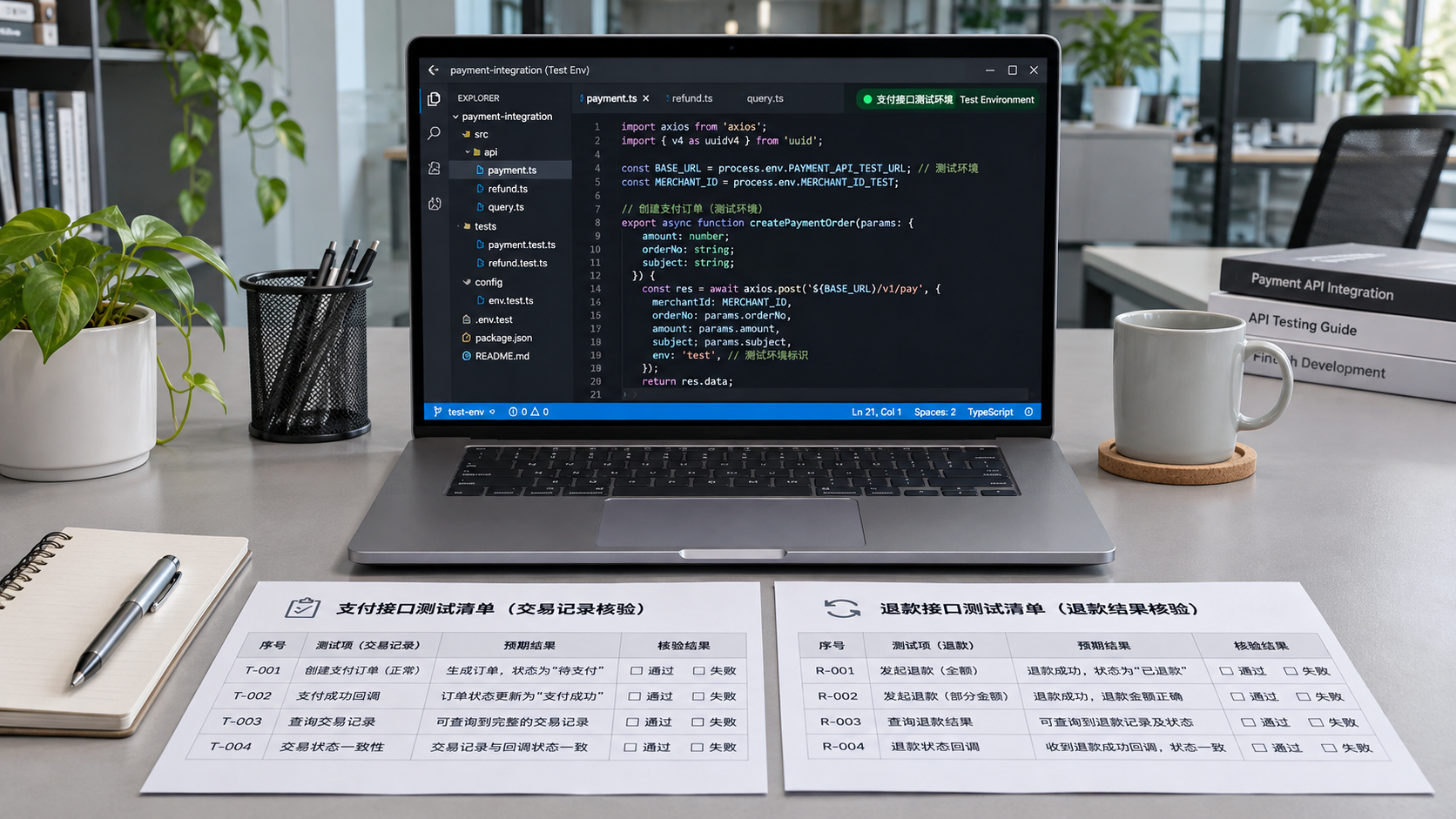
 How to Evaluate Payment Gateway Compatibility for Cross-Border E-commerce Platforms


Related Products
 Yiyingbao SaaS Intelligent Website Building and Marketing SystemYiyingbao SaaS Intelligent Website Building and Marketing System, AI-powered no-code website building, rapid creation of multilingual B2B international websites in 10 minutes, global server acceleration, AI-powered SEO optimization, helping businesses connect efficiently with global markets. The perfect integration of technology and operation makes building an international trade website remarkably simple
 AI+SEM Intelligent Advertising Marketing SystemAI+SEM drives intelligent ad creation, empowering full-funnel precision advertising marketing. The system automatically generates weekly/monthly reports, AI recommends keywords and target countries, monitors core metrics in real-time with intelligent alerts, and enables one-click high-conversion ad solutions to help quickly acquire customers and improve ROI.
 AI+SEO Dual-Engine System Optimization ServicesYiyingbao’s AI+SEO dual-engine optimization system helps foreign trade enterprises acquire high-quality organic traffic through AI-powered keyword research, content generation, and comprehensive technical optimization, significantly improving search rankings and conversion rates.
 AI+SNS Social Media Marketing SystemYingbao AI+SNS Social Media Marketing System - Precision social capture for the social media era. Supports one-click content synchronization across major platforms like Facebook and LinkedIn. AI intelligently rewrites posts for enhanced relevance. 24/7 AI customer service and user profiling analysis empower businesses to efficiently expand into global markets.
 AI+SEO营销解决方案易营宝AI+SEO营销解决方案,通过AI批量写作、智能生成TDK、精准关键词扩词等功能,全面优化网站SEO效果,提升流量与转化率。助力企业构建高效智能网站新生态。
 AI+SEM Advertising Marketing SolutionsAI+SEM Advertising Marketing Solution leverages AI technology to deeply empower SEM ad campaigns. It automatically generates weekly/monthly reports using AI, presenting account data across multiple dimensions for comprehensive insights into campaign performance and trends. The system precisely recommends keywords and target countries, intelligently generates high-conversion ad copy, and enables one-click activation of efficient campaign plans to help businesses rapidly acquire customers. Simultaneously, it monitors core metrics in real time, intelligently identifies abnormal fluctuations, and issues timely alerts to ensure stable, high-return advertising results.
 Domain Name ServicesEasyWin provides professional domain name services, including intelligent queries, one-stop registration, brand protection, and full lifecycle management, helping businesses build a digital brand image.
 EasyOperate B2C Cross-Border E-Commerce Platform & Independent WebsiteEasyStore B2C Cross-border E-commerce Independent Store is an intelligent website building and cross-border e-commerce integrated solution independently developed by EasyStore Information Technology (Beijing) Co., Ltd. The system is specially designed for small and medium-sized as well as large export enterprises, integrating 'website building, operation, marketing, advertising, and conversion' into one, helping enterprises quickly establish cross-border e-commerce independent stores to achieve brand globalization and global sales growth.
The platform supports multiple languages, multiple currencies, and multi-channel marketing, with built-in AI intelligent translation and SEO optimization systems, suitable for mainstream markets such as Southeast Asia, Europe and America, Latin America, and the Middle East, assisting Chinese manufacturing enterprises in efficiently deploying international e-commerce strategies. SSL证书易营宝提供专业SSL安全证书服务,包括单域名和泛域名证书,确保网站数据传输加密、身份验证和完整性保护,助力企业建立安全可信的在线业务环境。









